Black and Jewish people were allies once. Can they be again?
Initiatives are springing up across the country to bring together Blacks and Jews, including one from CNN commentator Van Jones
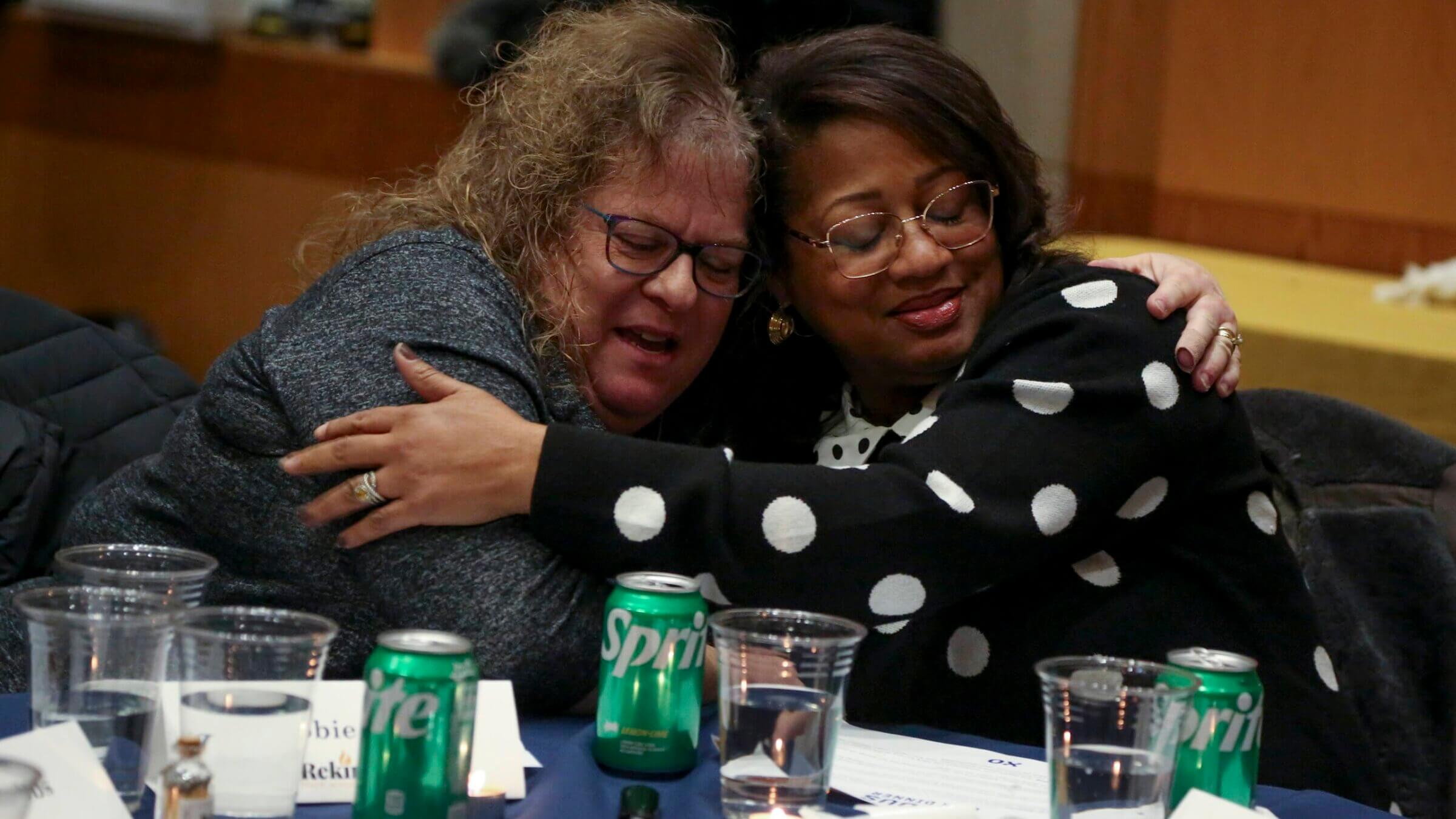
Participants at the Rekindle Fellowship Exodus Over Dinner program in December. Courtesy of Rekindle Fellowship
By Andrea Cooper January 19, 2026
The Rekindle graduates laugh, clap their hands, and twirl to “Hava Nagila.” They are Black and white, Jewish, Christian, and agnostic.
It’s the sort of scene that Matt Fieldman, a white Jew, and Charmaine Rice, a Black Christian, envisioned when they launched Rekindle in Cleveland in 2021. The organization, now with 20 chapters nationally and six more in development, aims to revitalize Black-Jewish relations in the U.S. and help rebuild the groups’ historic connections.
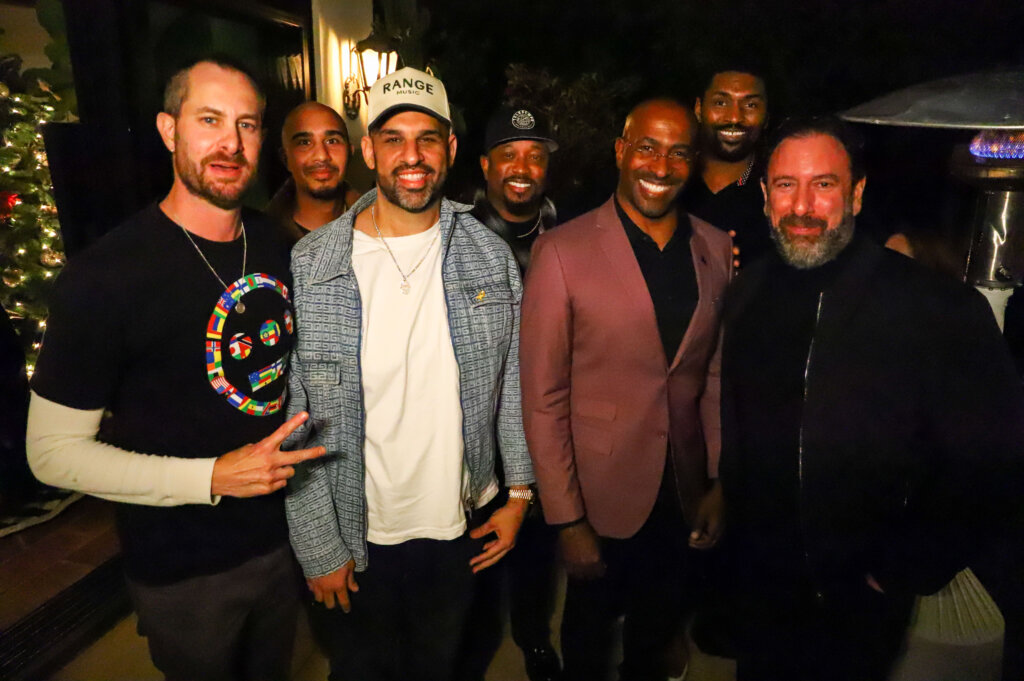
Other initiatives share similar goals. Exodus Leadership Forum from CNN commentator Van Jones brings together Black, Jewish, and Black-Jewish leaders over dinner in multiple cities for “nights of deep conversation” and “a space to share history, confront hard truths and imagine a shared future,” according to a promotional video. The organization anticipates holding more than 300 dinners this year in partnership with community groups, Jones told the Forward.
Hillel International, the Foundation to Combat Antisemitism, and UNCF (formerly the United Negro College Fund) are hosting Unity Dinners with speakers and dialogue for students on college campuses in 14 cities. Additional efforts include local groups for teens or adults, such as Challah and Soul in Los Angeles and the Charlotte Black/Jewish Alliance in North Carolina.
For some, nothing less than democracy is at stake. “I think the most powerful alliance for good in the history of Western civilization is Blacks and Jews together,” said Jones, who is Black.
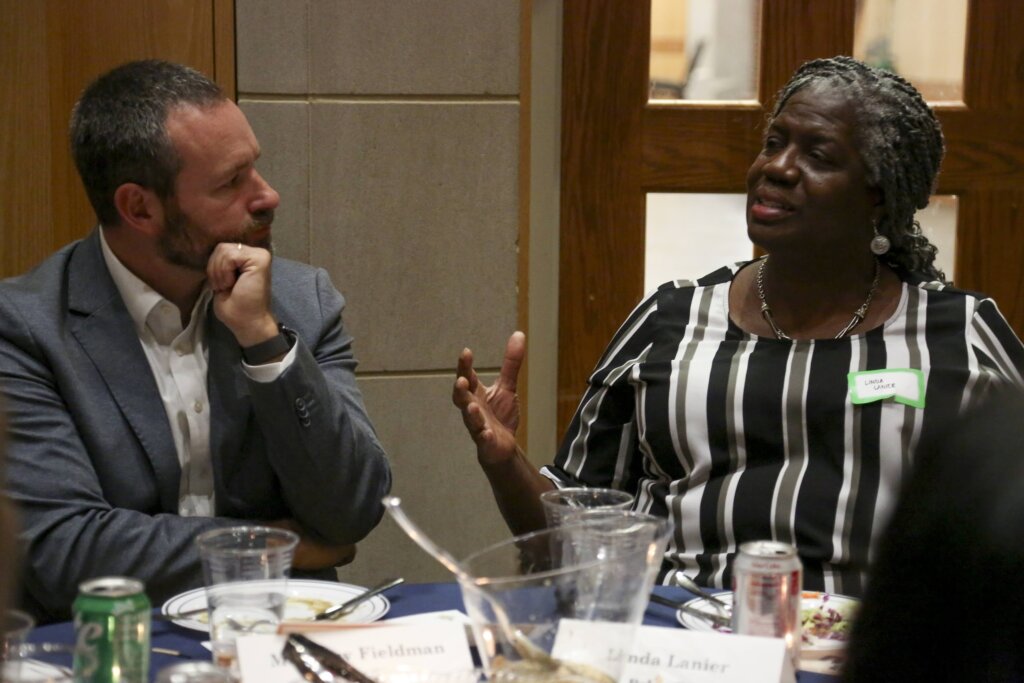
Advocates point to rising rates of antisemitism and more than 3,000 hate crimes committed against African Americans in 2024. Blacks and Jews were effective allies for social change during the civil rights era and can be again, the thinking goes, even amid such painful obstacles as the turmoil in Gaza.
“There were relationships that were hurt as a result of the war, but we still have to continue to work as hard as we can to heal them,” said Rabbi Judy Schindler, executive director of Spill the Honey, which creates films, educational curricula for students, and workshops to help “the Black-Jewish alliance today” fight antisemitism and racism. “There’s just too much work to do right here,” said Schindler, who is white.
How bridges are being rebuilt
Movement leaders point to the need for education as a foundation for reconnection and action today. Jews were among the NAACP’s founders in 1909. Soon after, Julius Rosenwald joined Booker T. Washington to build thousands of schools for Black students. During World War II, Black soldiers fought Nazism, while Black colleges and universities offered faculty positions to Jewish academics fleeing Europe. In the civil rights era, “the room where it happened” was in the Religious Action Center of Reform Judaism, where leaders drafted the Civil Rights Act of 1964 and the Voting Rights Act of 1965.
Black and Jewish people have an historic alliance, said Shonda Isom Walkovitz, the Black Jewish co-founder of Challah and Soul. “It’s in both our DNAs what we have experienced, not only across Europe but in the United States. It was ‘no Blacks, no Jews, no dogs,’” she said.
Still, historical understanding is just a start, those involved in this work said. Renewing the alliance requires opportunities for moderated, honest conversations to see where the groups’ current values, experiences and priorities intersect locally and nationally.
People need to build relationships and trust, said Fieldman, before allyship can happen. The five-session Rekindle curriculum, with an optional sixth session on Israel, is designed to deepen knowledge of each community while providing a place for questions and dialogue. Among the topics: Who benefits from the Black and Jewish communities not getting along?
“People are hungry for a space to have meaningful conversations,” Fieldman said. “They want to get off social media, and they want to have a space where they can’t be canceled or have negative ramifications of asking a question or talking honestly about their opinions.”
Jones has seen the same need at the Exodus dinners, where people enter cautiously but once “you break the seal and let people speak about their own personal experiences, not politics, not geopolitical events, but our own experiences as Jewish people, as Black people, as people who might be both Black and Jewish, the heart opens up,” he said.
Meaningful experiences are key. Rekindle participants can join each other for Shabbat dinners, church services, arts and cultural events, and holiday celebrations, including Juneteenth. Friendships have led to joint projects, such as joining a community clean-up hosted by local churches.
In Los Angeles, Challah and Soul hosted a Soulful Seder last year which attracted 150 guests. Organizers and audience members wrote a Haggadah at the Seder together that incorporated the Black American story of enslavement. This year, they will add part of the Latino experience into the same Haggadah.
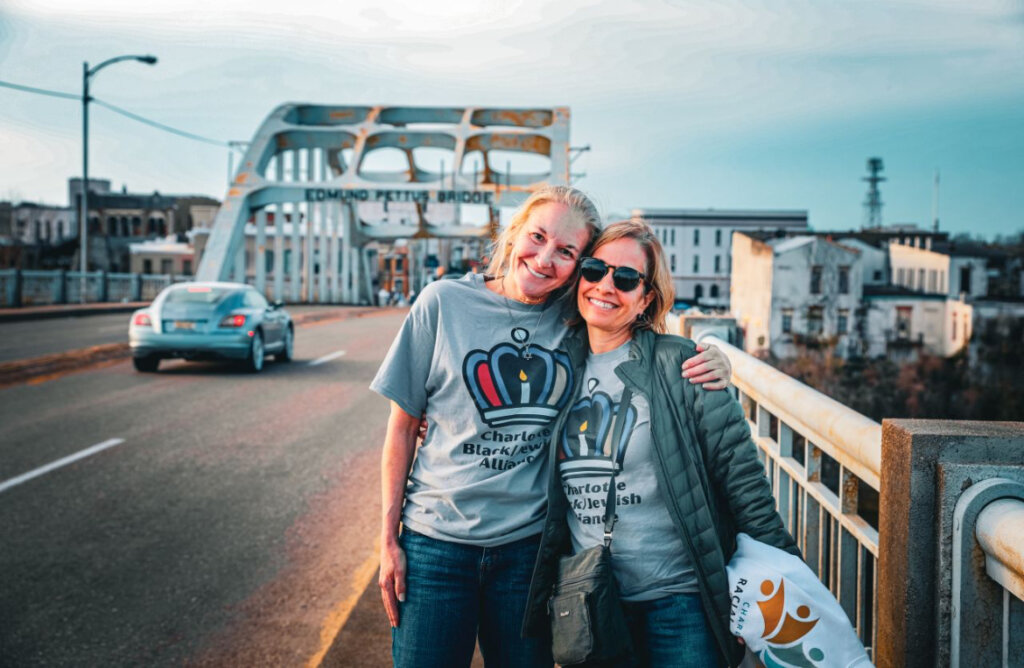
The Charlotte Black/Jewish Alliance honored the 60th anniversary of the Edmund Pettus Bridge crossing in Selma, Alabama, by recreating the journey from Atlanta to Selma. The group visited museums on Black history, along with synagogues and Black churches that supported protestors.
“The questions and discussions that happened on the bus — it was eye-opening,” said Ty Green, a Black Christian leader of the group. “We unfolded and opened up about our feelings about what we saw.”
Experiences like these can allow each group to see that the other is not a monolith. “Some of the bias and stereotypes of both communities exist because they’ve really never talked to anyone who was from the other community,” said Harriette Watford Lowenthal, a Black Jewish woman who has led Rekindle cohorts and trained with Exodus Leadership Forum.
She believes the voices of Jews of color are essential to this work. “In my experience, the Black community isn’t very well educated about Jews of color,” she said. Knowing there are Jews from a variety of backgrounds can boost African Americans’ connection with the Jewish community. Those perspectives may be especially important among younger people. One 2024 study found that 18-year-old registered voters are five times more likely to have an unfavorable opinion of Jewish people than 65-year-olds.
Attempts to “bring the band back together,” as Jacques Berlinerblau puts it, have their skeptics. Berlinerblau, a professor in the Center for Jewish Civilization at Georgetown University, wishes these organizations well but doesn’t believe the juggernaut from 60 years ago can be revived. “For the overwhelming majority of the Black community, the relationship has never been central or particularly important,” said Berlinerblau, co-author with Terrance L. Johnson of Blacks and Jews in America: An Invitation to Dialogue.
“I think the most powerful alliance for good in the history of Western civilization is Blacks and Jews together.”Van JonesCNN commentator and founder of Exodus Leadership Forum
Jones acknowledges that interest in reuniting is higher in the Jewish community than the Black community. “Black people have so many of our own problems that have been accelerated in the past couple of years and feel quite isolated,” he said, pointing to the collapse of job opportunities in the public sector, the end of DEI initiatives, and other challenges. “It’s something of a revelation to Black leaders sometimes that our help would be needed or appreciated in the Jewish community.”
Still, there are signs of momentum. In post-fellowship surveys, 93% of Rekindle graduates report they feel “empowered to address hatred of the other community that I see in my own community” and 80% have “advocated for the other community” six months after graduation.
Exodus Leadership Forum, Spill the Honey, and other leaders are planning to collaborate this spring on a combined national strategy for advancing the Black-Jewish partnership. Collaborations could include students from historically Black colleges and universities traveling to Tel Aviv to study its tech industry, or Black residents accompanying Jews at synagogue for support, Jones said.
The work is crucial during the country’s 250th anniversary, according to Benjamin Franklin Chavis Jr., chairman of Spill the Honey and North Carolina youth coordinator for Martin Luther King Jr. in the early 1960s.
“This is a pivotal year in terms of what defines an American,” Chavis said. “Where are we going? What is the ethos? Can pluralism work, and can we be mutually supportive of one another as brothers and sisters?”
Why I became the Forward’s Editor-in-Chief
You are surely a friend of the Forward if you’re reading this. And so it’s with excitement and awe — of all that the Forward is, was, and will be — that I introduce myself to you as the Forward’s newest editor-in-chief.
And what a time to step into the leadership of this storied Jewish institution! For 129 years, the Forward has shaped and told the American Jewish story. I’m stepping in at an intense time for Jews the world over. We urgently need the Forward’s courageous, unflinching journalism — not only as a source of reliable information, but to provide inspiration, healing and hope.
Support our mission to tell the Jewish story fully and fairly.