For fleeing Jews, Venezuela was a golden land. Now in exile, they watch their homeland’s unrest with trepidation.
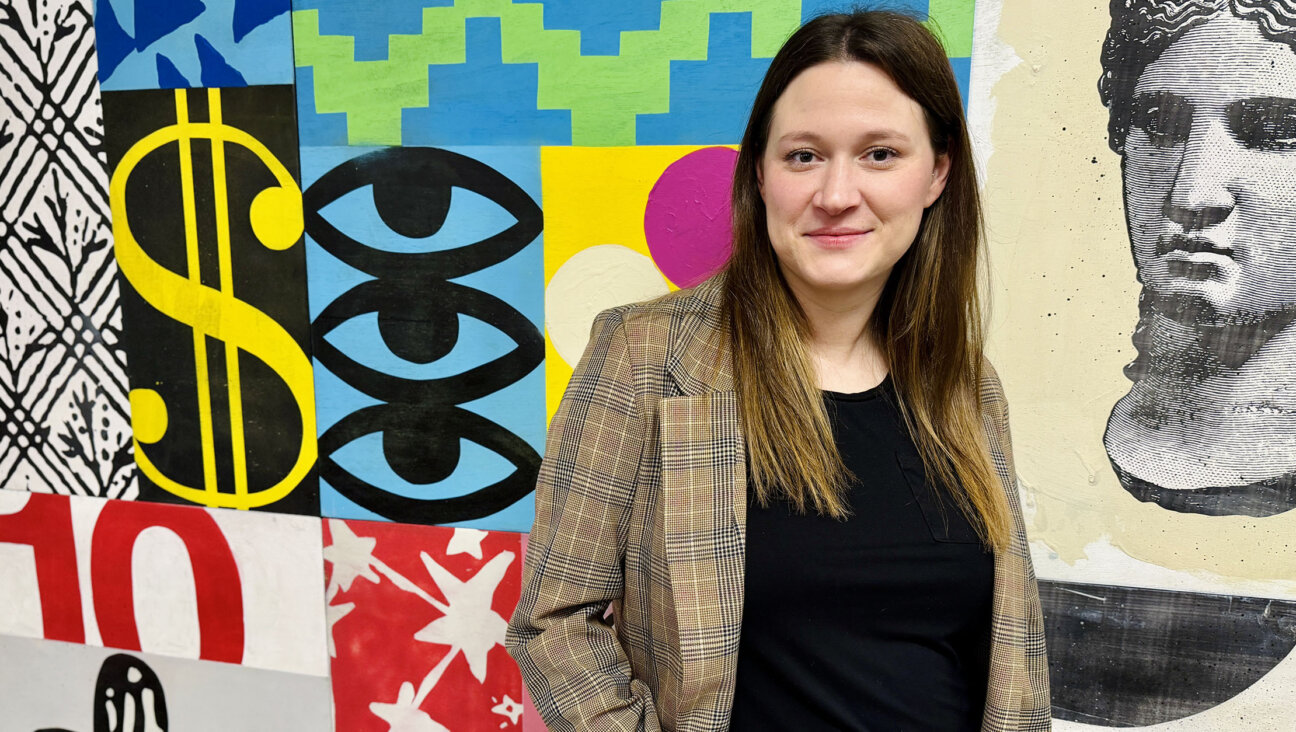
‘They took the clown out of the circus, but they left the rest of the troupe,’ said El Nacional columnist Alicia Freilich
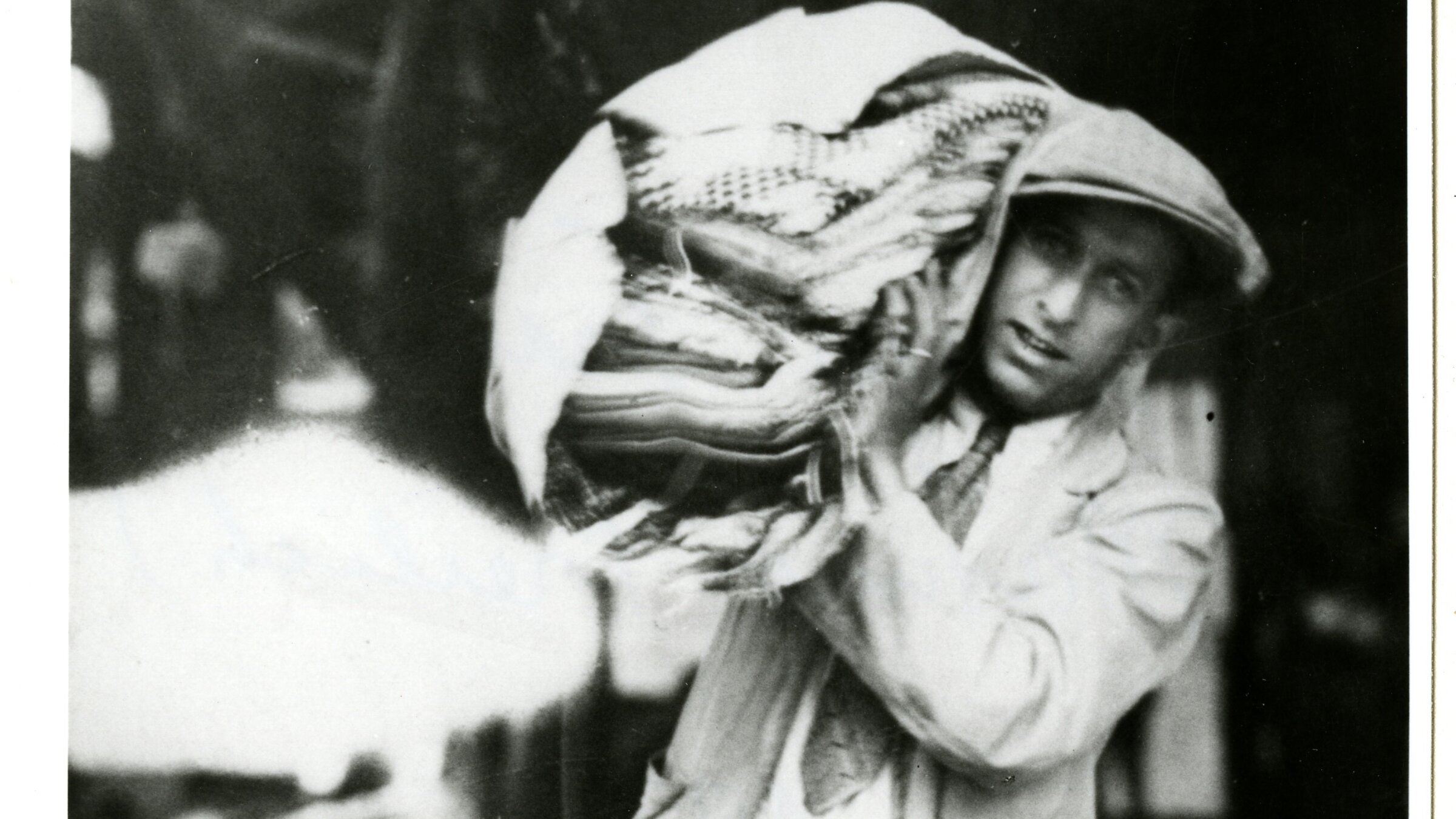
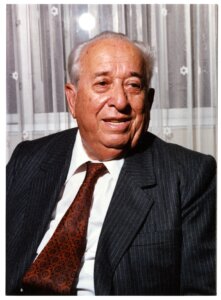
After getting into trouble in Cuba for working as a socialist organizer, Maximo Freilich worked as an itinerant salesman in Venezuela. Courtesy of YIVO
By Andrew Silverstein January 28, 2026
After their overcrowded motorboat ran aground and took on water, the 15 migrants swam up to a Tampa beach. The men they paid back in Havana had promised they’d be in Miami within five hours; instead they were at sea for five days, running out of food and water.
Two of the migrants had to be carried ashore, where they were swiftly detained by the police. Years prior, their entry would have been easy, with a pathway to citizenship, but now with an anti-immigrant backlash they were sentenced to a year in jail.
After a week, a sympathetic Cuban-born prison guard smuggled out a letter asking for help. “They hold us,” it read, “as if we were criminals, murderers, in stifling dark rooms. We are given only black coffee in the morning and fed once a day, and very limited at that.”
The letter writer worried that he and his fellow refugees might spend months in the dark cell without air or light. But what he feared most was being deported.
Amazingly, the letter got them out.
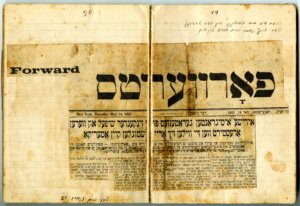
The letter’s author was Mordechai Freilich, a 26-year-old Polish Jew who had run into trouble as a socialist organizer in a shoe factory in Cuba then ruled by General Gerardo Machado. Written in Yiddish, the letter was mailed to Freilich’s uncle in New York who was instructed to share it with this newspaper, the Forward, which published it on May 14, 1931, under the headline: “Jewish immigrants rescued from sinking boat and arrested when they try to smuggle themselves into America.”
Mordechai, known as Máximo, had written articles for the Forward before he’d left Poland two years earlier. At the time, it was the most widely read ethnic publication in the United States. The newspaper’s general manager, the influential New York politician Baruch Charney Vladeck, persuaded the future governor of New York Herbert H. Lehman to intervene. Freilich and the others were released on condition they find a country to accept them within two weeks.
“The United States was the goldene medine; it was the salvation, but it was closed,” Máximo’s daughter Alicia Freilich told me by phone from her home in Delray Beach, Florida. “Venezuela became our goldene medine.”
Alicia was born in Caracas in 1939, and for the past 57 years, she has been a columnist for El Nacional, the leading Venezuelan newspaper, which itself has become an exile. In 2018, the government seized its headquarters. Today, the web-only publication is blocked by the nation’s internet providers, limiting its readership to the Venezuelan diaspora and those within the country determined enough to digitally bypass the censorship.
In 2012, Freilich suspected her phone was tapped by the government and fled to Florida. If it wasn’t for her advanced age, she’s sure she would have been jailed for her criticism of then-President Hugo Chavez.
“I became an immigrant at the age of 73,” Alicia told me in Spanish the week after President Nicolás Maduro and his wife were arrested by American forces. “I never thought I’d leave.”
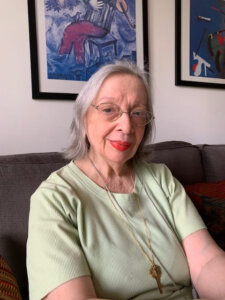
Since 2012, a quarter of Venezuela’s population, nearly 8 million people, have left, fleeing food insecurity, political oppression and spiraling gang violence. Though Venezuela was once home to a community of 25,000 Jews, now only 5,000 remain. Alicia Freilich remembers full synagogues and generous charities that allowed for even the poor to attend Jewish day schools and take advantage of the busy community center and Jewish retirement home. Now the first thing visitors to the website of the nation’s leading Sephardic organization see is detailed information on how to apply for Spanish citizenship.
While there was a small Sephardic Jewish community in Venezuela in the 19th century, the country’s Sephardic families came mainly from Morocco during the country’s postwar oil boom. Most Venezuelan Jews, however, are Ashkenazi, the children or grandchildren of Eastern European Jews who left Europe before the Holocaust, like Alicia’s parents Máximo and Rifka, or survivors who came after the war, like Alicia’s ex-husband Jaime Segal.
In 1938, Máximo made a return trip back to Poland. “I begged them [my extended family] to leave, that there was going to be a war,” Máximo told Alicia in an interview published in her 1976 book Interviewees in the Flesh, “but they laughed at me.” After the war, his in-laws, Alicia’s aunt and uncle Gutka and Abraham, who survived Auschwitz, joined the family in Caracas.
Officially, Venezuela had restrictive immigrant policies, but it made exceptions. In 1939, the government of Eleazar López Contreras gave refuge to 250 German Jews onboard the Caribia and Köningstein ships, which had been denied entry at all other ports. Máximo Freilich was one of the representatives of the Jewish community who welcomed the new arrivals at the port in La Guaira.
“Venezuelans are magnificent, generous,” Alicia told me. “My father used to say, ‘the people are so generous that even a beggar would offer some of his coffee.’”
Máximo, like most Jewish immigrants at the time, was a “claper,” the Yiddish term for an itinerant salesman. After years of “claping” on doors, peddling rags, he graduated to a Caracas storefront. Among Jews, the self-educated Máximo was a respected figure, a contributor to Yiddish newspapers like the Forward, a settler of disputes, a man consulted over beet soup and gefilte fish. But he never mastered Spanish, and to Venezuelans he remained a “musiu,” slang for a foreigner.
In 1987, Alicia wrote her first novel, Cláper, adapting Máximo’s Yiddish diary from his early years in America, which she intertwines with her own story. Máximo’s journey is from his shtetl, fictionalized as “Lendov”; Alicia’s is from her sheltered Jewish day school childhood into the wider Venezuelan society, attending college and starting her career. She mixes in literary circles, rubs shoulders with leading intellectuals and left-wing dissidents, yet she’s never fully at ease, discovering she is not so different from the “Polish peasant” parents she wished to escape.
“Half a century ago, a bunch of musiús began arriving. They knocked on doors in order to sell rags. They knocked: clap, clap, clap,” she writes, reflecting on her success in journalism. “So daughter of a cláper, I too am a caller. When I knock and knock from the pressroom, what I wish to sell for free is what we might call ethical anxiety.”
Alicia’s part of the narrative comes in the form of a monologue to her psychoanalyst, like in Philip Roth’s novel Portnoy’s Complaint, which she references in her book. But Caracas is not Newark. Beyond the middle class of the cities is vast poverty. Venezuelan Jews helped build the democracy that emerged in 1958 after the Pérez Jiménez dictatorship, and for four decades Venezuela was considered one of Latin America’s most stable and affluent countries. But oil wealth bred corruption, inequality fueled unrest and by the 1990s the system was fracturing.
In 1999, the socialist Hugo Chávez, who had led a failed coup attempt seven years earlier, was elected president. Initially popular for promising to redistribute oil wealth to the poor, Chávez chipped away at democratic norms, leading many professionals to exit the country in the early 2000s.
“They never directly target the [Jewish] community,” said Alicia, but Chavista anti-Israel rhetoric created a hostile atmosphere. In 2009, armed men overran the nation’s largest synagogue, Tiféret Israel in Caracas, desecrated the sanctuary, stole objects and spray-painted antisemitic and anti-Zionist messages demanding the government expel Jews. That’s when she first thought about leaving.
Soon, she said, her younger sister Miriam Freilich, a culture writer for El Nacional and host of a radio program, decided it was impossible to be an independent female journalist in Caracas. She moved to Colombia before joining her daughter in Israel, and died in Spain last year. Alicia’s two sons had left years earlier. They did post-graduate studies abroad in the 1990s and decided not to return.
Ernesto Segal is a physician in Florida and Ariel Segal, who has lived in both the U.S. and Israel, is a communications professor in Lima. “I prefer Venezuela as a people, as a climate, as the landscape,” Ariel, 61, told me over Zoom from Lima. “I haven’t returned because of the Chavismo.”
“We lived in paradise, but we didn’t realize it,” Ariel said. He particularly remembers Club Hebraica, the Jewish community center in Caracas, not just a sports center but a hub for youth groups, singles mixers, and holiday celebrations. It’s where he went to school. “After Chávez, we realized, ‘Wow, that was wonderful. We had freedom. We could change the president every five years. Politicians never threatened each other.’”
For years after he’d left, Ariel returned for weeks at a time each year to lecture at Venezuelan universities on authoritarianism and the Middle East. Then, in 2016, he was accused by name on a government television program of being an agent of the Mossad. He hasn’t been back since.
It was after Chávez’s death in 2013 that most Venezuelans migrants left. With a fall in oil prices and Nicolás Maduro in power came inflation, shortages and increased corruption. Increases in U.S. sanctions further strained the economy, making it difficult for the average person to access food and medicine. Early waves of middle-class immigrants left the country on planes with visas. Jewish Venezuelans headed to Florida, Spain, Panama and Israel.
More recent migrants are poorer, without passports or visas. Many fled initially to countries within the region, with over 2 million residing in Colombia, but others were forced to head north to the United States. Their treacherous and unauthorized immigration was not so different from Máximo’s journey in 1931.
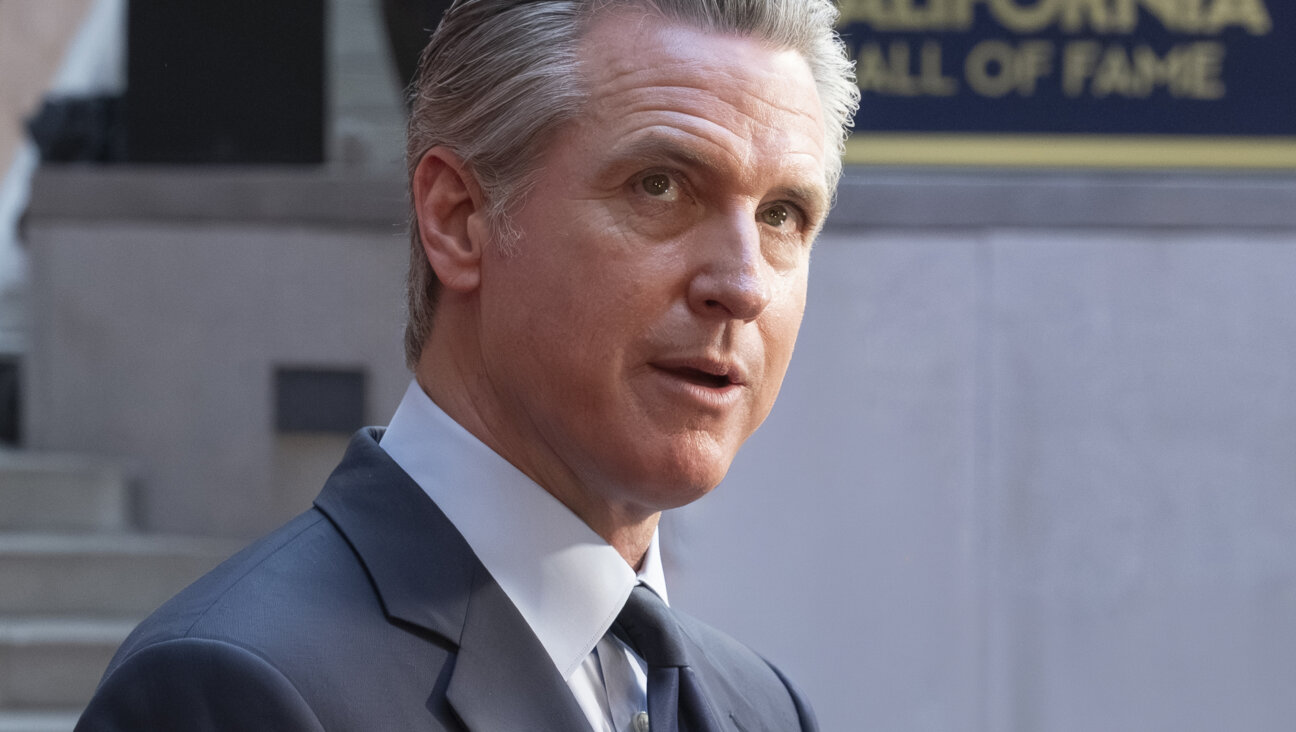
At the end of his first term, President Donald Trump deferred deportation for Venezuelans. More recently, he has turned hostile, claiming “hundreds of thousands” of Venezuelan migrants are members of what he calls “savage” and “bloodthirsty gangs” like the Tren de Aragua, which he says Maduro sent to “terrorize Americans.” Last year, he stripped the protective immigration status of more than half of the nation’s 1.2 million Venezuelan immigrants, targeting them for deportation. Now, his administration has suggested that, with Maduro in prison, Venezuelans can return home.
“They took the clown out of the circus, but they left the rest of the troupe,” Alicia told me. Maduro’s arrest has been celebrated by Venezuelan exiles, but she doesn’t feel it’s enough. The current acting president, Delcy Rodriguez, and her brother, Jorge, the National Assembly president, long allies of Maduro, are extremely dangerous, she said.
She’s hopeful that slowly things will improve, but she said that Trump’s unpredictable personality and disregard for the rule of law worry her, as both a Venezuelan and as a Jew living in the United States. While he has been friendly to Jews, she said she fears he could easily turn on them, and, she added, his focus with Venezuela is oil, not human rights. “They are not acting with solid democratic principles in the country,” she said, “but the United States [democracy] itself is also at risk.”
Even if Venezuela gets on the path to democracy, it will take time. Alicia doesn’t believe exiles will return home anytime soon. She herself doesn’t seem to be going anywhere. At 86, her energy goes into her weekly column for El Nacional. On the 80th anniversary of the liberation of Auschwitz, she wrote about her survivor aunt and uncle. Mostly, though, she focuses on current Venezuelan politics.
Her father had written from Caracas for Yiddish speakers thousands of miles away. Now, Alicia speaks to a Venezuelan diaspora.
In a recent column, she stressed the only people with the legitimate authority to run Venezuela and restore freedom to the masses are those who were fairly elected in 2024. “There is no other correct way to rescue the imperfect and perfectible democracy,” she concluded.
Florida, Alicia Freilich told me, is not her home; her community, her focus, and her heart remain in Caracas. It reminds me of something she quoted her father as saying: “I stayed back in Lendov, just my feet left.”
This is a moment of great uncertainty. Here’s what you can do about it.
We hope you appreciated this article. Before you go, we’d like to ask you to please support the Forward’s independent Jewish news this Passover.
This is a moment of great uncertainty for the news media, for the Jewish people, and for our sacred democracy. It is a time of confusion and declining trust in public institutions. An era in which we need humans to report facts, conduct investigations that hold power to account, tell stories that matter and share honest discourse on all that divides us.
With no paywall or subscriptions, the Forward is entirely supported by readers like you. Every dollar you give this Passover is invested in the future of the Forward — and telling the American Jewish story fully and fairly.
The Forward doesn’t rely on funding from institutions like governments or your local Jewish federation. There are thousands of readers like you who give us $18 or $36 or $100 each month or year.
Support our mission to tell the Jewish story fully and fairly.