Muslim and Sephardic Jewish college students are connecting over shared heritage
Amid campus tensions, participants in Mizrahi cultural events say shared food, language and other commonalities are creating unexpected connections.
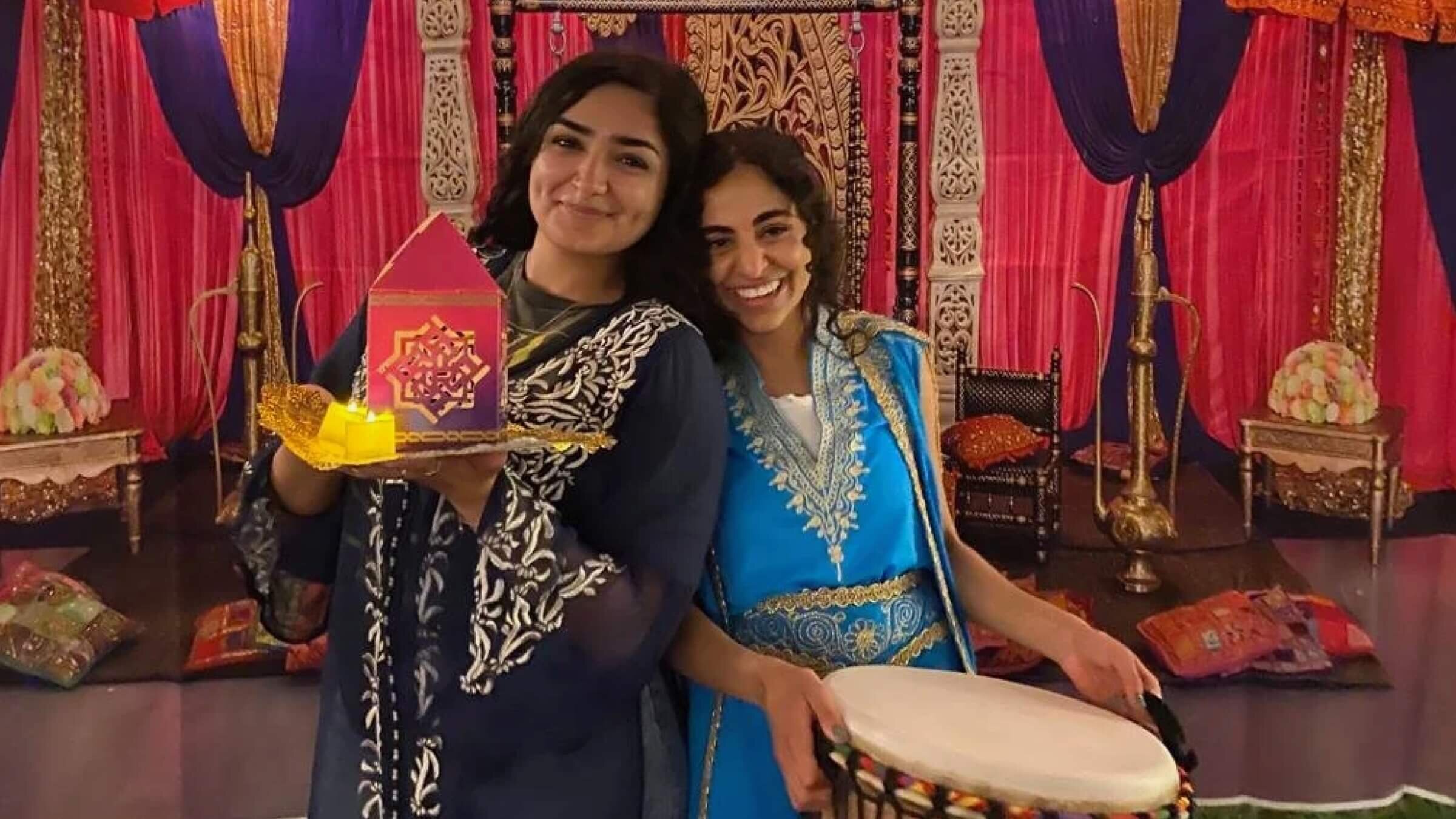
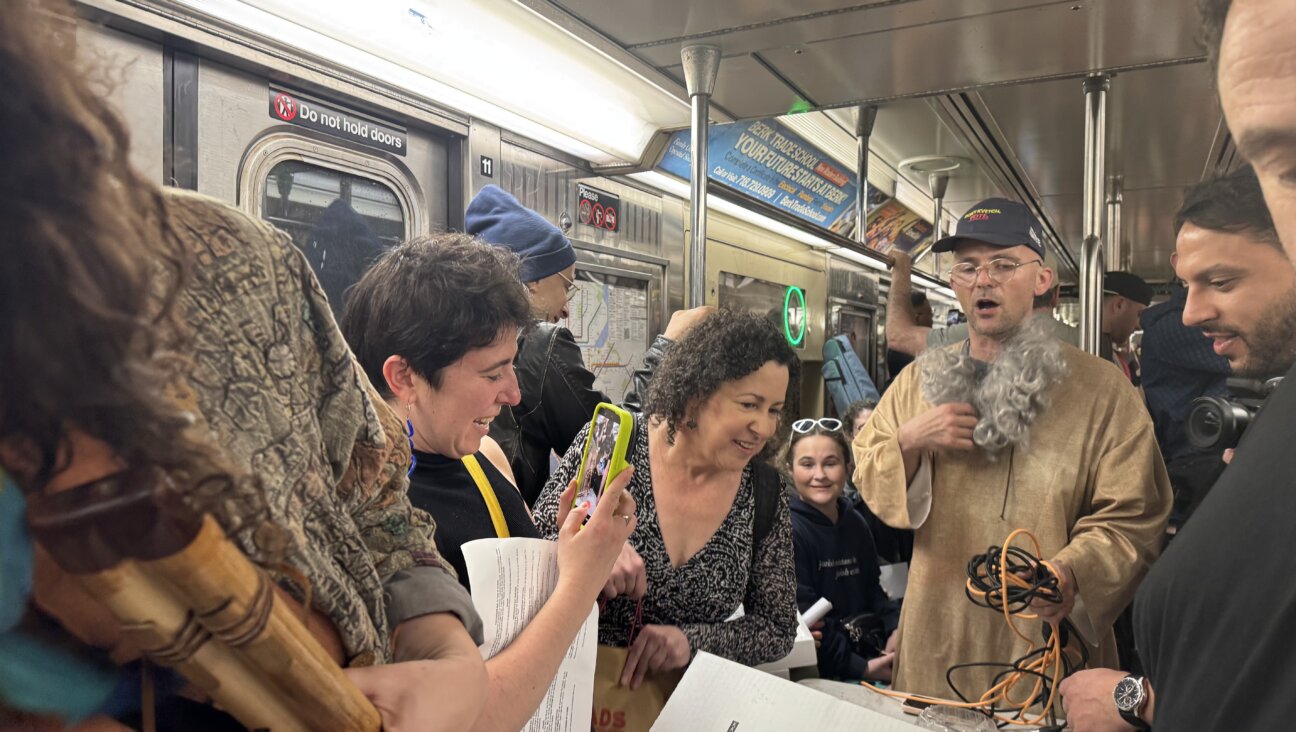
Students participate in a SAMi Sephardic heritage event at Florida International University. Courtesy of Manashe Khaimov
By Simone Saidmehr February 15, 2026
Joseph Pool, a senior at Rollins College in Florida, grew up hearing his Moroccan-born grandparents describe Mimouna, a traditional Moroccan Jewish celebration marking the return to eating chametz after Passover. Because Jewish families had cleared their homes of chametz for the holiday, Muslim neighbors would bring over fresh flour, butter, and milk, and together they would enjoy a chametz-filled meal.
Amid rising campus tensions after Oct. 7, Pool decided to host a Mimouna event of his own at Rollins College, and Muslim students showed up in droves.
“I spent years sleeping over at my grandparents’ house and hearing stories about the connection Muslims and Jews shared in Morocco,” Pool said. Seeing Muslim classmates embrace the celebration, he recalled thinking: “Wow, this is still the case today. There is still this connection ability here.”
At a moment when Jewish-Muslim tensions have intensified on campuses nationwide, some Sephardic and Muslim students say shared cultural heritage, rather than formal interfaith programming, is opening unexpected space for connection.
SAMi (Sephardic American Mizrahi Initiative) hosts Sephardic cultural programming on 16 college campuses across the country, including Persian music karaoke nights, hamsa painting events, and Mimouna celebrations. According to Manashe Khaimov, SAMi’s founder and CEO, roughly 10% of the 6,000 students the organization has engaged are Muslim.
The events are not intended to be spaces for interfaith dialogue, and that is a big part of their appeal. “Students don’t want to show up to an interfaith event unless [they’re] interested in political dialogue,” said Khaimov. Rather, students who are just looking for a place to engage with their culture show up to listen to the kind of music they grew up with, eat familiar foods, and hear Arabic or Farsi spoken.
For many Muslim students, SAMi events “smell the way it smells at home” as opposed to many Jewish spaces on college campuses that can feel “foreign” or “alienating,” said Khaimov. “For most of the Muslim students,” he said, “this is the first time even walking into Hillel spaces.”
Emily Nisimov, a Bukharian student from Queens College who organized Sephardic heritage events on her campus with SAMi, said, “The point of the events originally was to spread love and intimacy between Jewish students.” To her surprise, Muslim students started showing up. “Maybe they did just come for the food,” she said, “but the fact is that they stayed and they interacted with us and they tried to find a middle ground, which I was really impressed and shocked by.”
These connections are not limited to organized programming. Across campuses, Muslim students say friendships with Sephardic and Mizrahi peers have reshaped their understanding of Judaism, and Jewish students say the friendships have changed them, too.
Ali Mohsin Bozdar, a Muslim student at Springfield College who met Sephardic students through Interfaith America’s BRAID fellowship, observed this. “Jewish people from Middle Eastern backgrounds — most of the culture is similar. The food, the music, the language. I found that really fascinating,” he said. “It automatically binds you.”
Yishmael Columna, a Moroccan Jewish student and SAMi organizer at Florida International University, said the exchange has been mutual. “After Oct. 7”, he said, “it’s easy to give in to hate.” But getting to know Muslim peers complicated that instinct. “I wouldn’t be able to form opinions on many things as well as I do now if I didn’t have these conversations with them,” he said.
Sofia Houir, a Moroccan Muslim senior at Columbia University, said she had never met a Jewish person before attending college. Forming close friendships with Sephardic students on Columbia’s campus changed that. “Having friends who are Middle Eastern Jews definitely made Judaism more personal to me,” she said. “You can read about Judaism, you can study it, but talking to friends about how they grew up made me realize that, regardless of our religion, we’re all North African or Middle Eastern.”
Sofia formed a particularly close bond with an Iraqi Israeli student, Orpaz Zamir, during her time at Columbia, which she says deeply influenced her decision to travel to Israel for the first time. “Orpaz played a huge role in me going to Israel, just because I’m super close to him. And I really, really wanted to discover his culture, and to discover his country,” she said.
But that decision came with consequences.
Sofia said that her friendships with Jewish and Israeli students as well as her decision to travel to Israel caused peers in the Muslim and Arab communities on campus to stop speaking to her.
“I had some heated arguments with people who basically argued with me as if I was representing the Israeli government,” she said. “The frustrating thing was that they never had a conversation with me about it. They just presumed that me going was me validating Netanyahu’s politics or betraying the Palestinians.”
Nisimov said campus tensions at Queens College, part of New York City’s public university system, have not disappeared simply because of a heightened awareness of shared culture.
After October 7, she said, “A lot of claims were made that we should go back to where we came from.” “We tried to explain to them — just like you, we came from the same spot — but they didn’t want to listen.”
Even so, she said, her personal friendships have endured outside the realm of discourse on the Israeli-Palestinian conflict. “My Muslim friend and I, we’re not really on the political level of conversation,” she said. “But we have plenty of conversations about our cultures and our religions and the differences and similarities.”
Rethinking Jewish whiteness
For some students, these relationships have also challenged assumptions about Jewish identity and, thus, the tenor of political conversations.
Mian Muhammad Abdul Hamid, a Muslim student from Syracuse University, told the Forward that he “thinks the majority” of Muslim students on his college campus believe Jews only come from Europe. “When people think Jewish, the first thing that pops up is European.”
Bozdar agreed. “When I met these people, it confirmed for me that there are Jews from the Middle East,” he said. “Until you meet people, nothing is for sure.”
Columna recalled participating in a tabling event about Israel shortly after Oct. 7, when a Muslim student approached him to talk. The two later became friends. Weeks later, Columna asked why he had approached him rather than the other nearby Jewish students.
“He told me, ‘I decided to talk to you because, in contrast to the Ashkenazi Jews nearby, you were the only one who looked brown,” Columna said.
“I feel that sometimes the reason why these conversations do not work is because Muslim students don’t feel that Jews are even part of the Middle East,” said Columna. “Once you break that wall, and you find a common ground,” he said, “it becomes a more productive conversation.”
Zamir, an Iraqi Jewish student at Columbia University, described a similar experience. Though initially nervous about enrolling amid campus tensions, he said, “I never felt I was being attacked for my views.”
A Muslim friend later told him it was because he was seen as “from the region.”
“If you are Mizrahi,” Zamir said, “Muslim students respect what you say a bit more because if you’re from the region, you’re entitled to be there.”
But that dynamic also raises uncomfortable questions about which Jewish students are seen as having legitimate perspectives on campus.
“There’s this extreme position that Ashkenazi Jews shouldn’t be there or shouldn’t have this view because they’re ‘colonizers,’ but you’re okay because you’re part of the region,” he said.
“Unfortunately, this is the case, but it also makes my interactions with them easier,” he added.
While several students said their conversations about their shared background remain at the cultural level rather than getting political, Pool believes shared meals can create space for conversations that lean on these shared identities.
“If you share a meal with someone, you start with something in common,” he said. “You have the same food, maybe then you have the same family tradition of how to cook this food. And then suddenly, when you’re talking about politics, you can talk about just a political issue versus it being your entire identity.”
This is a moment of great uncertainty. Here’s what you can do about it.
We hope you appreciated this article. Before you go, we’d like to ask you to please support the Forward’s independent Jewish news this Passover. All donations are being matched by the Forward Board - up to $100,000.
This is a moment of great uncertainty for the news media, for the Jewish people, and for our sacred democracy. It is a time of confusion and declining trust in public institutions. An era in which we need humans to report facts, conduct investigations that hold power to account, tell stories that matter and share honest discourse on all that divides us.
With no paywall or subscriptions, the Forward is entirely supported by readers like you. Every dollar you give this Passover is invested in the future of the Forward — and telling the American Jewish story fully and fairly.
The Forward doesn’t rely on funding from institutions like governments or your local Jewish federation. There are thousands of readers like you who give us $18 or $36 or $100 each month or year.
Support our mission to tell the Jewish story fully and fairly.