An Arizona cemetery now requires mourners to leave before burial. A rabbi plans to sue.
Jewish families say a Scottsdale cemetery’s new policy requiring loved ones to leave before a casket is lowered disrupts a core burial ritual
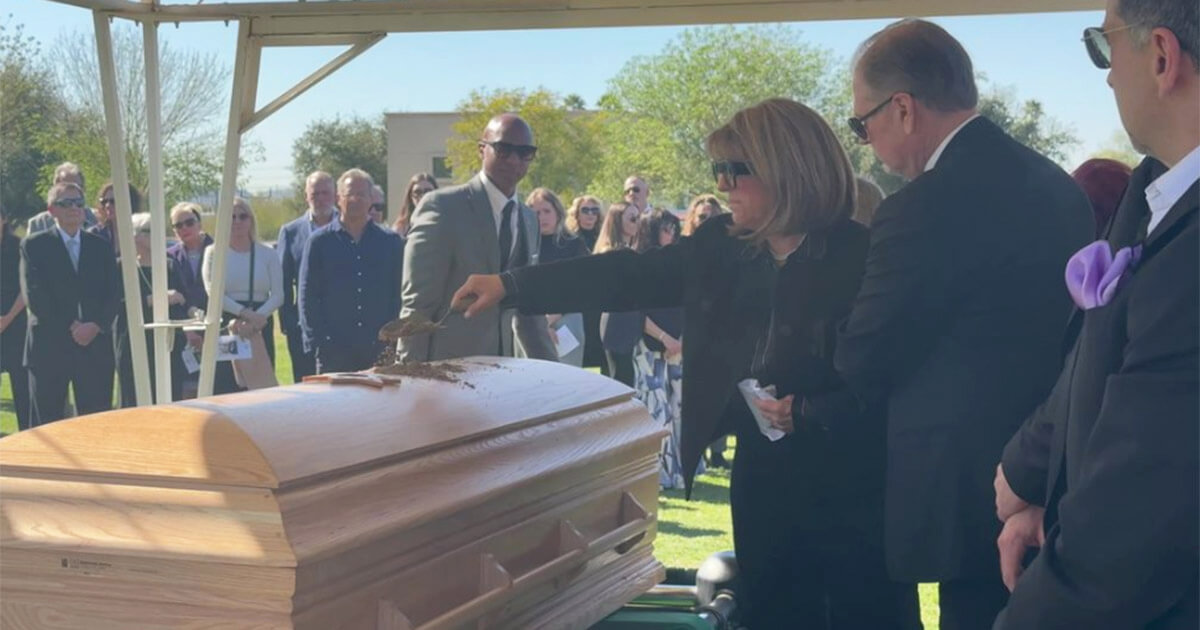
Cindy and Jim Carpenter place dirt on the casket of their daughter, Cortney, before it is lowered into the ground. Courtesy of Cindy Carpenter
By Benyamin Cohen February 24, 2026
At Jewish funerals, the final act is often the simplest: The casket is lowered into the earth, mourners take turns with a shovel, and the grave slowly fills. It is a moment many rabbis describe as the essence of burial — the point at which ritual, grief and physical reality meet.
At a cemetery in Scottsdale, Arizona, that moment now does not happen.
A new safety policy at Paradise Memorial Gardens requires families to leave before a casket is lowered into the ground. Cemetery officials say the rule, which applies to all funerals, is necessary to prevent accidents, likely involving uneven ground, heavy equipment and mourners overcome with grief. But Jewish clergy say the policy interferes with a core religious ritual, and one local rabbi is preparing a lawsuit.
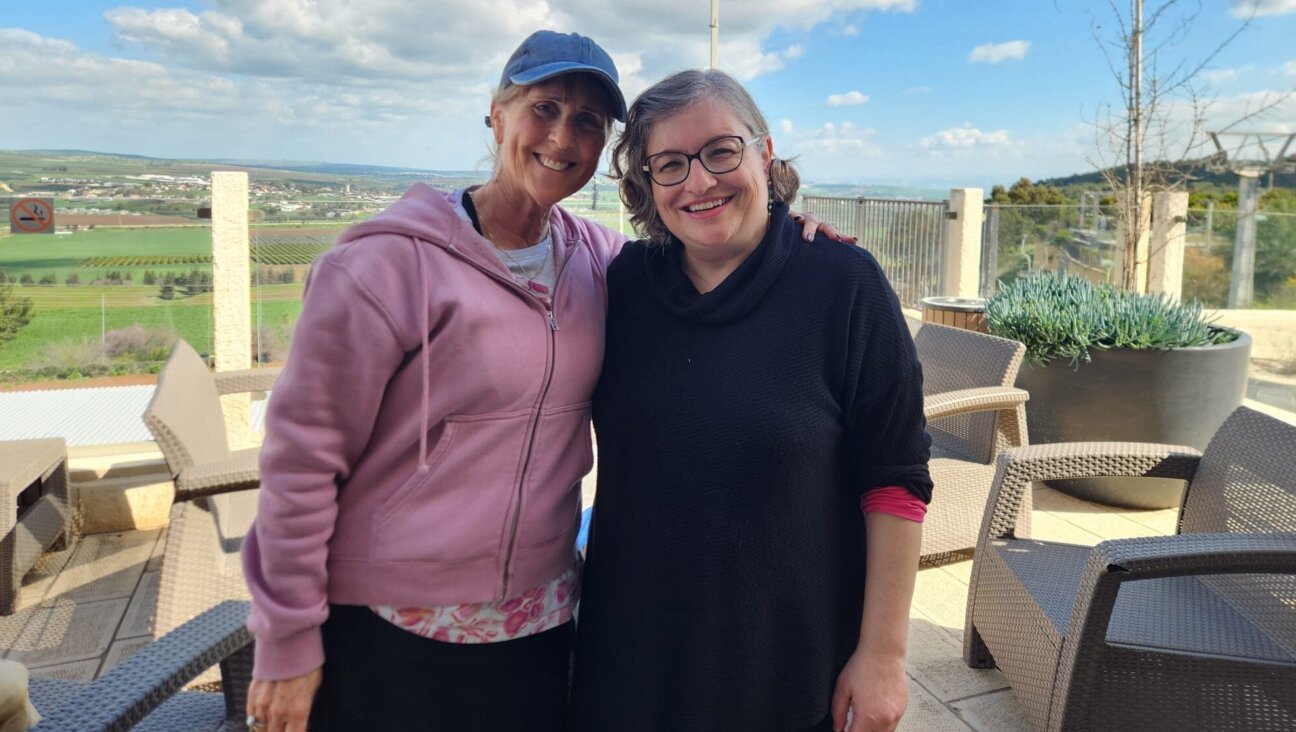
For Cindy Carpenter, 66, the dispute became painfully personal.
Her younger daughter, Chelsea, died at 33 of cancer in November. As Carpenter arranged the funeral, she and her husband purchased five burial plots at Paradise — for their two daughters, themselves and Chelsea’s husband — expecting the family would be buried together and according to Jewish practice. In total, the plots cost about $50,000, Carpenter said.
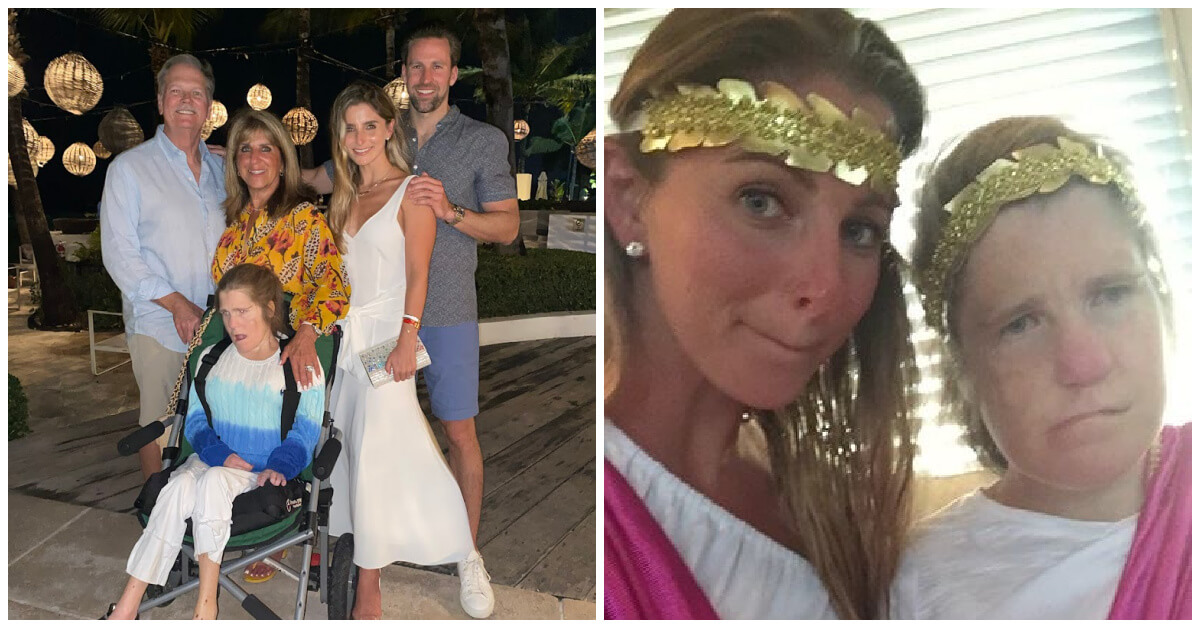
Eleven weeks later, Carpenter returned to the same cemetery to bury her older daughter, Cortney, who had significant disabilities and died at 40 after a long illness. Between the first funeral and the second, Carpenter said, the cemetery moved from compromise to refusal.
At Chelsea’s funeral, after intervention from local rabbis, mourners say they were allowed to stay but were placed around 20 feet away behind a rope while the casket was lowered. It was an imperfect accommodation Carpenter said she accepted. She understood the attempt to balance safety and tradition.
When Cortney died at the end of January, Carpenter said, that accommodation was gone. The standardized printed contract for the graveside service had added to it an additional handwritten note at the bottom stating that the casket would not be lowered until the “family has departed.” Carpenter said she was told that they had to leave the property altogether and that her request to stay inside a building at the cemetery and watch from a window was denied. Carpenter and her husband, Jim, signed under protest because the funeral was the next day.
Cindy added her own handwritten note: “I object to this awful policy,” while Jim wrote: “I acknowledge your policy & strongly object to the policy.”
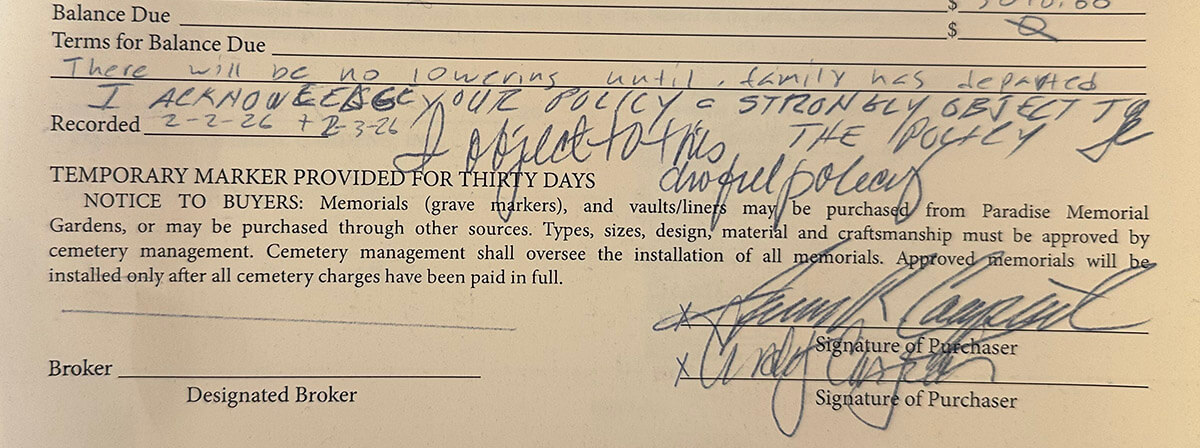
“We’re grieving parents for the second time in 11 weeks,” Carpenter said in an interview. “And you’re telling me I can’t stay to see my daughter buried?”
Rabbi Pinchas Allouche of Scottsdale’s Congregation Beth Tefillah, who officiated at the funerals for both of Carpenter’s daughters, confirmed that everyone who came for Cortney’s funeral was told they could not wait in their cars and had to leave the property. “It was horrible,” Allouche said.
Afterwards, Allouche sent his 24-year-old son back into the cemetery — dressed in a baseball cap and sunglasses — to pretend to be a random person visiting a nearby grave. “From there,” Allouche said, his son “took a video of the lowering of the casket and the covering of the grave for the family to have some slice of comfort in all this.”
Cemetery officials say the rule is not aimed at any one faith. Sabrina Messinger-Acevedo, CEO and owner of Messinger Mortuaries, which operates Paradise Memorial Gardens, said the cemetery is non-denominational and that its safety policies are applied uniformly. She acknowledged the new policy does “not fully align with certain religious traditions,” but said it was adopted after past incidents in which attendees failed to follow staff directions, creating safety concerns.
Messinger Mortuaries operates multiple funeral homes, cemeteries and crematories across Arizona, including Paradise Memorial Gardens, which has a large Jewish section.
Cortney’s funeral was Feb. 3, but the dispute did not gain attention until it was reported by the local news on Feb. 16. Carpenter said the delay was due to the nonstop coverage of the Tucson disappearance of Nancy Guthrie, the mother of Today show host Savannah Guthrie.
Eddie Dressler, a funeral director who has served Atlanta’s Jewish community since the 1990s, said he has never encountered a cemetery policy requiring families to leave before the lowering of a casket. “Having a rule like that is just crazy,” Dressler said.
The only similar restrictions he has seen are at some U.S. Department of Veterans Affairs cemeteries, which open multiple graves at once for logistical reasons — but even there, he said, exceptions are typically made for Jewish burial practices.
Safety and spirituality
Allouche said the rule removes what Jewish law considers the defining moment of burial. The lowering of the casket and the covering of the grave, he said, are not symbolic gestures but the final act of care for the dead — one traditionally performed with mourners present and often participating.
Allouche said he is working with an attorney and expects to challenge the policy, arguing that families who purchased plots in the cemetery did so with the expectation they would be able to bury loved ones according to Jewish practice. Applying the rule without exception, he said, effectively prevents that.
Rabbi Randy Brown, the resident rabbi at Arlington National Cemetery who has officiated at more than 900 funerals there, said safety concerns at gravesides are real. He has personally helped prevent people from falling in “dozens of times.”
But Brown said most cemeteries do not impose blanket bans. Instead, clergy, funeral directors and grounds crews typically coordinate accommodations, such as keeping families at a distance during the lowering and allowing them to return afterward to place earth on the grave, a practice that preserves both safety and ritual meaning.
Graveside funerals, he said, function both as sacred ritual and, with bulldozer equipment nearby, active work sites. Arlington, he added, approaches each burial individually — considering weather, terrain and family needs — rather than applying a single policy to every service.
Brown described the moment when earth strikes the casket as emotionally powerful for many mourners, recalling his own experience at his grandmother’s funeral as “visceral and cosmic.” That meaning, he said, is why cemeteries and clergy typically seek practical compromises. “It’s not one size fits all,” he said.
Religious disputes have surfaced elsewhere. In Atlanta in 2023, for example, a synagogue threatened to sue after a cemetery policy was seen by rabbis as interfering with Jewish burial customs. The cemetery eventually settled.
Allouche said he expects legal action to move forward. Some families who own plots at the cemetery have begun reconsidering their plans, he said, while others are waiting to see whether the cemetery revises its rules or reaches a compromise with community leaders.
Messinger-Acevedo said her company — founded in 1959 by her grandparents, Paul and Cora Messinger — has “deep roots in the community” and a commitment to serve families with “care and compassion.” She said they offer “partial refunds to families who choose to rescind the purchase of an unused burial space” — a complex decision for those with relatives already buried at the cemetery.
Carpenter said the dispute is not something she wanted to fight, but one she felt compelled to pursue. Nearly two decades ago, she founded Cortney’s Place, a day program for adults with disabilities created in her older daughter’s honor, and is now working with local clergy to create “Shabbat boxes” for Jewish patients in hospitals — small packages with challah, candles and grape juice inspired by Chelsea.
“I fought for them all of their life,” Carpenter said. “And this is no different.”
This is a moment of great uncertainty. Here’s what you can do about it.
We hope you appreciated this article. Before you go, we’d like to ask you to please support the Forward’s independent Jewish news this Passover. All donations are being matched by the Forward Board - up to $100,000.
This is a moment of great uncertainty for the news media, for the Jewish people, and for our sacred democracy. It is a time of confusion and declining trust in public institutions. An era in which we need humans to report facts, conduct investigations that hold power to account, tell stories that matter and share honest discourse on all that divides us.
With no paywall or subscriptions, the Forward is entirely supported by readers like you. Every dollar you give this Passover is invested in the future of the Forward — and telling the American Jewish story fully and fairly.
The Forward doesn’t rely on funding from institutions like governments or your local Jewish federation. There are thousands of readers like you who give us $18 or $36 or $100 each month or year.
Support our mission to tell the Jewish story fully and fairly.