Ronnie Eldridge was one of NYC’s toughest political minds
Friends and family of the longtime City Council member and activist, who has died at 95, remember her as a New York institution all by herself
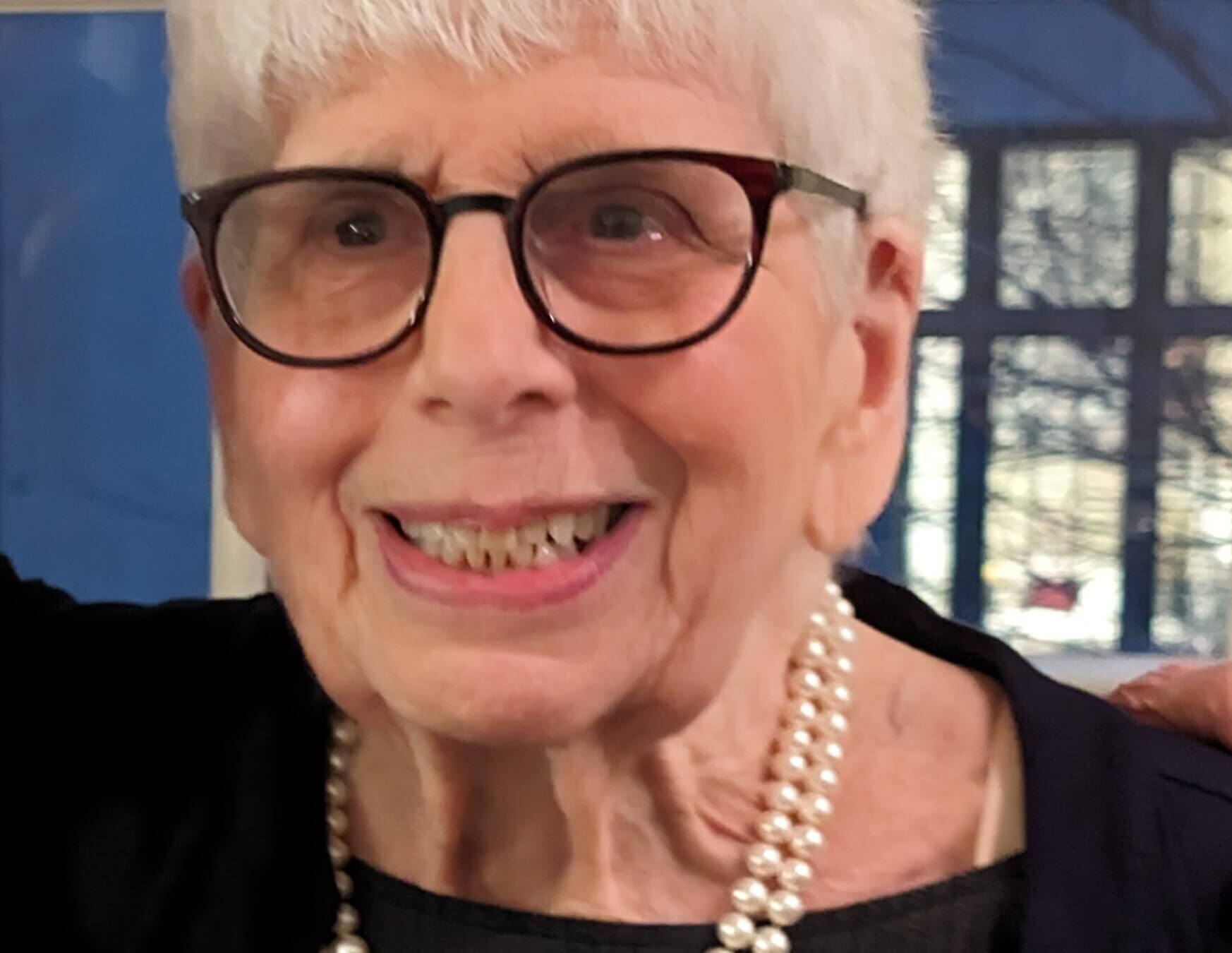
Ronnie Eldridge is remembered for her commitment to justice. Courtesy of Daniel Eldridge
When news arrived that Ronnie Eldridge had passed away at the age of 95, I thought back to the mid-1980’s when I made a number of visits to the apartment on Central Park West that she shared with the legendary newspaper columnist Jimmy Breslin and their blended family of six kids. At the time I was doing stories for NPR about Breslin and his passionate denunciation of municipal authorities for their neglect of the city’s homeless. Sometimes I’d record Breslin at home.
I couldn’t help noticing that almost every time I was in that apartment, Eldridge was on the phone with an autistic Jewish man named Ralph. I tend to notice things like that because my brother Michael, olav ha sholom, was autistic.
According to Daniel Eldridge, the eldest of the three Eldridge “kids,” his mother met Ralph at a Robert F. Kennedy presidential campaign event in 1968. Apparently, a campaign volunteer who was manning the door was giving Ralph a hard time.
Ronnie Eldridge intervened and declared that Ralph, who she had never met before, was her friend and he was to be allowed in. Daniel Eldridge told me his mother spoke with Ralph nearly every day after that.
Because my conversation with Daniel Eldridge was conducted on speakerphone, Eldridge’s granddaughter, Sophie Silberman, piped up.
“She looked after everybody with kindness and devotion,” Silberman said. “She knew that she was significant to Ralph and it didn’t take much to keep that part of his life alive and it meant the world to Ralph.”
Big shoes to fill
That kindness and devotion echoed in several recollections of Eldridge’s public life today.
Ruth Messinger, a former city council member who went on to lead the American Jewish World Service, told me that Eldridge “was very savvy.”
“She was a no-nonsense person,” Messinger said. “If there was an issue, if there was a problem, she would take it on. She was a seriously progressive presence for many, many years. She pursued the issues and stood up for justice.”
“She was just an institution all by herself,” said her successor in the New York City Council, Gale Brewer.
Eldridge represented an Upper West Side district in the Council for 12 years before being term-limited out of office. “Her shoes were very big shoes to fill,” Brewer said.
Eldridge was one of the sponsors of a 1992 law that required cameras be placed in facilities that house automated teller machines. She was motivated to win passage, having been held up using an ATM in her neighborhood.
Brewer is one of many public officials and activists who are remembering Eldridge’s advocacy on behalf of the most vulnerable members of society, including the LGBTQ community and women who have been abused by their spouses or boyfriends. She remembers Eldridge visiting incarcerated women who were doing time for crimes linked to their experience as battered women.
“She put that issue on the map,” Brewer told me.
The conscience of the Lindsay administration
Eldridge was one of the anti-war activists in the 1960’s who made mountains move on the national level. During the war in Vietnam she helped found the “Dump Johnson” movement, which in turn sparked President Lyndon Johnson’s decision to forego re-election in 1968. That prompted Robert F. Kennedy to enter the race. Eldridge was keen on RFK. She was a young mother in 1964 when she volunteered for his campaign for the U.S. Senate.
During the ’68 presidential campaign, RFK said of Eldridge, “Behind that sweet, motherly face, Ronnie Eldridge has one of the toughest political minds in the city, if not the country.” She used the quote on a campaign poster for her unsuccessful bid to become Manhattan Borough President in 1977.
Eldridge’s activism also paid dividends on the local level. She served as the coordinator of Democrats for Lindsay and helped the Republican mayor win re-election in 1969 on the Liberal Party line. She was a political strategist for Lindsay and was known as the conscience of the Lindsay administration.
Around that time, she was part of a group that included the singer Harry Belafonte challenging the license of television station WPIX. The challenge dragged on for nine years but in 1978 an out of court settlement put about $10 million into the entity that challenged the license. I learned about all this when I asked Eldridge how she came to possess that very valuable Central Park West apartment.
A tabloid life
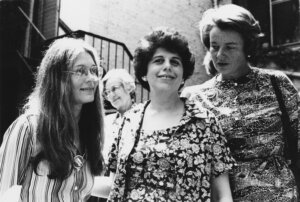
A number of Eldridge’s close friends have remarked that being married to Jimmy Breslin may’ve come with some perks, but it must’ve been a challenge as well. For those of us who read Breslin religiously in the New York Daily News and New York Newsday, some of the gruff newspaper columnist’s more entertaining columns chronicled the foibles of the interfaith family’s Upper West Side life together.
This shtick inspired a pilot for a 1989 CBS sitcom about a NYC newspaper columnist and a mayoral aide. American Nuclear was co-written by Breslin but the network ultimately decided not to pick up the series.
In a 2004 for a radio documentary interview about her husband, I asked Ronnie Eldridge about having her domestic life portrayed in a tabloid
“The first time it happened everybody was hysterical,” she said. “I had a daughter in Paris. She called from Paris and was in tears. A daughter at college, she was also in tears. And my son in California said, ‘What’s going on?’ And then Jimmy’s family said, ‘Oh, just don’t pay any attention to it.’”
“When I was in the city council, I would just pretend that I didn’t read the paper. He would write articles. condemning and attacking colleagues of mine. I’d have to go into the city council and, see somebody that he’d just called unmentionable names. So, I just learned to leave it alone.”
A memorial service will be held for Ronnie Eldridge on Wednesday, March 11 at 4:30 p.m. at the New York Society for Ethical Culture, 2 West 64th Street in Manhattan.
This is a moment of great uncertainty. Here’s what you can do about it.
We hope you appreciated this article. Before you go, we’d like to ask you to please support the Forward’s independent Jewish news this Passover. All donations are being matched by the Forward Board - up to $100,000.
This is a moment of great uncertainty for the news media, for the Jewish people, and for our sacred democracy. It is a time of confusion and declining trust in public institutions. An era in which we need humans to report facts, conduct investigations that hold power to account, tell stories that matter and share honest discourse on all that divides us.
With no paywall or subscriptions, the Forward is entirely supported by readers like you. Every dollar you give this Passover is invested in the future of the Forward — and telling the American Jewish story fully and fairly.
The Forward doesn’t rely on funding from institutions like governments or your local Jewish federation. There are thousands of readers like you who give us $18 or $36 or $100 each month or year.
Support our mission to tell the Jewish story fully and fairly.