‘This isn’t the Gov. Newsom that we know’: One week after apartheid remark, calls to reconsider remain unheeded
Jewish leaders defended Newsom from recent backlash. They still want answers.
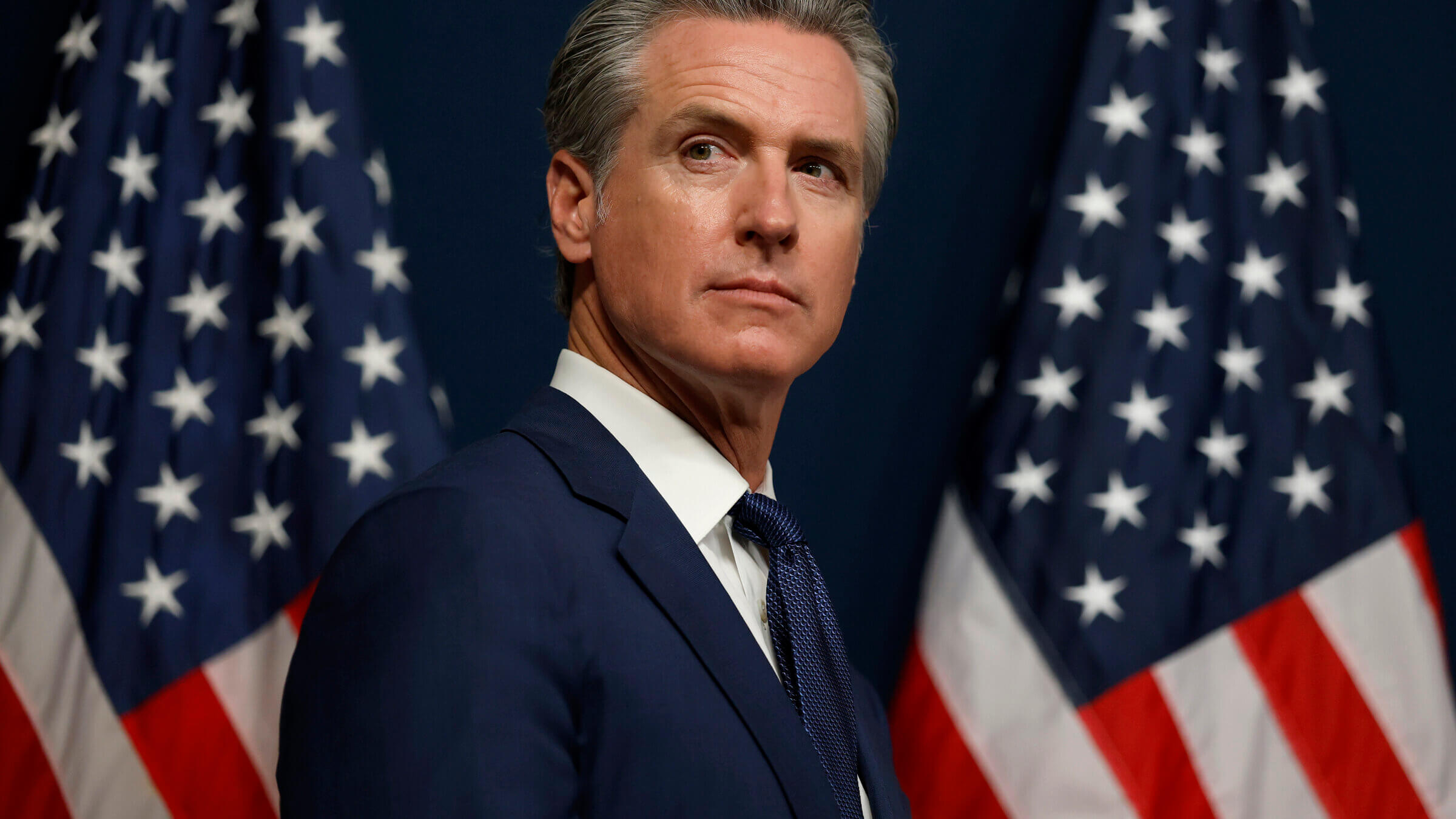
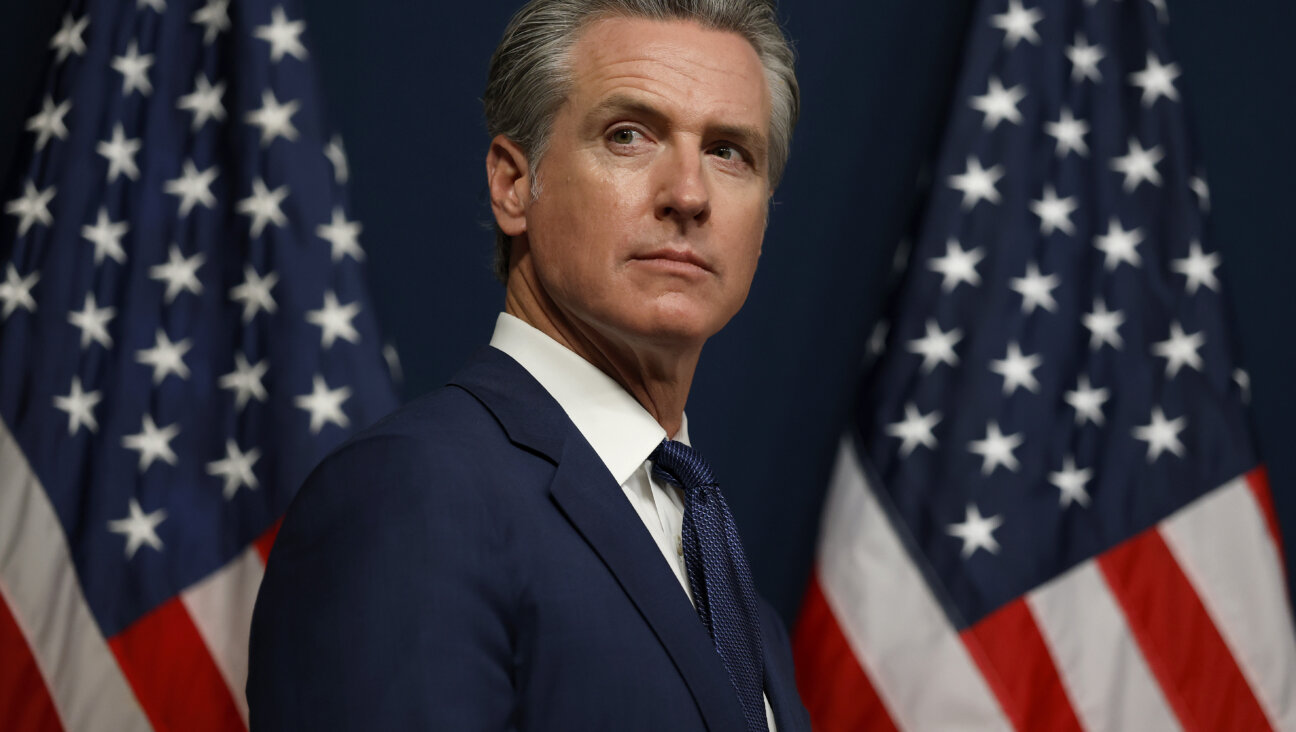
California Gov. Gavin Newsom said comments comparing Israel to an “apartheid state” referred to a direction Israel was headed, but the clarification has failed to satisfy some Jewish leaders. Photo by Justin Sullivan/Getty Images
By Louis Keene March 11, 2026
One week after California Gov. Gavin Newsom caused a stir by using the term “apartheid” to describe Israel, Jewish leaders in the state and beyond — have tried in vain to get him to walk back his statement.
Those seeking answers include allies of the term-limited governor, a likely presidential candidate, who have defended his record and even the comment itself.
Newsom said March 3 on a podcast that Israel had been talked about “appropriately as sort of an apartheid state,” and suggested that a time may come when the U.S. should reconsider its military aid to Israel.
Some Jewish leaders have said the apartheid comment had been taken out of context, and representatives of Jewish groups who met with the governor’s staff following Newsom’s remark called the conversation constructive. But Newsom has not backtracked in public appearances since then, leaving those leaders split on whether a serious contender for the 2028 Democratic nomination — long seen as a champion of Jewish causes — is plotting a new course on the national stage.
Newsom’s clarification two days later — noting that he was referencing a Thomas Friedman column in the New York Times about the direction Israel was headed — offered them little succor.
“It’s out of step,” said David Bocarsly, executive director of Jewish California, a group that represents more than 30 Jewish community organizations in the state. “This isn’t the Governor Newsom that we know.”
Newsom’s office did not respond to an inquiry.
‘Sort of an apartheid state’
Newsom made the remark in a live taping of Pod Save America, a podcast hosted by former Obama administration staffers Jon Favreau and Tommy Vietor. The duo, who are among the Democratic mainstream’s most vocal Israel critics, asked Newsom whether he thought the time had come to reevaluate American military support for the country.
In an extended response, Newsom brought up Israeli Prime Minister Benjamin Netanyahu.
“The issue of Bibi is interesting, because he’s got his own domestic issues,” Newsom said. “He’s trying to stay out of jail. He’s got an election coming up. He’s potentially on the ropes. He’s got folks, the hard line, that want to annex the West—the West Bank. I mean, Friedman and others are talking about it appropriately as a sort of an apartheid state.”
As to whether the United States should consider rethinking military support for Israel down the road, Newsom replied, “I don’t think you have a choice but that consideration.”
Newsom’s use of the term and apparent willingness to break from pro-Israel orthodoxy sent heads spinning. Jewish Insider described the interview as a “hard left” shift. A column in the Jewish Journal of Greater Los Angeles assailed Newsom for “finger in the wind politics.” And secular outlets like Politico and The Guardian reported that Newsom had likened Israel to an apartheid state.
Even organizations that have historically enjoyed a collaborative relationship with Newsom publicly condemned the remarks. Jewish California, whose member groups include the state’s local Jewish federations, took to Instagram to call them “inflammatory.”
Newsom said in a subsequent live appearance March 5 that he was referencing Friedman’s recent assertion that Israel annexing the West Bank without giving Palestinians equal rights would create an apartheid system.
“I was specifically referring to a Tom Friedman column last week, where Tom used that word, ‘apartheid,’ as it relates to the direction Bibi is going, particularly on the annexation of the West Bank,” he said. “I’m very angry with what he is doing.”
The clarification wasn’t strong enough for the Jewish California coalition. Bocarsly told The Jewish News of Northern California last week the groups hoped to see a definitive public statement from the governor that he continues to support funding for Israel’s defense and that he “doesn’t believe that a thriving, pluralistic and democratic society, as it is in its current state, is an apartheid state.”
Tye Gregory, chief executive of the JCRC Bay Area — a Jewish California member group — added to the outlet that “we need to hear directly from the governor.”
The coalition left its conversation with Newsom officials believing such a statement was forthcoming, but Bocarsly said his optimism was fading.
“It’s been several days, and we haven’t seen the clarification that we had hoped,” Bocarsly said. “And we’re still waiting.”
A loaded word
Some international and Israeli human rights organizations say Israel’s occupation of the West Bank and the treatment of Palestinians in the territory already constitutes apartheid.
The term was originally used to describe the system of institutionalized segregation in South Africa that granted the minority white population official higher status, denied nonwhites the right to vote and enforced a range of other forms of economic, political and social domination. Those applying the apartheid term to Israel point to the Israeli citizenship, voting rights, freedom of movement and legal protections granted in the West Bank to Israeli residents but not Palestinians in the territory.
But many Jews say that any charge of apartheid — whether referring to the present or a hypothetical future — oversimplifies the Israeli-Palestinian conflict and is used as a cudgel to delegitimize the Jewish state, where within its boundaries Israeli Arabs can vote and travel freely.
Israel annexing the West Bank — a stated goal of far-right ministers in the Netanyahu coalition like Itamar Ben Gvir and Bezalel Smotrich — would replace the premise of Palestinian sovereignty in the territory, which is officially governed by the Palestinian Authority, and enshrine the two-tier system. Such a step, Friedman wrote in a Feb. 17 column, would amount to apartheid.
“It's been several days, and we haven't seen the clarification that we had hoped. And we're still waiting.”David BocarslyExecutive Director, Jewish California
Bocarsly believed that Newsom’s reference to apartheid had been misinterpreted — even after the governor clarified his views — as describing Israel today, rather than a future scenario.
Nevertheless, he said, by invoking the term “apartheid” at all the governor had played into an effort among Israel’s detractors to make use of terms like “apartheid” and “genocide” to describe the Jewish state’s actions a litmus test for elected leaders.
Only a month earlier, Democratic State Senator Scott Wiener — then the co-chair of California Legislative Jewish Caucus — called Israel’s war in Gaza a genocide, after first declining to during a congressional candidate debate and getting jeers in response.
“For someone as close to our community as Gavin Newsom is, I think it was disappointing and painful for a lot of people to see that he was falling into this test,” Bocarsly said. “We want to know that when it comes down to it, that he is willing to avoid criticizing Israel in that way.”
Halie Soifer, chief executive of the Jewish Democratic Council of America, said Newsom’s initial comments had been taken out of context, and she was satisfied with his later clarification. Instead, she objected more to Newsom’s suggestion that the U.S. might eventually withhold military aid to Israel. The JDCA rejects withholding or conditioning such aid in its platform.
Still, while the “apartheid” phrase got the most attention, Soifer suggested it was just as revealing when — in the same podcast appearance — Newsom had described Israel’s rightward turn under Netanyahu as “heartbreaking.”
“It’s indicating his emotions are actually in this but also disagreement with the policies of the current Israeli government,” Soifer said. “And that is a view that polling has consistently shown is held by the vast majority of American Jewish voters.”
But she acknowledged that further backtracking would help, noting that she had listened to the section of the podcast multiple times to get a clear idea of his intent.
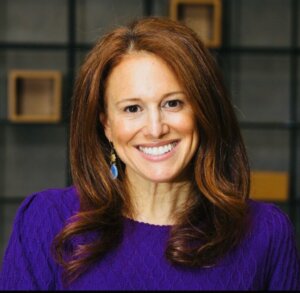
“I don’t think the average person is doing that,” Soifer said in an interview, “and he shouldn’t assume that either.”
The governor you know
The comments seemed to break with Newsom’s track record of verbal and legislative support for Jewish life both in the state and in Israel.
During his seven years in the governor’s office, he has funded the largest nonprofit security grant program in the nation, signed a landmark bill aimed at addressing antisemitism in public education and poured some $50 million into Holocaust survivor assistance programs. He also visited Israel to meet with Oct. 7 survivors less than two weeks after the attacks.
That made Newsom’s failure to hedge in a more fulsome way all the more confounding for his Jewish allies.
Gregg Solkovits, president of Democrats for Israel Los Angeles, a Democratic party club, thought the governor had been intentionally vague — and was intentionally waiting out the Jewish criticism — to “protect his left flank” as a future presidential candidate.
“He knows that in the upcoming election, there will be Bernie-supportive candidates who are going to be running for the nomination, and he will be attacked for being too pro-Israel, which he has been consistently,” Solkovits said. “Would I wish that he had not taken that approach entirely? Of course. I also understand he’s running for president.”
Soifer offered that Newsom might just be waiting for the right opportunity.
“He doesn’t actually legislate on this particular issue, so perhaps he feels he doesn’t need to clarify,” she said. “But I think it would be helpful for him to clarify that, especially if he’s seeking an opportunity at some point in the future to weigh in on such decisions.”