Scallion fights, soft matzo and other Passover traditions live on around the world
From India’s animal blood on doorposts to Ethiopia’s all-chickpea pre-Seder diets, the Jewish diaspora has developed distinctive traditions that endure.
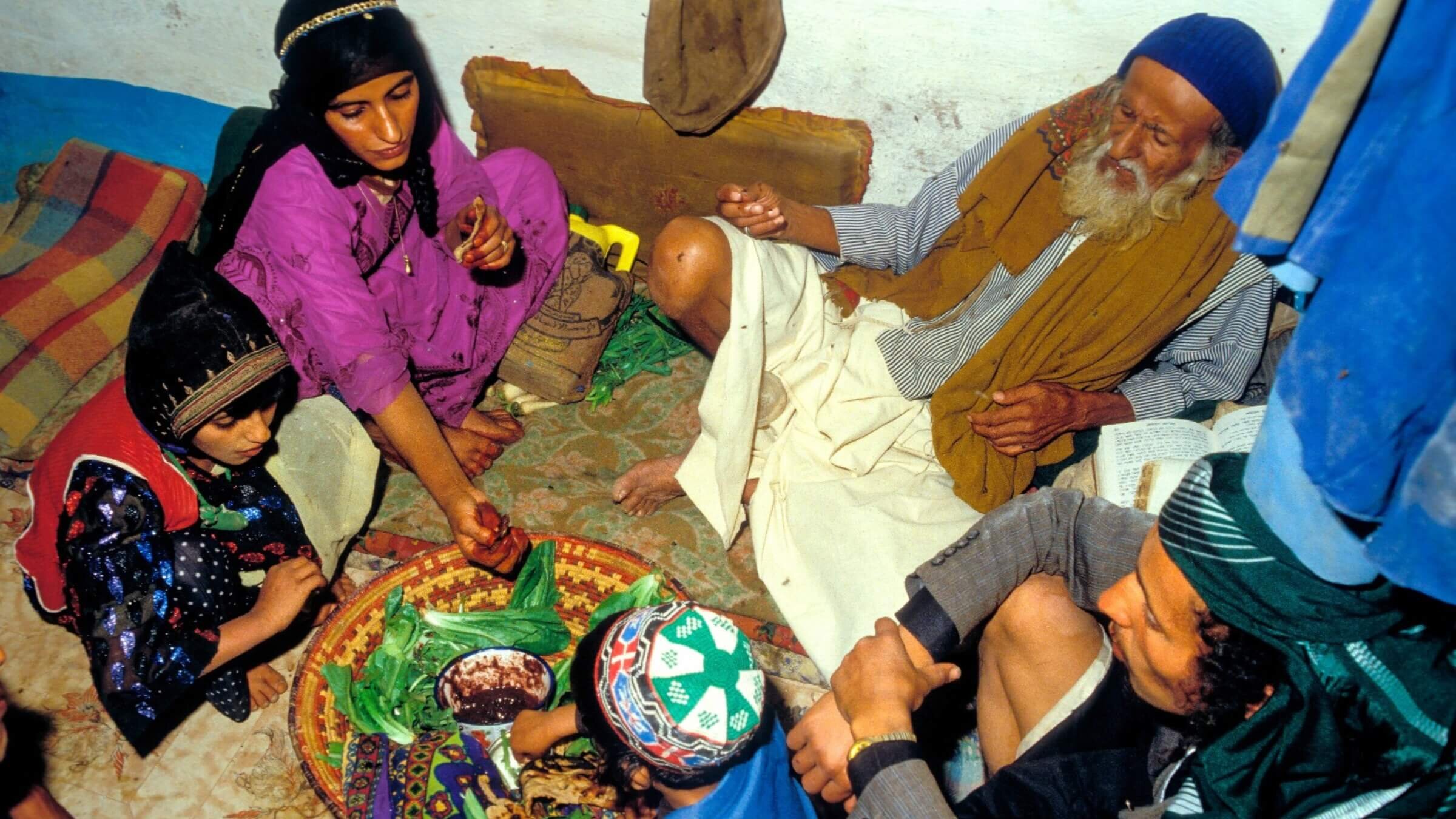
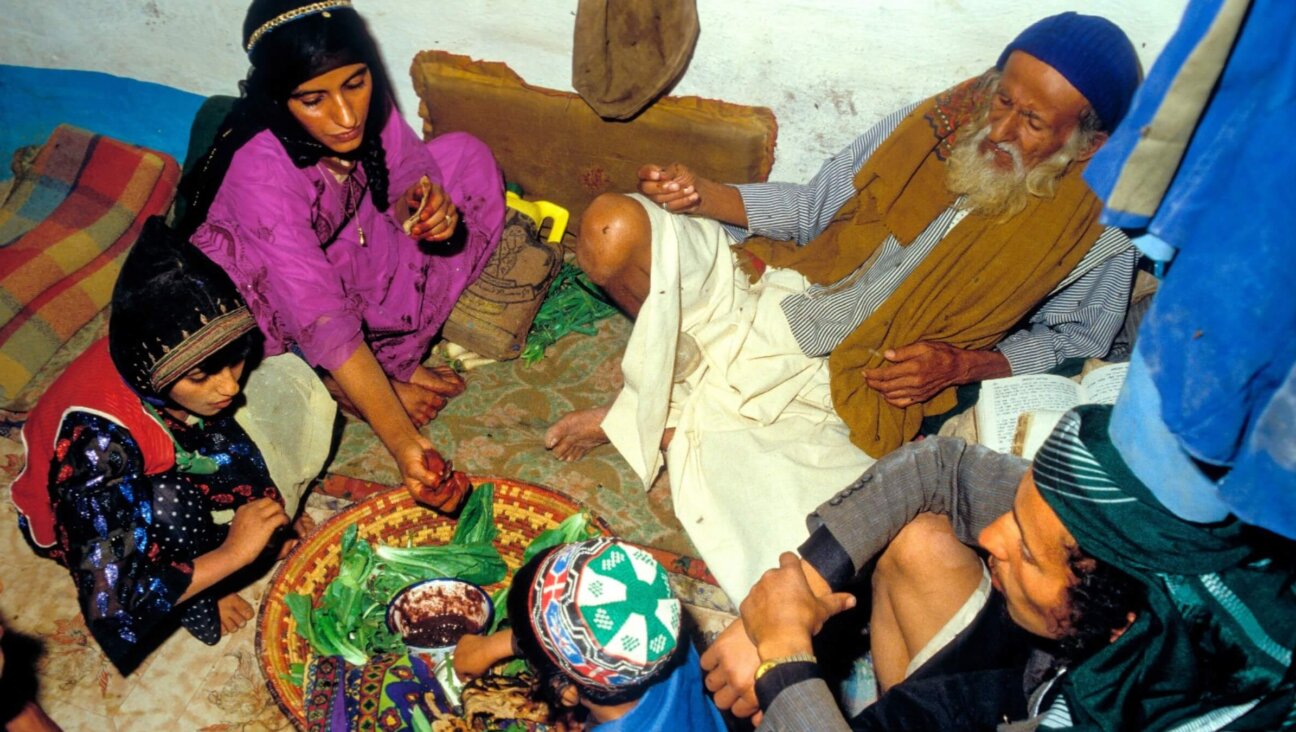
A Yemenite Jewish family celebrates Passover in 1988 Photo by Naftali Hilger

By Simone Saidmehr March 31, 2026
Indian Jews smear animal blood on their doors. Ethiopian Jews gorge on chickpeas. Iraqis dump wine after the meal. And matzo might be soft and squishy, depending on where in the world the recipe hails from.
Adapting Passover to the cultures and conditions of the places where they lived is a practice Jews have sustained for centuries around the globe. Today, even as many of these communities live far from their countries of origin, these regional traditions continue in the diaspora. Here are some of them.
India: Blood on the door, rice in the tandoor
On Passover in India, members of the Bene Israel community mark their doorposts with blood.
Traditionally, families slaughtered cows or goats and pressed bloody handprints onto their homes, echoing the biblical commandment in the Exodus story. While some Indian Jews continue that tradition, it has adapted over the 20th century. Today, a kosher butcher in Mumbai saves papers stained with the blood of animals he ritualistically slaughters and distributes them to community members so they can continue the tradition.
“It’s the commandment to put the blood on the door,” said Yael Jhirad, a Mumbai-based member of the Bene Israel community, who called the practice a “hallmark” of their tradition.
For Indian Jews, the food eaten during Passover looks entirely different than the usual fare, Jhirad said. Bene Israel Jews avoid dried spices, a staple of Indian cooking, out of concern that they may contain chametz, the leavened grain products forbidden during Passover, which can result from even small amounts of fermentation.
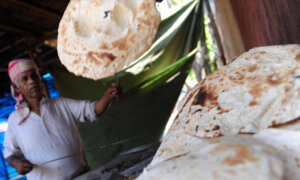
Rice flour is also central to Indian Passover traditions. Until the modern era of commercial food manufacturing, its preparation was labor-intensive: A month before the holiday, rice would be washed, dried in the sun and ground in mills used exclusively by the Jewish community to avoid contamination. Women gathered for weeks to prepare the milled rice, eventually turning it into flatbread. Before gas stoves, families even constructed clay tandoor ovens specifically for Passover.
Today, only about 3,500 Jews remain in India, most of them in Mumbai. Many now celebrate at communal Seders held at the city’s five active synagogues. “It becomes a great way to meet the community and be together,” Jhirad said.
Ethiopia and Yemen: A Passover time capsule
Because Jews in Ethiopia and Yemen were geographically isolated for centuries, many of their Passover traditions developed with little outside influence.
Ethiopian Jews, known as Beta Israel, practice a form of Judaism rooted primarily in the Torah, without later rabbinic additions. Because of this, they do not traditionally use a Haggadah to tell the story of the Israelites leaving Egypt. Instead, in Ethiopia, the Jewish community gathers outside the local synagogue on Passover to hear the story of the Exodus recited by religious leaders known as kesim. Today, Ethiopia is considered to be home to the largest Seder in the world, where 4,000 Jews congregate in Gondar, Ethiopia, to hear the Passover story told.
According to Brhan Leibman Worku, an Ethiopian Jew who lives with her family in Israel, preparation for the holiday in Ethiopia takes around three weeks. Many fast before the holiday and immerse themselves in water, often at a nearby river, to “enter the holiday with a sense of purity and intention,” and “become spiritually ready to receive freedom.”
Before the holiday begins, Worku said Ethiopian Jews consume a strict diet of chickpeas, which, in Ethiopian Jewish custom, were thought to purify the gut and digestive system.
Ethiopian Jews maintained the biblical tradition of animal sacrifice during Passover. But when many immigrated to Israel in the 1980s and encountered rabbinic Judaism, Worku said, Ethiopian Jews were shocked that other Jewish communities no longer practiced the custom. “They were like, we’ve been doing this for thousands of years,” she said.
Today, approximately 13,000 Jews remain in Ethiopia, with most having immigrated to Israel. Many of Israel’s 150,000 Ethiopian Jewish citizens purchase and share a cow or sheep between several families to eat during the holiday to commemorate that earlier practice.
Ethiopian matzo also differs from the crisp, cracker-like version familiar to many Jews and was instead baked fresh daily to maintain a soft texture. In Ethiopia, only post-menopausal women prepared it, a practice tied to concerns about ritual purity. That tradition is still kept by many Ethiopian Jewish women in the diaspora.
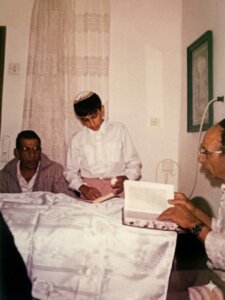
In Yemenite communities, too, matzo is soft, warm and flexible, resembling a laffa bread. It is traditionally mixed, shaped and baked in clay ovens, all in under 18 minutes to ensure kashrut. ”In Yemen, the community did not settle for pre-holiday baking; instead, they insisted on baking fresh matzo every single day of the festival,” said Shai Naggar, an expert on Yemenite Jewry. The Yemenite matzo is said to be most similar to what the Israelites might have eaten during their escape from Egypt.
Yemenite Jews do not use a formal Seder plate; instead, the entire table becomes one large display, with greens arranged around the edges and symbolic foods placed at the center. The Haggadah, which arrived in Yemen 350 years ago, is not read in turns but “recited in a loud, communal chant by all participants,” according to Naggar.
The only solo of the night comes when the youngest child recounts the story of Exodus in Judeo-Arabic: “Ma Khabar Hadha Al-Laylah” — “What is the story of this night?” It is often told through folk tales, one of which is “the story of an Egyptian elderly woman whose dough-made idol was eaten by a dog.” It is intended, said Naggar, to illustrate the futility of idols.
Iraq: an Seder in Arabic
While only three Jews remain in Iraq today, Iraqi Passover traditions continue in the diaspora — often in Arabic.
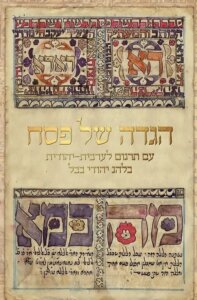
Iraqi Haggadot frequently include Hebrew text alongside translation and commentary in Judeo-Arabic. “In the old times, the women and children didn’t know Hebrew or Aramaic,” said Lily Shor, an Iraqi Jew. “So they translated it into Arabic for them to understand.” Several of the songs in an Iraqi seder are also sung in Iraqi Judeo-Arabic, an endangered language only spoken natively by 6,000 people in the world, including “Ha Lachma Anya” (“This is the bread of affliction”).
Unlike many Ashkenazi Seders, where fingers are dipped into wine and then back on plates to symbolize the plagues, Iraqi families pour the wine from one cup to another and then discard it outside the home — sometimes down the street — to ensure the plagues remain far away. Children are told to close their mouths during the recitation, and the food on the table is covered, all to ward off bad luck.
At the end of Passover, Iraqi Jews traditionally ventured out into wheat fields, placing the green stalks over their shoulders, eating them, and blessing one another with “santak khdhra” (a green year) to call in a prosperous year ahead. “I still remember the taste,” said Shor, who continues the tradition today with her family in Israel, using myrtle branches instead of wheat. Many diaspora families use leafy greens to continue the tradition as well.
Moroccan Jews go out with a bang
For Moroccan Jews — most of whom now live outside Morocco, especially in Israel — one of the most distinctive celebrations comes at the moment the holiday ends, known as Mimouna.
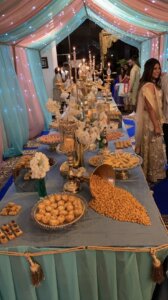
In Morocco, Muslims and Jews came together to close out the holiday together. Because Jews had no flour or other chametz ingredients in their homes as the holiday ended, Muslim neighbors would bring over chametz-filled ingredients for their Jewish neighbors to cook with. Joseph Pool, a Moroccan Jew, recalled his Rabat-born grandparents describing Muslim neighbors bringing over “fresh flour, fresh butter, fresh eggs, and the Jewish neighbors would make traditional pancakes and sweets. You would go from house to house, enjoying the food.”
Now in the diaspora, Moroccan Jews continue the Mimouna celebration by hosting parties to commemorate the holiday’s end. Traditional Moroccan dance music is played, and an anise-flavored Middle Eastern spirit called Arak is served along with an assortment of fried Moroccan treats. “Moufleta,” a yeasted pancake drenched in butter and honey, and “sfenj,” a Moroccan-style sugar-covered fritter, are classic Mimouna desserts.
The Persian seder gets physical
In Persian Jewish households, the Seder takes a physical turn.
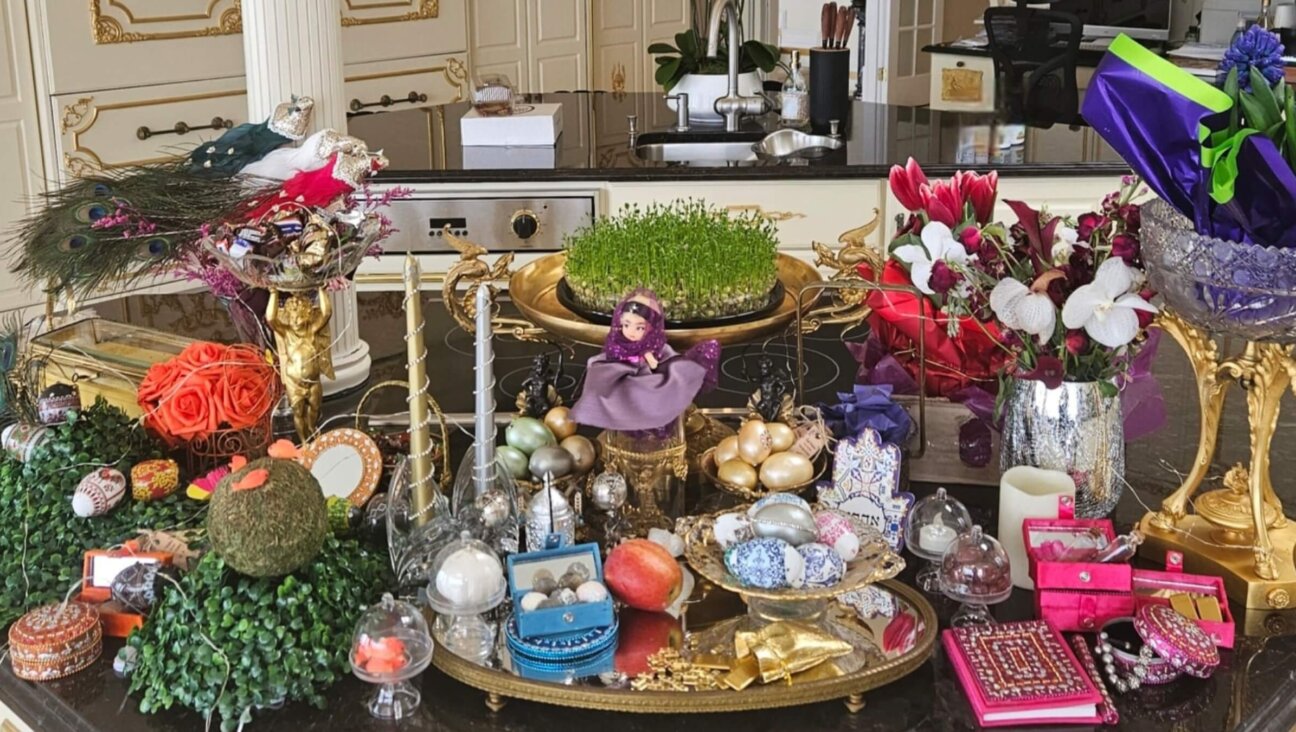
During Dayenu, family members hit one another with bunches of scallions and herbs, symbolizing the whips used during slavery in Egypt. “All of the courtesy and politeness of Persian culture is washed away,” said Tannaz Sassooni, an Iranian Jew who lives in LA. “Grandkids go at their grandparents, parents get their aggressions out on their kids, cousins, aunties, everyone gets into it.”
The origins of the custom are unclear, though some suggest it may stem from the abundance of greens and herbs in Persian cuisine.
Many Persian Jews also refrain from eating dairy during Passover out of an abundance of caution that it may have been contaminated with chametz, since dairy products in Iran were often handled by non-Jews. At the end of the holiday, known as Shab-e Sal, families celebrate with a dairy-rich meal, including yogurt dishes and a cold rice porridge.
For Sassooni, the tradition remains deeply personal — a reminder that in the diaspora, Passover customs are preserved even when the conditions that shaped them no longer apply. When she once asked her mother why they continued avoiding dairy in the United States, where kosher dairy options are readily available, her mother became emotional. “Because that’s what my dad did,” she said, teary-eyed.
This is a moment of great uncertainty. Here’s what you can do about it.
We hope you appreciated this article. Before you go, we’d like to ask you to please support the Forward’s independent Jewish news this Passover. All donations are being matched by the Forward Board - up to $100,000.
This is a moment of great uncertainty for the news media, for the Jewish people, and for our sacred democracy. It is a time of confusion and declining trust in public institutions. An era in which we need humans to report facts, conduct investigations that hold power to account, tell stories that matter and share honest discourse on all that divides us.
With no paywall or subscriptions, the Forward is entirely supported by readers like you. Every dollar you give this Passover is invested in the future of the Forward — and telling the American Jewish story fully and fairly.
The Forward doesn’t rely on funding from institutions like governments or your local Jewish federation. There are thousands of readers like you who give us $18 or $36 or $100 each month or year.
Support our mission to tell the Jewish story fully and fairly.