Atlanta movie exec who complained of ‘nasty Jews’ is running for Congress
Ryan Millsap made the comments in text messages shared as part of a legal dispute
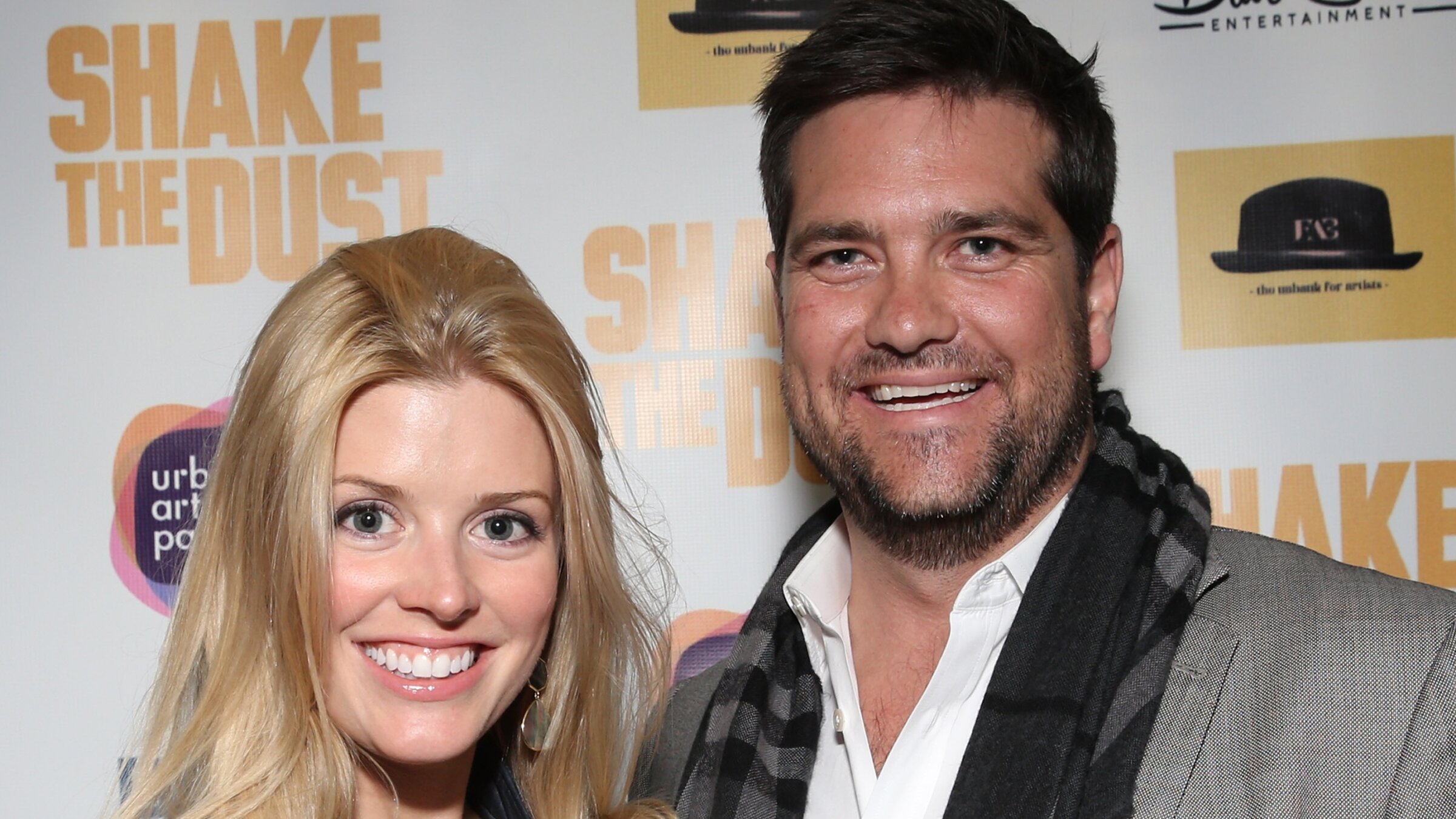
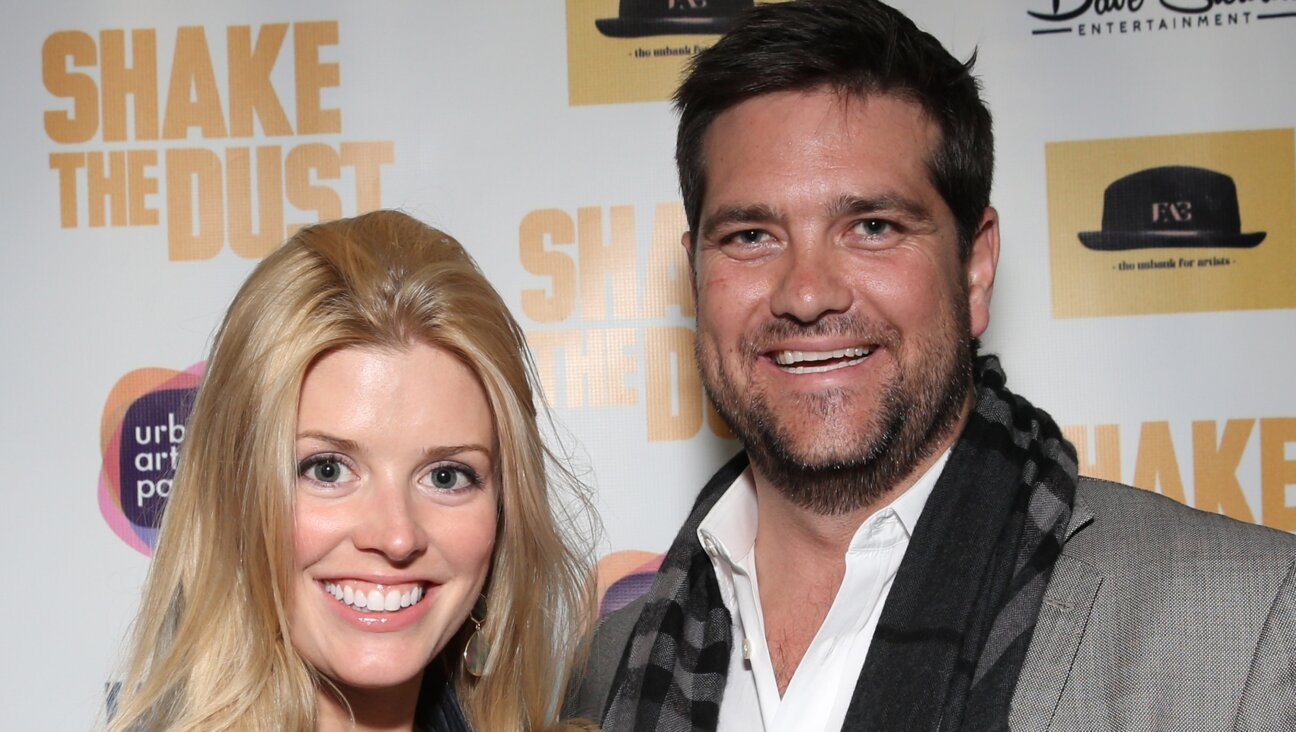
Christy Hockmeyer and Ryan Millsap attend a movie Hollywood premiere at TCL Chinese 6 Theatres on May 15, 2015 in Hollywood, California. Photo by Todd Williamson/Getty Images for BOND/360
By Arno Rosenfeld April 9, 2026
Ryan Millsap, a prominent film and real estate executive in Atlanta who made antisemitic and racist comments in private text messages, is now running for a congressional seat in rural Georgia.
ProPublica and the Atlanta Journal-Constitution reported two years ago that Millsap had sent the offensive texts to a girlfriend.
“Just had a meeting with one of the most nasty Jews I’ve ever encountered,” Millsap wrote in a 2019 text message viewed by the Forward. John Da Grosa Smith, Millsap’s former attorney, filed the text messages in Fulton County Superior Court in Georgia in 2024.
The news outlets also reported that Smith said in court documents that Millsap had allegedly made derogatory comments about Jews while they worked together, including referring to his Jewish colleagues as “the Jew crew” and calling one of them “a greedy Israelite.”
ProPublica and the AJC reported that during arbitration with Smith, Millsap said the comments Smith had described represented “locker room talk.”
Millsap apologized for the offensive text messages in a 2024 statement to the news outlets, saying “comments which I never intended to share publicly have come to light, and people I care about and who put their trust in me have been hurt.”
He also spoke directly at the time to the racist and antisemitic remarks.
“I want to extend my sincere apologies to my dear friends, colleagues and associates in both the black and Jewish communities for any and all pain my words have caused,” his statement continued. “My sincere hope is that the bonds and friendships that we have forged speak far louder than some flippant, careless remarks.”
Millsap is running in the Republican primary for the open seat in Georgia’s 10th Congressional District, which stretches from the far outskirts of Atlanta to the South Carolina border and includes the college town of Athens. The district is outside of the major Jewish population centers in Georgia and had fewer than 7,000 Jewish adults, according to the American Jewish Population Project.
The election is on May 19 and Millsap is running against a popular state lawmaker Houston Gaines in what is expected to be a competitive race.
Gaines called Millsap’s reported text messages “disqualifying.”
“Antisemitism has no place in this country, and as a Christian, I’ll always stand firmly against it,” Gaines said in a statement to the Forward.
Millsap did not respond to a request for comment about the text messages or whether he has conducted any outreach to the local Jewish community as part of his campaign.
In an interview last month with the Washington Reporter, Millsap said that negative interactions with local protesters had pushed him into politics. Millsap’s studio controlled land adjacent to the construction site for Cop City, a planned police training ground near Atlanta, and both sites were targeted by activists.
“They tried to ruin my reputation,” Millsap said in the interview. “Leftist journalists at ProPublica were enlisted to write hit pieces on me, call me a racist, antisemite, anything they could do to hurt my life and put me in a bad political position, because obviously DeKalb County is mostly black Democrats.”
Millsap’s Blackhall Group, whose studio produced movies including “Venom,” “Blockers,” and “Loki,” purchased the property in a county forest near the future Cop City site in 2021. Millsap said activists violently attacked construction workers on his property, burned a pickup truck and left threatening messages in 2022.
He has referred to the demonstrators as “antifa” and made his dispute with them a cornerstone of his campaign.
Antisemitism does not seem to be a major issue in the congressional race, in which Millsap and Gaines have focused on immigration and election security. The seat is considered a safe Republican district and the winner of the GOP primary is expected to win the general election.
According to the text messages filed in court and reviewed by the Forward, Millsap and his then-girlfriend, Christy Hockmeyer, complained about Jews and Black people on several occasions. “F—king Black people,” Millsap wrote in one message reported by ProPublica and AJC after Hockmeyer complained about a Black driver whose car she hit.
Hockmeyer also apologized for her role in the text message conversations with Millsap. “Those comments do not reflect who I am and I disavow racism and antisemitism as a whole,” she wrote in a statement to ProPublica and the AJC.
The ProPublica and AJC article noted that Millsap had built close ties with the Black and Jewish communities in Atlanta after relocating to the city from California and seeking to become active in its robust film industry. He had also been applauded for embracing workplace diversity.
His apology received a mixed response from those he had worked with in Atlanta.
Smith, Millsap’s former attorney, filed the text messages in a lawsuit after the two became embroiled in a heated legal dispute. An arbitrator found that Smith had violated his contract with Millsap when the two were working together and ordered him to pay $3.7 million for breach of contract and breach of fiduciary duty.
Millsap said in his 2024 apology that Smith had “violated the most basic and fundamental principle of attorney client privilege and released private text messages between myself and a former romantic partner.”
This is a moment of great uncertainty. Here’s what you can do about it.
We hope you appreciated this article. Before you go, we’d like to ask you to please support the Forward’s independent Jewish news this Passover. All donations are being matched by the Forward Board - up to $100,000.
This is a moment of great uncertainty for the news media, for the Jewish people, and for our sacred democracy. It is a time of confusion and declining trust in public institutions. An era in which we need humans to report facts, conduct investigations that hold power to account, tell stories that matter and share honest discourse on all that divides us.
With no paywall or subscriptions, the Forward is entirely supported by readers like you. Every dollar you give this Passover is invested in the future of the Forward — and telling the American Jewish story fully and fairly.
The Forward doesn’t rely on funding from institutions like governments or your local Jewish federation. There are thousands of readers like you who give us $18 or $36 or $100 each month or year.

Support our mission to tell the Jewish story fully and fairly.