Things are only going to get worse for Jews from here
Nobody seems to be making a dent in antisemitism — even as problematic beliefs about Jews continue to grow
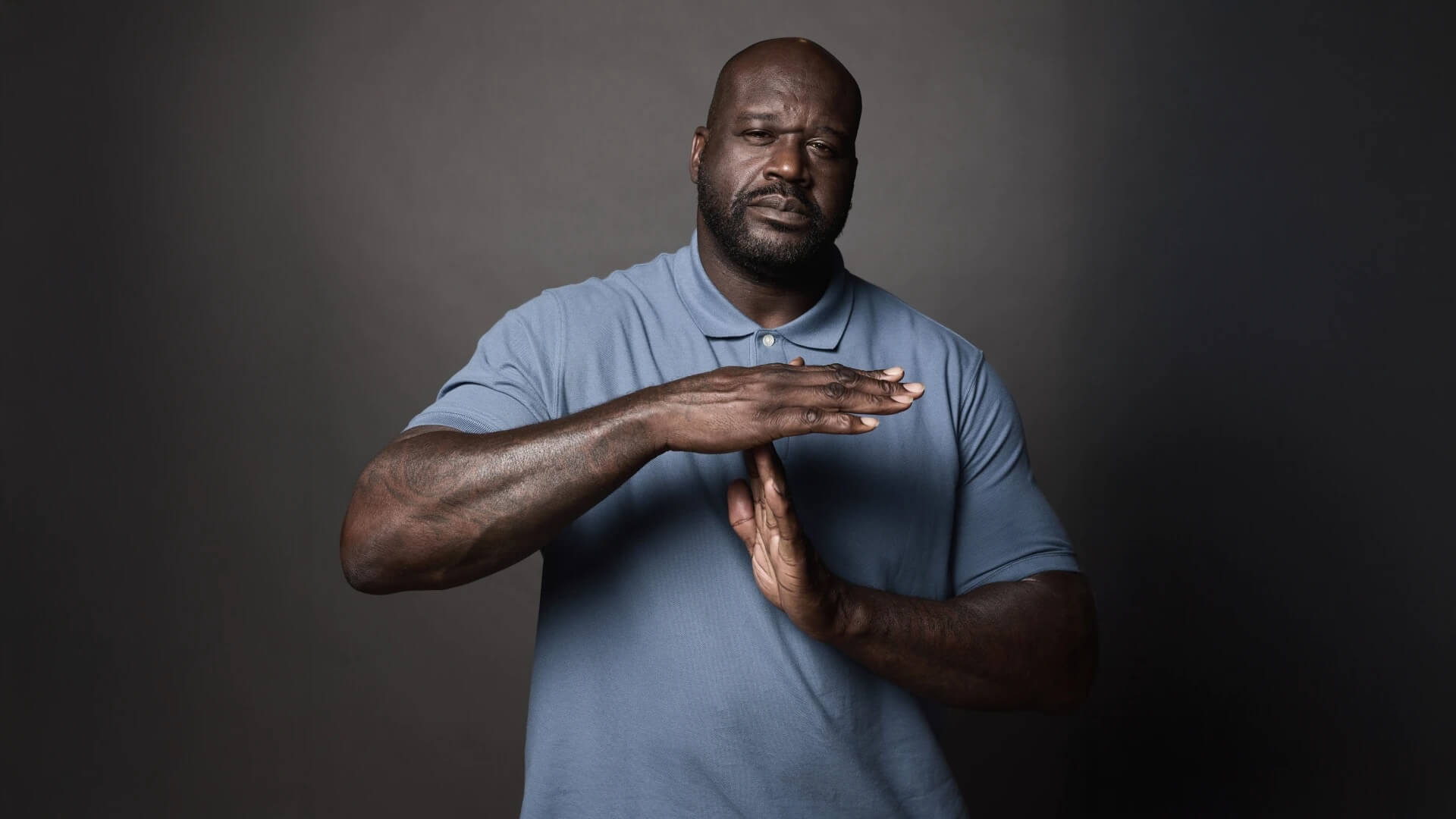
A public service announcement campaign funded by New England Patriots owner Robert Kraft and featuring famous athletes has been one of the few efforts to win hearts and minds in the fight to counter rising antisemitism. Courtesy of Blue Square Alliance
By Arno Rosenfeld December 31, 2025
Antisemitism Decoded is the Forward’s biweekly newsletter that helps you separate the signal from the noise and understand current debates over Jewish safety. Sign up here to get it in your inbox.
I spent last week compiling a summary of news from the past year for the American Jewish Year Book, an annual project that allowed me to zoom out on 2025 — and the results are bleak.
Even as my reporting has often uncovered evidence that the most doomer takes on contemporary antisemitism are wrong, key signals are pointing toward things getting worse for Jews, and antisemitic attitudes growing with few checks.
The country’s largest Jewish advocacy groups are downplaying its rise on the right, afraid of appearing partisan and damaging ties with the Trump administration. At the same time, the Jewish establishment — the Anti-Defamation League, Jewish Federations of North America, the Conference of Presidents and other big institutional players — refuses to acknowledge any distinction between Jewish identity and Zionism, making it difficult to influence the growing share of Americans whose political turn against Israel sometimes slips into antisemitism.
Progressives, meanwhile, tend to view antisemitism as a secondary or tertiary issue — if not a complete distraction from their priorities. And their work on antisemitism is often stymied by an inability to understand the complex relationship that most American Jews have with Israel.
So despite Jewish organizations’ massive investment in combating antisemitism — and huge levels of concern among Jews — there are shockingly few meaningful checks on growing antisemitic sentiment across the political spectrum, and little indication that such checks will emerge in the near future.
The antisemitic turn of the right
The antisemitic turn on the right has not been subtle. President Donald Trump has repeatedly accused American Jews of disloyalty, and his administration is stocked with high-level appointees who have either espoused antisemitism — Elon Musk suggested Jews are destroying Western civilization, Pentagon press secretary Kingsley Wilson claimed Leo Frank was guilty of the crimes he was lynched for and White House official Paul Ingrassia has a self-professed “Nazi streak” — or fraternized with avowed antisemites, like FBI director Kash Patel’s repeated appearances on a podcast whose host called for the mass deportation of Jews.
Prominent Trump supporters in the media — like Candace Owens, Tucker Carlson, Joe Rogan and Theo Von — have either made antisemitic comments or brought on offensive guests.
And data has consistently shown that conservatives hold the most openly offensive views about Jews, and anecdotes suggesting the same continue to pile up. At a recent roundtable of young conservatives hosted by the Manhattan Institute, three of the four responses to the question “What do you think of Jewish people?” included: “They’ve got Hollywood on lock”; “Don’t they own, like, a ton of the media, and, like, just kind of everything?”; and, “I would say a force for evil.”
Yet none of the country’s largest Jewish advocacy groups have directed the bulk of their energy at addressing conservative antisemitism or the Trump administration’s tolerance of at least certain forms of antisemitism.
Instead, Eric Fingerhut, chief of the Jewish Federations of North America, cautioned his network’s members against signing an April statement criticizing the Trump administration’s approach to antisemitism and urged synagogues to apply for federal security funding, even though it appeared to prohibit them from engaging in diversity work. When asked about Patel, the FBI director who cozied up to an antisemitic podcaster, Fingerhut called on Congress to significantly boost his budget.
I don’t mean to single out Fingerhut — his approach is the same as almost every other major Jewish establishment figure; most have spent the past year focused on opposing progressive groups like teachers unions, student protesters and politicians like Zohran Mamdani.
Paradoxically, focusing on criticizing the left rather than the right helps avoid allegations of partisanship because the Democratic Party and major Jewish leaders are often aligned on Israel. It’s not viewed as an attack on the Democrats for Jonathan Greenblatt, the ADL chief, to compare student protesters to ISIS terrorists; President Joe Biden basically agreed with Greenblatt that the demonstrators were antisemitic, even if he used more restrained language. Kamala Harris refused to allow a Palestinian speaker at last year’s Democratic convention and the party’s top brass dragged their feet or outright refused to endorse Mamdani in the New York City mayor’s race.
Trump, on the other hand, has steadfastly refused to condemn his movement’s antisemitic wing. Carlson delivered a keynote address at the Republican convention last summer and Trump defended him after he interviewed Nick Fuentes, a notorious Holocaust denier. And Vice President JD Vance has dismissed examples of overt antisemitism on the right as “edgy, offensive jokes.”
This dynamic makes a full-frontal assault on the antisemitic elements of the right much more fraught for Jewish groups that want to maintain a working relationship with the Trump administration.
And they do want to maintain that relationship — in large part because the current administration is aligned with the Jewish establishment in going after the anti-Zionist left.
A toxic combination on the left
On the other side of the political spectrum, I’ve seen two problematic tendencies increase over the past year.
The first is that Jews are often thought of as a privileged group. This can minimize concern about antisemitism on the left. (“Sure, it’s bad, but not as bad as other forms of discrimination.”) Or it can fuel suspicion that claims of antisemitism are just a smokescreen for the powerful elite to shield themselves from criticism.
The second factor is a misunderstanding of the Jewish relationship to Israel. Some wrongly assume Jews all support Israel, conflating Jewishness with the Zionism they oppose. Others incorrectly insist Israel has nothing to do with Jewishness, making it OK to demonize every Jewish person who refuses to unequivocally denounce Israel’s existence.
These combine to create a perilous climate for Jews, fueling animus toward Jewish targets with only the faintest connection to the Israeli state’s actions in Gaza — a student dinner hosted by Baruch College’s Hillel, a Minneapolis synagogue on the anniversary of Oct. 7, a Cincinnati rabbi slated to speak at an anti-Nazi rally before organizers determined that his liberal Zionism made him a “white supremacist.” These are only a few examples among many small indignities experienced on college campuses and in workplaces by Jews with even slightly complicated views about Israel.
The porous boundary between opposition to Israel and antisemitism is especially stark online. “It was promised to them 3,000 years ago” — a meme originally poking fun at the ancestral Jewish claim to modern Israel — has transformed into a way to mock supposed Jewish entitlement, disconnected from any political valence. (“A video of Jewish content creators joking about bringing free shampoo home from a hotel?” my colleague Mira Fox explained over the summer, “well, they must think those toiletries were promised to them 3,000 years ago.”)
When Jews raise concerns about this rhetoric, the response is often a mix of the factors I mentioned above: A little antisemitism is no big deal because Jews aren’t oppressed, or it’s not antisemitic because it’s only a dig at Zionists. And in cases where the vitriol is aimed at Jews that have nothing to do with Israel, well, they’re probably Zionists.
A blunt force approach to campus unrest
Some young leaders on the far right, including Fuentes, have sought to join criticism of Israel with explicit antisemitism. But, in contrast, young progressives driving the political turn away from Israel remain less likely to agree with classic antisemitic tropes than conservatives, and more likely to say antisemitism is a problem for society.
This should make them a relatively easy audience to reach.
But rather than wage a battle for the hearts and minds of these progressives, the largest Jewish organizations have opted for blunt force. They’ve joined with the Trump administration to pressure universities to arrest, expel and, in some cases, deport student protesters, and implement strict new rules for demonstrations. And they’ve sought to legislate definitions of antisemitism that include criticism toward Israel, while outlawing school curriculums that they believe are biased.
Some of these policies may be sound. But, with perhaps the sole exception of Robert Kraft’s quixotic public service announcements about antisemitism — one features Shaquille O’Neal calling for a “timeout on hate” — none of these efforts focus on convincing people to change their minds about Jews.
Instead, they effectively aim to outlaw or restrict expression of negative views toward Israel, leaving whatever harmful beliefs about Jews that might be tied to those positions to fester in silence.
There are a variety of projects that seek to explain, first of all, why progressives should care about antisemitism and, second, how to critique Israel without slipping into antisemitism, including The Past Didn’t Go Anywhere, Safety Through Solidarity and PARCEO training.
But these efforts receive little funding. Amid the hundreds of millions of dollars that philanthropists are throwing at countering antisemitism, why are projects made by and for progressives left out?
The reason, I suspect, is that the Jewish establishment is not interested in teaching people how to oppose the existence of a Jewish state in Israel without engaging in antisemitism. To them, opposition to Zionism is itself antisemitism, which erodes their credibility with anti-Zionists who genuinely want to avoid antisemitism.
Nobody is going to listen to a Jewish organization that says, “Your political ideology is always going to be antisemitic — and I’m going to try to get your school to expel you for promoting it — but in the meantime could you please try to be careful about using these slogans because they make some of your Jewish peers feel uncomfortable?”
This approach has convinced some progressives that “antisemitism” just means criticism of Israel — in part because prominent Jewish leaders describe it this way — rather than a genuine form of bigotry.
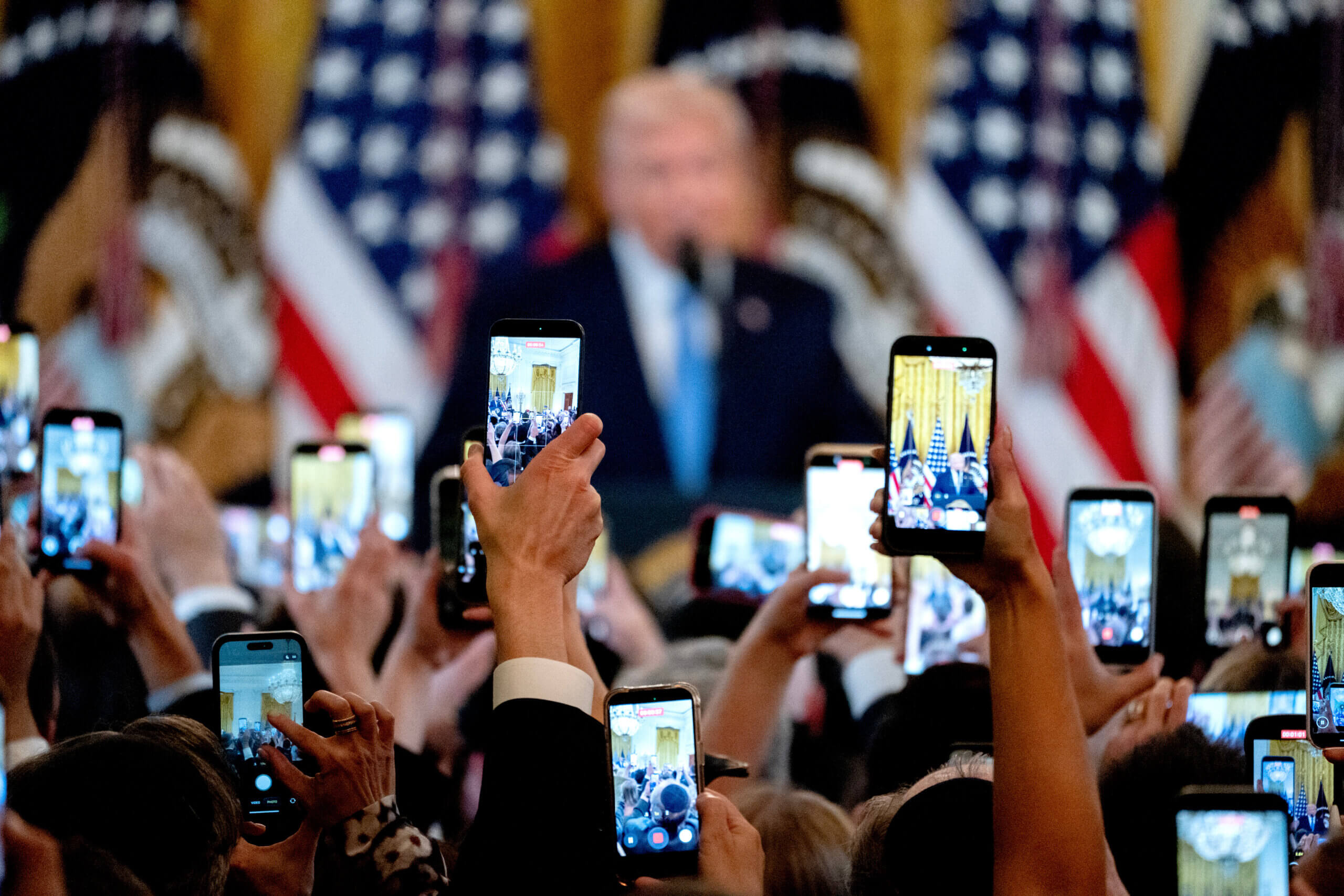
Ostracizing Israel’s harshest critics might have worked when anti-Zionism was a fringe belief. But the aftermath of Oct. 7 heralded a near-consensus among liberals, including many Jews, that Israel is a villain on the world stage. Attempting to simply ban people from expressing these views — or taking away their phones — is not going to help address the antisemitism that can get mixed in with animus toward Israel.
The good news is that things are still not as bad as some would have you believe. Mamdani, who became a fixation for many Jewish leaders during the race for mayor, has been remarkably conciliatory to the Jewish establishment, modeling a version of anti-Zionism that mostly avoids some of the pitfalls I’ve outlined. And Jews still have a place in the mainstream conservative movement, which has directed most of its ire toward other minorities — after all, it was Somali immigrants, not Jews, who Trump recently referred to as “garbage.”
For now, this explosion of antisemitism remains mostly — though, tragically, not entirely — confined to feelings of social alienation rather than violence or systemic discrimination.
But that only buys time to find meaningful remedies that, to date, have been few and far between.
This is a moment of great uncertainty. Here’s what you can do about it.
We hope you appreciated this article. Before you go, we’d like to ask you to please support the Forward’s independent Jewish news this Passover. All donations are being matched by the Forward Board - up to $100,000.
This is a moment of great uncertainty for the news media, for the Jewish people, and for our sacred democracy. It is a time of confusion and declining trust in public institutions. An era in which we need humans to report facts, conduct investigations that hold power to account, tell stories that matter and share honest discourse on all that divides us.
With no paywall or subscriptions, the Forward is entirely supported by readers like you. Every dollar you give this Passover is invested in the future of the Forward — and telling the American Jewish story fully and fairly.
The Forward doesn’t rely on funding from institutions like governments or your local Jewish federation. There are thousands of readers like you who give us $18 or $36 or $100 each month or year.
Support our mission to tell the Jewish story fully and fairly.