Amid an incoherent war with Iran, antisemitism fills the vacuum
There’s no shortage of possible explanations but Trump and his advisers haven’t been able to pick one or even to say what the war’s objective is and when it might end
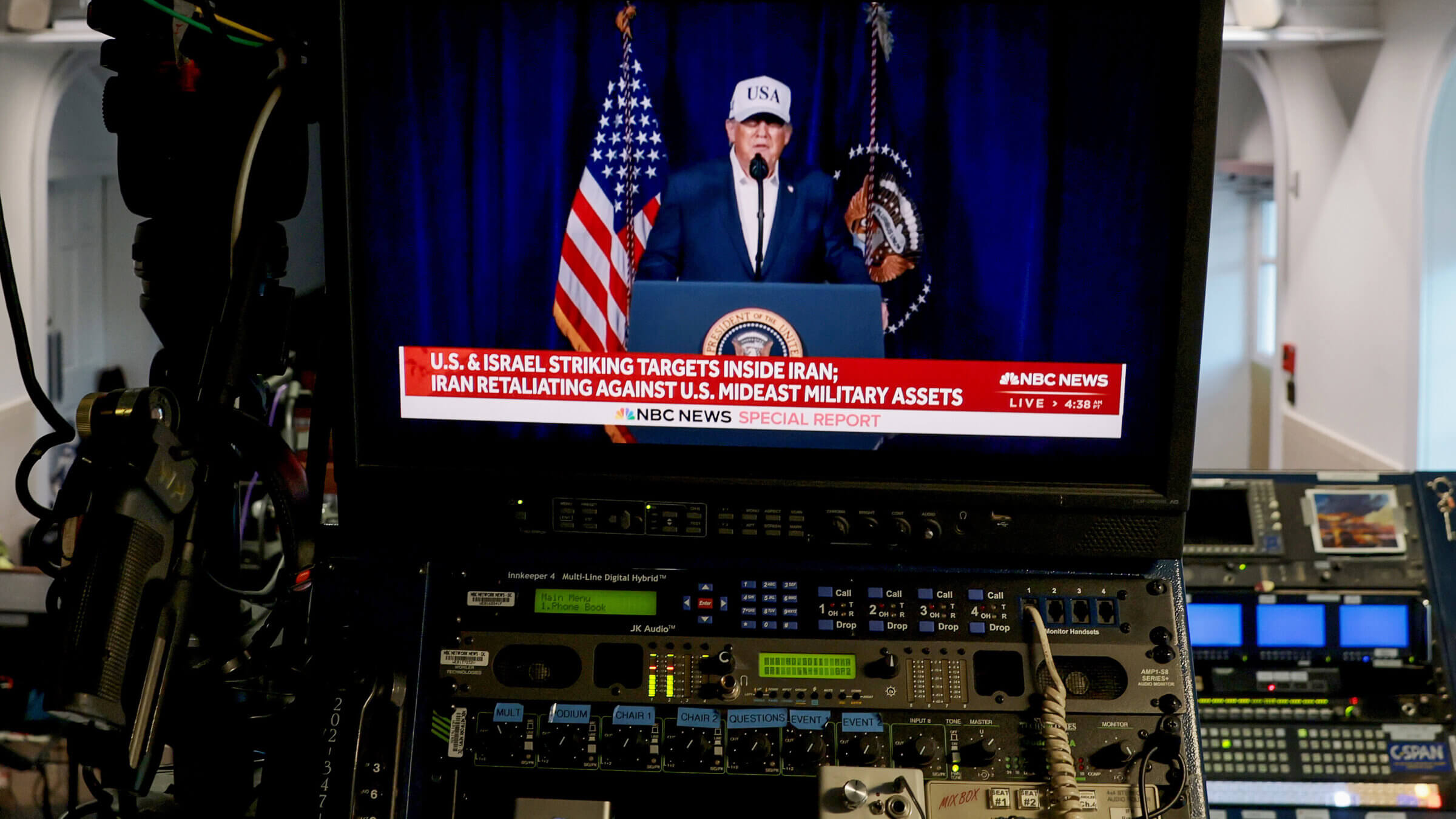
U.S. President Donald Trump announced that the United States and Israel had launched an attack on Iran on Feb. 28. Photo by Anna Moneymaker/Getty Images

By Arno Rosenfeld March 11, 2026
Antisemitism Decoded is the Forward’s biweekly newsletter that helps you separate the signal from the noise and understand current debates over Jewish safety. Sign up here to get it in your inbox.
One of the most striking elements about the war with Iran is how little the Trump administration and its supporters have done to explain their rationale for starting a new war in the Middle East.
There’s no shortage of possible explanations — the Iranian government’s repression of protesters, its sponsorship of foreign terrorist attacks, the threat its missiles or nuclear program poses to the United States or to Israel — but Trump and his advisers haven’t been able to pick one or even to say what the war’s objective is and when it might end.
“You’ve said the war is ‘very complete,’ but your defense secretary says ‘this is just the beginning,’” a reporter asked Trump on Monday. “So which is it?”
“Well, I think you could say it’s both,” Trump replied.
People don’t like this lack of explanation — recent polling has found that the Iran war has lower public approval, at 41%, than any other modern conflict that the U.S. has participated in — and are quick to supply their own reasoning for why their government is willing to sacrifice American lives and hundreds of millions of tax dollars to bomb a foreign country.
Some, apparently fueled in part by an Iranian propaganda campaign, have claimed the war is intended to distract from disclosure of the Epstein files or from setbacks on domestic policy, where presidential powers are far more limited than they are in military action.
Others have pointed to Trump’s longstanding obsession with toppling Iran’s leadership.
But many have zeroed in on a familiar claim: It’s the Jews.
Megyn Kelly, the former Fox News host, spoke for many in the conspiracy-laden isolationist sphere of the conservative movement — dominated by figures like Kelly, Tucker Carlson, Candace Owens and the Holocaust-denying Nick Fuentes — when she argued this war was the doing of Jewish pundits, donors and, for good measure, the senior senator from South Carolina.
“Mark Levin wanted it, it’s his war, Ben Shapiro, Lindsey Graham, Miriam Adelson — that’s obvious,” she said. “They are the ones who’ve been pushing us into it.”
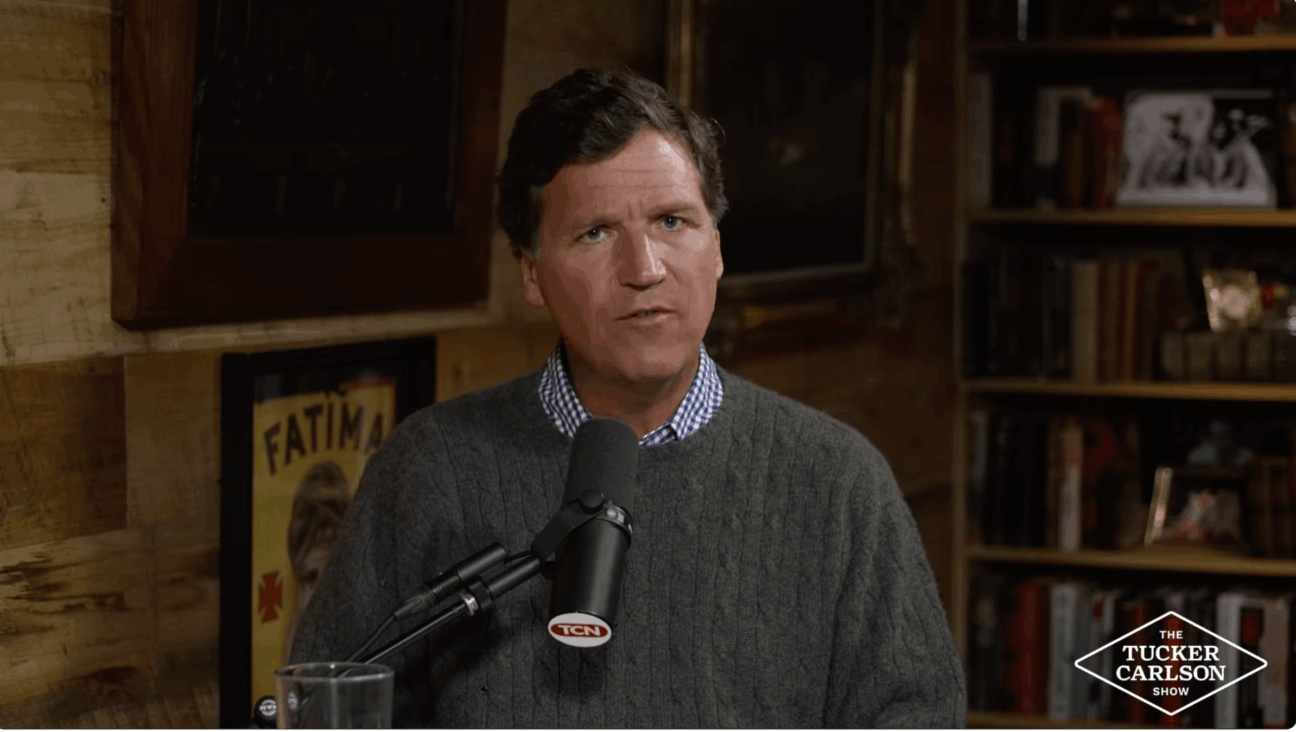
At least it’s true that the folks Kelly named are hawkish political figures who have long called for confronting Iran. But Jews outside of the political sphere have also come under attack. Carlson suggested that the U.S.-Israel campaign against Iran is a Jewish religious plot intended to destroy Al-Aqsa Mosque in Jerusalem and build the Third Temple — and that it was orchestrated by “Chabad, C-H-A-B-A-D.”
Carlson’s outlandish claim, shared widely on social media, prompted the Lubavitcher Orthodox Jewish movement to boost security at its many remote outposts, which are often the only formal Jewish presence in cities around the world.
This rhetoric echoes what we saw last spring when the far right openly trafficked in antisemitism as influencers voiced opposition to American airstrikes on Iran. “We are done being blackmailed, bribed and killed by Jews,” one prominent conservative said at the time.
And it fits in with a long pattern of scapegoating Jews for death and destruction. Henry Ford’s Dearborn Independent claimed that Jews “found wealth in the debris of civilization” following World War I, while the celebrity aviator and isolationist Charles Lindbergh claimed the “British, the Jewish and the Roosevelt administration” had conspired to drag the U.S. into World War II.
When convenient, Jews have also been blamed for losing wars. The Nazis promoted the stabbed-in-the-back myth to claim Jews were among those who had caused Germany to lose the Great War, while President Richard Nixon was obsessed with how many of his Democratic opponents were supposedly Jewish anti-Vietnam peaceniks.
Often these conspiracies have been complete fabrications. But even when there’s a germ of truth — many Jews did, of course, oppose the Vietnam War — the most straightforward rebuttal is that it’s offensive and ignorant to attribute the actions of individual Jews to “the Jews,” as if every Jewish person is part of a vast global conspiracy.
What makes the current uproar blaming Israel or Jews — sometimes the public has a hard time separating the two — for the Iran war is that Israeli Prime Minister Benjamin Netanyahu did seem to play an integral role in convincing Trump to strike Iran.
“We knew that there was going to be an Israeli action,” Secretary of State Marco Rubio told reporters. “We knew that that would precipitate an attack against American forces, and we knew that if we didn’t pre-emptively go after them before they launched those attacks, we would suffer higher casualties.”
And while the American war objectives are clear as mud, Israel faces a far more obvious threat from Iran — as witnessed by the hundreds of missiles fired at the country since the war began — which likely accounts for the widespread support for the war in Israel.
It’s not incorrect or antisemitic, then, to note that Israel encouraged the U.S. to attack Iran and that many of its American supporters have cheered on the campaign.
But assigning the country outsized influence is where one starts to get into dicey territory. The notion that the United States has become subservient to Israel has made its way into the discourse across the political spectrum. “A rogue client state has completely overtaken the host,” James Li, a conspiratorial content creator, wrote on X last week.
This sentiment teeters on the edge of the absurd. Israel may have sought to force Trump’s hand by threatening its own attack, but the U.S. has tremendous leverage over Israel and has stopped Israel from launching similar planned attacks in the past.
And the lack of a more straightforward explanation for why the war was in America’s own interests should not inevitably point to a nefarious Israeli plot. Trump has done a lot of things that either belie logical explanation — like a tariff regime that even protectionist economists have looked askance at — or have been justified in fluid ways, or not at all.
But conspiracies help people make sense of confusing and stressful events especially in the absence of a more sensible explanation.
And where conspiracies begin, antisemitism almost inevitably follows.