Why I interviewed Mahmoud Khalil
The question of who is going to harness the turn by many Americans, including Jews, away from Israel is becoming more important
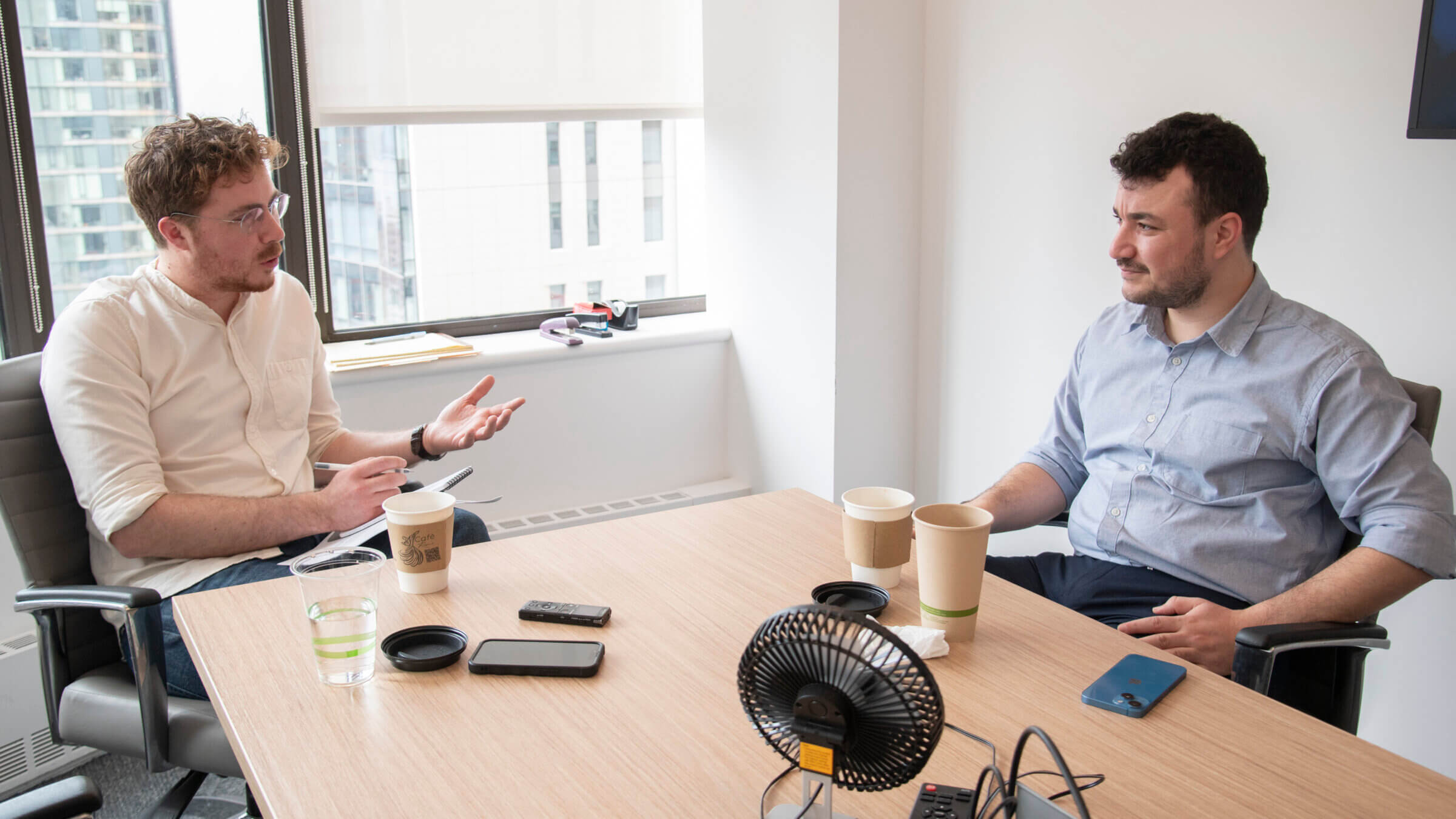
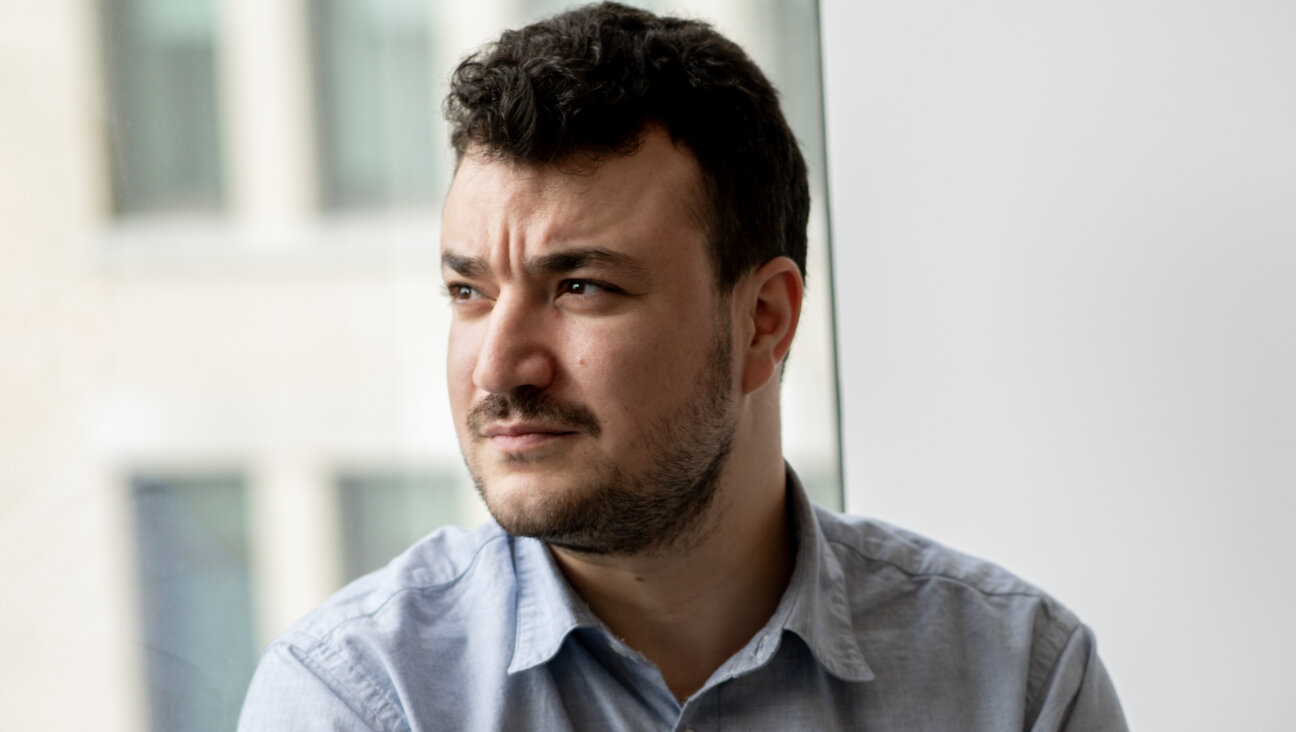
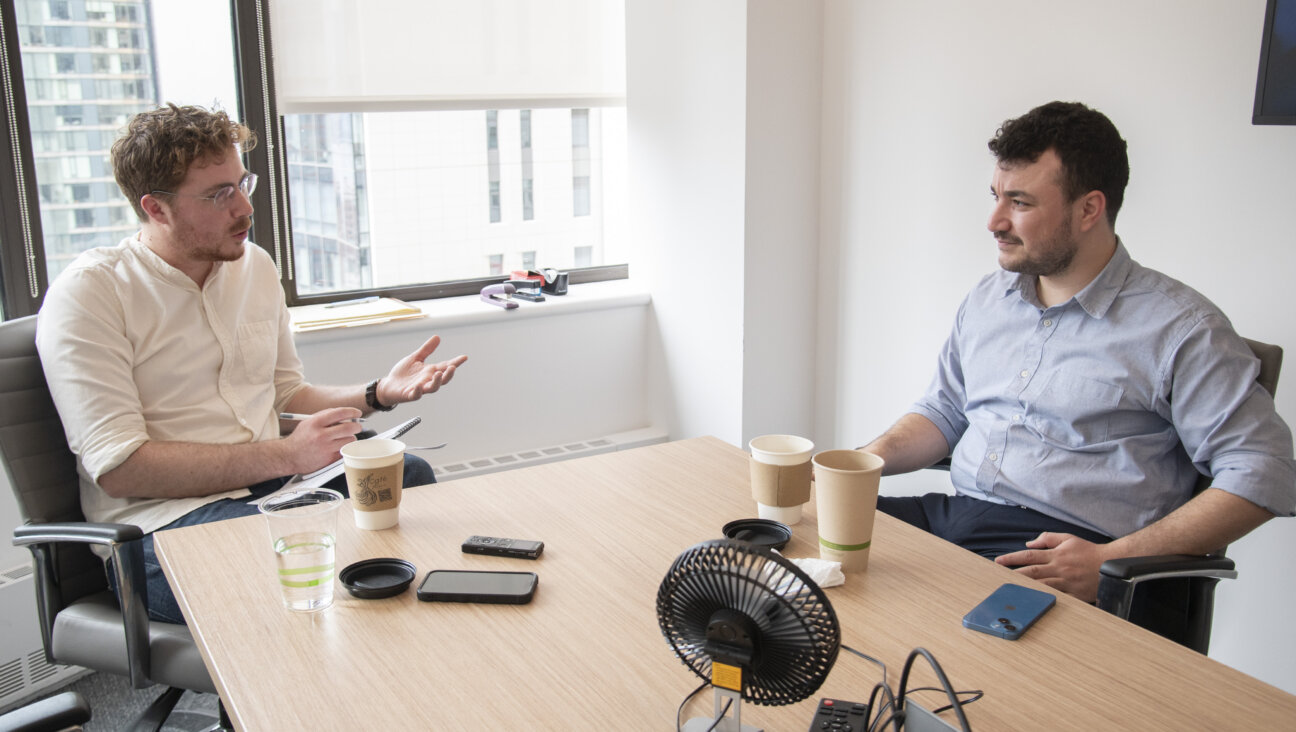
I interviewed Mahmoud Khalil last week in New York City. Photo by Melanie Einzig/Special to the Forward
By Arno Rosenfeld April 8, 2026
Antisemitism Decoded is the Forward’s biweekly newsletter that helps you separate the signal from the noise and understand current debates over Jewish safety. Sign up here to get it in your inbox.
Since he was targeted for deportation by the Trump administration, Mahmoud Khalil has become both a celebrity among those who supported the campus protests against Israel and a villain for Jews who thought the demonstrations fueled antisemitism and sought Israel’s violent destruction.
While Khalil had addressed general allegations that the protests had created a hostile climate on campus in previous interviews — arguing that they may have made students uncomfortable but not unsafe — he had not spoken in detail about some of the most pressing questions for Jews who may have been alarmed by his arrest but were unsure about his actual beliefs.
What did a “free Palestine” — a core demand of the protesters — mean to Khalil?
What did he think about Oct. 7 and Hamas?
And how did he think the protest movement should relate to Jews who don’t share their views?
When a representative for Khalil reached out last month asking whether I wanted to interview him, it presented an opportunity to present his answers to these questions to the Forward’s audience.
I had no illusion that Khalil was going to assuage the concerns of every reader who believe he is antisemitic or otherwise misguided, but I saw my job as trying to understand where he was situated within a protest movement that is gaining political power and influence but remains more fractious than many people outside the movement are aware.
These divisions include divergent views over what the acceptable forms of Palestinian resistance are, what the ultimate objective of anti-Zionism should be, and how the movement should treat Americans — and especially American Jews — who disagree with it.
I know that such distinctions may not matter for those who think that any failure to recognize Israel’s right to maintain a Jewish majority, or opposition to Zionism, period, crosses a red line.
But even those who find anti-Zionism unacceptable may appreciate the opportunity to grapple with how and why a growing number of Americans, including Jews, are turning away from support for Israel in the wake of the wars in Gaza and now Iran. The question of who is going to harness that political sentiment and what they plan to do with it is becoming more important.
I wanted to know where Khalil stood on looming questions.
***
His answers, corroborated through conversations with others who knew and worked with him during the encampments at Columbia as well as his past public statements, were revealing.
Overall, they situated Khalil as a leader of the more conciliatory wing of the protest movement when it came to how it should engage with Israel’s supporters. He has read about and seriously engaged with liberal Zionism, and expressed sympathy for Jews who support Israel; he said Hamas was not a true representative of the Palestinian people, and that it was unacceptable for them to target and kidnap Israeli civilians; and he said that Israeli Jews should remain in a “free Palestine” with full rights.
He supported the statement from protest leaders that condemned a Columbia student who had said “Zionists don’t have a right to live,” opposed the ultimately violent takeover of Hamilton Hall and avoided the slogan “globalize the intifada.”
But his answers also underscored the gulf between even the more moderate protesters and the position of many liberal American Jews, who believe Israel committed war crimes or genocide in Gaza but remain horrified by the atrocities committed by Hamas on Oct. 7 and think that a two-state solution is the only way to preserve Jewish safety while respecting Palestinian rights.
Khalil wanted to assuage Jewish fears that he believed were at least partly responsible for the appeal of Zionism, and yet he did not acknowledge the full extent of violence on Oct. 7 — that Palestinian militants intentionally killed Israeli civilians — which perfectly epitomized a major source of these fears.
Whatever you may think of Khalil or his political views, I’m glad that the Forward can serve as a forum for people both inside and outside the Jewish community to speak with American Jews and I hope you’re able to learn something about Khalil and the movement he helped lead from our conversation.
This is a moment of great uncertainty. Here’s what you can do about it.
We hope you appreciated this article. Before you go, we’d like to ask you to please support the Forward’s independent Jewish news this Passover. All donations are being matched by the Forward Board - up to $100,000.
This is a moment of great uncertainty for the news media, for the Jewish people, and for our sacred democracy. It is a time of confusion and declining trust in public institutions. An era in which we need humans to report facts, conduct investigations that hold power to account, tell stories that matter and share honest discourse on all that divides us.
With no paywall or subscriptions, the Forward is entirely supported by readers like you. Every dollar you give this Passover is invested in the future of the Forward — and telling the American Jewish story fully and fairly.
The Forward doesn’t rely on funding from institutions like governments or your local Jewish federation. There are thousands of readers like you who give us $18 or $36 or $100 each month or year.

Support our mission to tell the Jewish story fully and fairly.