The Jewish left is misplaying its hand — by not focusing enough on Jews
Israeli policies hurt activist Jews in a state that’s supposed to treat all Jews equally
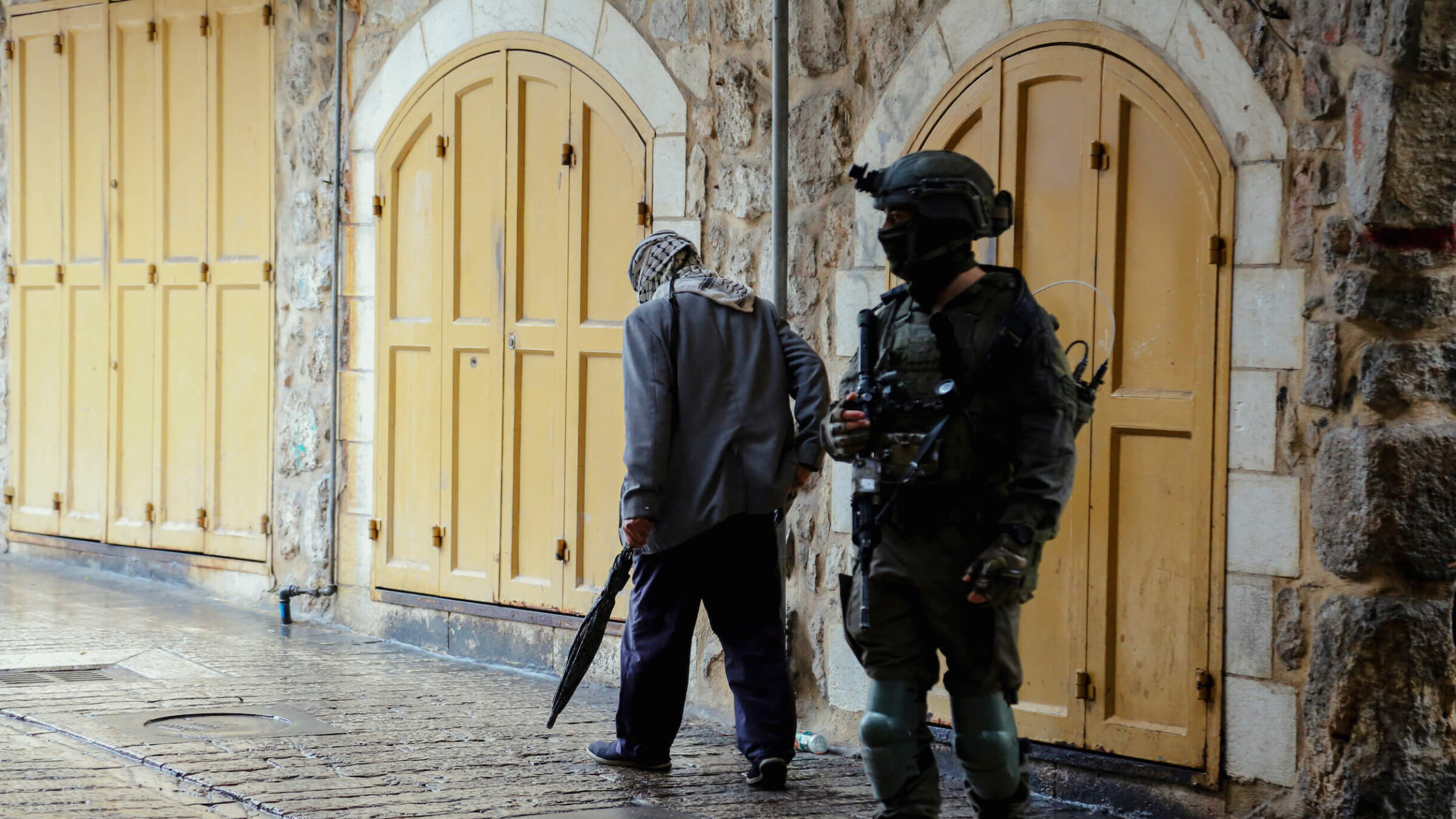
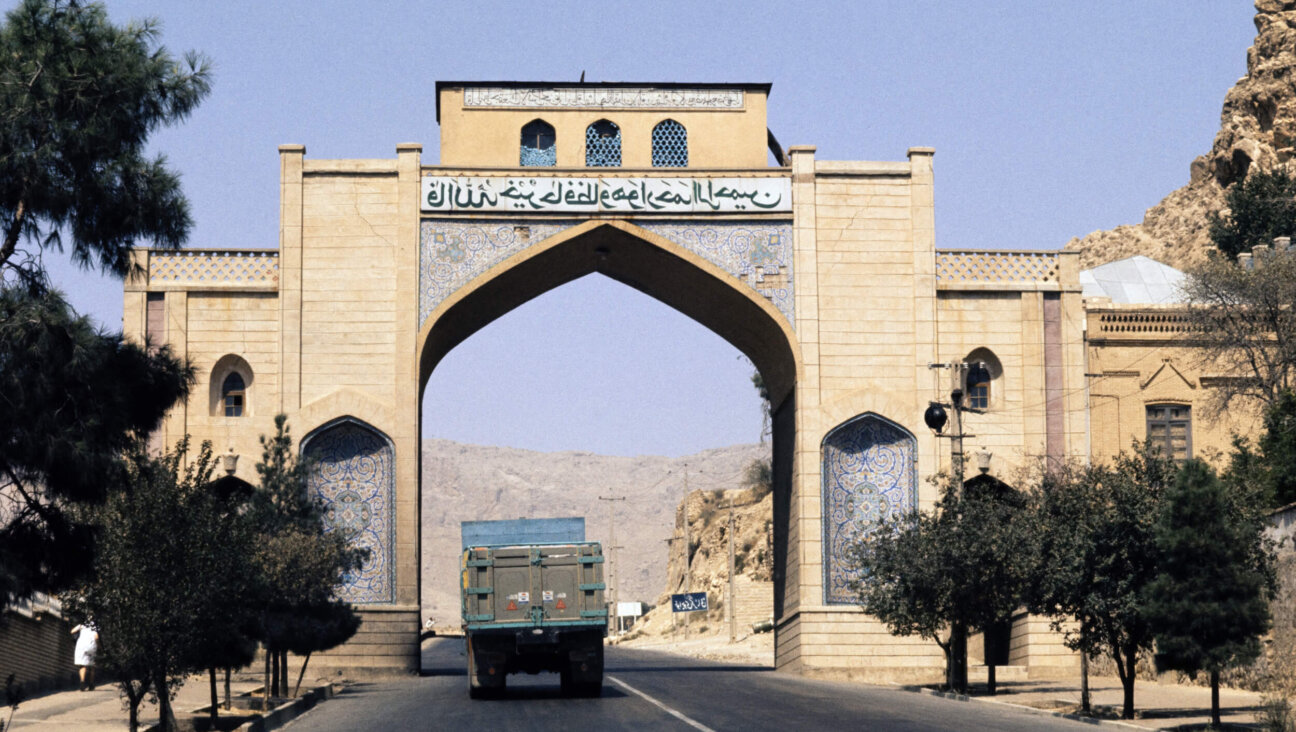
An Israeli soldier guards the Tomb of the Patriarchs, also known as Ibrahimi Mosque, in the Old City of Hebron, in the occupied West Bank, on Nov. 15. Photo by Mosab Shawer/Middle East Images via AFP/Getty Images

Charlotte Ritz-Jack December 10, 2025
A few weeks after I moved to Jerusalem this fall, I was barred from entering the Tomb of the Patriarchs on a visit to Hebron. Three soldiers stopped me almost as soon as I stepped through the entrance. “Do you support Palestine?” one asked. “Are you a Muslim?” another demanded.
I was confused — perhaps I was at the wrong door? The occupation has made separate entrances for each religion, with one for Jews and another for Muslims. Passport in hand, I told the soldiers that I am Jewish, had just moved here, and was visiting the Tomb for the first time. I gestured to the chai, Hebrew letters meaning “life,” around my neck. It did no good.
I had forgotten that I was wearing a T-shirt from the Taybeh Brewing Company. The shirt had the company’s name in Arabic, with the word “Palestine” printed beneath it. The soldiers demanded my friends and I stand against a wall as they searched our bags. Their anger only intensified as I explained that Taybeh is a beer company, whose product is enjoyed across Israeli cities.
Eventually, their superiors arrived, and told my friends and I to leave. Something as trivial as a T-shirt was seen as damning enough to negate my Judaism, as well as whatever rights come with it in this Jewish state.
I have heard many stories like this: Jews are banned from holy sites, communal activities, and institutions central to Jewish life, simply for showing care for Palestinian existence. This fall, two friends of mine, both Jewish American, Hebrew-speaking women, were deported from Israel for participating in an olive harvest in the West Bank.
The consequences of these red lines affect Jews in the diaspora as well as in Israel. I personally know many Jews who have had their Judaism treated as illegitimate because of their criticism of Israel. An Orthodox friend of mine was bullied out of her college’s Jewish society for displaying posters that paired Jewish liturgy with images of destruction in Gaza. Another friend’s brother was barred from a synagogue after he was spotted in a video of a pro-Palestinian protest. And in some rabbinical schools, recent efforts seek to blacklist applicants who question Zionism.
Yet rarely do I hear these stories told in Jewish activist circles and used as campaign fuel. That’s a mistake. If we want to build a movement capable of affirming a different version of Jewish life in this land and throughout the diaspora, we must talk about the ways in which Israel harms Jews.
The left often prioritizes spotlighting the urgent needs of Palestinians — rightly, and with good reason. Palestinians are unequivocally oppressed. Gaza lies in ruins; Palestinians in the West Bank endure unprecedented state-backed settler violence; and the full death toll of two years of war — plus continuing Israeli strikes in Gaza — remains unknown.
But the de-escalation that has accompanied the current ceasefire has opened an opportunity for the Jewish left to reflect and redefine its strategy. What future, exactly, are they fighting for? And how can they best go about that fight?
Too often, Jewish leftist spaces shy away from these questions. What does the egalitarian, diverse and thriving Jewish future the left seeks to build look like in Israel and beyond? How does this future address the many legitimate questions Jews have about their safety and identity there?
When the left fails to answer these concerns, it invites Jews to be skeptical of the merits of its vision. If the Jewish left cannot articulate a way forward to a meaningful future for Jewish safety, belonging and spirituality in Israel, Jews will continue to seek those things from the reactionary forces who paint morbid pictures.
That’s a bad outcome for Jews, as well as for Palestinians.
Right now, Israel’s government enforces a hierarchy of Jewishness. In doing so, it prioritizes versions of Jewishness rooted in nationalism, and erodes the vast historical treasure trove of diverse Jewish expression.
This is no accident. Systems built on injustice turn those affected by them against each other. The narrow definitions of “good Jewishness” advanced by Israel’s government only serve to weaken our people. The Jewish left must present a contrast: a strong plan for Jewish life in Israel that uplifts the spiritual and cultural traditions of the Jewish people, and coexists with a peaceful, free future for Palestinians. A vision of abundance, rather than the specter of scarcity that dominates today’s politics.
Of course, the alienation I and other Jews have experienced in Israel and because of Israeli policies pales in comparison to the violence, dispossession, and racism Palestinians have long faced under Israeli rule. But both emerge from the same supremacist logic. The same system that decides who is human enough to enter, pray, and live.
To challenge this system, the Jewish left must include Jewish stories of exclusion in the narrative of our politics — not to distract from Palestinian suffering, but to expand understanding of what this movement truly aims to accomplish: a good future for Jews and Palestinians, equally. After all: How can a state that punishes Jews for wearing the wrong T-shirt claim to protect us?