The Maccabees taught us persistence and hope – even when the light flickers, as it has this Hanukkah
The goal of antisemitism is, as it has always been, to divide us, isolate us, and snuff out our light
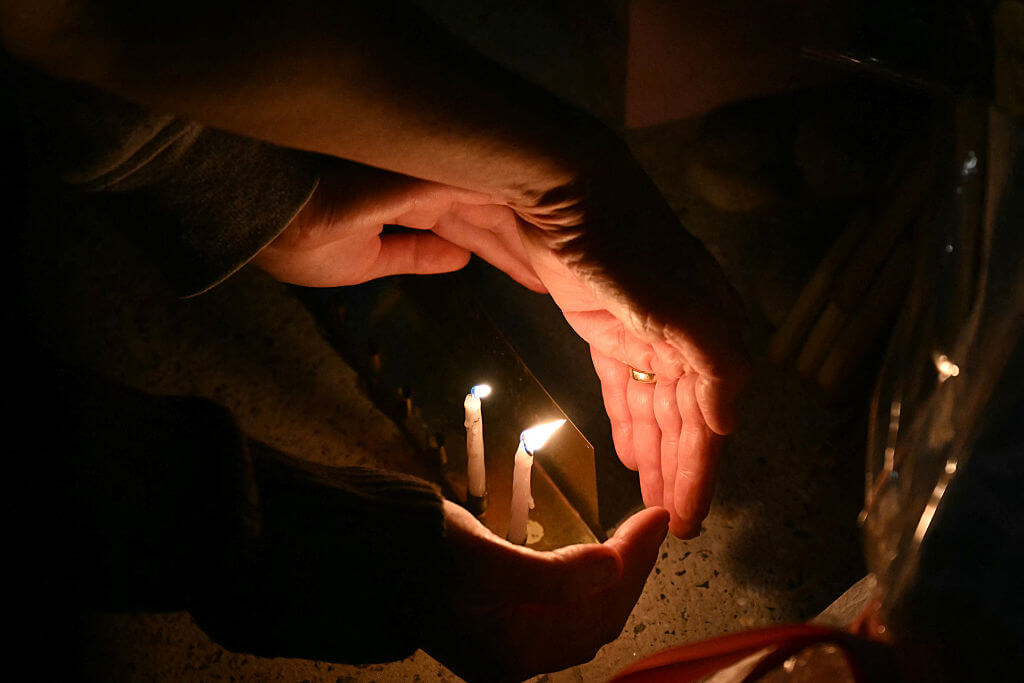
People light candles at the Bondi Pavillion in memory of the victims of a shooting targeting Jews at Bondi Beach, in Sydney. Photo by Saeed Khan/AFP via Getty Images
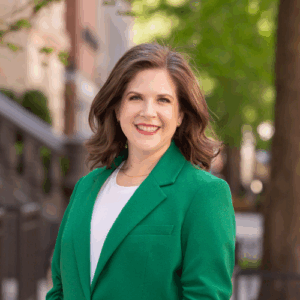
Vanessa Aronson December 15, 2025
The first time I lit a Hanukkah candle as a Jew wasn’t at a synagogue or around a large family table. It was in a tiny apartment kitchen with my then-fiancé, Reid. I didn’t yet know the blessings by heart or if I belonged. But when that first shamash, the special “helper” candle used to light the Hanukkah menorah, flickered to life, something in me shifted. I knew I had reached a place where curiosity wasn’t a problem to be solved; it was a doorway.
Lighting the candles with Reid and our two children as we process the horrifying news from Sydney, Australia, I find myself thinking back to that first candle and to a tradition that empowers us through learning and debate, where hard questions are not avoided or feared but welcomed, even in times of great heartbreak and adversity. In a moment when so much pushes us apart and so many try to make us afraid, those values draw us together and give us strength.
Hanukkah itself is a story of a community striving to stay whole in the face of profound forces of division. The Maccabees stood against a regime that attempted to erase Jewish practice by banning observance, desecrating the Temple, and punishing the very acts that defined Jewish life. The victory we celebrate is the enduring resilience of Jewish identity, a small, committed people, deeply diverse in their own ways, coming together around a shared purpose to reclaim the right to live authentically.
When the Temple was rededicated, they relit the ner tamid, the eternal flame, with only a day’s worth of consecrated oil. The miracle, tradition teaches, is that the flame lasted eight days until new oil could be secured. But perhaps the greater miracle is that they lit the flame at all, despite their fear, the uncertainty, and the enormity of the moment. Even in the darkest times, our light shines brightest when we choose to light it together.
My journey to becoming Jewish was many years in the making. I was raised Catholic in the church my mother grew up in. I was a curious child, always pressing to understand the world around me. After the sudden death of my father at 9, I craved answers to life’s toughest questions and felt increasingly out of place in a setting where questions were treated as a lack of faith. In Judaism, I found a spiritual home that teaches that questions are holy, learning is lifelong, truth is revealed through wrestling with ideas, and our sacred bonds to each other are strengthened through debate.
I still remember the moment I first learned this about Judaism. More than a decade before my conversion, Reid and I sat on a lumpy sofa in a University of Chicago lounge debating life’s mysteries the way only college students can. After I had shared my frustrations about organized religion, Reid explained that in his experience, Judaism didn’t fear disagreement, but welcomed it. It was a tradition built on commentary layered over commentary, where even the margins of our texts are alive with centuries of Jews arguing, interpreting, questioning, refining and expanding on the ideas that came before them.
As I continue to grow into my Jewish identity, it becomes ever more clear that the Jewish community is not a monolith. We span countless traditions, cultures and perspectives. Our disagreements are real, deeply felt, and sometimes painful. But disagreement is not the opposite of unity. Judaism gives us the tools to lean into complexity without letting it tear us apart.
At this difficult moment we are living in, that seems a daunting task. Antisemitism is surging in ways both familiar and surprising, and Jews are being targeted simply for being Jewish. Millenia-old tropes are finding new life in the ugliest corners of the internet and on our sidewalks, with online conspiracy theories fueling real-world violence. This bigotry is often smuggled into mainstream discourse using criticism of the State of Israel as a Trojan horse, with the intention of pitting Jews against each other.
We must reject this attempt to co-opt political disagreements by those who wish to destroy us and remember that for many American Jews, Israel represents shared history, culture and the enduring light of Jewish peoplehood — the very light that antisemites have long tried to extinguish.
The goal of antisemitism is, as it has always been, to divide us, isolate us, and snuff out our light. Hanukkah reminds us that our story did not end in the ancient world. From Jerusalem to Sydney to New York, we are still here, still connected, still carrying that light forward, and the miracle the Maccabees fought for endures in Jewish survival and the promise of a Jewish future. Hanukkah teaches that when Jewish people, by birth and by choice alike, stand together in shared purpose, bound together as B’nei Israel, we can overcome even the greatest darkness.
Unity does not mean uniformity. It means choosing one another, especially when the world feels fractured and we, as Jews, are under attack. It means committing to our shared future even as we debate the path to get there. It means recognizing that our strength has always come from community, learning and a willingness to keep asking the hard questions together.
This is the model I strive to follow as a public servant: to lead with curiosity, to listen across differences, to protect our sacred spaces, and to build bridges through education and shared understanding.
As someone who chose this tradition because of its capacity for honesty, complexity, and hope, I urge us to take the lesson of the Maccabees to heart and keep the light shining — for ourselves, for each other, and for the generations who will inherit the world we shape today.
This is a moment of great uncertainty. Here’s what you can do about it.
We hope you appreciated this article. Before you go, we’d like to ask you to please support the Forward’s independent Jewish news this Passover. All donations are being matched by the Forward Board - up to $100,000.
This is a moment of great uncertainty for the news media, for the Jewish people, and for our sacred democracy. It is a time of confusion and declining trust in public institutions. An era in which we need humans to report facts, conduct investigations that hold power to account, tell stories that matter and share honest discourse on all that divides us.
With no paywall or subscriptions, the Forward is entirely supported by readers like you. Every dollar you give this Passover is invested in the future of the Forward — and telling the American Jewish story fully and fairly.
The Forward doesn’t rely on funding from institutions like governments or your local Jewish federation. There are thousands of readers like you who give us $18 or $36 or $100 each month or year.
Support our mission to tell the Jewish story fully and fairly.