Australia welcomed my family’s Holocaust survivors — and Bondi Beach soon became a symbol of renewal for me
The Australian Jewish population nearly tripled in size from 1938 to 1961, driven by Holocaust survivors, among others
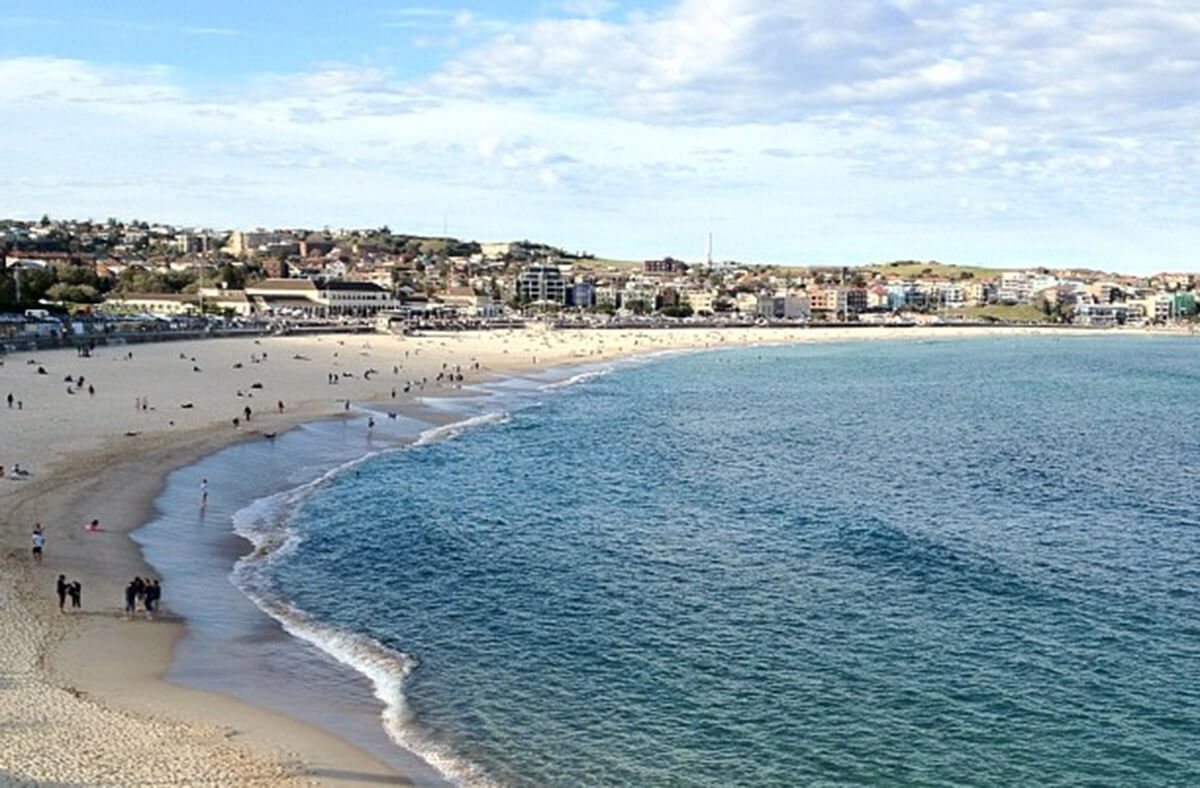
Bondi is one of several beaches nestled in coves along the southeastern shore of Sydney. Photo by Andy Carvin
Andy Carvin December 15, 2025
Like so many Jewish Americans whose families immigrated prior to World War II, I grew up believing that none of my family had survived the Holocaust. When I would ask my older relatives, they would shrug. Only my grandfather shared anything about our relatives: He remembered how his parents would receive letters from Lithuania in the late 1930s and early 1940s, until one day they stopped coming.
As far as I knew, we were the only ones left. That is, until my uncle got a strange phone call from an elderly man who spoke with a hybrid German-Australian accent.
My uncle was skeptical; the person on the other end of the line claimed to be a cousin from the Australian branch of the Carvin family, despite the fact that my great-grandfather Max had invented the surname only after reaching the United States in the early 1900s.
The mysterious Australian said he was visiting Boston and asked if he wanted to meet. My uncle declined and ended the call, assuming it was a hoax or a scam.
My cousins, though, were curious. One of them began calling hotels across Boston asking for a Mr. Carvin until she tracked down the Australian. His name was Leo, and he graciously renewed his offer to meet for lunch.
When she arrived at the restaurant, she saw a man who looked much like her father, but older. And he was holding an envelope of letters written on my great-grandfather’s stationery from his home outside of Boston.
Over the course of an afternoon, my cousin learned more about my family history than any of us had uncovered in decades. Leo explained that his mother was one of my great-grandfather Max’s sisters, making Max his uncle. She and Max had continued to correspond during the interwar period; when the Nazis annexed Austria, her young adult children, including Leo, fled to Italy. Coming to the U.S. was no longer as straightforward as it had been for so many European Jews a few decades earlier, but Max tried to arrange visas for them. He suggested they begin using the surname Carvin rather than his sister’s married name, hoping it might increase the chances of obtaining visas.
It made no difference. Despite all of Europe being on the precipice of another world war, the United States would not take them in. But Australia would.
Leo and one of his brothers arrived in Freemantle, Western Australia, in October 1938. To honor Max’s efforts to help them escape from Europe, they legally adopted the surname Carvin soon after their arrival. Eventually they found their way to Sydney, where they and their descendants would thrive.
In the years since Leo Carvin made that phone call to my uncle, we’ve gotten to know our Australian branch. They’ve traveled the east coast of the U.S. visiting my family multiple times; two of them crashed my wedding in Baltimore.
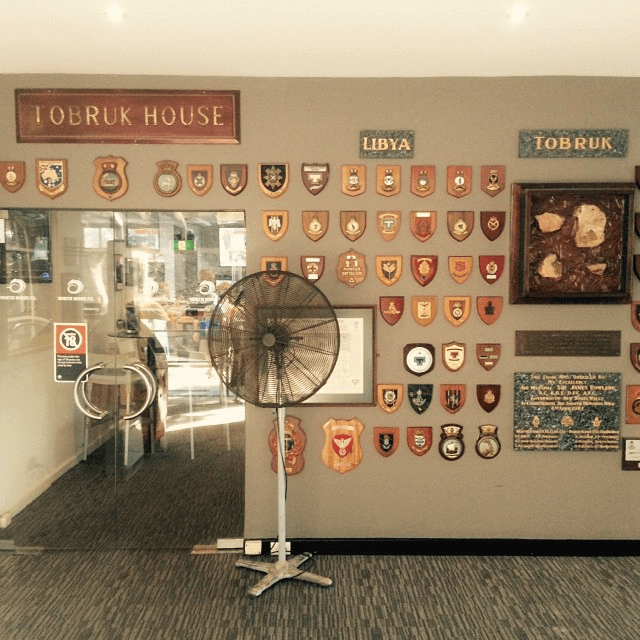
I’ve also visited them in Sydney on three occasions, and on each trip, we’ve repeated the same ritual: having drinks overlooking Bondi Beach at a clubhouse founded by Australian veterans of World War II’s North Africa campaign.
It would be wrong to say Bondi is unlike any other beach I’ve been to; in fact, it’s one of several beaches nestled in coves along the southeastern shore of Sydney, all equally inviting and picturesque. But Bondi is the one I will always think of as our family beach in Australia, and the veterans’ clubhouse as our local pub. It’s a place where I got to rediscover my family in a way that all too many Jewish Americans will never get to do, reuniting with the descendants of relatives who escaped the horrors of the Holocaust and found refuge in a new home.
My great-grandfather, an old-school Bundist, probably would have described our family’s immigration to Boston as doikayt, the Yiddish word for “hereness” that celebrates the diversity of the Jewish diaspora and our ability to thrive wherever we end up, often against difficult odds. I can’t help but think of doikayt whenever I think of Bondi Beach and the country that welcomed my extended family when other countries would not. It symbolizes more than just survival — it symbolizes renewal, prosperity, and resilience.
Bondi Beach may be 9,800 miles away from my current home — effectively on the opposite side of the world — but it will also be here for me. It’s become my home away from home, and a place for joyful reunions that defy all odds. And it would never have been possible if Australia had not opened its arms to my extended family.
This is a moment of great uncertainty. Here’s what you can do about it.
We hope you appreciated this article. Before you go, we’d like to ask you to please support the Forward’s independent Jewish news this Passover. All donations are being matched by the Forward Board - up to $100,000.
This is a moment of great uncertainty for the news media, for the Jewish people, and for our sacred democracy. It is a time of confusion and declining trust in public institutions. An era in which we need humans to report facts, conduct investigations that hold power to account, tell stories that matter and share honest discourse on all that divides us.
With no paywall or subscriptions, the Forward is entirely supported by readers like you. Every dollar you give this Passover is invested in the future of the Forward — and telling the American Jewish story fully and fairly.
The Forward doesn’t rely on funding from institutions like governments or your local Jewish federation. There are thousands of readers like you who give us $18 or $36 or $100 each month or year.
Support our mission to tell the Jewish story fully and fairly.