My religion was ‘None of the above,’ until Oct. 7 and now Bondi
I was wandering around a non-denominational desert — until I became Jewish at 60
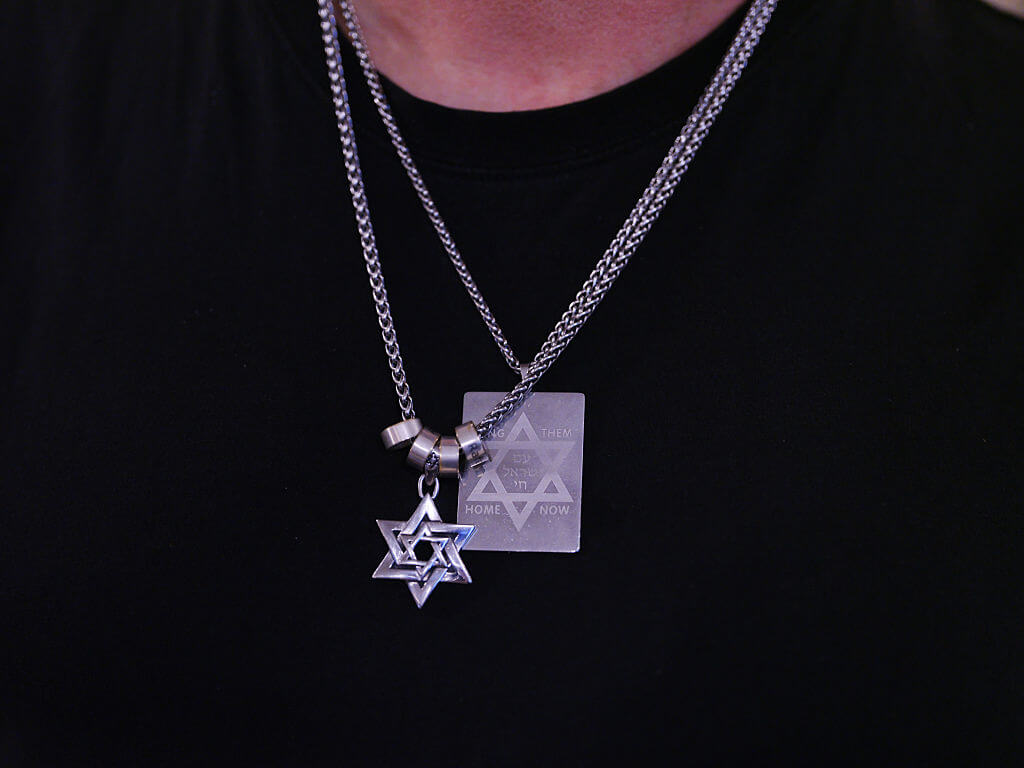
A member of the Jewish community wears necklaces in the shape of the Star of David at Jewish community center, Chabad of Bondi at Bondi Beach on December 15, 2025 in Sydney, Australia. Photo by George Chan/Getty Images
David Weill December 16, 2025
Judaism is on fire — or really, being Jewish is on fire. The mass murder of Jews on Bondi Beach during a Hanukah celebration was only the most recent example. But the reaction that surprised me the most was how unsurprised I was watching the news reports on Sunday morning. Like too many, I have become anesthetized to mass shootings in general and those targeted toward Jews in particular.
Antisemitism is raging across the world like a global pandemic, except the contagion this time is not a virus, it’s hate — and the fire is burning out of control. It shows up on our news platforms, our social media feeds, even, perhaps especially, in the polite company of dinner parties and faculty lounges. Jewish worshippers shot in a Manchester synagogue, an Israeli tourist viciously beaten on a busy Manhattan street while onlookers casually walked by, two Israeli embassy staff members murdered outside the Capital Jewish Museum in D.C. are just a few recent examples.
Space doesn’t allow a full accounting of all the Jewish hate crimes in the last few years. But this much is true: Jewish hate is old, truly biblical, but it’s become increasingly hot in the aftermath of the war in Gaza that, parenthetically, was initiated by a heinous attack against the Jewish people. Though obvious, sometimes, especially as it relates to this conflict, the obvious needs restating. And now, for reasons that are beyond baffling, who started the war seems beside the point.
Until recently, I could feel removed from this global phenomenon, given the ambiguity of my own religious identity. Despite my last name and appearance, for most of my life, I didn’t identify as Jewish. Instead, I was the confused product of a Baptist mother from Selma, Alabama and a Jewish father who escaped Nazi Germany just in time. Both my parents turned away from their religions, my mother because of the silence of churches in the South in the face of racial injustice and my father as protection against Jewish persecution that didn’t end when World War II did.
Growing up, my religious identity was None of the Above, a designation that made me feel as though I was aimlessly wandering around a non-denominational desert.
As I grew older, the subject of my religious identity made me immediately uncomfortable, whether as a topic of conversation at a dinner party or as a simple question on a form. At times it elicited a visceral response — flushing, a bit of nausea, a bead of sweat on my back — not just because I didn’t have a ready answer, but because it made me feel disconnected from the rest of society. I would have rather been asked anything else: Who did you vote for or How much money do you make?
The question What religion are you? felt like an interrogation, a bright light shone in my face. While most people could respond to the question with a one-word answer, that was never going to be an option for me. And that made me feel like an outsider, a person that could not fit neatly into a religious box, akin to the children in military families who stumble when asked, Where did you grow up?
Everywhere, nowhere.
Because not having a religion to call my own never sat well with me, I went on a decade-long journey, one that went here and there, ending only when I spent the time to, once and for all, put the matter to bed. After thousands of hours of research, discussion, and a significant amount of rumination, I’ve decided to embrace my Judaism, to run into the burning building, as it were, when the convenient choice would have been to run away from it, an easy choice for someone that had spent his whole life undifferentiated when it came to religion.
Which brings me to today, to where I am now, to where we all are now.
Oct. 7 happened to occur in the midst of my grappling with my own religious identity. But even if that was still a bit murky then, I felt rage nonetheless when anti-Israel protests ignited in many Middle Eastern and Western capitals, all before one IDF plane was in the air. As I watched these images from the comfort of my living room, I thought of my father and his family, the knocks on the door in the middle of the night, the trains, and yes, the burning furnaces. As ever, societal opinions that surround Israel and Jewishness today have become conflated, manifesting as antisemitism when it might simply have been disagreement with the Israeli prosecution of the war in Gaza.
This country finds itself in a rare situation where extremists on the Right and the Left have merged into an unholy antisemitic coalition, exemplified by Progressives yelling and screaming about “genocide” without having a clue what that word really means and voting overwhelmingly to elect a New York City Mayor who refuses to walk back his call to “globalize the intifada.”
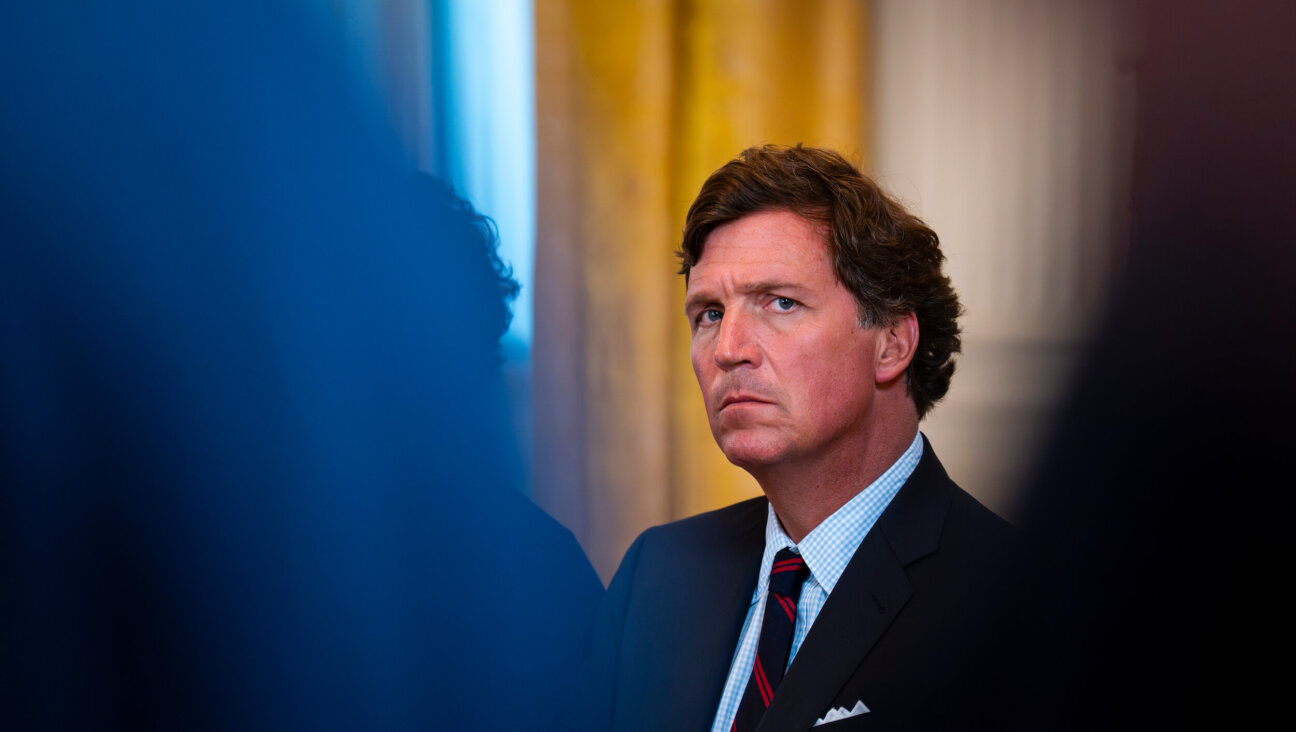
Meanwhile on the Right, Tucker Carlson, who has a podcast that goes out to 16.7 million followers on X, recently gave Nick Fuentes two hours to spew antisemitic rhetoric, including his comments that with regard to his enemies in the conservative movement, “I see Jewishness as the common denominator,” and that Jews are a “stateless people,” certainly true if Fuentes had his way.
Not to be left out, Carlson helpfully added that the United States gets nothing out of the relationship with Israel. Given that Israel is the only functioning democracy in the Middle East, a part of the world not known for stability, I would argue that support of Israel is not just in the interest of the “Jews” (the monolith that Carlson and his ilk view them/us) but rather in America’s interest. Carlson obviously sees the geopolitics differently, arguing recently that Israel was not “strategically important” to the United States and, in fact, a “strategic liability.” For his part, President Trump defended Carlson, saying, “You can’t tell him who to interview,” without commenting directly on what was actually said in the interview.
For a confused maybe/maybe not a Jew like me, Oct. 7 provided an impetus to reassess my faith. So I did. But after hundreds of hours of research and thousands of miles of travel, I realized my Judaism didn’t start on Oct. 8, 2023 — it began in 1320 when the progenitor of my family, Juda Weill, was born. Juda was then followed by generations of Jewish family members, mostly rabbis and including the famous composer Kurt Weill, until the German Weills were either murdered by the Nazis, or for the lucky ones, dispersed all over the world. My grandfather, fresh off the horrors of Buchenwald, made it to America with my father, grandmother, and uncle.
Then — at nearly age 60! — I learned that my mother converted to Judaism, and the path toward my own Judaism was set, when all that was left was to walk along it and pick up the breadcrumbs along the way.
What did I find at the end of that road?
A burning building. And what did I do as I looked at that place on fire, whether in Australia, Europe, or on the streets of American cities?
I ran in, because that’s what we all must do, Jews, Christians, Muslims, and everyone else of any religious identity.
If any of us wonder what we would have done, Jews or Gentiles, during the early days of the Nazi regime, we are doing it now.