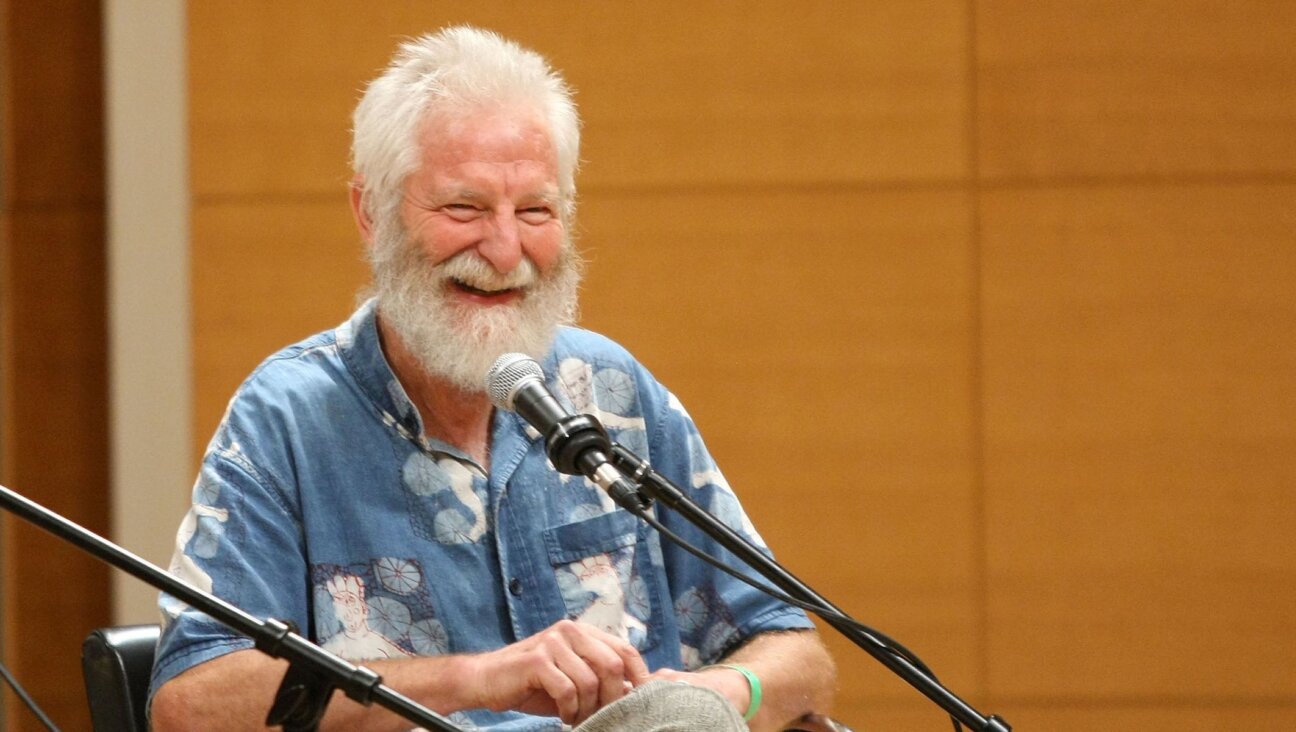
He lost family during the Bondi Beach attack. Hours later, he helped feed 600 unhoused people in LA
Yossi Segelman grew up with Rabbi Eli Schlanger
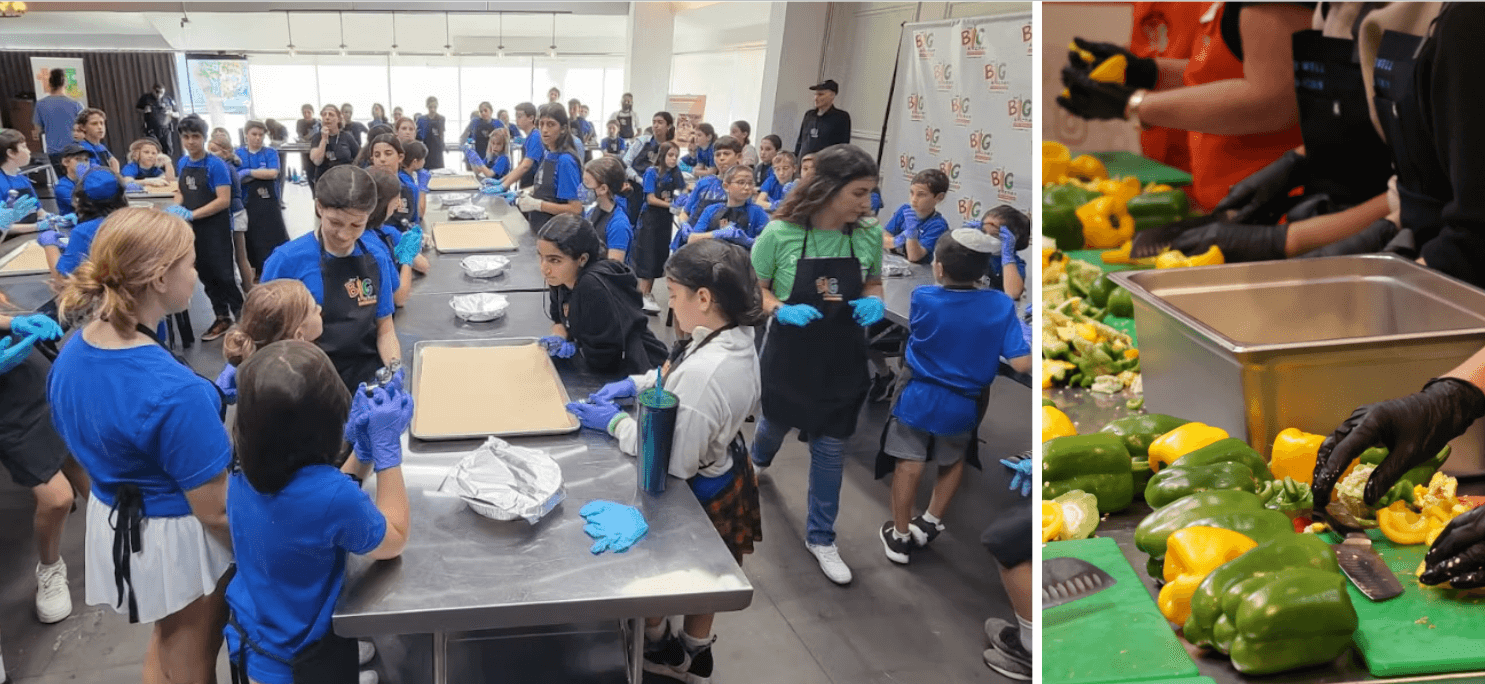
In the past year, Our Big Kitchen Los Angeles welcomed more than 24,000 volunteers who made 183,574 meals. Courtesy of OBKLA
Hanukkah on Bondi Beach was the coolest party of the year, recalled Yossi Segelman.
“There’s singing. There’s dancing. There’s sufganiyot … There’s clowns and petting zoos,” he said. “It brought all people together.”
Segelman, who was born in London, spent 16 years living in Sydney, and now resides in Los Angeles, used to attend the celebration every year.
It was Segelman who drew Rabbi Eli Schlanger, his childhood neighbor in London, to Australia almost 20 years ago. Segelman made the shidduch, or match, between Eli and his wife Chaya’s cousin. As they became family, Segelman and Schlanger also became close friends.
“He was just always happy … a rocket full of joy,” Segelman said. “I knew many people who were personally moved and touched and became more connected to Judaism and to Israel as a direct result of their impact and connection with Rabbi Eli.”
When Segelman logged on to WhatsApp on Sunday, he learned that terrorists had murdered Schlanger at the same yearly Hanukkah celebration. One of his nieces was in surgery.
“I had a number of other family members, nieces, nephews, who were ducking at the tables and had bullets whizzing overhead and had seen things that no one should ever see,” he said.
And yet hours later, Segelman, who is the executive director of the nonprofit Our Big Kitchen Los Angeles, still showed up to lead dozens of people in preparing 600 meals for Angelenos in need.
That Sunday was my second time volunteering at OBKLA. As I snapped on blue nitrile gloves and prepared to scoop meatballs from a tub of ground beef, I was stunned that Segelman felt capable of showing up with one family member dead and another on the operating table.
But he insisted, during the session and two days later when I came back to speak with him, that it’s precisely during dark times that a community needs a space to come together and serve others. As rising antisemitism and violent attacks like the one in Bondi might pressure Jews to turn inward, Segelman’s emphasis on both Jewish pride and welcoming all, no matter their background, offers us a path forward.
Giving back in times of crisis
Schlanger and Segelman both served as chaplains in Australia; Schlanger for corrective services and Segelman for the military.
“We were involved in the same thing and that is to try and bring peace, and comfort, and solace, encouragement, to those who found themselves in difficult situations,” Segelman said.
In parallel to his work as a chaplain, Segelman became involved as an early director of Our Big Kitchen in Sydney, which prepares meals for Australians in need. The organization’s Bondi kitchen is less than a mile from where Sunday’s terror attack took place. Though the food is kosher, most meals go to the broader community, and most volunteers aren’t Jewish.
A few years after moving to Los Angeles, at the height of the pandemic, the Segelman family sprung into action to distribute snacks to hospitals, unhoused people, and first responders. Their impulse to help has since grown into a smooth operation, one the Segelmans activated at full throttle during LA’s wildfires this year.
In his office, Segelman has a basket where he keeps empty rolls from the stickers volunteers use to package food. Each roll signified a thousand meals. The basket was overflowing. In the past year, Segelman said, OBK LA welcomed more than 24,000 volunteers who made 183,574 meals.
Segelman emphasized the impact of the meals not only on the recipients, but also on the volunteers who created them.
“Volunteering, it’s being hands-on. It’s a visceral experience. You’re immersing yourself in an act of goodness and kindness,” he said.
How we respond to terror
Segelman has more practice than most in taking action. But the attack in Sydney posed a new challenge.
“For me to get up Sunday morning and welcome everybody and do what we do usually at OBK with cheer and with love was not easy,” he said. But he knew that his job was “to inspire people, especially when the going gets tough, and to really transform those feelings of helplessness into hopefulness.”
When we spoke on Tuesday at noon, Segelman had just finished an event with 70 school kids, with more programs to come later that day. Schlanger’s funeral, which he would attend remotely, was at 4 p.m. His teenage niece’s operation was successful, though his entire family remained extremely traumatized.
Nevertheless, Segelman insisted the Hanukkah celebration must return to Bondi Beach.
“100%. Bigger and better,” he said. “To cancel events and close down events is contrary to the story of Hanukkah.”
“We need to continue doing what we’re doing, do it stronger, obviously be smart, be vigilant, but absolutely go out there and to continue to do what we do and do it proudly.”
When I asked if a terror attack like Sunday’s might complicate OBK’s practice of welcoming everyone into its kitchen, his answer was adamant: “We are an organization rooted in Jewish values of chesed, of tzedakah, and we’re proudly kosher, and we’re proudly based in the heart of the community. But we welcome absolutely everyone, both to volunteer and to receive a meal.”
Violence cannot shatter our empathy
To be proudly Jewish and yet welcome everyone is an essential message; one whose second component, I think, may be hard for some in our community to hear right now.
The brutality of Oct. 7, of the subsequent rise in antisemitism and terror like the kind unleashed in Sydney, rightfully activates Jewish fears. It also, however, threatens to make a drought of our empathy. At its very worst — as I’ve written about in the case of far-right Jews denying hunger in Gaza or using AI to spread hate — Jewish pain is contorted into a pretext to ignore others’ suffering or even inflict it on them.
But now is the time to lean into our values, not turn away from the rest of the world. Segelman’s message for all of us this Hannukah: Find a way to give our time in service to others, even if it’s just an hour a week, and to provide inspiration or love, even to just one other person.
On Sunday night, a few hours after the OBKLA event, my partner and I welcomed our friends, some Jewish, some not, for the first night of Hanukkah. We fried latkes and schnitzel. My hand shook, then steadied, as I sang and led a menorah lighting for the first time. The candle burned through its wick; yellow and blue wax dripping onto parchment paper. We sat in the gentle glow, affirming joy.
This Hannukah, Segelman and OBKLA show us that when faced with unimaginable violence, the best way to nourish our souls might be to come together, cook, and serve others.