What if Donald Trump puts his name on the US Holocaust Memorial Museum?
In our new Trumpian world, even the most unthinkable acts now seem plausible
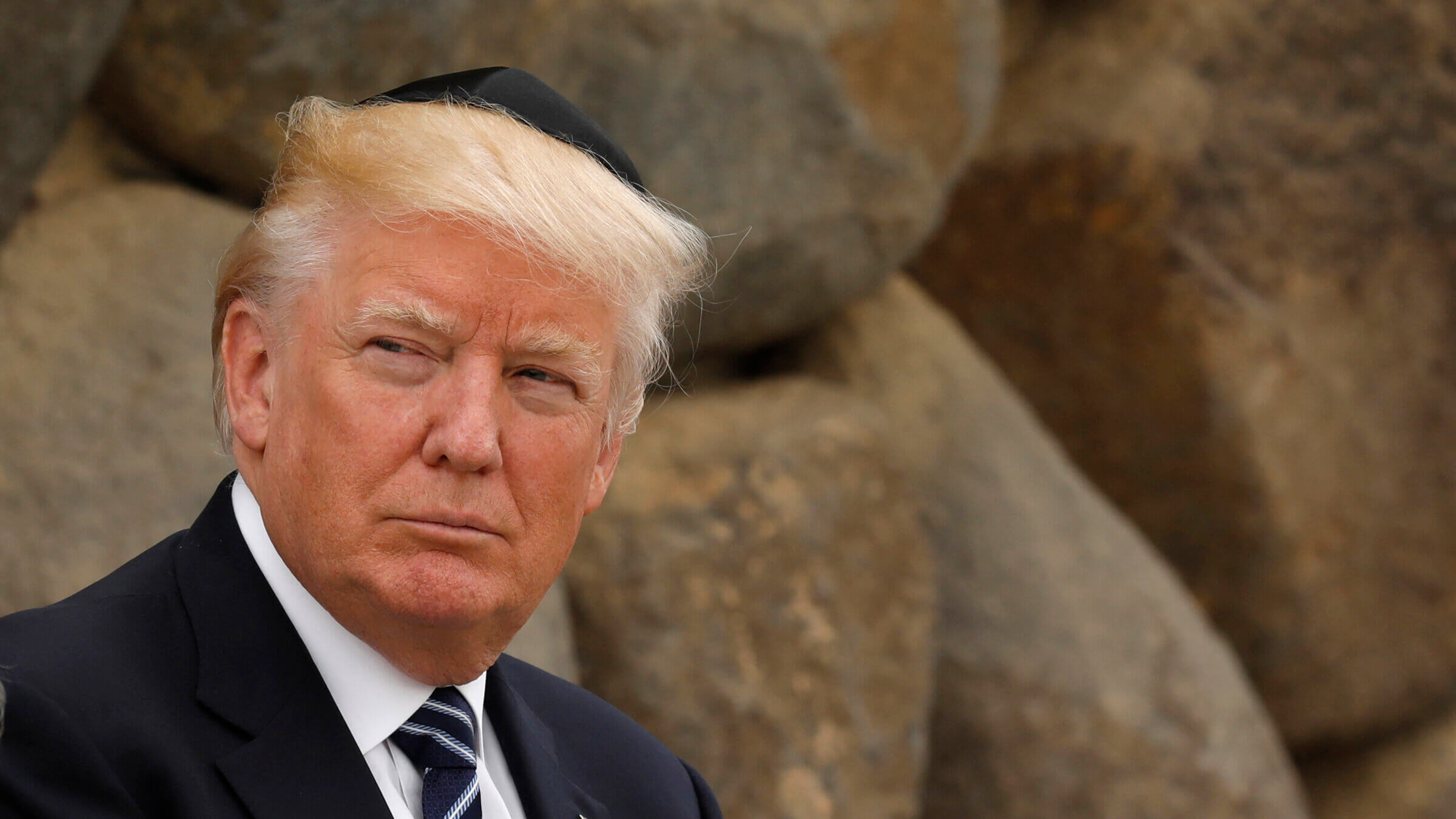
Donald Trump at the Yad Vashem Holocaust Memorial museum Photo by GALI TIBBON/AFP via Getty Images)
Robert Zaretsky December 27, 2025
What if I told you that this morning, I found the following Truth Social post on my newsfeed?
“THE TRUMP US HOLOCAUST MEMORIAL MUSEUM HONORS will be broadcast tonight, on CBS, and Stream on Paramount+. Tune in at 8 P.M. EST! At the request of the Board, and just about everybody else in America, I am hosting the event. Tell me what you think of my “Master of Ceremony” abilities. If really good, would you like me to leave the Presidency in order to make “hosting” a full time job? We will be honoring true GREATS in the History of the Holocaust, from the Elders of Zion and the NSDAP to John Birchers and Groypers. THANK YOU FOR YOUR ATTENTION.”
If you said this post wasn’t real, you would be right. If you said that I tweaked a recent Truth Social post, swapping the US Holocaust Memorial Museum for the former John F. Kennedy Memorial Center for the Performing Arts, you would be right about that too.
But if you said that this post was unthinkable, my response would be “Think again.”
The phrase “Thinking the unthinkable” was all the rage in the late 1950s and early 1960s. It was an era darkened by the threat of mushroom clouds, the theatrics of Peter Sellers in Stanley Kubrick’s film Dr. Strangelove, and the theories of Herman Kahn, whose notion of the Doomsday Machine features in Kubrick’s masterpiece. Kahn coined the term “unthinkable,” insisting that while “nuclear war may seem highly unlikely, indeed unthinkable, to many people — it is not impossible.”
To this very day, the threat of a nuclear holocaust remains all too real and thinkable. But it has been sidelined by a different kind of threat, one that has buried the very concept of the unthinkable.
So many words and acts once considered unthinkable have, under the two Trump presidencies, become not just thinkable and not just doable, but also increasingly unremarkable. Is there any word or act we still consider safely and surely unthinkable? Is there anything at all that, to quote Herman Kahn, while it may seem highly unlikely, indeed unthinkable, to many people — is not impossible?
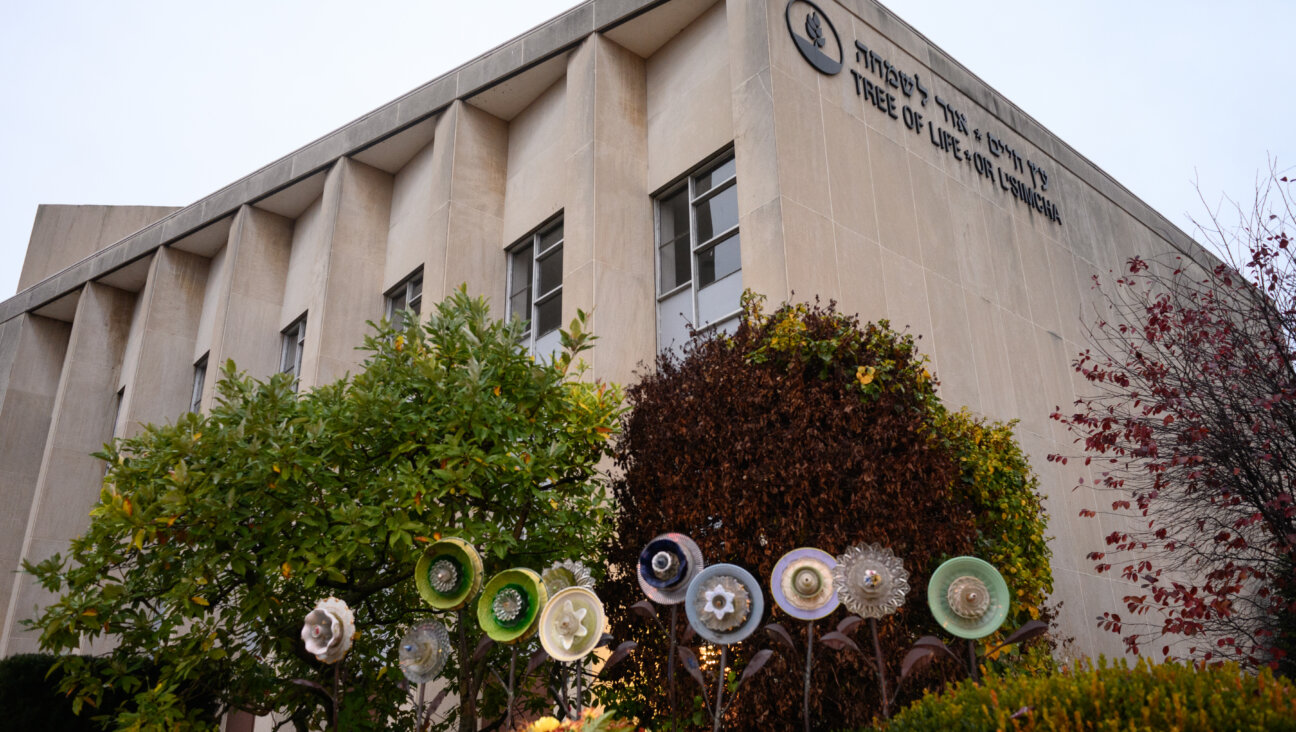
To find an answer, it helps to suggest a limiting case on our government’s effort to make all things thinkable, and thus acceptable, even normal. Consider the fake post with which I began this column — namely, that Donald Trump would one day plaster his name on the building that houses the United States Holocaust Memorial Museum. Can there be anything more unthinkable than Trump stamping his name on the USHMM, the very institution that is dedicated to reminding the world of the consequences of acting on the unthinkable?
In his reflections on life under totalitarian rule, The Captive Mind, Polish poet and Nobel Prize Laureate Czeslaw Milosz observed that all “concepts men live by are a product of the historic formation in which they find themselves. Fluidity and constant change are the characteristics of phenomena. And man is so plastic a being that one can even conceive of the day when a thoroughly self-respecting citizen will crawl about on all fours, sporting a tail of brightly colored feathers as a sign of conformity to the order he lives in.”
We see such plasticity on the sets of Fox News, the corridors of Congress and in the board rooms of media, legal, and tech titans where talking heads, politicians and CEOs happily crawl about with many-colored tails of feathers. This is also true in the board rooms of the Donald J. Trump and John F. Kennedy Memorial Center for the Performing Arts and the Donald J. Trump Institute of Peace. (The names of these sites must be written in full to fully grasp the absurd character of this era.)
But the United States Holocaust Memorial Museum will always be exempt from this creeping rot of the absurd, right?
Wrong.
In early May, the USHMM, which like the Donald J. Trump and John F. Kennedy Memorial Center for the Performing Arts is both privately and federally funded, announced an overhaul of its board. Nearly all its Biden-appointed members were fired, replaced by a choice assortment of Trump appointees. They include Sid Rosenberg, a conservative talk-show host who spoke at a Trump rally last year, denouncing the Democrats as “a bunch of degenerates.”
Another Trump appointee, Martin Oliner, published an op-ed in The Jerusalem Post earlier this year in which he called for the forcible removal from Gaza of Palestinians, whom he described as “fundamentally evil.” In another piece, titled “Make the Holocaust Memorial Council Great Again,” he warned that the USHMM was not meeting its “important role.”
Equally troubling was this fall’s temporary closing until next February of the museum exhibit dedicated to America’s wartime response to the Holocaust. The ostensible reason was to “upgrade the exhibit,” an Orwellian phrase that some staffers fear means the blurring the historical record, one that includes the disinterest of the White House, the fecklessness of most Jewish leaders, and the polite, yet potent antisemitism at the State Department.
In his landmark work The Abandonment of the Jews, the historian David Wyman offers a similar conclusion on the American public’s response to the Holocaust: “Few American non-Jews recognized that the plight of the European Jews was their plight too. Most were either unaware, did not care, or saw the European Jewish catastrophe as a Jewish problem, one for Jews to deal with. That explains, in part, why the United States did so little to help.”
Is it possible that because too many of us remain unaware of or indifferent to the Trump administration’s abandonment of the unthinkable, we have invited the catastrophe now enveloping our nation? A catastrophe that already announces itself in the mass and often violent arrests and deportations of men and women because of their skin color? In the lawless killing of civilians in international waters? In the unconstitutional deployment of the National Guard in our cities? For those who do not yet have an answer, it is worth giving the matter a bit of thought — even if you find those thoughts unthinkable.
This is a moment of great uncertainty. Here’s what you can do about it.
We hope you appreciated this article. Before you go, we’d like to ask you to please support the Forward’s independent Jewish news this Passover. All donations are being matched by the Forward Board - up to $100,000.
This is a moment of great uncertainty for the news media, for the Jewish people, and for our sacred democracy. It is a time of confusion and declining trust in public institutions. An era in which we need humans to report facts, conduct investigations that hold power to account, tell stories that matter and share honest discourse on all that divides us.
With no paywall or subscriptions, the Forward is entirely supported by readers like you. Every dollar you give this Passover is invested in the future of the Forward — and telling the American Jewish story fully and fairly.
The Forward doesn’t rely on funding from institutions like governments or your local Jewish federation. There are thousands of readers like you who give us $18 or $36 or $100 each month or year.
Support our mission to tell the Jewish story fully and fairly.