In 3 days, Israel and the US reshaped the Middle East
The war to date has been enormously successful. Can it continue?
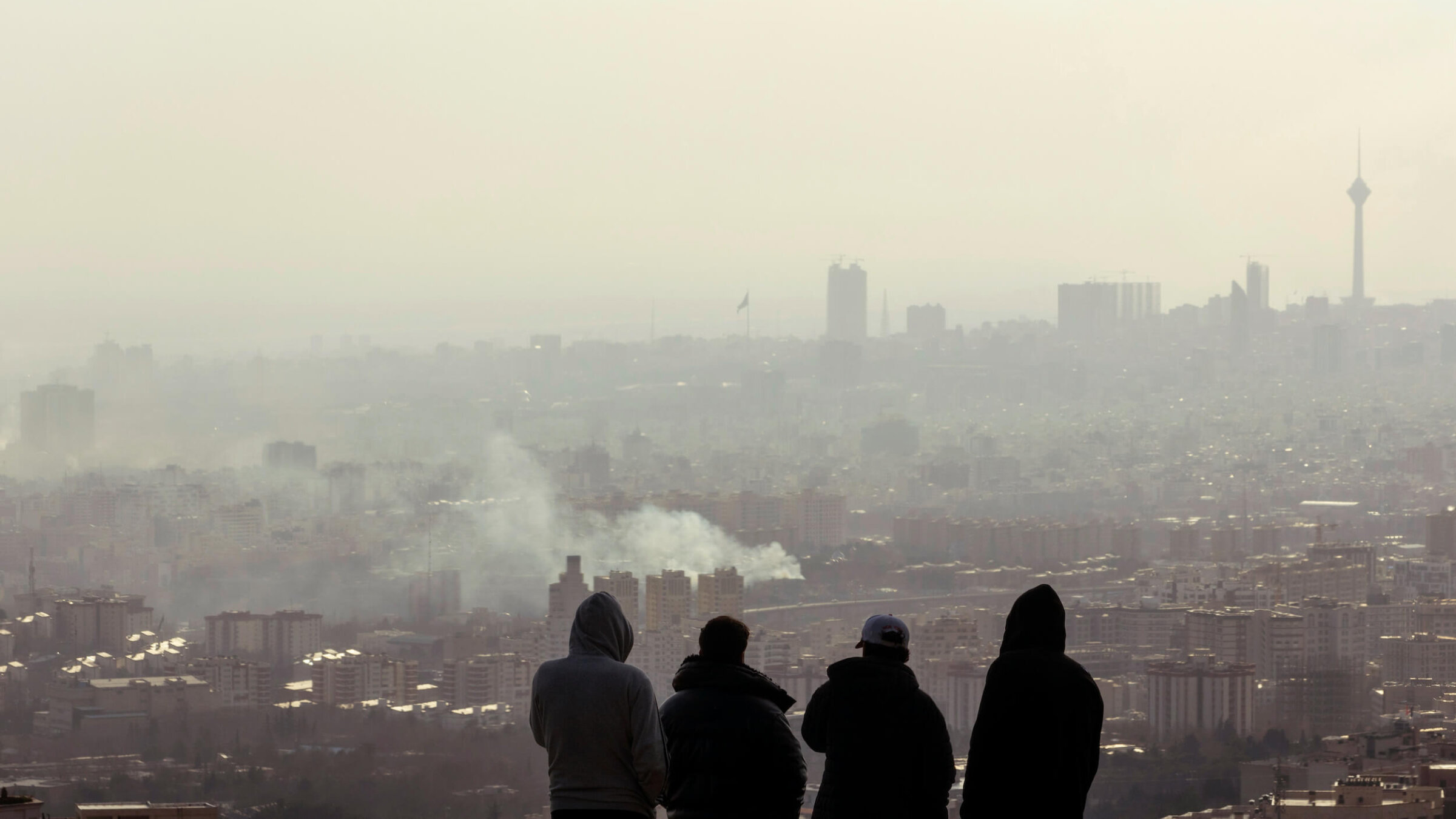
Men watch from a hillside as a plume of smoke rises after an explosion in Tehran, Iran on March 2. Photo by Majid Saeedi/Getty Images

Columnist Dan Perry March 2, 2026
The first three days of the new war in Iran will be studied in military academies for decades. They may also be remembered as the moment the Islamic Republic’s long arc of regional intimidation finally broke.
Israel and the United States swiftly eliminated much of Iran’s command structure. Supreme Leader Ayatollah Ali Khamenei. Senior Revolutionary Guard commanders. The military high command. Key ministers. Even former president Mahmoud Ahmadinejad, who had dedicated years of rhetoric and policy to Israel’s destruction. Roughly 40 senior officials were killed in a synchronized operation that combined intelligence penetration, precision strike capability and political nerve.
It is difficult to identify a modern precedent for such a comprehensive and instantaneous decapitation of an adversary. States have targeted leaders before. They have crippled command structures before. But to reach so deeply, so quickly, and with such apparent accuracy into the inner sanctum of a regime long defined by paranoia and internal security is extraordinary.
Whatever follows, that message will linger. Israel can reach you. It can map your hierarchy, and then collapse it in a night.
For once the cliché is true: This is truly a pivotal moment. Here’s a look at the interlocking elements, and the possible directions in which this unpredictable situation could next unfold.
Air supremacy without precedent
Perhaps most striking has been the dominance in the skies.
Israel fields more than 300 combat aircraft of the highest caliber. The U.S. has surged at least a comparable number into the region. Together, they have established near-total air superiority over Iranian territory.
Iranian air defenses — already degraded in strikes in late 2024 and mid-2025 — have proven unable to contest sustained sorties. Launchers that reveal themselves are rapidly destroyed. Radar systems are neutralized in cycles.
Wars between states are rarely so asymmetrical in the air. Iran has invested heavily in layered defenses and missile deterrence. But technology, training and integration have won the day. For the Israeli air force, this is an operational achievement of historic scale.
The alliance factor
Just as consequential is the political dimension: Israel and the U.S. fighting shoulder to shoulder in a major offensive campaign.
For much of Israel’s early history, U.S. military cooperation was uncertain. Even after the strategic partnership deepened in the 1970s, it was never a given that Washington would participate directly in high-risk regional operations. That barrier has now been crossed.
President Donald Trump’s decision to align so closely with Israel in a war of this magnitude will be remembered in Israel for a generation. Many Israelis have long believed him to be uniquely aligned with their security worldview. After three days of joint operations, the strategic intimacy is undeniable.
This does not resolve every question about long-term regional strategy, or about how steady of a partner the U.S. will prove to be. But in the immediate sense, Israel’s foundational anxiety — that in an existential confrontation it might stand alone — has been decisively eased.
Iran’s gamble in the Gulf — and Lebanon’s unfinished business
Tehran’s response to Israeli and U.S. strikes has been to widen the field.
By striking at Gulf states and issuing threats beyond Israel, Iran appears to be attempting escalation in order to generate pressure on Washington. The logic is clear: If oil markets tremble and regional capitals feel directly endangered, the U.S. might be compelled to restrain Israel to prevent broader instability.
The gamble is that, with the exception of Qatar, few Gulf governments harbored much sympathy for the Islamic Republic to begin with. Iran’s support for militias across the Arab world has long been viewed as an assault on Arab sovereignty. So, instead of fracturing the U.S.-Israel coalition, Iran risks pushing Gulf states to join it.
Faced with direct attacks and threats, a group of Arab foreign ministers convened and issued a notably unified statement warning Iran of consequences. Even Doha has publicly criticized Tehran’s moves.
Threats toward Cyprus have also stirred a European reaction. What had been a near-global consensus around three core American demands — no military-level nuclear enrichment, no offensive long-range missile program, and an end to proxy warfare — is hardening rather than eroding. Only China and Russia stand conspicuously apart.
And then there is Lebanon. After Hezbollah joined the conflict, Brig. Gen. Effi Defrin declared that the conflict would end “with Hezbollah severely damaged, not just Iran.” That was not rhetorical flourish. It was a warning that the scope of the war could shift.
After striking significant blows against Hezbollah in the war that unfolded after Oct. 7, Israel gave Lebanon space to implement what had been promised: the disarmament or at least meaningful curtailment of the militia’s independent military capacity. That has not happened. Hezbollah, though badly thrashed in that earlier round, has preserved significant capabilities, and appears to believe it can fight another day.
Israel sees Hezbollah’s engagement as an invitation for a renewed campaign designed to decisively degrade the group. Should Washington prefer to limit escalation inside Iran itself, the center of gravity could shift northward, toward a resumption of intensive Israeli operations in Lebanon.
The war, in other words, has multiple possible theaters.
Missiles versus interceptors
Informing Israel’s choices is a grim arithmetic.
Iran retains a substantial stockpile of ballistic missiles. Israel’s layered defense is formidable but not inexhaustible. The strategic question is simple: Will Iranian missiles run out before Israeli interceptors do?
Iran’s firing patterns suggest awareness of this calculus. Rather than saturating Israeli defenses with hundreds of missiles at once, it has launched in more measured waves. Preserving inventory matters.
For Israel, two parallel imperatives follow: destroy as many launchers and depots as possible, and accelerate interceptor production and deployment. Both are underway. Strikes on missile infrastructure are a central component of the air campaign. Reports also indicate targeted killings of Iranian personnel involved in advanced missile research and development.
This is a race of attrition beneath the spectacle of air supremacy.
Jerusalem’s dilemma
If the war were to end now, Israel would not have achieved everything it wants. Iran’s nuclear infrastructure may not be fully dismantled. The missile threat would not be entirely erased. Hezbollah would remain armed, though weakened. The broader militia network would not yet have withered away. (Trump has suggested the conflict will continue for some weeks, but he is also notoriously changeable.)
Yet there is a serious argument in Jerusalem for exploring whether surrender terms can now be imposed while the balance of power is overwhelmingly favorable. The gains already secured are historic. The Iranian regime’s top tier is gone. Its air defenses are crippled. Its deterrent mystique has collapsed.
The alternative to a truce — escalation toward maximalist objectives, including outright regime change — entails unpredictability.
So Israel must now decide how hard to press Washington. Should it urge the U.S. to seize the moment and push for more profound structural transformation in Tehran? Or should it consolidate the gains already achieved and lock them into enforceable constraints? Should it pivot north and finish what it regards as unfinished business in Lebanon?
These are strategic questions. They are also political ones.
The domestic shadow
A large majority of Israelis believe that Prime Minister Benjamin Netanyahu is politically cynical enough to initiate or expand military confrontations to serve his own political survival. The trauma of Oct. 7, and the government’s earlier attempt to overhaul the judiciary in ways widely seen as authoritarian, left him deeply unpopular and mistrusted across much of the electorate.
A successful war against Iran could restore Netanyahu’s standing to a degree few would have imagined only months ago, and plausibly position him to win upcoming elections.
For Israel, that prospect is enormously consequential. A renewed Netanyahu mandate, built on the back of a historic military triumph, would likely entrench a version of Israel that is more nationalist, more religious, and more dismissive of liberal constraints. The tensions between secular and religious communities, between the judiciary and the executive, between integration and isolation, would only grow.
Israel’s most globally connected and economically productive sectors have already shown signs of anxiety about the country’s democratic trajectory. A perception that authoritarian tendencies have been vindicated by war could accelerate emigration among parts of the professional class. Over time, that would reshape not only Israel’s politics but its economy and society.
In that sense, the most consequential outcome of this war for Israel may not lie in Tehran or Beirut, but in Tel Aviv and Jerusalem.
This is a moment of great uncertainty. Here’s what you can do about it.
We hope you appreciated this article. Before you go, we’d like to ask you to please support the Forward’s independent Jewish news this Passover. All donations are being matched by the Forward Board - up to $100,000.
This is a moment of great uncertainty for the news media, for the Jewish people, and for our sacred democracy. It is a time of confusion and declining trust in public institutions. An era in which we need humans to report facts, conduct investigations that hold power to account, tell stories that matter and share honest discourse on all that divides us.
With no paywall or subscriptions, the Forward is entirely supported by readers like you. Every dollar you give this Passover is invested in the future of the Forward — and telling the American Jewish story fully and fairly.
The Forward doesn’t rely on funding from institutions like governments or your local Jewish federation. There are thousands of readers like you who give us $18 or $36 or $100 each month or year.
Support our mission to tell the Jewish story fully and fairly.