A gunman attacked a Michigan synagogue. Here’s what happens to the community next
Mass violence has effects that linger long after camera crews leave
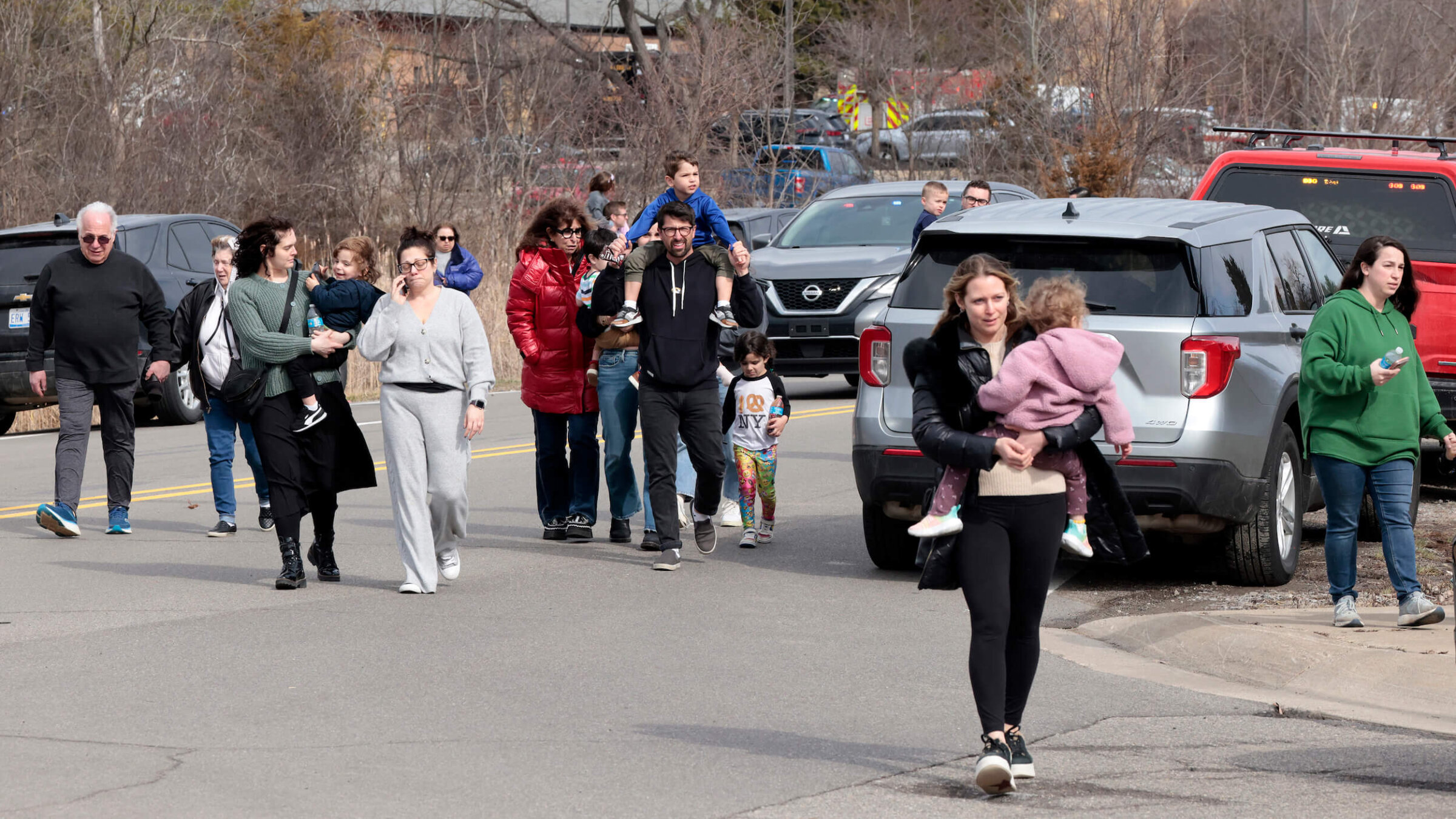
Families leave after being reunited outside Temple Israel synagogue on Thursday. Photo by Jeff Kowalsky/AFP/Getty Images

Senior Columnist Rob Eshman March 12, 2026
A driver rammed his pickup truck into Temple Israel in West Bloomfield Hills, Michigan, a large Reform Temple about 25 miles from downtown Detroit, on Thursday. Blessedly, there were no casualties besides the shooter, whom security guards rapidly engaged. One guard was injured. Aside from that, everyone who was inside the synagogue, including 140 children attending school there, emerged unscathed.
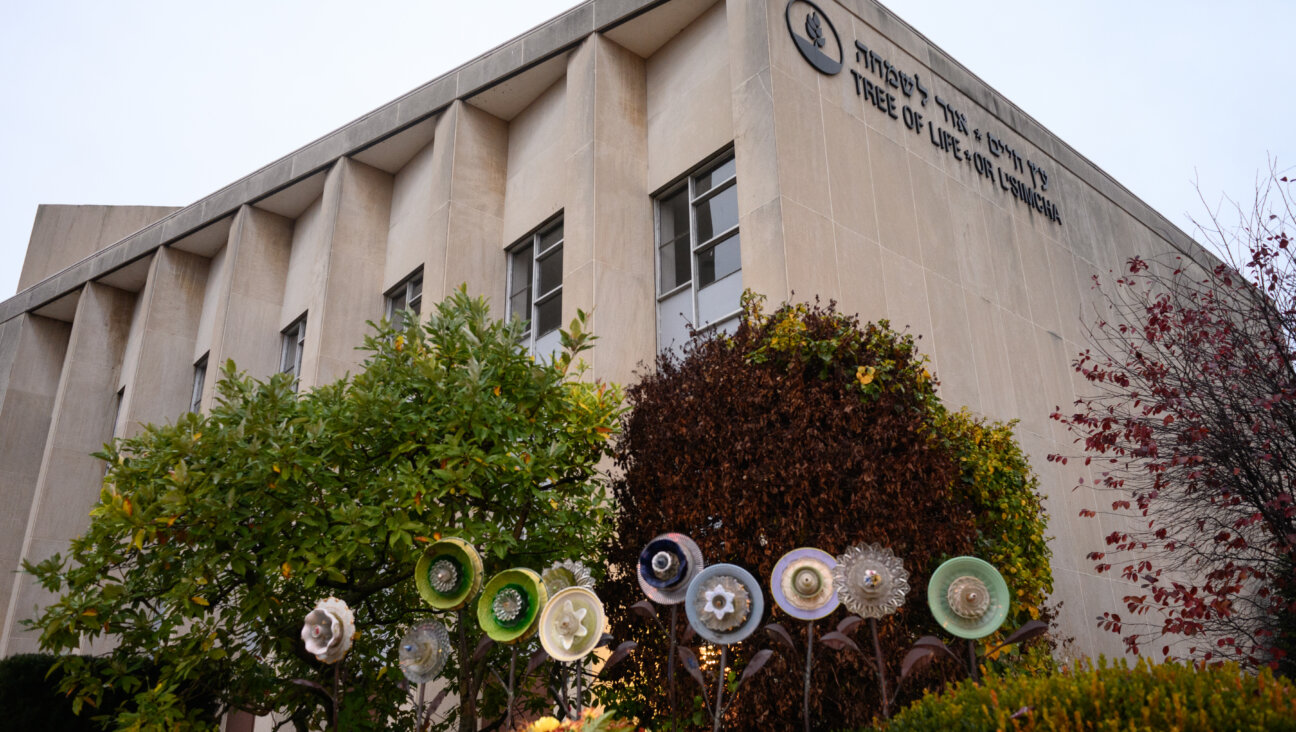
“There’s hopeful news and there’s sad news about the aftermaths of these shootings,” said Mark Oppenheimer, author of Squirrel Hill: The Tree of Life Synagogue Shooting and the Soul of a Neighborhood, a methodical, lyrical look at what happened to the Pittsburgh neighborhood shattered by the Oct. 27, 2018, shooting that left 11 people dead.
The hopeful news is that older, established Jewish communities can rely on close, long-established bonds within and outside the community to get them through.
The sad news is that people unaffected by the shooting tend to move on and forget.
“So whereas this will haunt the Jewish community for years,” Oppenheimer told me in a phone interview, “most people outside the Jewish community will quickly move on to whatever the next horrible incident is.”
What happens next
Authorities have not confirmed the attacker’s motive, although he has been identified as a Michigan man who was born in Lebanon. But among all the unknowns, we do know a few things for certain.
We know that a great tragedy was averted due to the guards’ bravery and expertise, and due to the planning and preparation of synagogue leadership.
We know such attacks have gone from being extremely rare in the United States, to being more frequent.
And we know that what happens now, in the aftermath, matters a great deal.
That’s why, in writing about the worst mass shooting in American Jewish history, Oppenheimer spent most of his time researching what came after the atrocity.
“When the cameras and the police tape were gone, what stayed behind?” Oppenheimer, who teaches at Washington University’s John C. Danforth Center on Religion and Politics, wrote in the book’s introduction.
The power of connection
Both the Tree of Life synagogue and Temple Israel are older, deeply entrenched congregations with close ties to a number of local communities — Jewish and non-Jewish alike.
In one chapter of Squirrel Hill titled, simply, “Gentiles,” Oppenheimer chronicles how non-Jews came to the aid of the stricken congregation, including clergy, politicians and neighbors.
Emblematic of that was the capacity crowd of 2,500 people that came together at Soldiers and Sailors auditorium on the one-year anniversary of the shooting, where law enforcement, politicians and Christian, Muslim and Jewish clergy all spoke.
“There are usually people in government, in community organizations, in neighborhood organizations, who reach out, who want the Jews to know that they’re not alone,” said Oppenheimer.
Evidence of such connection was already on show in Michigan on Thursday. One reporter interviewed a woman praying outside the synagogue, who said, through tears, that the “Holy Spirit” had told her to turn her car around once she saw police cars racing past her to the scene, and go lend support.
In Pittsburgh, the 2018 shooting was also a time for the Jewish community itself to come together.
Squirrel Hill’s close-knit Jewish community crossed denominational divides to show support. An Orthodox rabbi organized a spreadsheet to manage the 24-hour vigils Jewish law prescribes over the bodies of the dead prior to burial.
“In Squirrel Hill, one of the nice things is there is a lot of community and solidarity across denominational lines and levels of observance,” said Oppenheimer, “and that’s pretty rare in American Judaism. It’ll be interesting to see how that plays out in Detroit.”
A new reality
In recent years, the need for solidarity and resilience in the face of such attacks has become, unfortunately, more apparent.
When Oppenheimer wrote his book, he was able to state the shooting was “a unique event” in American history. It’s true that until the Tree of Life massacre, antisemitic violence had claimed just 26 lives in U.S. history. The U.S., more than any Western country, and far more than Israel itself, had truly been a safe haven for Jews.
Since Squirrel Hill, six more people have died in four attacks. The previously well-earned sense of safety has been shattered.
“While the odds that any given Jew will be attacked remain quite low, it is obviously pretty terrifying,” said Oppenheimer.
Some critics of the national focus that fell on Squirrel Hill after the Tree of Life shooting argued that the tragedy got far more attention than similar mass shootings that had befallen non-Jewish communities.
But it’s the very rarity of these attacks that makes them so shocking and, at least for American Jews, so memorable.
In this new normal, it’s even more important for Jews to form strong, mutually supportive bonds among themselves, and with others.
And the world moves on
Those bonds are especially crucial because, while the victims of violence don’t soon forget and move on, the world does.
“It’s a short burst of solidarity, and then people leave. Understandably so,” Oppenheimer said.
I suspect that even though prayers of gratitude and deliverance will echo through the sanctuaries of Detroit — and in Jewish hearts everywhere — the attack will haunt its intended victims long after the police tape comes down.
What will make the difference in how the community faces those fears and moves forward is the amount of support it receives from those outside it. If the broader Bloomfield and Detroit community refuses to forget this awful incident, it will change the course of healing.
I asked Oppenheimer what lessons he learned from the Tree of Life aftermath that could apply to Temple Israel.
“In Pittsburgh, there was a long history of people showing up for each other,” he said Oppenheimer. “The relationships, or lack of relationships, that exist become more noticeable when something goes wrong.”
“Where there are strong ties before a shooting, there are strong ties afterwards.”
This is a moment of great uncertainty. Here’s what you can do about it.
We hope you appreciated this article. Before you go, we’d like to ask you to please support the Forward’s independent Jewish news this Passover. All donations are being matched by the Forward Board - up to $100,000.
This is a moment of great uncertainty for the news media, for the Jewish people, and for our sacred democracy. It is a time of confusion and declining trust in public institutions. An era in which we need humans to report facts, conduct investigations that hold power to account, tell stories that matter and share honest discourse on all that divides us.
With no paywall or subscriptions, the Forward is entirely supported by readers like you. Every dollar you give this Passover is invested in the future of the Forward — and telling the American Jewish story fully and fairly.
The Forward doesn’t rely on funding from institutions like governments or your local Jewish federation. There are thousands of readers like you who give us $18 or $36 or $100 each month or year.
Support our mission to tell the Jewish story fully and fairly.