Passover’s 4 cups of meaning
The Seder offers a model for how to resist the ‘Meaning Crisis’ without falling into nihilism or hyper-traditionalism
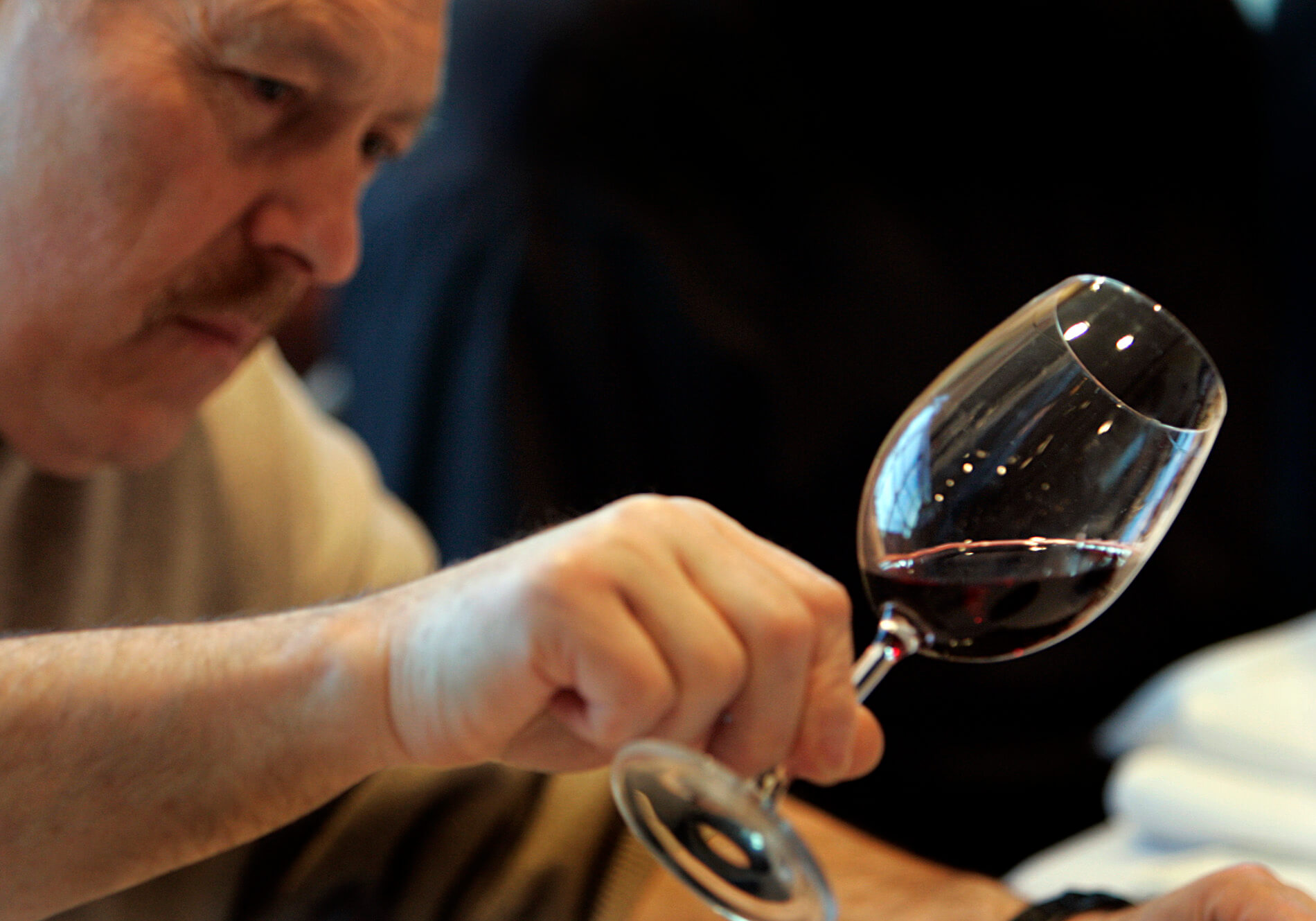
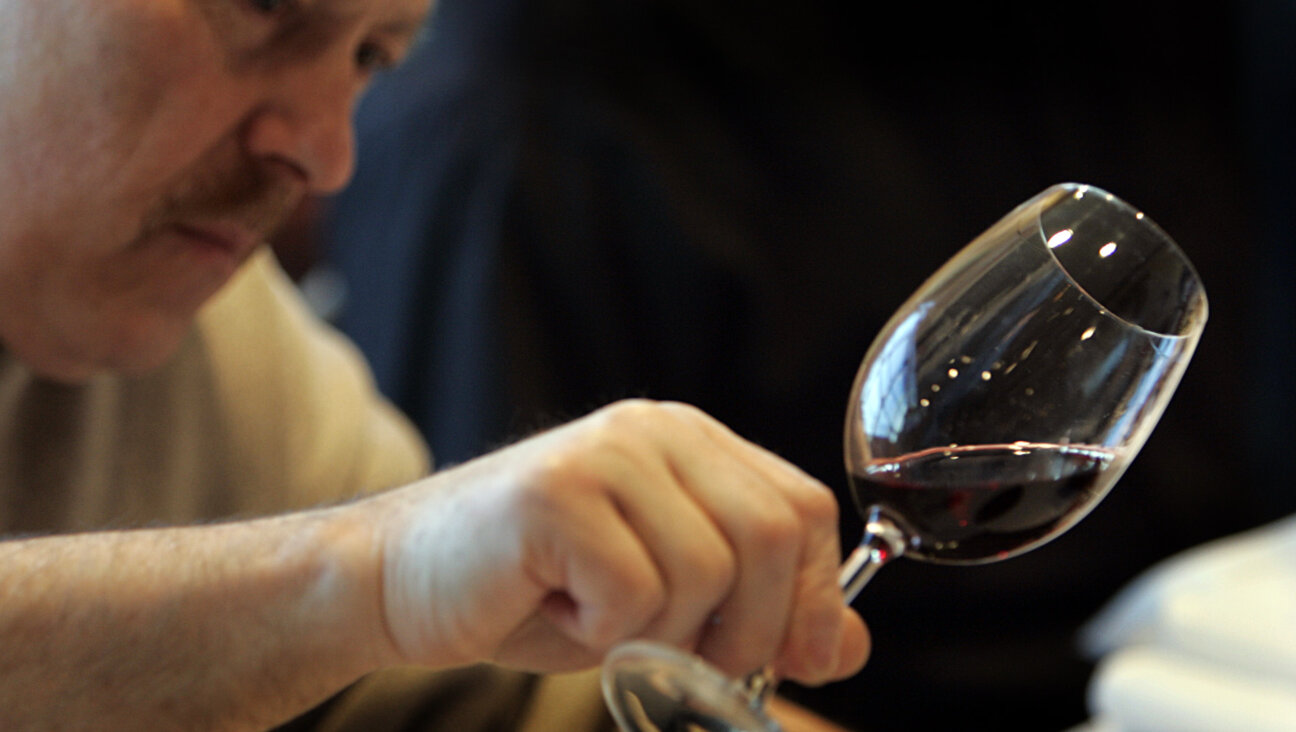
A glass of wine offered at the Passover Seder. Photo by Carlos Chavez/Los Angeles Times via Getty Images

Contributing Columnist Jay Michaelson March 31, 2026
What if the answer to the ‘Meaning Crisis’ is sitting right in front of us, around our Passover tables?
The Meaning Crisis is a term coined by philosopher John Vervaeke to discuss the constellation of mental health, political and cultural crises that, in his words, derive from people “feeling very disconnected from themselves, from each other, from the world, and from a viable and foreseeable future.” It is, Vervaeke argues, at the root of such seemingly disparate phenomena as the opioid crisis, the rise of right-wing nationalism, and off-the-charts reports of despair and anxiety, particularly among young people.
There are at least two meanings of ‘Meaning’ in this context.
First, over the last few hundred years — but especially in the last few decades — there has been a rapid erosion of the structures and communities that gave human lives meaning for hundreds, if not thousands, of years. Traditional religious values and structures are far less coherent, attractive or attainable. Familial and communal structures have rapidly shifted. Fewer and fewer of us live in the places where we grew up, surrounded by extended family. The civic bonds many of us once took for granted are frayed as we fundamentally disagree about what American democracy even means. And in the last few decades, the atomizing effects of technology have made us more isolated from one another, with less in-person human contact and even less physical intimacy.
This is also a literal crisis of meaning: who we are, how we understand our world, the concepts by which we organize our lives — all of these are rapidly changing, and with the potential of AI to reshape our economic order and wipe out half of white-collar jobs, it’s possible we ain’t seen nothing yet.
Some of these changes are for the best. To take one personal example, the word ‘marriage’ connoted a very specific form of social arrangement for hundreds of years: a man, a woman, a lifelong union blessed by a religious authority, and the raising of children. The parameters of marriage were never as stable as traditionalists like to claim — just look at our biblical ancestors polygamous marriages, or the deeply unequal access and expectations around extramarital sex stretching through the Mad Men 1950s. But with the progress in women’s rights (e.g. not being considered the property of their husbands, being able to have careers) and LGBTQ equality, obviously the nature and rates of marriage have changed significantly. As someone in a same-sex marriage, I’m very grateful for that.
But it is still a change, and, together with other transformations, it has challenged some traditional notions of masculinity, leading to a resurgence of misogynistic, hyper-conservative models in the so-called ‘manosphere.’ And that’s but one example of many.
In this context — the meaning crisis and the reactionary responses to it — I find the observance of Passover, and the Passover Seder in particular, to be a much-needed antidote to disorientation on one hand, and oppressive traditionalism on the other.
Fittingly, for a holiday obsessed with the number four, I want to explore this in four ways — if you like, the Four Cups of Meaning that can be part of the Passover Seder.
1) Community
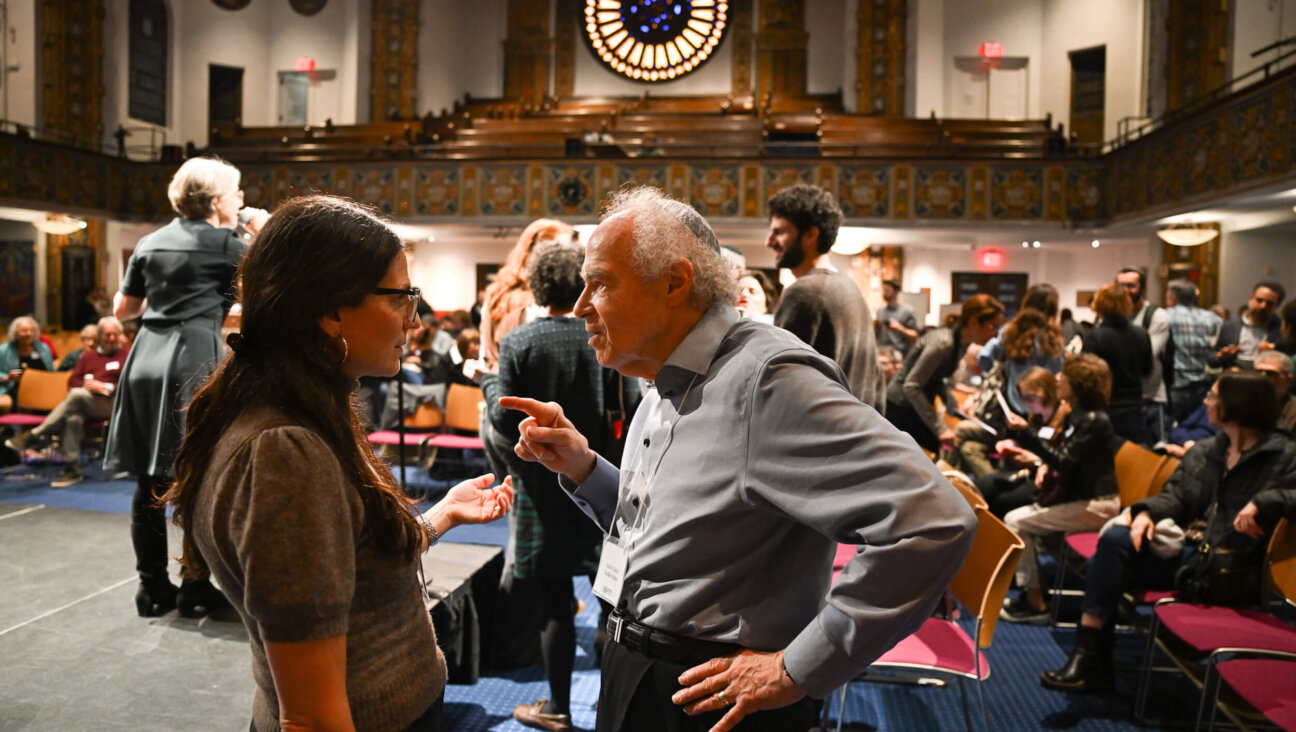
For many people, gathering with families of origin can be extremely stressful in our politically polarized time. It was bad enough when it was just the proverbial ‘racist uncle’ we had to endure at Seders. He might’ve been annoying, but he could also be ignored. Now, however, even well-meaning, sincere and committed Jews passionately disagree over a number of subjects, especially a certain country (or two) in the Middle East.
Yet there is a profound value gathering as a family — even as a tribe — and feeling a sense of kinship and belonging to it. Despite real and painful differences, Jews congregating together are connecting to a heritage and an ancestry that cannot be taken away by those who seek to put us outside the tent. That is something very old and very rich. You are not an atomized, isolated individual, separate from a history and a people and a tradition — a tradition which specifically includes the value of disagreement, argumentation and wrestling with the divine.
2) Centering our core values
Within the Jewish family, there are radically different iterations of core values. For me, the meaning of the Exodus is that oppression, slavery and injustice are morally wrong in the highest possible sense. As Exodus 23:9 teaches, “Do not oppress the stranger, for you know the heart of a stranger, for you were strangers in the land of Egypt.” From our experience of oppression — real, imagined or historically projected — we extrapolate the emotional and ethical value that it is wrong to oppress those who are different from us.
I know others have different views — for example, that the story of the Exodus is centrally about something that happened to our tribe, and that our group must never allow to happen to us again. But in terms of the meaning crisis, the debate is part of the solution. We are called at the Passover Seder to discuss the meanings of freedom, to reenact in our lived ritual experience the passage from servitude to liberation.
And not only that. We are invited to cultivate gratitude — in the Dayenu song and elsewhere — for all the blessings around us. We are invited, over and over again, to value questioning, curiosity, even challenging the texts of the Haggadah that for many are the very foundation of the Seder. These values are placed at the center of the Passover symposium. And while we disagree about how these questions are to be answered, just asking them is a retort to the emptiness and nihilism of so much of online culture and political cynicism. Values matter.
3) The power of myth
Human beings are creatures of story. Some linguists believe that it is in the telling of stories that human language itself — and thus human consciousness — evolved. Personally, I don’t regard the biblical narrative as a historical document; I see it as a shared myth of national self-creation, one which we can embody in ritual — in what the scholar of religion Clifford Geertz called “deep play.”
Sometimes the play is quite literal. Last year, my friend Shoshana Jedwab, a marvelous Jewish educator, led a bibliodrama performance in which, drawing from Sephardic traditions, we whipped one another with scallions to mock the servitude of Egyptian slavery. It’s fun (and worked really well with my eight-year-old) but it’s also a way of making myth into embodied, living experience. The myths, and their reenactment, bring us into intimacy with the past.
But ritual play may take many forms. Why do we dip our vegetables twice? Why the charoset? Why the orange on the seder plate? Why this? Why that? The inquisitiveness of the Four Questions is modeled by the youngest participant of the seder, but is invited on behalf of all of us. These often inscrutable, embodied, crunchy, weird rituals connect to the myth of the Passover story and make it alive in a way that mere retelling could never do.
As you prepare for your own seders, I invite you to create your own questions based on the themes embedded in the order of the Seder. And to lean into the weird. Which brings me to the final cup of meaning:
4) The non-rational
Passover, like many Jewish holidays, has multiple layers — seasonal, agricultural, mythic — and they all mash together in an often strange, and often charoset-like, mixture.
Particularly this year, the non-rational, emotional, and spiritual content of the Seder feels resonant for me. I cannot sequester the grief I feel at the crumbling of the American experiment in multicultural democracy, or at the ascendant far right in Israel. I feel perhaps a little closer to that pre-redeemed consciousness of my mythic ancestors in the land of Egypt. I am certainly not enslaved, but I do feel the sense of precarity that the Seder invites us to cultivate.
And so I find myself yearning for a miraculous deliverance — maybe not one involving frogs, lice, and boils, but from some unknown, mysterious, sacred source. Perhaps salvation will come from what we do not know. Perhaps there is room for a desperate hope, despite ample reasons not to hope.
As the Hasidic masters noted (and for a wonderful presentation of this, consider downloading the ‘Four Cups of Consciousness’ Haggadah supplement created by the Jewish psychedelic organization, Shefa), the Passover Seder is in large part about consciousness change: using the four cups of wine, the emotional arc of the seder, and the long night of singing, arguing and talking over a festive meal that stretches to midnight to shift our consciousness and open us to the possibility of internal freedom, even when external circumstances are antithetical to it.
This is the freedom of which Viktor Frankl wrote. And while we are a long way from what Frankl endured, I would submit that part of the invitation of the Seder is to imagine the consciousness of freedom even when that freedom is threatened — to be in solidarity with those being oppressed as we gather for our lavish meal, reclining on real or metaphorical cushions and drinking cups of wine, and to hold those two sides together. To know that, as the Haggadah relates, there have always been threats to our physical and spiritual safety. And while our physical freedom can indeed be restricted — and has been — we retain the capacity for ethical and spiritual freedom even in circumstances far worse than our own.
This is the ultimate meaningfulness: that in a time when the structures and language that give our lives meaning are threatened, we can resist the slide to nihilism and despair. And the Seder is a celebration of doing so.
This is a moment of great uncertainty. Here’s what you can do about it.
We hope you appreciated this article. Before you go, we’d like to ask you to please support the Forward’s independent Jewish news this Passover. All donations are being matched by the Forward Board - up to $100,000.
This is a moment of great uncertainty for the news media, for the Jewish people, and for our sacred democracy. It is a time of confusion and declining trust in public institutions. An era in which we need humans to report facts, conduct investigations that hold power to account, tell stories that matter and share honest discourse on all that divides us.
With no paywall or subscriptions, the Forward is entirely supported by readers like you. Every dollar you give this Passover is invested in the future of the Forward — and telling the American Jewish story fully and fairly.
The Forward doesn’t rely on funding from institutions like governments or your local Jewish federation. There are thousands of readers like you who give us $18 or $36 or $100 each month or year.
Support our mission to tell the Jewish story fully and fairly.