Passover liberation and US liberty both summon us to remember and renew
Democracy, like the Haggadah’s account of the Jews’ escape from slavery, requires continuous participation
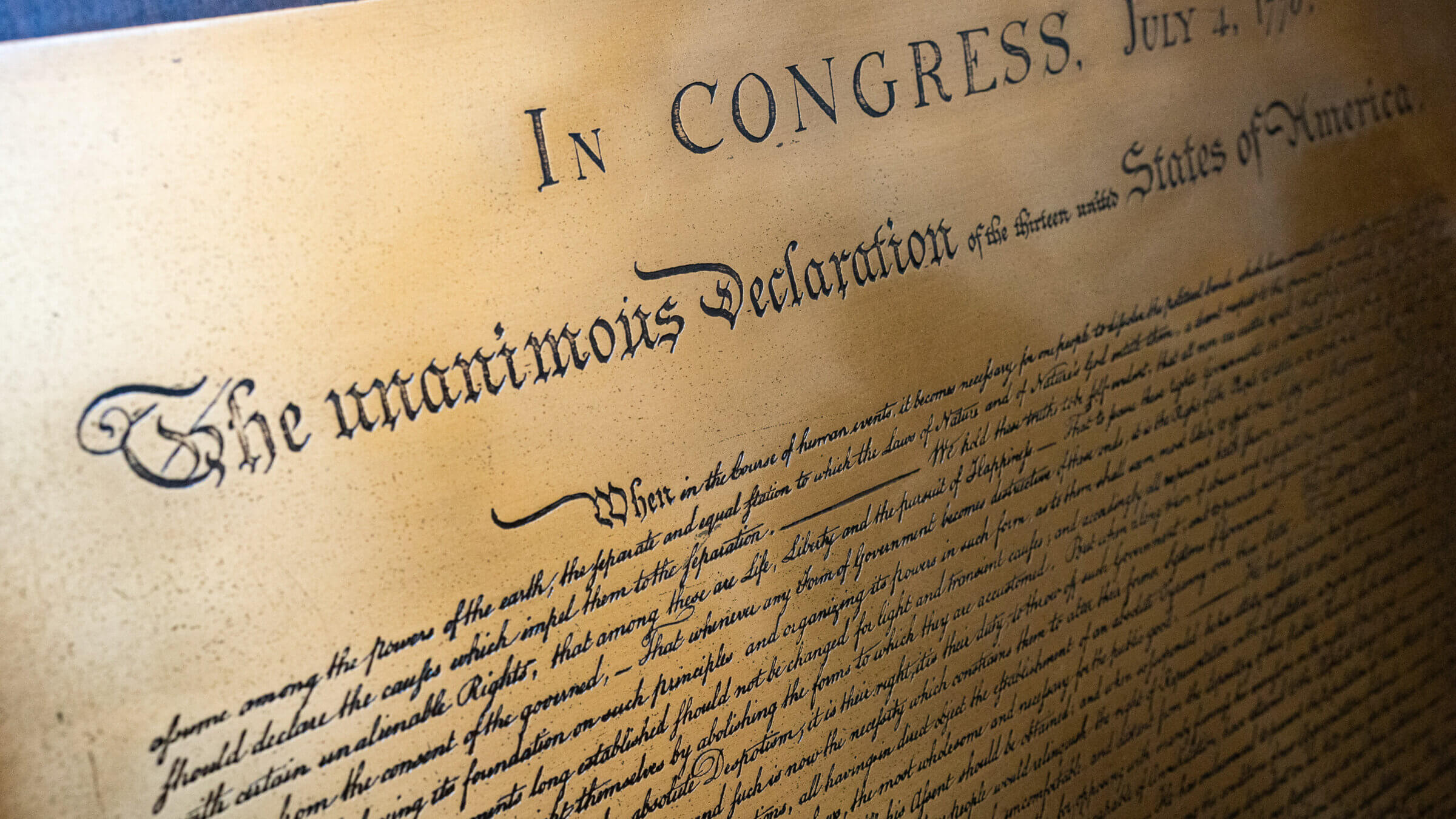
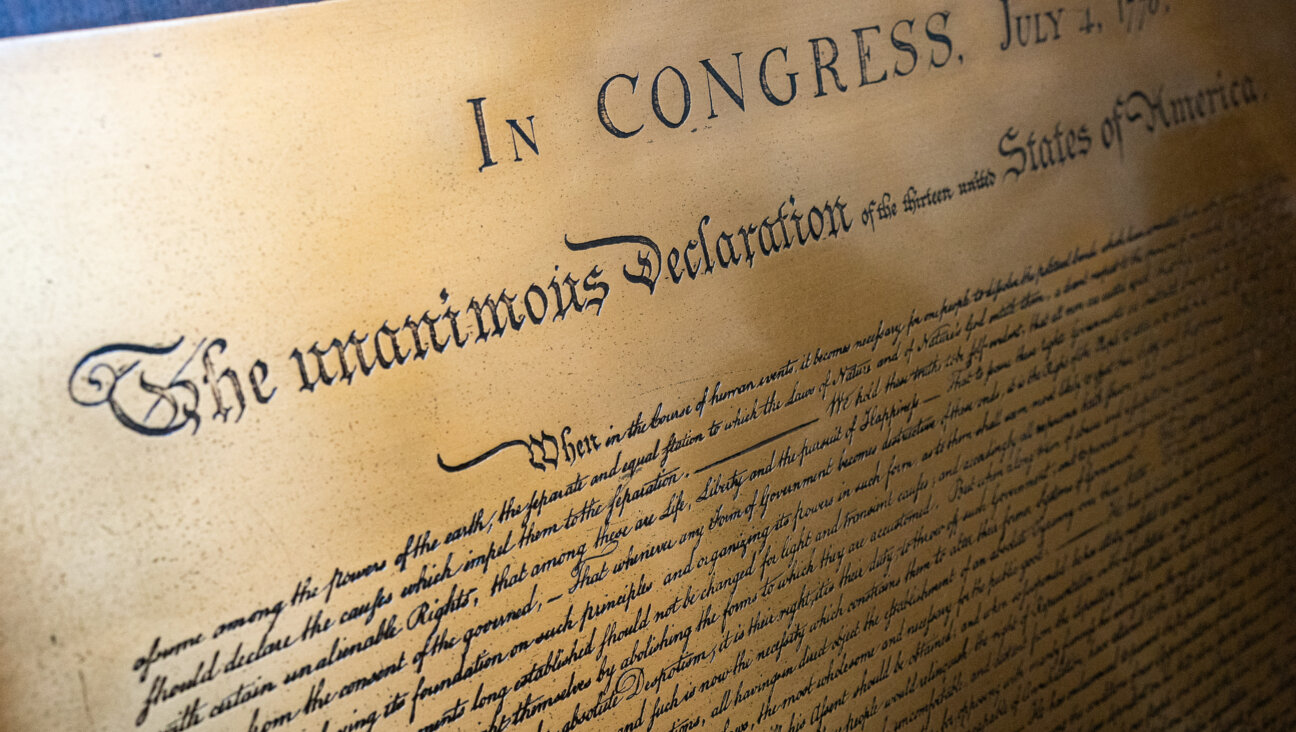
An engraving of the US Declaration of Independence in the Rotunda of the US Capitol in Washington, DC, US, on Monday, June 23, 2025. Photo by Al Drago/Bloomberg via Getty Images
At our campus Seder this week, I found myself talking to a student about Passover as a holiday of memory. She seemed puzzled and asked me to explain. The Seder plate, the ritual of reclining, and the talk of freedom, I told her, were all meant as reminders of enslavement in Egypt. Of course, she knew that. But I told her that even before the Jews cross the Red Sea to escape bondage, the Torah says something like “you better remember this!” Just after the final plagues — the killing of the first born — are visited upon the Egyptians, but before the Israelites escape from slavery, God tells Moses how the Passover holiday will be a commemoration of the events about to take place!
This day shall be to you one of remembrance: you shall celebrate it as a festival to GOD throughout the ages; you shall celebrate it as an institution for all time. Ex 12:14
You shall observe the [Feast of] Unleavened Bread, for on this very day I brought your ranks out of the land of Egypt; you shall observe this day throughout the ages as an institution for all time. Ex 12:17
The commemoration of liberation, and the memory of bondage, are given sacred status — and even prior to the liberation itself. The festive meal, the Passover Seder, is a communal insistence on memory. And this insistence is not restricted to what happened to other people in the distant past. The Torah’s word for remembering here is zakhor, which means something closer to “reliving” than to what we usually think of historical recollection. We are slaves in Egypt, just as we are at the foot of Mount Sinai to receive the Commandments.
As it so happens, during Pesach this year I am also working at Wesleyan University on a national program to encourage college students to protect our democracy by participating in it. Inspired by the students who went to Mississippi in 1964 to register Black voters in the face of violent suppression, we launched Democracy Summer 2026, a nonpartisan call to young people to strengthen their democratic muscles by using them. We are mindful of the 250th anniversary of the Declaration of Independence as we build programs along with colleges and universities across the country that aim to remind our fellow citizens of the importance of exercising our powers as constituents of this constitutional republic. The mission statements of educational institutions — from small private religious schools to large public universities — express an obligation to contribute to the public sphere. When we do contribute, we are participating in history, learning about ourselves and the world around us; we contribute to our institutions and to the country whose freedoms allow them to fulfill their purposes.
As part of this work, I’ve been rereading Danielle Allen’s wonderful Our Declaration (2015), a book that helps us through a slow reading of a core founding document. Allen describes teaching the Declaration of Independence to a group of working adults in a night class in Chicago and how by doing so she came to appreciate its famous words more profoundly than ever: “We hold these truths to be self-evident, that all men are created equal, that they are endowed by the Creator with certain unalienable rights, and among these are Life Liberty and the pursuit of Happiness.” She came to see these words (and the Declaration as a whole) as aimed at her and her students — that they were part of that “WE,” members of the political community that recognized the power of these truths. This realization didn’t happen right away. At first her students thought that the Declaration represented “institutions and power, everything that solidified a world that had, as life turned out, delivered them so much grief, so much to overcome.” They had to make the document their own to see themselves as participants in its legacy.
These students “regifted” the Declaration to Allen by helping her see its argument for political equality as her own political patrimony. The founding fathers would not have seen it this way: Allen is a Black woman whom they would not have recognized as a citizen. But by reading the text slowly and carefully with her students, she and they claimed it as their rightful inheritance: “an understanding of freedom and equality, and of the value of finding the right words.”
In Torah study, I strive for something similar to this claiming of an inheritance. Such a claim, I find, is also what we are meant to feel when we read the Haggadah at our Seders. I study not to acquire expertise about holy texts but to participate in an ongoing conversation about enduring questions. Through the teaching that we were slaves in Egypt, we are meant to feel how it is to be oppressed and to consider our obligation to claim our freedoms, an essential step in developing a people. And we are also meant to help other groups escape oppression, make good on claims for liberation that resonate with our story. This is not only for the week of Passover. Rashi teaches that we must make mention of the exodus from Egypt every day. Every day we must claim our freedom and, we might add, find the right words for others to do so.
This is also the message of our summer call to action this year. As we commemorate the 250th anniversary of the Declaration, let us claim our political patrimony, our rightful inheritance. To paraphrase Benjamin Franklin: it is our republic so let us keep it!
This is a moment of great uncertainty. Here’s what you can do about it.
We hope you appreciated this article. Before you go, we’d like to ask you to please support the Forward’s independent Jewish news this Passover. All donations are being matched by the Forward Board - up to $100,000.
This is a moment of great uncertainty for the news media, for the Jewish people, and for our sacred democracy. It is a time of confusion and declining trust in public institutions. An era in which we need humans to report facts, conduct investigations that hold power to account, tell stories that matter and share honest discourse on all that divides us.
With no paywall or subscriptions, the Forward is entirely supported by readers like you. Every dollar you give this Passover is invested in the future of the Forward — and telling the American Jewish story fully and fairly.
The Forward doesn’t rely on funding from institutions like governments or your local Jewish federation. There are thousands of readers like you who give us $18 or $36 or $100 each month or year.
Support our mission to tell the Jewish story fully and fairly.