Making Deals
In our lifetime (mine, anyway), several political eras have been tagged with the word “deal.” There was Franklin Delano Roosevelt’s famous New Deal. Roosevelt’s successor, Harry Truman, liked to refer to his reforms as the Fair Deal. There are some who refer to our current regime as the Raw Deal or perhaps as an Or-deal. But the use of the term “deal” dates back much further, to the opening years of the 20th century, when a president named Theodore Roosevelt tagged his reforms the Square Deal.
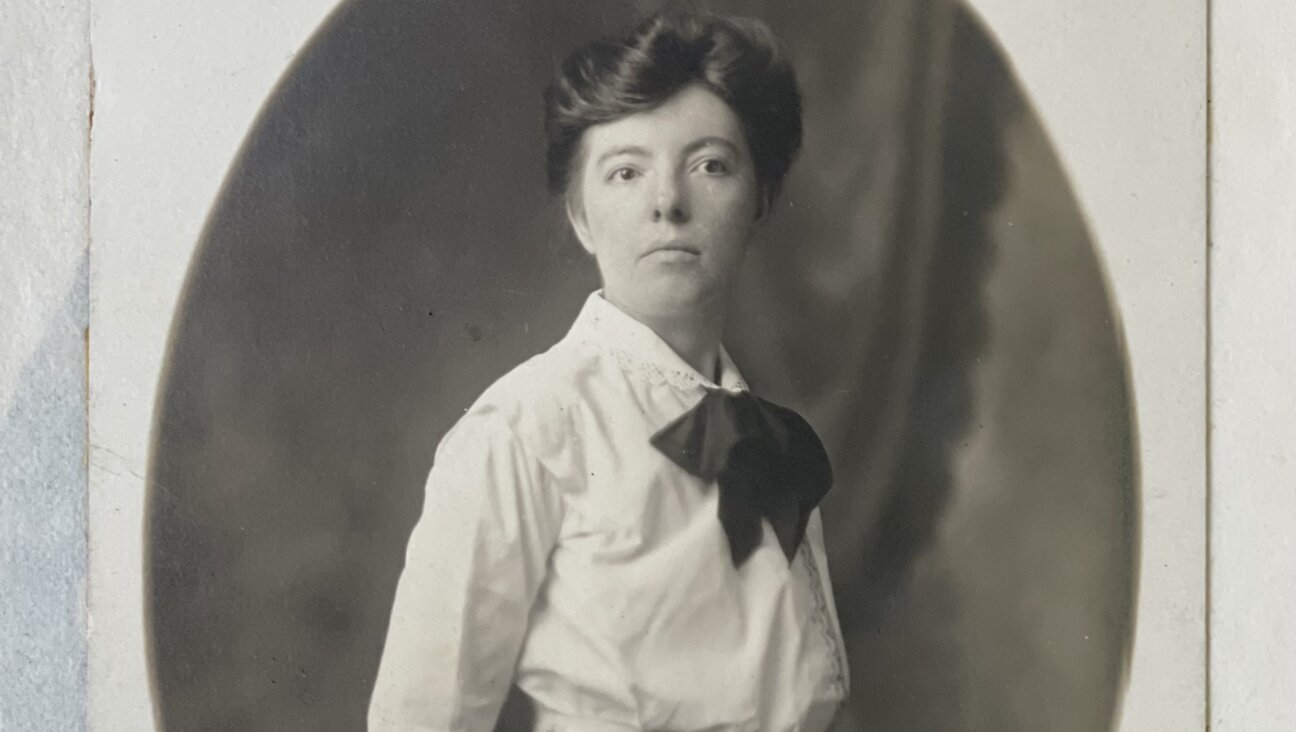
TR — as his contemporaries and subsequent admirers referred to him — was of the same family as Franklin. But Teddy was a Republican, not a Democrat. He first ran for vice president in 1900 on a ticket with William McKinley. He became president after McKinley’s assassination in 1901, and was elected in his own right in 1904.
Just what TR meant by the Square Deal was put together piecemeal. His most articulate explanation of the term was given after he left office, in a speech that he delivered in 1910 before an audience of Civil War veterans at the site of the John Brown battlefield in Osawatomie, Kan. It’s still considered one of the great speeches of American politics.
There, on that historic battlefield, TR quoted his Republican predecessor Abraham Lincoln to the effect that “labor is prior to and independent of capital. Capital is only the fruit of labor and could not have existed if labor had not first existed. Labor is the superior of capital and deserves much the higher consideration.”
“If that remark was original with me,” TR noted, “I should be even more strongly denounced as a Communist agitator than I shall be otherwise. It is Lincoln’s.”
“I am for the Square Deal,” TR said. “But when I say that I am for the Square Deal, I mean not only that I stand for fair play under the present rules of the game, but I stand for having those rules changed so as to work for a more substantial equality of opportunity…. Now this means that our government, national and state, must be freed from the sinister influence or control of special interests. I believe in a graduated income tax on big fortunes and in another tax which is far more easily collected — a graduated inheritance tax on big fortunes.”
Was this a call to class struggle? To TR, class struggle was an engine of progress. “At many stages of human advance,” he said, “in the advance of humanity, this conflict between the men who possess more than they earn and those who earn more than they possess is the central condition of progress.”
Although these thoughts that were voiced by a Republican Roosevelt are about 100 years old, it might be in order for the Democrats now in control of both houses of Congress to embrace TR’s program as an i-deal.
This is a moment of great uncertainty. Here’s what you can do about it.
We hope you appreciated this article. Before you go, we’d like to ask you to please support the Forward’s independent Jewish news this Passover.
This is a moment of great uncertainty for the news media, for the Jewish people, and for our sacred democracy. It is a time of confusion and declining trust in public institutions. An era in which we need humans to report facts, conduct investigations that hold power to account, tell stories that matter and share honest discourse on all that divides us.
With no paywall or subscriptions, the Forward is entirely supported by readers like you. Every dollar you give this Passover is invested in the future of the Forward — and telling the American Jewish story fully and fairly.
The Forward doesn’t rely on funding from institutions like governments or your local Jewish federation. There are thousands of readers like you who give us $18 or $36 or $100 each month or year.
Support our mission to tell the Jewish story fully and fairly.