Course to explore Ukrainian-Yiddish dialect of the theater and the Breslov Hasidim
The dialect was once widely spoken not just in Ukraine, but in Romania, Moldova and Poland
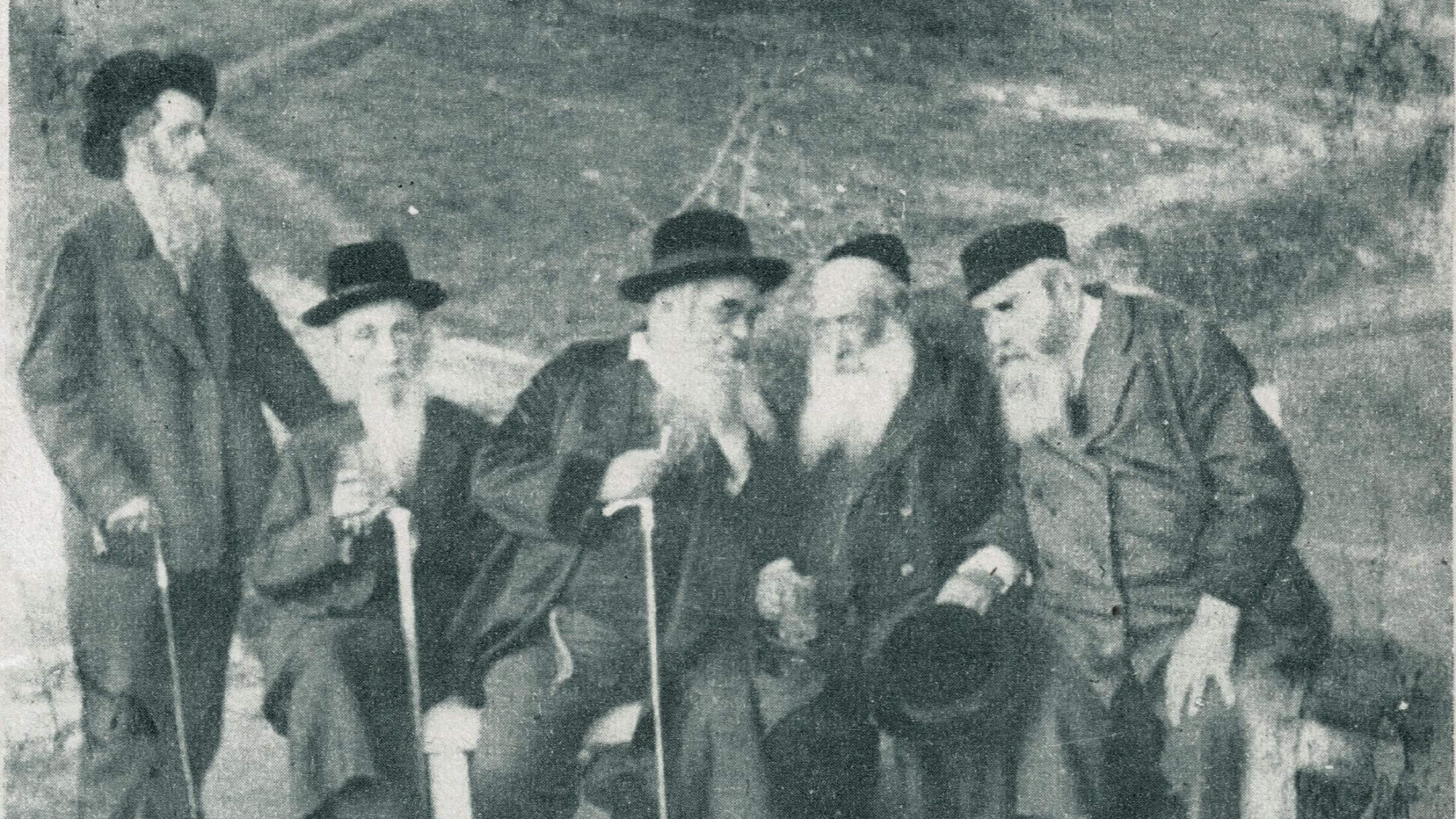
Jews in the Ukrainian shtetl of Triskevits (Truskawiec), 1930 Photo by Wikimedia Commons

By Forverts Staff February 20, 2025
In a unique course this spring, Yiddish scholar Leyzer Burko will explore the rich dialect of Ukrainian-Yiddish, once widely spoken not just in Ukraine, but in Romania, Moldova and Poland.
Ukrainian-Yiddish served as the standard dialect in Yiddish theater and film, and was also used by famous writers like Sholem Aleichem. The Hasidic movement, as well as many of today’s Hasidic groups, such as Skver and Breslov, originated in Ukraine.
One reason that Burko decided to teach the course is that Hasidim whose ancestors actually came from Skver and Breslov, no longer speak in their ancestor’s Ukrainian-Yiddish dialect. “Today almost all of them speak Hungarian-Yiddish just like the members of the larger Hasidic groups like Satmar,” he said. “As a result, the specific features of Ukrainian-Yiddish will soon be lost, unfortunately.”
Because many more Jews survived in Ukraine than in Poland and Lithuania, the dialect continues to be spoken throughout the post-Soviet diaspora, including by contemporary writers like Boris Sandler.
The course will focus mainly on the spoken dialect, covering varieties like the so-called tote-mome-lushn, in which the sound of /a/ is pronounced as /o/.
Students will examine the history of the dialect and see how it came to occupy a middle ground between Polish and the litvish (Lithuanian) dialects and will also learn how Ukrainian and Romanian influenced the vocabulary.
By the end of the course, students should be able to understand the spoken dialect and identify its distinctive features in written texts. Course tools will include interviews, folklore, and song recordings from archival sources, such as The Language and Culture Archive of Ashkenazic Jewry; the AHEYM project (Archives of Historical and Ethnographic Yiddish Memories) and Isaac Bleaman’s Corpus of Yiddish Spoken in Europe.
Register for the course here.
This is a moment of great uncertainty. Here’s what you can do about it.
We hope you appreciated this article. Before you go, we’d like to ask you to please support the Forward’s independent Jewish news this Passover.
This is a moment of great uncertainty for the news media, for the Jewish people, and for our sacred democracy. It is a time of confusion and declining trust in public institutions. An era in which we need humans to report facts, conduct investigations that hold power to account, tell stories that matter and share honest discourse on all that divides us.
With no paywall or subscriptions, the Forward is entirely supported by readers like you. Every dollar you give this Passover is invested in the future of the Forward — and telling the American Jewish story fully and fairly.
The Forward doesn’t rely on funding from institutions like governments or your local Jewish federation. There are thousands of readers like you who give us $18 or $36 or $100 each month or year.
Support our mission to tell the Jewish story fully and fairly.