Elie Wiesel as an American phenomenon and a family man
The Holocaust writer implored Reagan to cancel a visit to a German military cemetery where SS soldiers were buried.
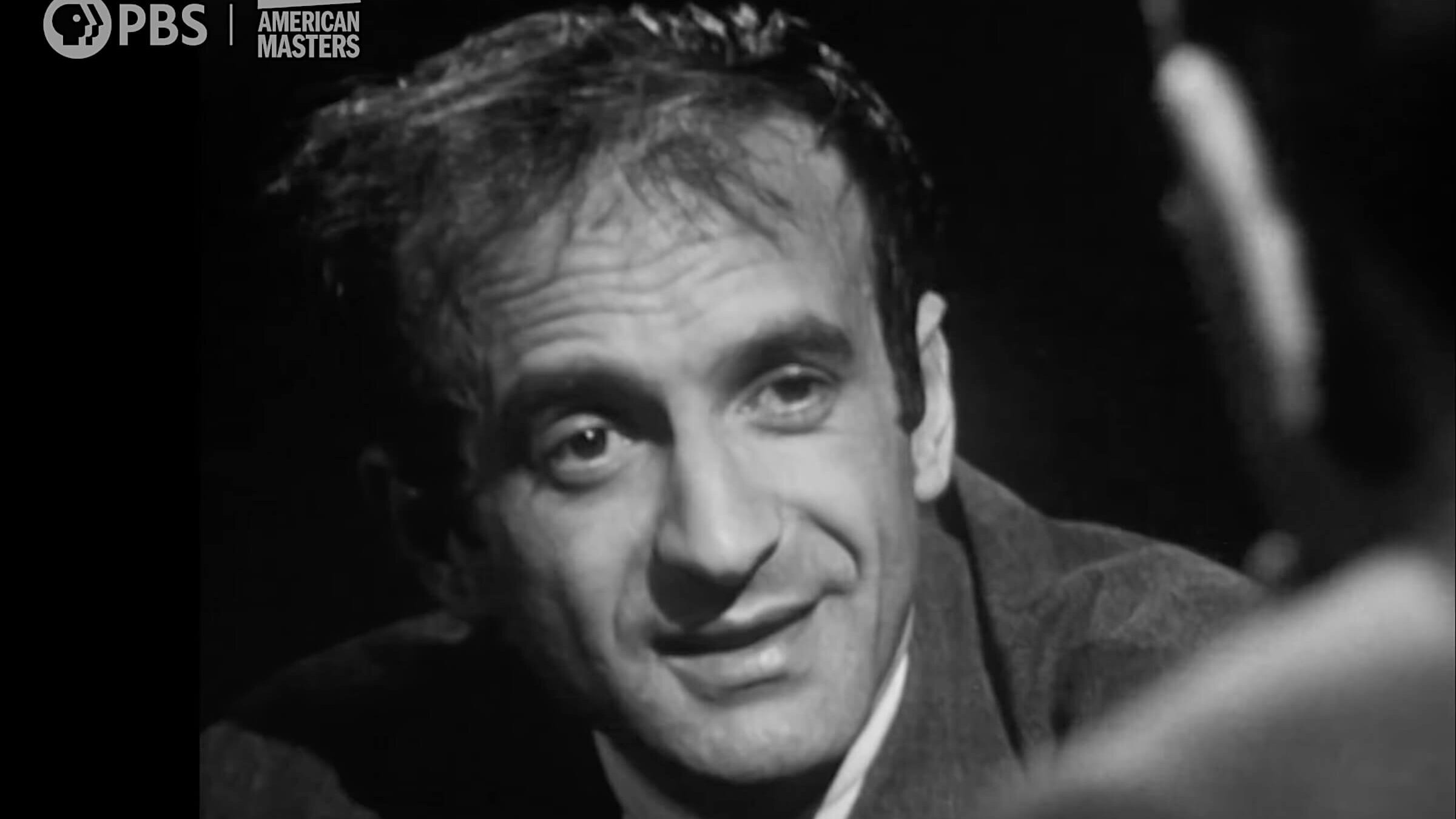
A shot of Elie Wiesel from the documentary Elie Wiesel: Soul on Fire. Photo by Public Broadcasting Service
How do you tell a story that everyone knows? Oren Rudavsky, in the opening scenes of his recently released documentary Elie Wiesel: Soul on Fire, makes the wise decision to begin his film not through the known facts about Wiesel or the Holocaust, but through a more internal logic of art and dreams.
As Wiesel narrates a dream, we see Joel Orloff’s hand-painted animation of dark figures succumbing to a rising river of blood, leaving the dreamer alone to try to rescue his drowning father. Fingers grasp at bodies as they slip under.
“I don’t know what power aided me,” we hear Wiesel say. “All I know is that I managed to save him all by myself.” As anyone who has read Night knows, Wiesel’s father succumbed to dysentery in Buchenwald. That Elie could not save his father, his wife Marion tells us, was the abiding wound he always carried.
Dreams, in Freud’s view, are wish fulfillments. But this dream-act of (temporary) reanimation also expresses Wiesel’s conviction that the dead are not entirely gone if they are remembered. That may be the redemptive vision that drives Rudavsky, as well. The implicit hope that the dead may be saved opens the film and breaks into full voice at its ending, with Wiesel beautifully singing the messianic anthem “Ani Ma’amin” from the stage of the 92nd Street Y.
As he sings, his face gives way to a lush, grassy landscape rushing by as if we’re passengers on a train, while his voice fades into a choral arrangement. In moving past Wiesel’s face and voice, the film embodies and fulfills Wiesel’s belief that the Jewish story will continue, on PBS as in his family line.
For all its focus on European catastrophe and Jewish longings, the documentary casts Elie Wiesel as an “American Master,” the title of the larger PBS series. Wiesel is an American phenomenon, read in classrooms around the country and, for a time, in the White House. Full disclosure: I appear briefly in the film, discussing the reception of Wiesel’s work and the difference between the Yiddish title of his best-known work, Un di velt hot geshvign (And the world kept silent) and the French/English title of its translation, La Nuit (Night).
One of the film’s extended sequences captures a moment that saw Wiesel at the center of American politics and the global stage, when he passionately implored President Reagan to cancel a planned visit to the German military cemetery in Bitburg, once it had become known that Waffen-SS soldiers were buried there. “That place is not your place,” Wiesel says on national TV, with Reagan looking on. “Your place is with the victims of the SS.”
Details less engraved on collective memory emerge from Rudavsky’s film: the shared friendship both men describe, the attempts behind the scenes to ameliorate the clash, Wiesel’s insistence that he was making no claims about German collective guilt. “Only the killers were guilty,” he said.
This episode establishes Wiesel’s courage and role as a preeminent moral voice of his time. Less clear is the trajectory from the solitary writer in postwar Paris to the man who came to represent the Holocaust experience, when his novel/memoir Night became required reading.
One of the brilliant 13-year-old students who discuss the novel in their Newark classroom suggests such an analysis, in distinguishing between the Eliezer of the story and Elie Wiesel, its famous author. In America and elsewhere, Wiesel became so closely associated with Holocaust memory that the Eliezer/Elie distinction, or alternatives to his distinctive voice, are hardly imaginable.
Not one but two stories drive Rudavsky’s documentary: one of unimaginable catastrophe and loss; and another of privilege and success — both Wiesel’s own stature and the broader rise of the American Jewish community in which this story is embedded. How these two narratives are related is a tale that remains to be told.
And yet, alternatives to Wiesel’s powerful voice are heard in the film. Remarkably enough, they emerge from Wiesel’s own family. Marion Wiesel, who married the war-haunted bachelor when he was 40, recounts that her husband had insisted “from the beginning that he didn’t want children.” And then she adds: “I convinced him.”
Photographs of her during those years as a bride and new mother radiate, and we see the hint of a smile on her husband’s mournful visage. As an old woman, she commands attention. Against the widespread veneration of Wiesel’s pronouncements, she shows herself at least occasionally unpersuaded. Describing Wiesel’s growing religiosity, she comments drily, “I was the pagan in the family.” Served a latke at a family Hanukkah celebration that could easily be played for sentimentality (“the Jewish people live!”), she sniffs: “Doesn’t look like a latke.”
Marion Wiesel’s acerbic tone is particularly welcome as commentary on a topic of increasingly pressing concern. Elie Wiesel, in his Nobel Peace Prize lecture, asserts that he is sensitive to the plight of the Palestinians, “but whose methods I deplore when they lead to violence.” Marion comments: “He didn’t want to criticize Israel under any circumstance. He didn’t want to criticize the occupation. He didn’t want to criticize the settlers. He may not have agreed with them, but he didn’t want to criticize them. Ever.”
In contrast with the moral clarity of his words about Bitburg, what the film presents us with on this issue is a muddle, and if I am reading Marion right, a bit of a family dispute. In this way, the Wiesel family was no different from so many others.
So, too, does Rudavsky complicate Wiesel’s devotion to Jewish survival in focusing on the discomfort of Elisha Wiesel, the couple’s only son, in the role of living symbol of Jewish continuity. Cuddled on Jimmy Carter’s lap, called to the stage at Oslo, Elisha remembers chafing at being “just an appendage” to his famous father.
And yet, as the film ends, he, too, has embraced Judaism anew, laying tefillin on camera. Elisha’s son, Elijah, also takes up the imperative and burden of Holocaust memory, traveling to Sighet to visit his grandfather’s childhood home, now turned into a museum.
In a stirring scene, the Hebrew letters on the gravestone of his namesake — his great-grandfather — appear with growing clarity, illuminated by the trick of scraping shaving cream off the inscription (not recommended by conservators) and the magic of documentary film.
And yet, Elijah Wiesel with the waist-long hair is not the Eliyahu Vizel of the gravestone, just as Eliezer Vizel of Sighet is not quite the same as Elie Wiesel of Oslo and Boston. “Jewish continuity” is a bridge we narrate over the shifting sands of loss and change. The present, past, and future connect for a fleeting moment, only to drift apart like a dream, a film.
This is a moment of great uncertainty. Here’s what you can do about it.
We hope you appreciated this article. Before you go, we’d like to ask you to please support the Forward’s independent Jewish news. All donations are still being matched by the Forward Board - up to $100,000 until April 24.
This is a moment of great uncertainty for the news media, for the Jewish people, and for our sacred democracy. It is a time of confusion and declining trust in public institutions. An era in which we need humans to report facts, conduct investigations that hold power to account, tell stories that matter and share honest discourse on all that divides us.
With no paywall or subscriptions, the Forward is entirely supported by readers like you. Every dollar you give is invested in the future of the Forward — and telling the American Jewish story fully and fairly.
The Forward doesn’t rely on funding from institutions like governments or your local Jewish federation. There are thousands of readers like you who give us $18 or $36 or $100 each month or year.

Support our mission to tell the Jewish story fully and fairly.