Millennial anxieties are the ‘new normal’ in these Yiddish stories
For young Israeli author Shiri Shapira, the 9/11 attacks turned the future into something dangerous and uncertain
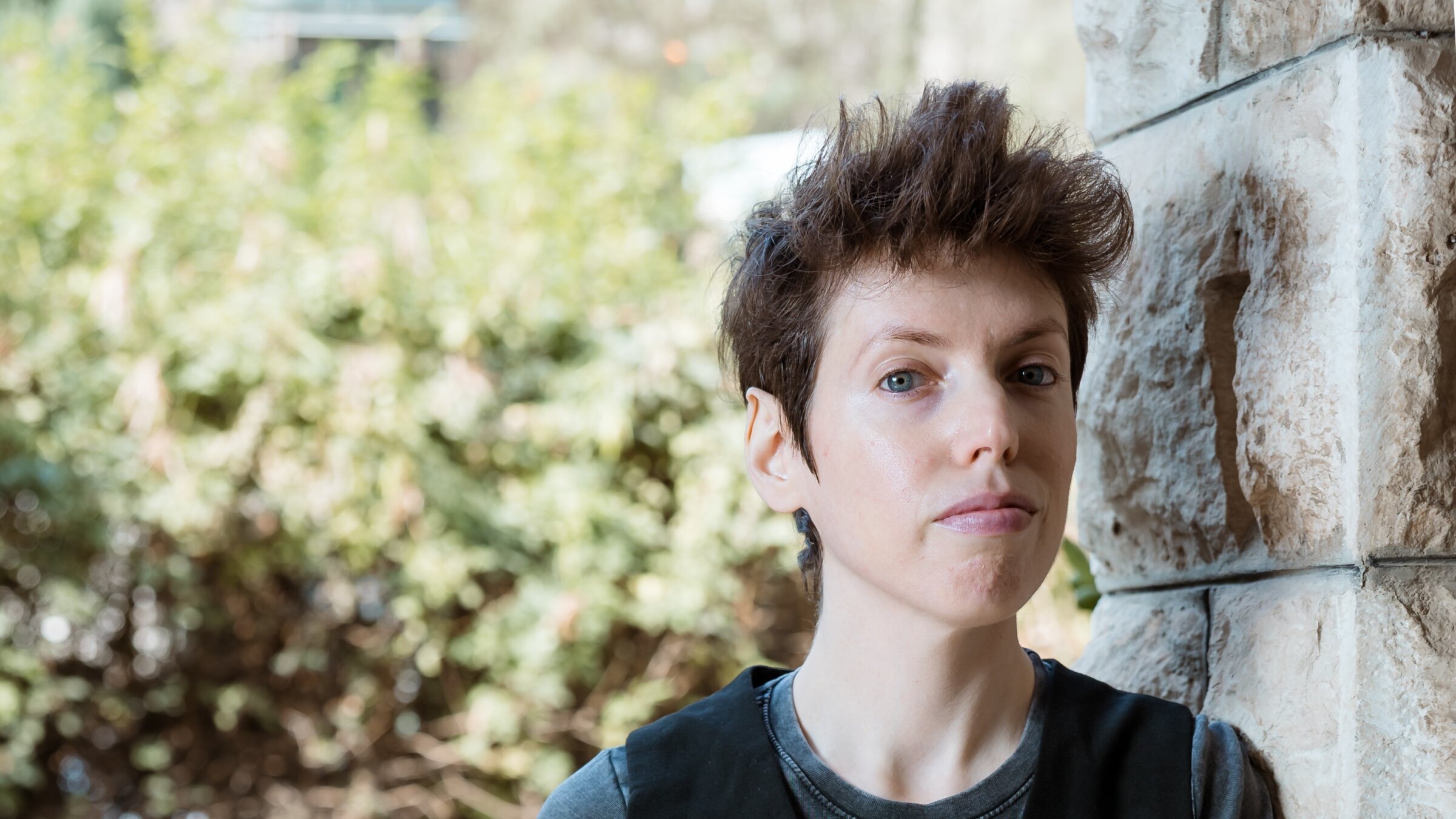
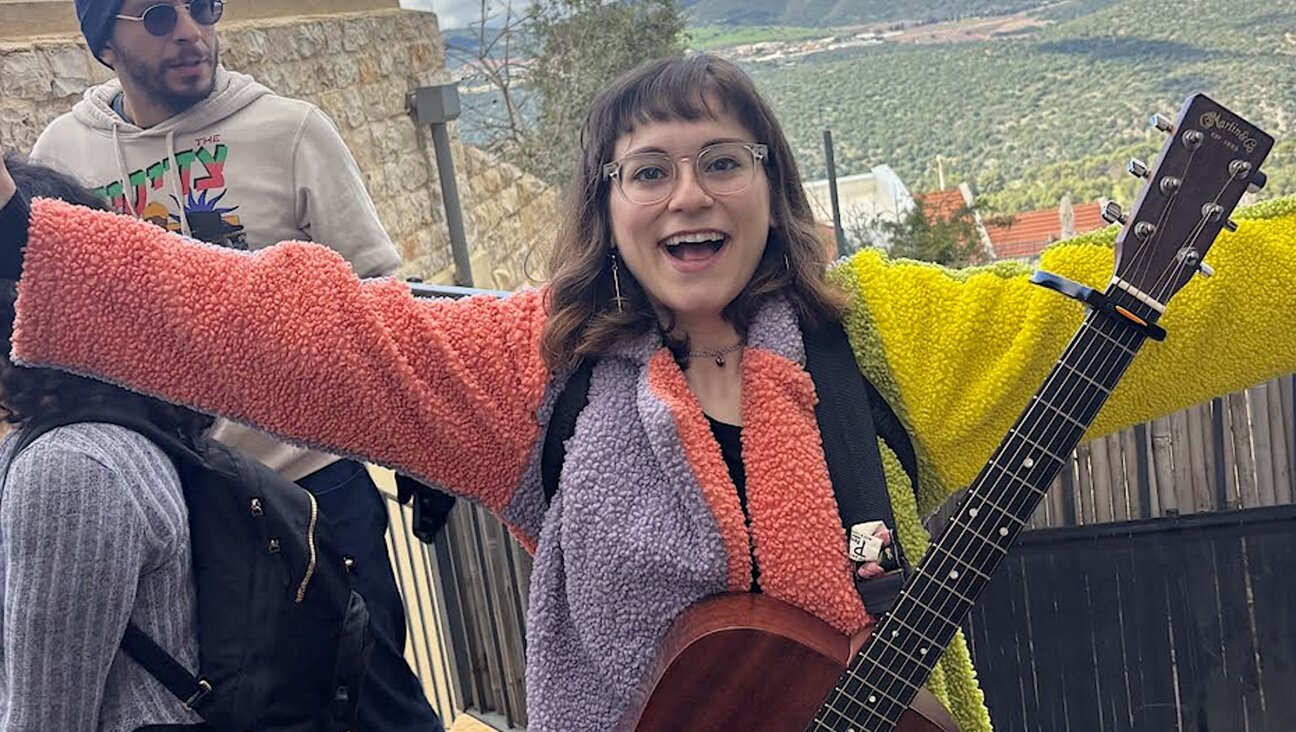
Shiri Shapira Photo by Noa Perez

By Mikhail Krutikov February 24, 2026
This is a revised version of the original article in Yiddish which you can read here.
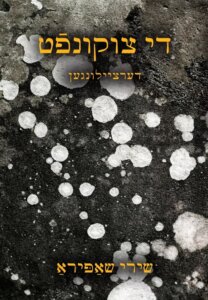
Di Tsukunft (The Future)
A book of short stories in Yiddish
by Shiri Shapira
Leyvik House, 2025
You may not have heard about Shiri Shapira yet but you may do so soon. She’s one of the few young Israeli writers who are choosing to write in Yiddish, the language of her East European ancestors. A collection of her short stories was recently published by the Tel Aviv publishing house, Leyvik House, with the support of Israel’s National Authority for Yiddish Culture.
Like the author herself, the protagonists in her new collection of short stories and autobiographical pieces, Di Tsukunft (The Future), are average Israeli men and women with everyday worries about their livelihood, families and health problems. But beneath their daily routine lies a latent personal experience that waits for a critical moment to be revealed. When that moment arrives, the characters often enter a new phase of life.
For the 13-year-old heroine of the opening story, also titled “The Future,” this happens in 2001. The terror attacks of 9/11 in New York City coincide with the onslaught of terror in her own town:
“The changes to daily life were immense. A seemingly endless series of discussion circles was held in memory of a victim from our school that I hadn’t known. Every morning I’d have to look at his smiling, pimpled face staring out from the enlarged photo that had been hung by the school gate.”
Thus 2001 ushered in the “terror attacks of the future […] up to the very skies, shining, silvery.” They became an indispensable part of the ‘new normal’ — for Shapira, the State of Israel and the entire world.
The word “future” is both the title of the book, and the name of the first and last stories in the collection. The term is key to Shapira’s work: for the author and her characters alike, the future is dangerous and uncertain.
Notably, “The Future” is also the name of one of the most important Yiddish literary periodicals, Di Tsukunft, published in New York from 1892-2010. In one of the more autobiographical pieces in the collection, also titled “Future”, Shapira writes about cataloging articles of Di Tsukunft for the Index to Yiddish Periodicals at the Hebrew University in Jerusalem. The concluding story “Future” highlights Shapira’s turning to Yiddish, which comes to loom so large in her life.
Shapira shares how she’d initially hoped to read the issues of Di Tsukunft and “learn everything about Jewish history.” Instead, she found herself reading the Israeli press, with its news of terror attacks in Israel, day after day, during the 2015-2016 wave of violence known as the “Intifada of the Individuals.” Israeli reality cancelled out the beautiful, visionary future of those long-ago Yiddish socialists: “What’s there to say about the future? The future’s a thing of the past.”
Shapira recalls: “As a child, I had the impression that I’d come too late for the past, and that someone whose past was shut off to them was of little use for the future.” Shapira references here a national oblivion around the “past”: Israeli society’s longtime neglect of Yiddish and Eastern European Jewish culture.
This neglect, however, served only to awaken her own interest in Yiddish. Historical inquiries and philosophical questions such as this one are woven skillfully into the narrative fabric of her stories.
Shapira’s characters live in Israel and speak Hebrew. Most of them don’t know Yiddish. Shapira herself is a Hebrew writer who has translated a significant number of works from German into Hebrew.
Sometimes Shapira’s tone is bitterly ironic, especially on the subject of the writer’s bleak lot in today’s society. The protagonist of “Self-Portrait as a Hebrew Writer” fantasizes about her ideal reader:
“He comes to an event celebrating my first book, my debut. […] He sits there, looking ridiculously handsome, listening to me babble about the difficult, wrenching labor of writing this text. When the musicians finish their part, he applauds energetically.”
The man reads her book twice and, as she comments ironically, “sees deep into her soul.” Their encounter takes them to the bedroom: “As he climaxes, he lets out a sweet sigh, a melody of contentment — like an enthused, eloquent review.”
So what role does Yiddish play here? Her stories suggest an answer.
In “Earthquake,” an elderly couple, Benny and Dalia, survive an earthquake in Jerusalem. Their modern apartment is unharmed, but many buildings in Shuafat, a Palestinian refugee camp in East Jerusalem, are destroyed, and around 700 people are killed. The couple’s Arab cleaning lady goes missing, and no one knows what happened to her.
For the couple, life goes on as usual. They quickly forget the cleaning lady, especially because they never even knew how to pronounce her name. Jews and Arabs make their home in the same town, but they live in completely different worlds.
Every night, Benny and Dalia eat dinner and nap a bit while watching a TV show. Something new does enter their routine; they sign up for a Yiddish class. Though they barely remember any of the Yiddish their parents once spoke, they hope they’ll “at least learn something before the next earthquake comes.”
The earthquake acts as a metaphor for the dramatic and tragic events that take place in Israel. These misfortunes cut through the monotony of the everyday, but soon enough life goes on as before. In such moments, Yiddish makes its appearance as a sort of phantom of Jewish history from which one might “at least learn something” before the next crisis hits.
Shapira remembers a feeling that used to disturb her as a child: “I was really young, and I thought that everyone besides me knew what to do in every situation, that they were grounded in their lives, while I was the only one floating in the air, not knowing where to land safely.” Yiddish, on the other hand, creates a kind of spiritual shelter, a ‘refuge’ where historical roots can be found.
Shiri Shapira has a keen sense of time in general and of the present moment in particular. In her stories, time flows naturally for months on end, then suddenly brings on changes in the lives of individuals and of society at large. Every day has the potential for danger. Written in Yiddish, Shapira’s stories build imaginary bridges between the troubling present and the past that has nearly disappeared from Israeli memory.
To buy the book, click here.
This is a moment of great uncertainty. Here’s what you can do about it.
We hope you appreciated this article. Before you go, we’d like to ask you to please support the Forward’s independent Jewish news this Passover. All donations are being matched by the Forward Board - up to $100,000.
This is a moment of great uncertainty for the news media, for the Jewish people, and for our sacred democracy. It is a time of confusion and declining trust in public institutions. An era in which we need humans to report facts, conduct investigations that hold power to account, tell stories that matter and share honest discourse on all that divides us.
With no paywall or subscriptions, the Forward is entirely supported by readers like you. Every dollar you give this Passover is invested in the future of the Forward — and telling the American Jewish story fully and fairly.
The Forward doesn’t rely on funding from institutions like governments or your local Jewish federation. There are thousands of readers like you who give us $18 or $36 or $100 each month or year.
Support our mission to tell the Jewish story fully and fairly.