This 12-year-old is enchanting people with her Yiddish singing. Her klezmer musician dad explains why.
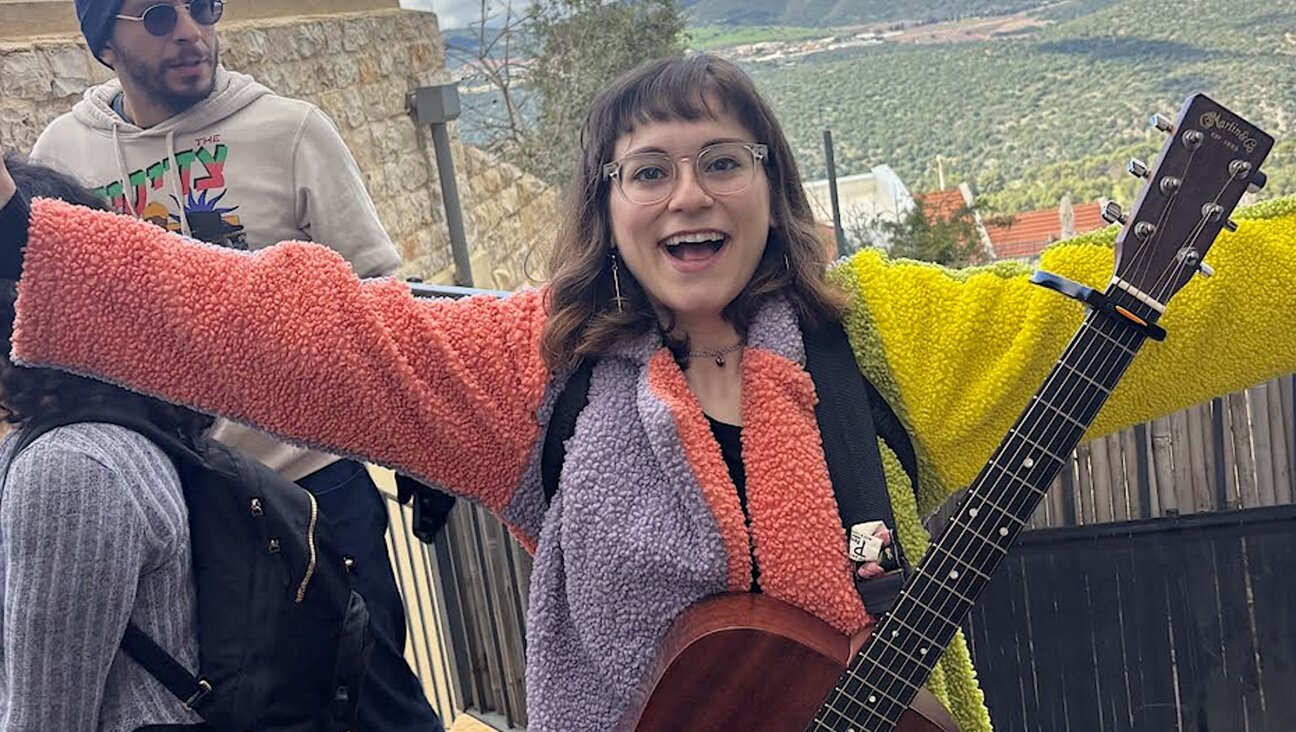
Many of Dinah Slepovitch’s performances, accompanied by her father Zisl Slepovitch, can be found on YouTube
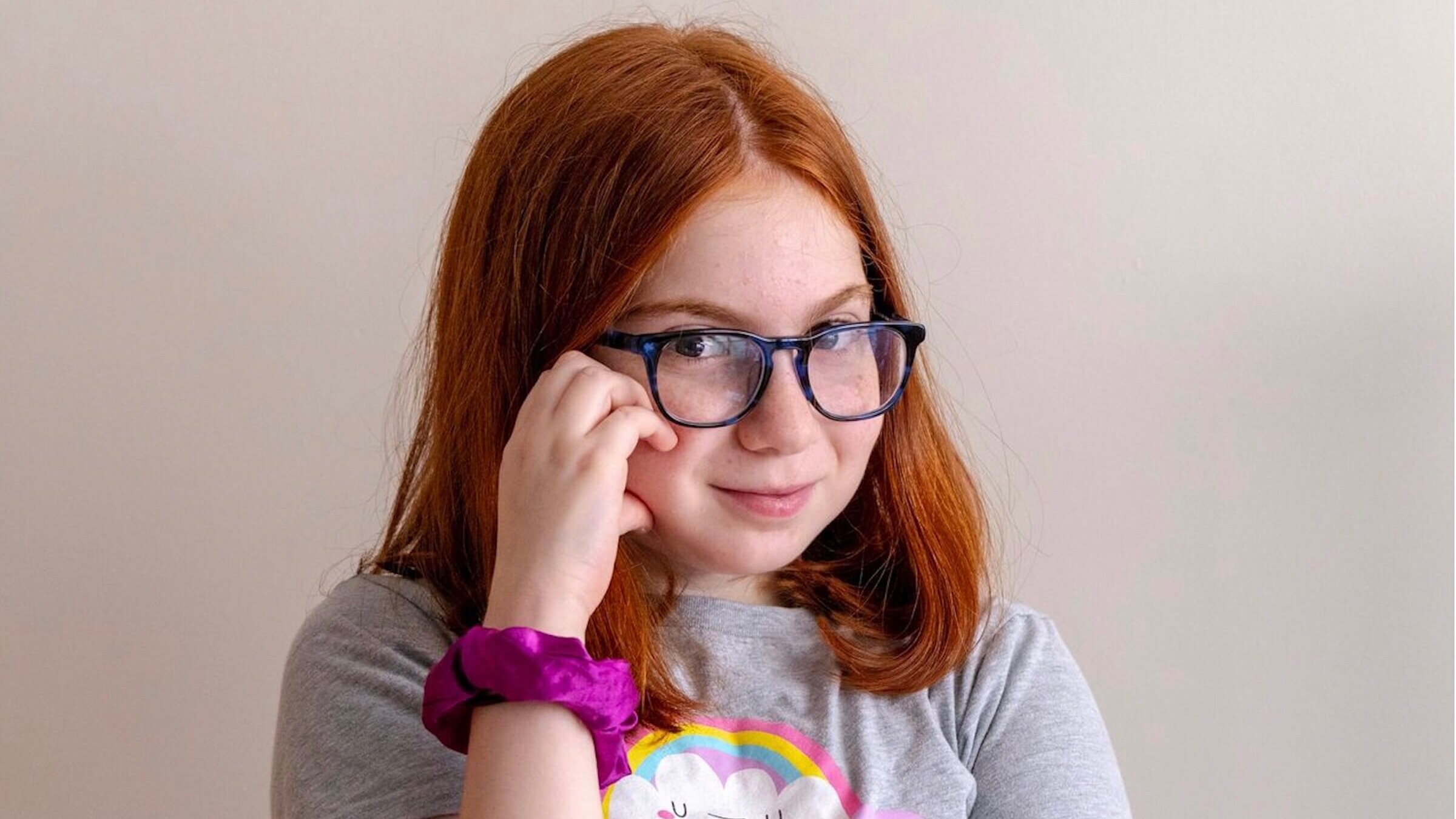
Dinah Slepovitch, August 2025. Photo by Zisl Slepovitch
In summer 2020, when the world was in lockdown, I couldn’t stop watching a video that featured two young children — Dinah Slepovitch and Pinya Minkin — singing a Yiddish folk song about eating potatoes every day. The song felt a lot like life during COVID-19, even as it evoked what poor Eastern European Jews often ate in the past. I was enchanted.
The Yiddish language was still relatively new for me then, and I had no idea that Dinah — at the grand age of 7 — was already an experienced singer of Yiddish songs.
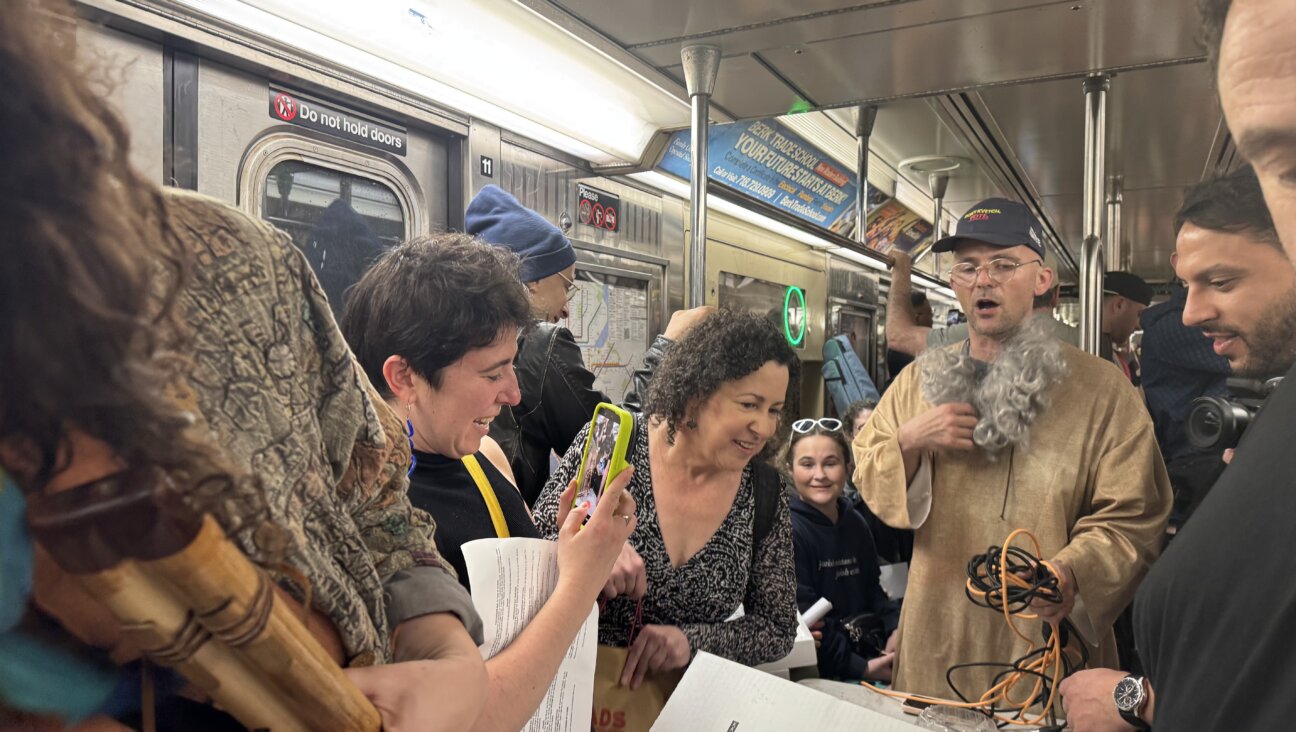
Here she is three years earlier at age 4, performing the children’s song “Hob ikh mir a mantl” (“I had a little coat”) at the Workers Circle Hanukkah concert in New York. She sings entirely from memory in perfect Yiddish and her father — klezmer musician, composer and Jewish music scholar Zisl Slepovitch — accompanies her on the keyboard. The audience joins in for the refrain. Dinah and her father have made nearly 20 videos together over the past several years, showcasing a wonderful variety of Yiddish songs.
In 2025, 12-year-old Dinah gave the world premiere of “Afn taykhl sholem” (“By the river of peace”), composed by her father with words from a Yiddish poem by former Forverts editor Boris Sandler. Father and daughter performed the song together at a gala in honor of Sandler’s 75th birthday.
Dinah also debuted as a soloist with the National Yiddish Theater-Folksbiene during their Hanukkah program at Hebrew Union College. And she appeared in new videos of Yiddish songs, including the bittersweet “Zol shoyn kumen di geule” (“May the Redemption Come Soon”), composed after the Holocaust with words by the poet Shmerke Kaczerginski.
I recently spoke with Dinah and her father about the role of Yiddish songs in her life — in the past, today, and hopefully into the future.
How did Dinah begin singing songs in Yiddish?
Zisl Slepovitch: I’ve been singing Yiddish songs to her since she was born. She naturally started imitating me, the way little kids do. We mostly speak Russian at home, because my wife and I grew up in Belarus. Of course Dinah speaks English at school, and English and Russian with her friends.
But Yiddish and Yiddish songs are part of our family life, and she soaked them up from her daily environment. She hasn’t been exposed to Yiddish in a systematic way, so she can’t converse yet like she does in Russian or English. But it’s clear how easily and naturally she sings in Yiddish.
Dinah, how do you learn all these Yiddish songs by heart? What’s your process?
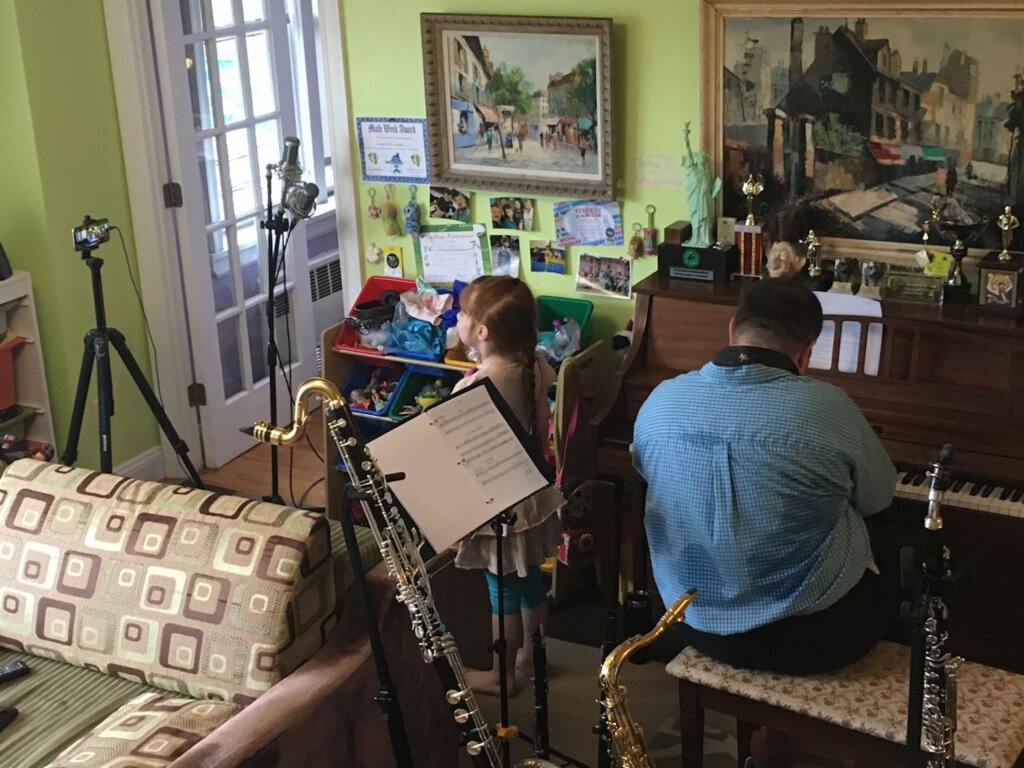
Dinah Slepovitch: When we pick a new song to learn, my father sings it to me as many times as I need. I have a pretty good memory, so I start to remember the melody right away. Then we go over the words, translating them into Russian and sometimes into English. We also talk about what the song means, the kinds of emotions that it describes. Because I know so many Yiddish songs by now, a lot of the words are already familiar — more and more words over time.
What are your favorite Yiddish songs?
Dinah Slepovitch: “Shnirele Perele” is special to me, because I sang it in the first video that my dad and I made during COVID-19. And of course the song about potatoes is close to my heart, since that video was really popular and helped a lot of Yiddish fans get through COVID. I also love “Arum dem fayer” (“Around the Fire”). When I sing it, I feel calm and connected to the other people singing with me.
What kind of reaction have you gotten to your videos?
Zisl Slepovitch: We’ve gotten a very positive reaction. I travel around the world because of my music work, and I hear from many musicians and Yiddish enthusiasts in other countries that they’ve watched the videos, often with their children. Yiddish teachers and teachers of Jewish music show them to their classes. It’s inspiring for students to see a child who loves Yiddish and sings it so comfortably.
Dinah Slepovitch: My friends watch the videos, and I think they like them!
Dinah, how do you feel when you sing for a live audience, especially in a big theater or auditorium?
Dinah Slepovitch: Nervous. But my mom helps me a lot. She’s my biggest cheerleader, and she’s always there with me backstage when I’m getting ready to perform. She helps me to calm down. Once I go out on the stage and start singing, I feel very happy.
Do you want to learn Yiddish more systematically, maybe with YiddishPop?
Dinah Slepovitch: Yes, I plan to start next summer, when I won’t have so much schoolwork to do. Hopefully I’ll learn pretty easily, because I’ve been hearing Yiddish my whole life. And I know so many words.
Will you keep singing Yiddish songs for live audiences and making videos?
Dinah Slepovitch: Yes. As I learn more Yiddish, I’ll be able to sing more kinds of songs. I sing with the New York chapter of the National Children’s Chorus, which helps with singing technique. We sing in English, Spanish, Japanese, Hebrew, Hawaiian, Mandarin, Latin. The conductors help us pronounce the words correctly. I love singing in all kinds of languages. But Yiddish songs will always be special for me, because Yiddish is such a big part of my life.
This article previously appeared in Yiddish.
This is a moment of great uncertainty. Here’s what you can do about it.
We hope you appreciated this article. Before you go, we’d like to ask you to please support the Forward’s independent Jewish news this Passover. All donations are being matched by the Forward Board - up to $100,000.
This is a moment of great uncertainty for the news media, for the Jewish people, and for our sacred democracy. It is a time of confusion and declining trust in public institutions. An era in which we need humans to report facts, conduct investigations that hold power to account, tell stories that matter and share honest discourse on all that divides us.
With no paywall or subscriptions, the Forward is entirely supported by readers like you. Every dollar you give this Passover is invested in the future of the Forward — and telling the American Jewish story fully and fairly.
The Forward doesn’t rely on funding from institutions like governments or your local Jewish federation. There are thousands of readers like you who give us $18 or $36 or $100 each month or year.
Support our mission to tell the Jewish story fully and fairly.