The Sour Legacy of the Spring of ’67
On June 1, 1967, the Beatles released “Sgt. Pepper’s Lonely Hearts Club Band.” The Wall Street Journal, reflecting on what it calls the Beatles’ most famous achievement, says that “When ‘Sgt. Pepper’ appeared, it was as if a massive block party had appeared outside your window.”
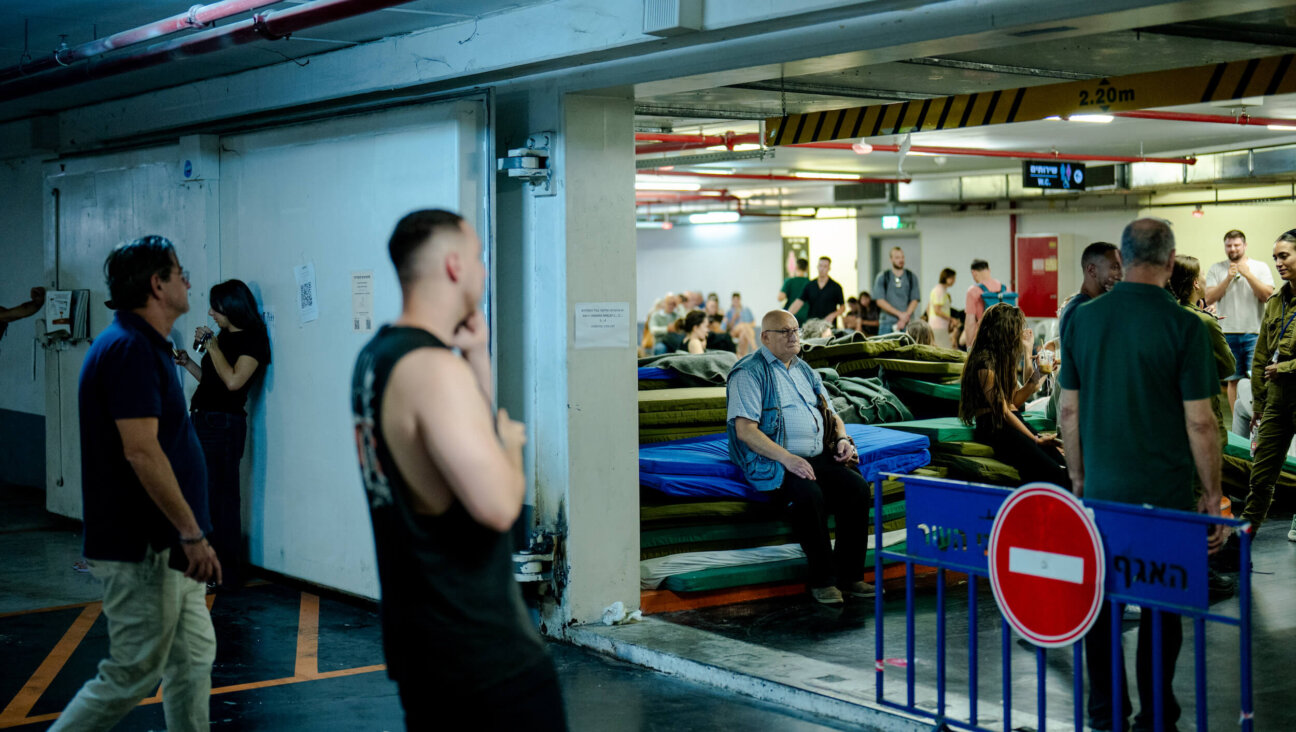
I missed the block party, and was absent as well from the “summer of love” that followed. I was, as they say, otherwise engaged. On May 22, Egypt had closed the Straits of Tiran to Israeli shipping, meaning that Israel no longer had access to the Red Sea. There immediately ensued two weeks of panic; war was in the air. The fear that “another Auschwitz” was in the making was deep and wide; fresh graves were dug in Israel to receive the bodies the anxious nation anticipated. Neither before nor since has there been so sharp a sense of foreboding.
Volunteers to come to Israel to help with the harvest, to work in hospitals, to drive heavy trucks were urgently requested. This was long before e-mail and the Web rendered that kind of request easily disseminated. Somehow — I don’t recall the circumstances at all — I became the clearinghouse for Boston-area volunteers, taking their calls, providing them with information and even, on occasion, the funds for their airfare.
So when there was a rally for Israel on the Boston Common on June 4, two weeks into the dread, it made sense that I was asked to speak to the question of what people could do to help the imperiled, as we all believed it was, Jewish state.
The main speaker that day was Senator Ted Kennedy, who hadn’t arrived at the bandstand when I began to speak. Midway through my eight minutes, I saw a rustling in the crowd — 10,000 people, we were later told — and I realized that Kennedy had arrived and was making his way through the crowd to the dais. I paused as he climbed the several stairs; he whispered an apology as he passed by me to take his seat. And by utterly fortuitous coincidence, the very next words of my prepared text were, “If John F. Kennedy could say in 1963, ‘Ich bin ein Berliner,’ then surely men and women of conscience everywhere can say in 1967, ‘Yehudi anochi — I am a Jew.’”
At that, the crowd went wild. (Note: If you’re ever speaking at an outdoor rally, remember to give people a reason to cheer.) Sustained clamorous applause, bravos, hurrahs; I’d struck a chord. And my words had the advantage of being entirely believable: Israel was, after all, the international darling of the day, the sweet innocent menaced by the evil ogre. A perfect melodrama.
So it is we come now to the 40th anniversary of a war that began on the morning of June 5, the very next day, a war that ended officially six days later but that for most practical purposes was over by about noon on the day it began. Given the awful apprehension that had preceded the war, no victory ever tasted sweeter. Plucky Israel had prevailed. David had again defeated Goliath.
I tell that story now not as a remembrance of “the good old days,” but as a way of cautioning that we ought be careful what we wish for. Few sweet victories have ever turned sour quite so quickly or comprehensively.
That’s not the standard view, I know, though it is increasingly accepted by Israelis to the left of center — not that any of them would have preferred defeat. True, peace with Egypt and Jordan have also happened and would perhaps not have without the 1967 victory. No small thing. But the victory left Israel the unwelcome occupier of 26,000 square miles of additional territory — the Sinai, Gaza, the West Bank, East Jerusalem and the Golan Heights.
The occupation, it was widely assumed, would be temporary. In Sinai, it lasted 11 years; in Gaza, 38. But the West Bank lingers, a tumor that grows. As Gershom Gorenberg brilliantly details in his book “The Accidental Empire,” just seven months after the war there were already 800 Jewish settlers in the West Bank. The settlement project was advanced by Shimon Peres, Yigal Allon and Moshe Dayan, all stalwarts of the left, and soon enough it was taken up as a messianic project by Gush Emunim, then advanced with varying degrees of enthusiasm by Begin, Rabin, Netanyahu, Barak and Sharon.
Now, 40 years later, there are some 250,000 Jewish settlers in 120 officially recognized West Bank settlements, an indeterminate (but relatively small) number in 102 (or so) illegal outposts, many of them on land privately owned by Palestinians, 16,000 on the Golan and 180,000 in annexed areas of East Jerusalem. Every few weeks, Defense Minister Amir Peretz announces the imminent dismantling of 24 of the illegal outposts, first promised to President Bush by Ariel Sharon. So far, they remain untouched, in several cases in blatant defiance of orders by Israel’s Supreme Court. And not merely untouched — connected to regional electric and water supplies and protected by the Israeli army.
In 1980 the late Hebrew University historian Jacob Talmon, in a letter to Begin, called the settlements and the occupation a “time bomb” and a corrupting “trap.” And then added, “Let us not compel the Arabs to feel that they have been humiliated until they believe that hope is gone and they must die for Palestine.”
Yet that is precisely what has happened.
The passions of the settlers have become a central fact of Israeli public life, rendering the settlements a trap, and the misery and hatred of two generations of Palestinians are a constant sorrow and an ongoing threat. Forty years: Here and there, a lush oasis. But mostly a desert; wandering, stumbling, no promised time in view.
I’m personally matching all gifts to the Forward, up to $36,000. Can I match your gift now?

Hello, fellow Forward reader! I’m Joel Brown, a Forward reader and supporter for more than 15 years, and currently the chair of the board of directors.
I’m an avid Forward reader because it ticks so many of my essential boxes: excellent journalism, Jewish focus and diverse viewpoints. In today’s political climate, what I most appreciate is the Forward’s independence — made possible by the generosity of its membership.
The Forward is committed to bringing you unbiased, nuanced Jewish news. From my position as board chair, I see an exciting future as we expand our position as the definitive independent voice of contemporary American Judaism.
— Joel Brown, Forward board chair
Support our mission to tell the Jewish story fully and fairly.