Lucette Lagnado, a former editor at the Forward and currently a reporter for The Wall Street Journal, recently took it upon herself to unearth the full details of her family’s 1962 exodus from Egypt. The resulting book, “The Man in the White Sharkskin Suit” (Ecco), tells the story of a family torn from its beloved city of Cairo and forced to build a new life in America — a task that proved more difficult than expected.
The family in question is also my own: I am the daughter of Lucette’s brother, Cesar (and, following in Lucette’s footsteps, a former intern at the Forward). I sat down with my aunt recently to discuss the book, from researching and writing it to our family’s reaction and her hopes for the future.
— Caroline Lagnado
What compelled you to write this book?
What I wanted to do was tackle these fairly epic themes of exile and loss and rootlessness, but through a child’s eyes: The child that I was when I left Cairo with my family in the early 1960s. I chose to tell the story of the Jewish exodus from Egypt through a single family, ours, and by way of a little girl named Loulou, who is of course my alter ego. Loulou takes note of all the upheavals under way, and she is thoroughly caught up in these sweeping historical events, but she experiences the changes around her as a child would, by latching on to familiar, beloved objects.
Did you find it cathartic?
The book meant coming to grips with my father — who emerged as filled with contradictions. That was an extraordinary dilemma for me — how to reconcile the two sides of my father, the extreme bon vivant and the deeply devout Jew. In America, that is practically impossible, but it was possible in Cairo: You could be a person of deep faith and yet still revel in the pleasures of the world.
What kind of reactions did you anticipate from our family members?
I was very anxious — my siblings are considerably older than me, and I figured they would feel, “She was way off on this,” and “How dare she say that.” So in fact I agonized about it, even though I worked really closely with them, in particular Cesar and Suzette. My sister comes off as a controversial figure in the memoir, so I was particularly worried about her reaction. I am thoroughly estranged from another brother, whose role in the book is quite minor. And so yes, I was worried — deeply worried. But my feeling now is that if I had the perfect Brady Bunch for a family, then maybe I wouldn’t have had so much material for “The Man in the White Sharkskin Suit” — which is, after all, about 100 years in the life of a complicated and tragic family.
Did you ever feel that these revelations betray the memory of your mother?
I adored both my mother and father, and so I hope not; I think that Mom was a terribly grand figure who was so lost and vulnerable. She was young and naive when she married — so many of us are, actually — and she married a man who was not only much older but much tougher. She simply wasn’t strong enough to deal with my dad as an equal. But you know you don’t have to be a frail, tender 20-year-old schoolteacher in 1940s Cairo to make a troubled marriage — it happens every day in America….
At the end of the book, you describe going back to Cairo in 2005. How do you view Egypt as a country now?
It is afflicted by this kind of weary post-Colonial shabbiness. Egypt threw out all the foreigners and all its Jews and said, “Our country is our own.” But what have they done with it? They have let it go to ruin. They know it, and they don’t quite know what to do.
At the readings I’ve attended, I noticed many Levantine Jews in the audience. What do you think is drawing these people in?
There is such an emotional reaction to the book, and the people are not part of the Manhattan establishment. Many are from the immigrant communities that came here from the Levant — from Egypt and Libya and Morocco and Yemen and Syria. They are reacting passionately because this is their story, and it is a story that hasn’t been told — this extraordinary Diaspora, the forced exiles from lands they loved every bit as much as my father loved Cairo.
What are you hoping readers will come away with from this book?
That once upon a time there was this amazing culture of book-loving, theater-loving, life-loving, intellectually vivid, charming and cultured people who were forced to give it all up and reinvent themselves. Somewhere — anywhere.
Unlike the Palestinians, the Jewish refugees of Egypt and other parts of the Middle East didn’t become a political cause. Most [Middle Eastern Jews] quietly assimilated, and those who could quietly set about rebuilding their lives, but many others, like my father, died mourning their lost home and country. They died yearning for this corner of the Middle East they had loved so much, but which had stopped loving them back.
The Forward welcomes reader comments in order to promote thoughtful discussion on issues of importance to the Jewish community. In the interest of maintaining a civil forum, the Forward requires that all commenters be appropriately respectful toward our writers, other commenters and the subjects of the articles. Vigorous debate and reasoned critique are welcome; name-calling and personal invective are not. While we generally do not seek to edit or actively moderate comments, the Forward reserves the right to remove comments for any reason.
"....the two sides of my father, the extreme bon vivant and the deeply devout Jew. In America, that is practically impossible, but it was possible in Cairo: You could be a person of deep faith and yet still revel in the pleasures of the world" That was and to a great extent even today, the Egyptian way. In the US we are forced to chose between deep faith and religious practice, which here seems more like an ideology, and "the pleasures of the world." Some swing one way, to the former, and others, most people, swing towards the latter. It is part of of the problem of religion the America. Most of us lean or swing towards one direction but inside, we want the other one as well.
Actually - this story has been told before by Andre Aciman in Out of Egypt, whose family was exiled from Alexandria. And a very fine book it is.
Dear Lucette Lagnado, thank you very, very much for a wonderful and moving book. I laughed and cried.
i would like to be able to email lucette privately and i wonder if you would be kind enough to give me her address. tks
I was deeply moved by The Man in the White Sharkskin Suit. I read it while visiting my parents, ages 94 and 92. I'm so glad Loulou provided this account of her family's journey.
The fate of Jews of Egyptian nationality was not really different from that of say, the Greek Catholics. My husband's family came from Aleppo and when he married me (a Muslim) he felt threatened and we finally landed in Australia where of course we found life most unpalatable. The point is that no country was prepared to give as much as Egypt did in those days without demanding anything in return.
As a first generation American Sephardic Jew I understand instincively what Ms. Lagnado refers to as the "humanity" she rediscovered on her journey back to Egypt. I saw this humanity in my grandparents eyes and in the way they approached others. And I, like Ms. Lagnado, am on a constant quest to reconnect with that humanity. Lagnado's book, The Man in the White Sharkskin Suit, was a poignant and moving way of doing so. BTW, Lucette Lagnado, we are acquaintances from a million years ago. My husband was the rabbi at the Sephardic Center of Mapleton and we remember you fondly from there. Our bookclub will be reading your book and we would like to engage you to come and speak with us. Please contact me at your convenience if you are interested. Best wishes and mabruk on your wonderful book!
Dear Lucette, I have been reading your memoir and happen to be finishing my own memoir about growing up in Tangier,Morocco with a father quite similar to yours. Would love the opportunity of telling you more about this. Michel Bensadon
The book is magnificent. Lucette is extraordinary in the way she captures our story-- not only Jews but Egyptian Christians who left the Levant in the next wave around 1969-72. The same haunting experience, similar memories of Cairo, Alexandria and a multicultural world that has perished there, but, interestingly been transported with us here, in NYC and Boston in homes where Arabic alternates with French and now English among the new generation.
to the author: Your book brought me back to My roots. Born in cairo,lived in heliopolis,Jewish, educated in english, speak french & Arabic. Living in USA since 1959. Mother still alive.( Does she have a story to tell you? Your story was flawless. You led a difficult childhoodyet kept the warm memories of a happy life one cannot explain and like all the jews that left Egypt overcame it all. and succeeded. Bravo We have that special something. would love to compare notes.
It is interesting that the author seems so interested, not just in the stories of her grandparents' Syrian Jewish community, nor just in the stories of the Jews from various parts of the world who gathered in Cairo -- Syrian, Ashkenazi, and even some with long roots in Egypt! -- but in all of the non-Ashkenazi stories. Whereas most English-speaking Jews today are Ashkenazi, a much smaller proportion of French-speaking Jews are Ashkenazi. Many of the stories in which the author is interested have therefore been written in French-language books. It would be nice if there was more translation of such books to English.
Lucette, I wonder if you remember me from Vassar where we were both French majors in the class of 1977. At that time, I didn't know we had things in common and now 30 years later, we have far more. My father was 57 when I was born, surely turned a few female heads like yours and used gentlemen's agreements in his work. After Vassar, I lived in Paris and then in Morocco and Jordan where Muslim friends called me "cousin" and where I decided The Alexandria Quartet was the book I'd take with me on a desert island. I spotted an ad for your book in my monthly Border's newsletter, ran to my yearbook to be sure my memory hadn't failed me and that the author was indeed the Lucette I once knew without really knowing. Your book is magnificent and I will think of it often.
Caroline, Thank you for conducting this interview and writing this article. It answers some of the many questions I have after reading Lucette's wonderful book. I wonder if there is a way to find out about any appearances Lucette will make about her book. It would be such a pleasure to meet her in person.
A riveting memoir, on so many levels - especially the excruciating loss of home and the tenacious daughter-father bond that made it less unbearable. As a fifty-year-old when my last daughter was born, "Loulou" found a place deep in my heart. And Leon, so unbearable in so many ways, retained his integrity to the end. A powerfully lingering evocation of a lost Jewish world and the futility of trying to find it in the US. Thank you for revealing so much and stirring so many deep feelings of love and loss.
Does anyone know how I can get in touch with Caroline or Lucette? My name is Leila Laniado and my family was also from Aleppo. Reading her book is like reading my story. I also have ties with Rabbi Laniado or so they told me. If so my email is leilalaniado@hotmail.com
I'm almost through reading the book and loving it. In a county's history there are too many moments when bad decisions are implemented and nothing could be done to easily remove their consequences, but Um Sayda is a real Egyptain old lady and acted like too many others would have done. I do love my country with all its people no matter what they believe in. Thank you ver much
I commend you on your honesty in telling your story about your father's family, his devotion and also his shortcomings. Being human carries both perfection and imperfection. Thank you for "The Man in the White Sharkskin Suit.
Thank you so much for this beautiful book, which I have just finished reading! My grandparents were from Russia and Roumania, not the same story as yours, yet I have not been so moved by a book in many years!
I adore the book. I am a Safardic Jew, my grandparents left Syria, Lebanon, and Turkey for Buenos Aires, where there's a large community of us. My parents Left B.A. in the early 60's for Los Angeles. I now live in Portland Oregon and am raising my children with my British husband. Thank you for your story.
I have Mrs. Lucette's latest book & it's very interesting but it's very painful to read because there's no justification at all for what happened ! It was awful but I do understand the conditions that they had to go through and I did some reading about the Egyptian Jewish community to find out the main reasons behind their exodus from the country they loved & lived for more than half a century ! And I came up with some answers & some questions !!!!! The book I'm reading ( The man in...)is very accurate,as a matter of facts it is the best book ever written about the Jews of Egypt but Mrs. Lucette didn't write about the cause of the problem ? Why did they agree to leave their country when others just like them are still living in Egypt today ?
I'm an Ashkenazi Jew who grew up in the US. As one of the seeming few who understood about the problems of the Mizrahim, I thought I had a good idea. I moved to Israel a few years back and know many Jews who had to flee Arab countries, but they, as with Ashkenazi and Sephardic refugees, don't talk about it much, they just deal with it. To read such a wonderfully written book was great, it tells it in a way that helps anyone understand the issue better. A refugee is a refugee, regardless of "from where" (except for that fake definition UNWRA has). It wasn't the troubles of the "typical" refugee that god me. What was an eye opener was just what she mentioned, the difference in the ability of Levantine Jews to combine both the religious and social aspects of modern life. The struggles of the author's family, not just the father, to deal with that is what gave the book its real value to me.
I thoroughly enjoyed The man in the White Sharksin Suit, but wonder what happened to the siblings? Did Suzette remain in England? Did the brothers go to college? Remain in the US? Marry Jews?
Lucette, I thoroughly enjoyed this book about your family and their exodus from Egypt. I read the review of it in the Jewish Journal in Los Angeles where I live. Recently I have become fascinated with Jews who have left their country of origin and journeyed to a new land. Your book exquisitely details the struggle of a stranger in a strange land. I tried to empathize with your new life in the United States but it is difficult being born here and never having to make such a change. January 2006 I visited Egypt and Cairo. I went to the Gates of Heaven synagogue on Saturday morning hoping there would be a service; it was open but no service. What a beautiful synagogue it is. I spent time reading the names on the wooden seats, imagining the lives of these people and wondering what happened to them. The story of your family has helped me understand the history of the Jews of Egypt. I have found that this is this is the best way to learn history; starting with the personal. Lucette, you write beautifully and I would like to read any books you may write in the future. I hope you are well and fully recovered from your cancer. Warmest Regards, Lynne Rubin Los Angeles
I just finished reading the book. It was very well written and very enlightening. I would highly recommend it to one and all.
Dear Lucette: I was deeply moved by your book, I also found myself in many of the immigrant "vignettes." Some of them were funny e.g.: I forced my daughter to go with "nice dresses" to birthday parties, how would you go dressed your child in blue jeans? Some of them were of unexpected cruelty-- like the" you people " from your Jewish landlady--considering that the disparaging attitudes came from fellow Jews. By the way although my husband is ashkenazi, and I am 75/25, we belong to a "halabi synagogue" where we were received with extraordinary love and friendship. Brahot hamot Ruth Warat
Thank you for a splendid book. I am 70 years old today and lived through the same agony described in your book. It was good for the soul to go over one's life history which we tend to forget once things get better. Well done.
Good idea! P.S. A U realy girl?
After reading several chapters of your book, I was struck by how almost identical your story is to mine; it was so uncanny, I felt you stole my past! Congratulations for having written the book first. I was in the process of writing my family's story but hit a few walls from uncooperative members who felt there was no need to "unearth" anything. The story needed to be told. Thank you for doing a beautiful job, though one tiny criticism: You glided by one too many times over situations that I envisioned to be dramatic and full of angst. It would have been more authentic to have heard a true voice. As you know, Sephardic people are gregarious and loud by nature and your voice was a little on the quiet side and a bit too polite.
U need antivirus?
I am Egyptian. My father, Elie Mosseri,is the newly married 22 year old man Lucette writes about in her book. I loved the book. Growing up my parents always told me stories of Egypt. My mother was also born in Cairo. She grew up pressing her nose to the window of Groppi"s.My mother went to Lycee Francais. I grew up listening to Om Kalsoum and watched movies with Samia Gamal. Today my father stills prays at the Ahava. The book really touched my heart!It was amazing! I would really love to speak with Lucette. If she emails me I will give her my phone number. Mabrouk Lucette. I would love to here from you. Lisa Mosseri Kanarek (I also married Ashkenazi)
I am reading this book right now. I am a Sephardic Jew with Iraqi and Syrian parents. I live in Deal, NJ where there is a large Syrian community. I would love it if Lucette Lagnado could come to our JCC and give a talk about her book. I know many people here would love it and would get so much out of it. Would this be possible? Please let me know.
I not understend what U want
давайте займемся этим!
my girl crazy, man!
Thank you for sharing with me your childhood on Malika Nazli; My 2 sisters & myself were born on Malika Nazli not far from 381. I admire Leon's decision to postpone his departure to 1963, I left Feb. 1957 at the age of 27 with a wife a one child & I often wondered what I would have done had I been over 50 with wife & 4 children. Chapeau for remembering the make of soap used on Friday's bath Nabolsy. The man in the white sharkskin suit brought back many memories,some good others of no importance. I remember the Cojasor, & the HIAS in Paris, I ended up in Canada, its been good to me, & I love it. You and Leon are very generous persons. Thank you from the bottom of my heart.
Ι've only recently discovered Lucette's book (at the Diwan bookstore in Zamalek, Cairo) and have been reading it with great interest. I am a Greek Cairene who reluctantly left Egypt with my parents in 1972. Though there were some Italians and Armenians left in Egypt, I barely got to know any Jews, as they had already left by the time I was old enough to have any meaningful give-and-take with them (though there was a neighbour, Miss Rosenberg, a tall, very elegant lady, who instructed me in French for a short while). Lucette's book fills this void wonderfully. And I too would like to contact her personally, since I too, as a journalist and writer working in Greece, have made it a point to record my Egyptian past and also educate as many people as possible about the unique experience it has been.
I have just finished reading "Sharkskin" and was very moved by it. I was born in Cairo and while reading the book my father passed away in Alexandria. I wonder is Lucette would come to Raleigh, NC for a book reading? There are many here who would welcome a visit and reading from her. Please contact me if you would like me to arrange it.
Dear Lucette, I am an Obstetrician and I work in Cairo University and on Sundays I have a clinic in the Italian hospital in Abbaseyya in Cairo so every Sunday I pass by your and Leon's house and I have to tell you that you caused me a big problem cause ever snce I read your book I always picture you and Leon in the balcony in the little HARA infront of the art galery that exists now. Sometimes I feel that I see Leon going to his synagogue to pray and I can picture you sitting in the balcony waving to your father with POUSPOUS on your lap. Sometimes I even think that the cat walking in the street (MALIKA NAZLI or now RAMSIS street)could be a descenedant of POUSPOUS. I have to tell you it is a wonderful book I enjoyed reading every page of it and I was not able to hold myself from finishing the book in 2 days. At the end of the book I found myself saying PAUVRE LOULOU, but my LOULOU was different from yours. My LOULOU was LEON and not Lucette he really had hard time and I really wished that he was able to come back to Cairo before he died. Lucette you have to know that you have not only one house in Cairo (281 Malika Nazli street) which was offered to you by your old neighbour who lives upstairs but you are more than welcomed to live in our house (me, my wife and 2 kids) whenever you think of coming back to your country. In the end there is a question that always bother me why don't Egyptian Jews come back to their country if they still love it and have good memories in it.
What a beautifully written book. I am not Jewish or Egyptian. I have been to Cairo. I loved the story of family. My mother mailed me the book because she loved it.
Dear Lucette, I just finished reading your wonderful book and had to sit down and write you a note. I enjoyed every word of it, smiling and crying throughout. Although different, in some ways this is my family's story. My parents were Polish Jews who survived the Holocaust. My grandparents, aunts, uncles and cousins did not survive. My parents came to the US as refugees in 1949 with the help of HIAS, rebuilt their lives. My parents settled in NYC where my siblings and I grew up. They left Europe and vowed never to return. They embraced their new land,learning the language and culture. However, I always felt like an outsider different from other children whose parents were born in the US and not suffered the way mine had.Thank you for a beautiful family memoir. Irene B-
I would like very much to communicate with Lucette Lagnado. I would like to convey my admiration for her book portraying her family exodus from Egypt and I would like to interview her for a news paper published in Kuwait.I also would like to discuss the translation of her book into Arabic. Thank you for telling us about your father. We can not but love him and admire him and your all family. Best regards Hamed Alajlan Kuwait
Really enjoyed this book. The story about their family's devotion to eachother and about their culture and religion was interesting. I especially was moved by the relationship Lucette had with her father. The only thing that bothered me was what I thought was a harsh judgement of America. It was a culture shock for them but I thought she could have had kinder things to say about the country that generously gave her and her family refuge.
I am reading the book "The Man in the White Sharkskin Suit". I am Armenian and I am also from Egypt. I would like to know what passport did Lucette's father hold. Italian, French, British or Egyptian? My uncle was asked to leave Egypt because he was British. My mother who was British could stay because she was married to an Armenian born in Egypt. I thought that only jews with Italian, British and French passports were asked to leave. I would also like to know if Mireille Lagnado, a girl who went to school with me in St. Clare's College of Heliopolis, is a relative of Lucette.
Hello, I am Mary Lagnado. I live in France around Paris. I am born in Egypt at Alexandria in 1955. Did you know my father Gabriel Lagnado and his wife Mathilde Brakha?
Lucette Lagnado has written a book that echoes my personal life and while I was reading it, I had "goosebumps".. I passed on this book to my wife and she was also able to have a glimpse of what I went through during my personal Exodus from Egypt at the age of thirteen. I now live in Montreal,Canada. I have never returned to Alexandria but something calls me to return and see the land of my birth. Many that have returned have told me to just remember the good old days as things are not the same. Those days are gone and will never return only memories remain. My dilemma remains whether I should return or remember the old ways. My last experience in Egypt was seeing the massive stones of the pyramids during a sandstorm with my whole family holding hands.
Thank you so much for writing a book that was just wonderful. I was captivated from the very first page. You wrote your family history beautifully and it was such an interesting story , especially your father who I loved and hated all at one time. The one coincidence in the story is that I lived in Bensonhurst and attended P.S.205, Seth Low and Lafayette H.S. though not at the same time that you did. It brought back wonderful memories of the old neighborhood. Our reading group is reviewing this next month and I'm anxious to hear the reaction from the other ladies. Thanks again for a great read. Roberta Wolsky
Dear Lucette, I loved your book, "The Man in the White Sharksckin suit". I loved it doubly because as a child of five I fled from Vienna during the winter of 1938-39. I spent the next 11 years in Belgium. I was hidden during the war in a convent at first and then taken in by a Belgian family. My Father was killed in Auschwitz. After the war my Mother rebuild our family, that is she, ny younger brother and I. We came to America in December 1949. I did not like it here. I finished high school and soon after that married. My husband and I ran a chicken farm and I have well adjusted to my life in America. Sadly I am now a widow. However I have pleasure and some sadness. After readomg your book, I feel that you are my friend, I have been compelled to write to you. Sincerely, Mona Ginsberg [nee Manja Rapaport]
I read the book but there is a major error in the pronunciation of the street where she lived. It is not Malaka Nazli, it is Malika Nazli. I also lived on that street. I don't know why Lucette admired her father so much. He was not a good person, leaving his wife at home and going out at nights carousing. If he was so pious, why that lifestyle?
Also, the jews were not thrown out of Egypt. The people with British and French passports were thrown out after the Suez invasion, like my uncle who had a British passport. They should not consider themselves as martyrs, everyone was not happy in Egypt, even the well to do Egyptians. They were not persecuted.
In reading this book I found myself putting it down and lost in memories triggered by your wonderful and moving prose. Like many reader's comments here,(especially Anna Idy) whom I quote here only because I could not have said it better. "I was struck by how almost identical your story is to mine; it was so uncanny, I felt you stole my past! Congratulations for having written the book first. I was in the process of writing my family's story but hit a few walls from uncooperative members who felt there was no need to "unearth" anything. The story needed to be told. Thank you for doing a beautiful job, though one tiny criticism: You glided by one too many times over situations that I envisioned to be dramatic and full of angst. It would have been more authentic to have heard a true voice. As you know, Sephardic people are gregarious and loud by nature and your voice was a little on the quiet side and a bit too polite."
I have just finished Lucette Lagnado's “The Man in the White Sharkskin Suit”.
I was born in Cairo in 1964 and landed in New York (where I still live) in March of 1971. I must say that I was completely moved by the story. It is incredibly similar to my own. Ms. Lagnado however escaped before 1967 when Israel routed Egypt in a war that lasted only seven days. The Jews that were left were persecuted like never before. All male Jews over the age of 16 were thrown in prison with no charges. They were tortured for three years, all their assets seized, their lives ruined. Mothers, wives and Children mourned their sons, husbands and fathers.
Gamal Abdel Nasser was a tyrant and a coward. After holding the Jews in a prison camp for three years he gave them the option of leaving Egypt forever or staying without the ability to have jobs/do business or own any assets. We opted to leave. We went to Paris just as Lucette did and lived in the run down hotels paid for by HIAS.
The stories I heard from my parents while growing up in New York City were eerily similar to the one's described in this wonderful book.
The complete shocker for me was the fact that my father, who was a physician, worked for The Jewish Home and Hospital for the Aged for about 20 years. Leon left Egypt in 1962 and my Father left in 1970 ended up in the same nursing home, one a doctor and one a patient.
Thank you Ms. Lagnado for your wonderful book. My home is open to you and your family.
Benlichaa@yahoo.com
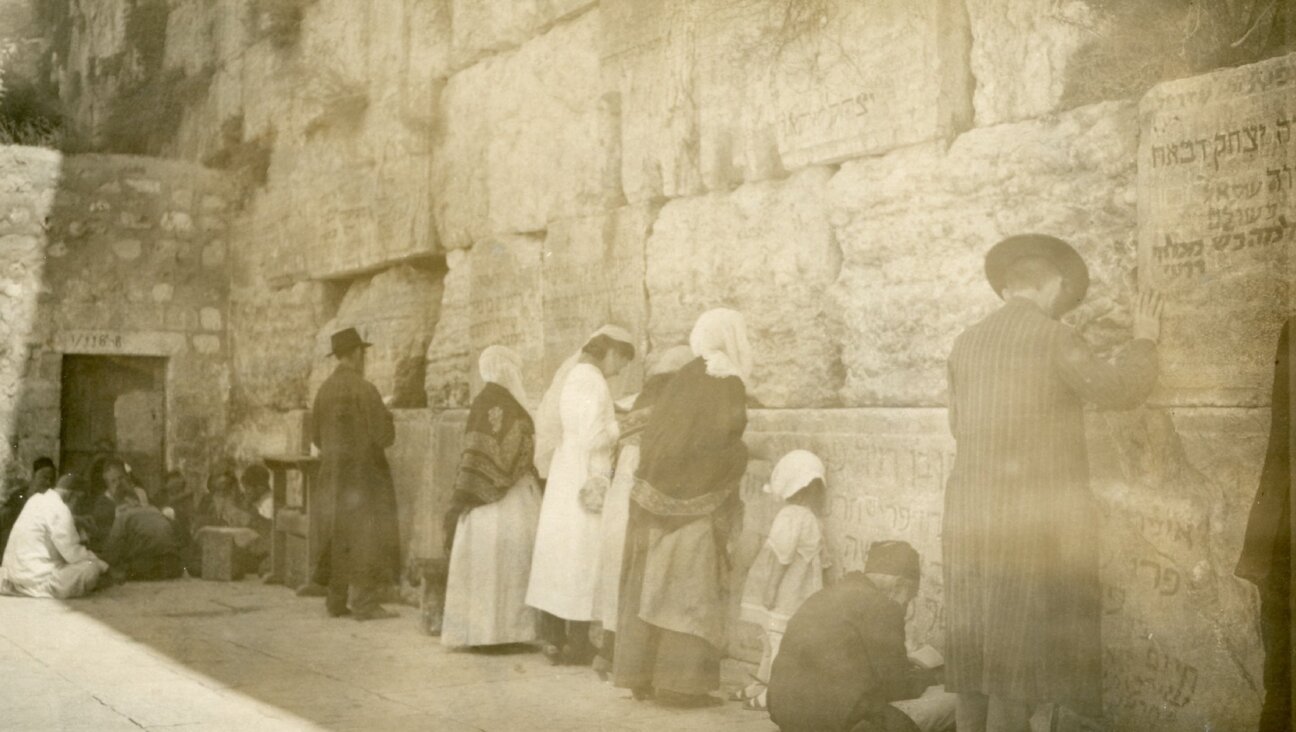
The photo of the 134 page book Cairo suite the man in the white suit sharksin, first left is my mom Florina Frewa, the third party to fund my father Maurice Mizrahi Z ¨ l, a child sitting on the ground is my brother Benny Mizrahi, was a thrill to see that photo in his book.
This is a message addressed to Peggy Hinaekian. I am Mireille Lagnado from St. Clare's College. I am having trouble to remember you, you know we've grown older and don't look the same.Did you live in Heliopolis? Did you have a sister? I believe that must be the one I remember. Would love to hear from you. Affectionately, Mireille
How funny that Peggy remembers Mireille Lagnado, Mireille and I were classmates at St. Clare's and were, unfortunately, separated by the 1956 war, and have just so recently reconnected - to our great joy.
I also am looking for anyone from either Sacred Heart School in Alexandria, or St. Clare's in Heliopolis, or American University at Cairo
Such memories..... such nostalgia, but, we picked ourselves up and continues with our life, I also remember HIAS, Paris, Cojasor and finally the USA - home at last
I just finished reading "The Man in the White Sharkskin Suit". What an unexpected title for this story!I could not put it down until it ended..I identified with so much of it..I grew up in Turkey, emigrated to the US with my late husband 52 years ago, we spoke French at home, I graduated from Lycee Francais Notre Dame de Sion in Istanbul. My father's brother and his family lived in Alexandria and had to emigrate to Brasil. Also Rabbi Chaim Nahum was my maternal grandmother's older brother. On behalf of those of us who wished they could write their own family history, thank you.
Chere Lucette: I am your cousin Joseph Laniado. I am an actor and film maker. I would like to share something with you. Chau Jos
I am hosting my book club in Rancho Mirage, CA and facilitating 'THE MAN IN THE WHITE SHARKSKIN SUIT".
As this is a dinner group, would you have a family recipe I could prepare to make the evening more special.
Thank you for a beautifully written memoir!