Kasztner: Hero or Devil?

New Documentary Revisits Israel’s Holocaust Reception

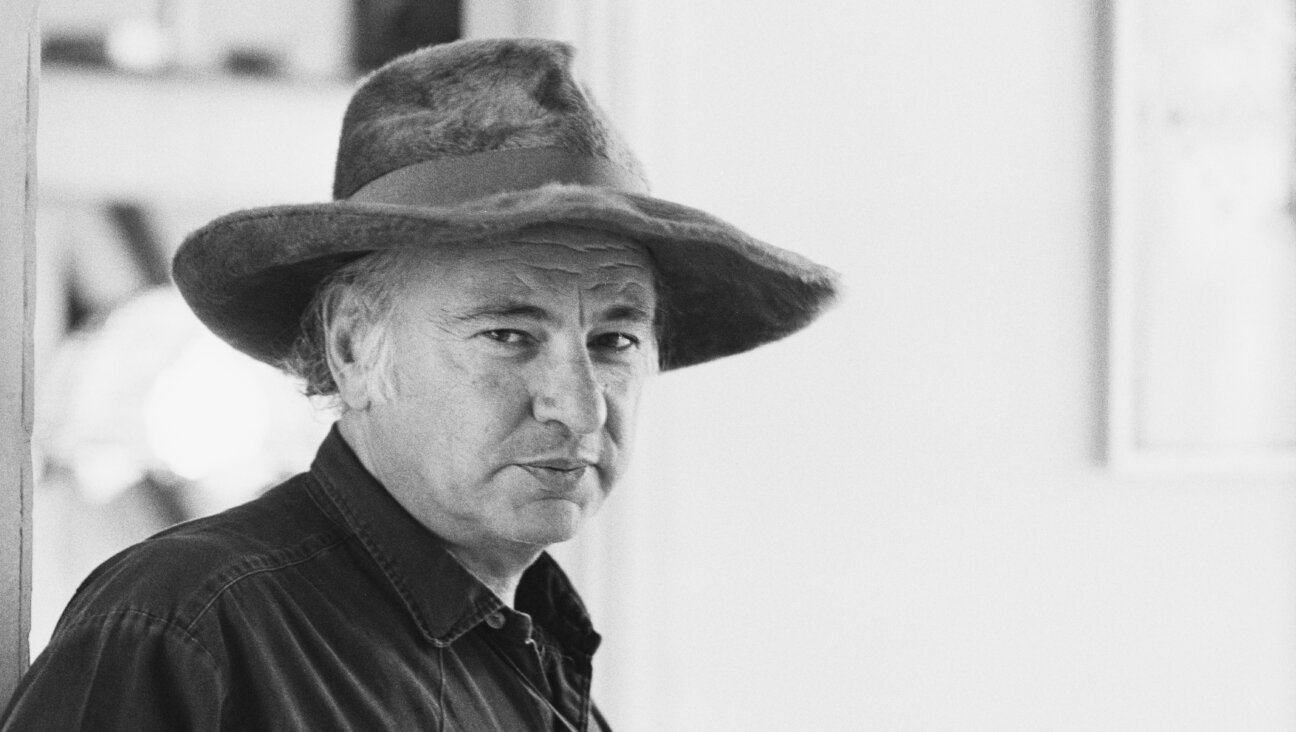
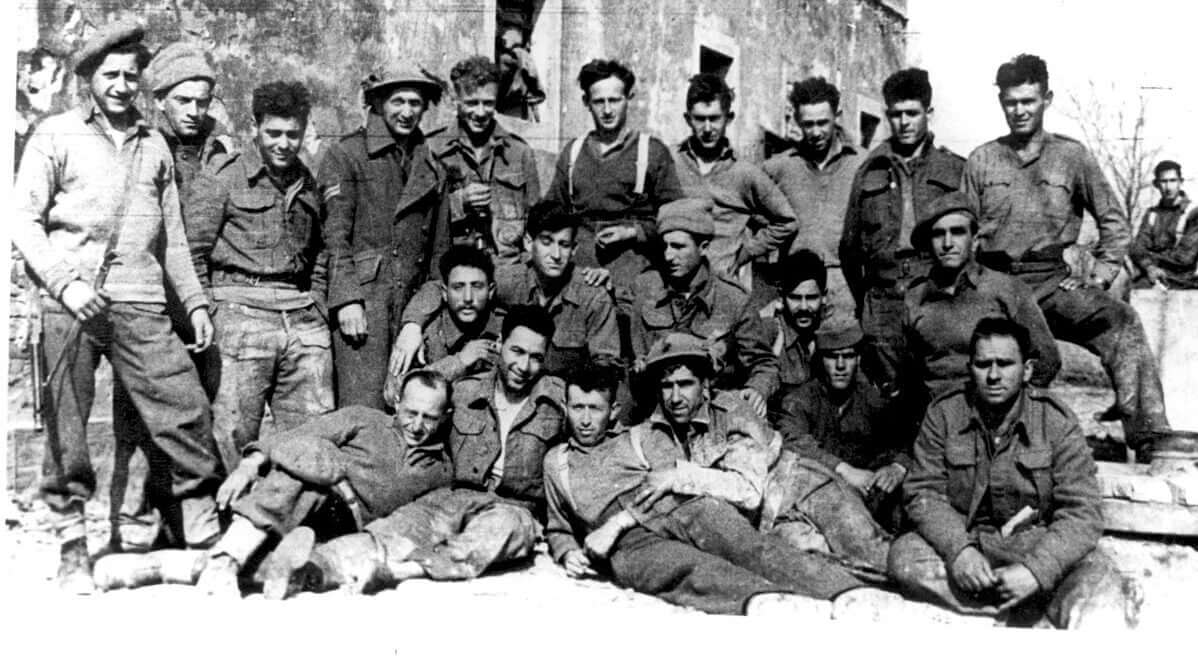
Another Kind of Train: Reszo Kasztner, pictured above in Switzerland, was in a position to liberate trains of Jews, including those Jewish children pictured to the left in 1944. Of course that meant he had to choose who would ride to freedom and who would remain under Nazi rule.
LEFT: COURTESY IZHAK WEINBERG; RIGHT: COURTESY KASZTNER FAMILY
Another Kind of Train: Reszo Kasztner, pictured above in Switzerland, was in a position to liberate trains of Jews, including those Jewish children pictured to the left in 1944. Of course that meant he had to choose who would ride to freedom and who would remain under Nazi rule.

By Jerome A. Chanes

Published October 14, 2009, issue of October 23, 2009.
  • Print
  • Share Share

Gaylen Ross’s splendid new documentary, “Killing Kasztner,” comes at a time when a new generation of Israelis is rediscovering a forgotten conflict, one that threatened to tear apart Israeli society in the 1950s. Until recently Rudolf Yisrael “Rezso” Kasztner had been the forgotten person in Israel. An ironic and puzzling situation since in the mid 1950s, the “Affaire Kasztner” was the flashpoint in Israel. It was an event that split Israeli society more deeply than even the Lavon Affair.

The idea that any Israeli, to say nothing of a highly placed Jewish Agency and later Mapai party and government official, could deal with the SS during the Second World War — in effect, collaborate with the Nazi beast — was abominable, obscene, unthinkable.

Yet there were many who thought just that.

Rezso Kasztner, a lawyer and a journalist, was a Zionist functionary associated with the Mapai party of David Ben-Gurion. In Budapest during the war, Kasztner headed up the Zionist Aid and Rescue Committee (Vaada) in Hungary, and it was in that position that he entered into negotiations with Adolf Eichmann and other Nazis to rescue Jews. Kasztner was indeed responsible for a number of rescue operations during the war, many of which involved negotiating with Nazis officials.

In 1953, Kasztner, then in the new State of Israel and working for the ruling Mapai government, was persuaded by party officials to cooperate in a libel suit brought by the Jewish state on his behalf against one Malchiel Grünwald, an old man and gadfly-crackpot pamphleteer who had declared in one of his sheets that Kasztner was a criminal Nazi collaborator: Kasztner had negotiated with the most terrible enemies of the Jews since Amalek; Kasztner had saved a trainload of handpicked Hungarian Jews (including his own family and the future Satmar Rebbe) in return for abandoning to their fate the rest of the Jews of that land; Kasztner had stolen Jewish communal funds, monies that the Jews had paid to him in return for promises to save them.

The trial — the first great Holocaust trial held in Israel — began in early 1954 and lasted for a year; in mid-1955, Tel Aviv District Court Judge Benyamin Halevy ruled against Kasztner, saying that he “sold his soul to the devil.” The verdict was overturned by the Israeli Supreme Court in 1958, but not before Kasztner was assassinated in 1957.

In the Israeli climate of the 1950s, it was impossible for Kasztner to be judged fairly or appropriately. Israelis were simply not ready to accept a concept or model of heroism other than that of g’vurah (heroism out of strength and courage) — according to the partisan or the Warsaw Ghetto models where Jews fought. They either took up arms against the Nazis and died heroically, ran to the forests and resisted heroically or were not heroic. Jews would not go quietly to their deaths.

The 1950s was too early to entertain an alternate model of Jewish heroism. The Hashomer Hatzair and Achdut HaAvoda parties pioneered the model of the “New Israeli Man” and g’vurah; the Ben-Gurion party was in this camp, too, albeit to a lesser degree. Holocaust victims (“sheep to the slaughter”) — and by extension, survivors (“collaborators”) — were viewed for the most part askance, indeed with an attitude close to contempt; they had collaborated in their own deaths.

The trial, which evoked the most awful images of Jewish collaboration, took place in this atmosphere. The trial of Grünwald became a trial of Kasztner; the trial of Kasztner, stoked by enemies of Mapai and Ben-Gurion, became a trial of Mapai; ultimately, the trial of Mapai became a trial of the victims — and survivors — of the Holocaust itself. The Herut party on the right, with Grünwald lawyer Shmuel Tamir as mouthpiece, joined forces with Uri Avneri’s widely read and influential magazine, Haolam Hazeh, on the left, in attacking Kasztner. While there were vast differences, politically and socially, between the two, Herut and Avneri had a common mission and goal: to topple the Mapai party. Contributing to the climate of hysteria was the non-fiction “Perfidy” (1961), an ill-conceived and irresponsible anti-Kasztner book by American playwright Ben Hecht that was widely read in the United States.

Thus the rhetoric: Tamir and Avneri sanctimoniously charged that Ben-Gurion and Mapai were nothing better than collaborationists during the war, with Kasztner as their more-than-willing tool; Mapai and the Jewish Agency cooperated with the British — they were no better than the Nazis; Mapai, in effect, hid the truth about the Holocaust from the Palestine Yishuv; Mapai was now no better in leading the new state. The trial exacerbated these emotions and aroused enmities more dramatic than any that had been evinced in Israel since its independence. Indeed, even to the present day, these enmities had a lasting effect on Israeli society. It took more than 20 years for Israel to understand what Kasztner did and what he accomplished — and even today there are many in Israel and the Diaspora who view Kasztner as a villain or worse.

In recent years there has been a renewal of interest in Kasztner the person and in his case. A new generation in Israel, not beset with the tensions and angsts of the 1950s, is looking at the Holocaust — and by extension, at Kasztner — without the g’vurah/“sheep-to-slaughter” binary paradigm. Journalist and pol Tommy Lapid was one of the first to write in the early 1980s about Kasztner, and was a voice in changing the Kasztner image into a positive one. In 1982, Yehuda Kaveh’s path-finding documentary on Kasztner was screened. But it was in 1985 that Motti Lerner’s explosive play, “Kasztner,” which premiered at Tel Aviv’s Cameri Theatre, properly reintroduced the country to the controversy. The play asserted that Kasztner had been railroaded by the press and by the court; he was not a villain, the play argued, but a hero who had saved Jews. “Kasztner” had a wide audience and an even wider readership, and an Israeli public began educating itself again about the nuances of the case.

Now arrives Ross’s “Killing Kasztner,” skillfully using archival materials together with penetrating interviews of the Kasztner family (and, remarkably, with Kasztner’s assassin) to flesh out the record. The film’s verdict joins the consensus of historians: Kasztner, far from being a villain, was a hero. He saved Jews, thousands of them.

Questions remain. How many Jews did Kasztner in fact save? Was it just the 1,685 souls on the “Kasztner train”? Yehuda Bauer and other authoritative historians of the Holocaust suggest that the number saved may have been close to 20,000, including numerous families, elderly people and children who were, as result of Kasztner’s negotiations, assigned to labor camps — unheard of in a time when it was Nazi policy to place only able-bodied men in labor camps and to liquidate all others.

The bottom line on the “Affaire Kasztner”: The Kasztner trial became a central issue because it was the first time a large number of Israelis lost confidence in the Mapai party, the very locus of power — in effect, in the Israeli establishment. Contemporary parallels are not hard to find.

Jerome A. Chanes is the author of the award-winning “A Dark Side of History: Antisemitism through the Ages” and the forthcoming “The Future of American Judaism” (Columbia University Press).


“Killing Kasztner” opens October 23 at New York’s Cinema Village.

Watch the trailer of ‘’Killing Kasztner”


  • Print
  • Share Share

The Forward welcomes reader comments in order to promote thoughtful discussion on issues of importance to the Jewish community. In the interest of maintaining a civil forum, the Forward requires that all commenters be appropriately respectful toward our writers, other commenters and the subjects of the articles. Vigorous debate and reasoned critique are welcome; name-calling and personal invective are not. While we generally do not seek to edit or actively moderate comments, the Forward reserves the right to remove comments for any reason.


Comments
Luke M. Wed. Oct 14, 2009

Excellent article. It's important to approach controversial issues like these without bias, and Killing Kasztner does a great job of presenting the history objectively. I really enjoyed the film

Herbert Kaine Thu. Oct 15, 2009

Why did the state pursue a libel trial against an individual?

Scott Fri. Oct 16, 2009

As far as I know, Perfidy was a work of nonfiction, not a play. The play that Ben Hecht wrote in support of rescue of European Jews was called A Flag Is Born, and it was performed in 1946, not 1961.

The play "raised an estimated one million dollars, part of which was used by the Bergson Group to purchase a ship--named the S.S. Ben Hecht--to bring Holocaust survivors to Palestine in defiance of British immigration restrictions." The above quotation is from an article by Rafael Medoff on the website of the David S. Wyman Institute for Holocaust Studies; you can find the article here: http://wymaninstitute.org/articles/2004-04-hecht.php

Perfidy was later turned into a play called Perdition by a playwright named Jim Allen. I was supposed to open in London in 1987, but it was suppressed and wasn’t performed until 1999.

Mordechai Levy Fri. Oct 16, 2009

B’SD Katner is NO Hero !

There is nothing heroic about Kastner who refused to save the hundreds of thousands of Jews in Hungary choosing instead to rescue his friends and family ! At that very time that Kastner collaborated with the Nazi murder machine a different group of real heroes was trying to rescuse them the Irgun that set up an operation called Af Al Pi organized by Zev Jabotinky and Ben _Hecht to smuggle huge numbers of Jews out on boats and bring them to pre-state Israel.Of course these Irgun boys risked arrest at the hands of the British government for violating a Britsh law called the White Paper used to keep Auschwitz fleeing Jews from getting into Israel.At the time both Kastner and Ben Gurion condemned the life saving rescue operations because it “violated British law. Now compare the act of treachery of letting nad helping the Nazis murder other Jews which is what Kastner did, with the noble action of the Orhodox Rabbis and Torah Sages (in cooperation with the Irgun) who heroically marched on the White House in 1943 to demand that Pres Roosevelt rescuse all of the Jews facing being murdered ! The Torah Sages were the heroes and Kastner is not ! The Irgun boys who suggled Jews to Israel duing the Holocuast are heroes and Kastner the betrayer of Jews is not !

Mordechai Levy Jewish Defense Organization www.jewishdefense.org

Larry Fri. Oct 16, 2009

Jabotinsky died in 1940, before Kastzner was negotiating with Eichmann. Hecht didn't become involved with the Irgun until after the war began, and he did mostly propaganda. Many of the Irgun's pre-war rescue efforts came to naught because they didn't have the resources. Some people were saved after the American Jewish Joint Distribution Committee stepped in to bail the Irgun out. Kastzner saved lives. There wasn't a choice between saving all Jews and saving only a handful. It was a choice between losing all and saving a handful. He saved a handful. Let's not forget who did the killing. Kastzner did not condemn anyone to death. The march of the Torah Sages was a wonderful thing but it took place thousands of miles away from the danger. Kastzner was in the belly of the beast. The rabbis' march was symbolic but did it save a single life?

Gitl Goodman Fri. Oct 16, 2009

Scott mentions the book Perfidy, by Ben Hecht. This book was actively supressed. I had to go to a Public Library to read it. Very sad. It was not just about Stephen Wise and his buddies who didn't want to help "a nation of peddlars(Jewish E. Europe)"....it also had stories about the great Dr. Semmelwiess and his struggles with AntiSemtism. Check it out of the library...it's worth the read. The jury remains out on Katszner. If he saved Jews I'm happy. Even some of the Judenrat did that.

Jeff Blankfort Fri. Oct 16, 2009

I would suggest people read Hecht's book themselves before succumbing to Chanes's description of it as "ill-conceived and irresponsible."

Borrowing heavily from the transcript of the trial, Perfidy presents a powerful ringing indictment of the mainstream Zionist movement which as Gitl Goodman notes above, was so actively suppressed for years that, until the internet, it became virtually impossible to find.

Anyone reading the book (which may not include Chanes) would also to object to Chanes description of Malchiel Grünwald, as a "gadfly-crackpot pamphleteer." In one of his self-published samizstats, Grünwald specifically accused Kastner of testifying on behalf of SS General Kurt Bucher, saving that Nazi's life. It is curious that Chanes did not mention that fact in his review/coverup.

Nor did he mention that Kaztner had instructed Hannah Senesh who had parachuted into Hungary to assist in rescuing its threatened Jewish population into turning herself into the Nazis who subsequently executed her and that Senesh's mother was one of those testifying against Kastner at Grünwald's trial.

Whether one sees the movie or not, anyone concerned with finding the truth about Rezo Kastner should read Perfidy which is available, at least for the moment, on Amazon.

Gavriel Wayenberg Sat. Oct 17, 2009

Thank you for the article and the trailer release, it is a relief.

Mordechai Levy Sat. Oct 17, 2009

B'SD

Zev Jabotinsky had actually in the late 1930;s set up a rescue the Jews from the Holocaust called Af Al Pi . It rented boats and all over Europe rescued as amny Jews as possible. In fact he wrote an article called " The New Jewish Sport" in which he praised the Irgun and Betar for rescuing Jdews from the clutches of the Nazi murderers Jabotinsky was condemned by the Ben Gurion crowd and the Jewish Establsihment leaders like Henry Montor of the Jewish Federation "for bringing floating coffins" to pre-state Israel and dating to upset the British and violate the White Paper.At the time Jabotinsky's son Eri in 1939 was arrested in pre-state Israel by the British for running one of those life saving voyages !

In the meantime a group of Jabotinsky followers including Ben Hecht formed the Emergency Committee to Rescue the Jews in Europe.That waslate 1939 and 40.In fact Rabbi Stephen Wise a long time opponent of Jabotinsky condemned in early 1940 all the way to the end of the war as a group of "Irgun racketeers" and no should support them.The Irgun had existed by the way in the early 1930 and its secret leader was Jabotinsky.The leader in pre-state Israel was David Raziel. Begin succeeded Raziel in 1944. B'SD

Zev Jabotinsky had actually in the late 1930;s set up a rescue the Jews from the Holocaust called Af Al Pi .It rented boats and all over Europe rescued as amny Jews as possible. In fact he wrote an article called " The New Jewish Sport" in which he praised the Irgun and Betar for rescuing Jdews from the clutches of the Nazi murderers Jabotinsky was condemned by the Ben Gurion crowd and the Jewish Establsihment leaders like Henry Montor of the Jewish Federation "for bringing floating coffins" to pre-state Israel and dating to upset the British and violate the White Paper.At the time Jabotinsky's son in 1939 was arrested in pre-state Israel by the British for running one of those life saving voyages !

In the meantime a group of Jabotinsky followers including Ben Hecht formed the Emergency Committee to Rescue the Jews in Europe.That waslate 1939 and 40.In fact Rabbi Stephen Wise a long time opponent of Jabotinsky condmened in early 1940 all the way to the end of the war as a group of "Irgun racketeers" and no should support them.The Irgun had existed by the way in the early 1930 and its secret leader was Jabotinsky.The leader in pre-state Israel was David Raziel.Begin succeeded Raziel in 1944.In the meantime just as Jabotinsky visited his groups Jewisgh armed training camp of Betar to actually oversee weapons training for the creation of a voluteer Jewish army in Aug 1940 In 1943 the Orthodox Rabbis & Torah Sages (in cooperation with the Irgun that ran and staffed the Emergency Committee to rescue the jews in Europe, marched and demanded the Roosevelt rescue Jews from the Holocaust.It was these rallies thathumiliated the Roosevelt administation under pressure to form the War Refugee Board and save a small number of Jews.Further it was the Torah Sages who actually came up with the idea of bombing the railroad lines to Auschwitz. Now who fought against this noble idea ? Ben Guron and the entire Ben Gurion crownd whch Kastner was part of. We will say it loud and clear that thee is a Mitzvah called Ahavat Yisroel, love of one’s fellow Jews One thing the Irgun and Betar types practiced vis a vis those rescue ships, they took any Jew on them even Jews who had been outright opponents of Jabotinsky 5 years before that !!

When Jews are facing murder at the hands of the Nazis you rescue them and not make a deal tosave your own family and friends and collaborate with the Nazi murderers to kill the rest likeKastner the betrayer did !

Mordechai Levy Jewish Defense Organization www.jewishdefense.org

Racheli Sun. Oct 18, 2009

Would be curious to hear halachic authorities familiar with the case weigh in. Isn't saving a life paramount to anything (as long as it doesn't involve committing idolatry, adultery, or murder)? From what I understand, Kasztner used material wealth to buy the lives of a train full of Jews. He failed, however, to warn the majority of the region's Jews that the deporation trains would take them to their deaths. His warning may have allowed them to hide/fight/etc.

Does ensuring the safety of a small but significant number justify not warning the rest? Warning them would maybe improve their odds, but it wouldn't offer the guarantee that was being given to the small number. I can't help but think that had he chosen to instead warn the greater community and not rescue the trainfull he would have been castigated as a murdered who should have taken the sure thing.

I don't see a clearly "right" decision here. And I am sure that I would try to include my friends and family with those I could save.

I would love to hear is halacha offers guidance here.

Phil Tue. Oct 20, 2009

I sit next to a special man at my shul. He was on the Kastner train. He credits (or is forced to credit) Kastner with saving his life. But there is someone else he is forced to credit. None other than Adolf Eichmann. Yes, this man was Eichmann's tailor. One day, Eichmann told him not to come in the next day. He didn't, but all the other Jewish workers who did come the next day were rounded up and killed.

Miriam Chartier Tue. Oct 20, 2009

Judging...

Personally, I believe we all have evils we can shun with the help of the LORD, and I'd perfer to work on that than to focus on others sins.

Judgement is the forbidden objectivation of the other person which destroys single-minded love, I am not forbidden to have my own thoughts about things and the other person, to realize others shortcomings. G-D tells us he loves, even when he does not like us, that unconditional love. I want to give that love to others, as it has been given me.

Judging others makes us blind, whereas love is illuminating. By judging others we blind ourselves to our own evil and to the grace which others are just as entitled to as we are. If when we judged others our real motive was to destroy evil, we should look for the evil where it is certain to be found, and that is in our own hearts.

One thing I have come to realize, is I am at war with sin....I see it take so many down. My heart grows heavy. How does G-D do it, he sees all we do?

For it is written...Isaiah 40...Do you not know? have you not heard? The LORD is the everlasting G-D the Creator of the ends of the earth. he will not grow tired or weary, and His understanding no one can fathom.

Psalm 50..And the heavens prockain=m his righteousness for G-D himself is judge.

Christian R Szabo Thu. Nov 5, 2009

Perfidy is generally regarded by scholars as an unreliable source for Kasztner's activities, save for a few facts about the trial. It's simply a ridiculous characterization of Kasztner. More broadly, it served as a rhetorical springboard from which to attack the Mapai party. Hecht's motivations were almost entirely political and disingenuous. Unfortunately, many in Israel at the time thought about the affair the way Hecht did. Perfidy is a product of its troubled time and should be read as such.

I'm currently preparing a paper for publication on the Kasztner affair (more specifically about Kasztner's relationship with Kurt Becher) and I cringe every time I have to consult Hecht's work, which thankfully is not very often.


    Would you like to receive updates about new stories?


    We will not share your e-mail address or other personal information.

    Already subscribed? Manage your subscription.