The Lesson of Tu B’Shvat: A Judaism for Every Season
Tu B’Shvat is once again on the horizon. The holiday marks the winding down of winter and the arrival of spring in the Land of Israel. The different seasons remind us that change is the way of the world.
Change and adaptation also happen to be among the keys to the longevity and vitality of the Jewish people. As Rabbi Mordecai Kaplan taught, Judaism is the manifestation of the Jewish people as “an evolving religious civilization.”
Tu B’Shvat is a perfect example of the evolutionary nature of the Jewish people. It is first mentioned in the Mishna in a debate between Hillel and Shammai. At issue then, some 2,000 years ago, was the question of what date should separate one year from another in relation to fruit-tree harvests. Such a marker was necessary so our ancestors would know how to calculate various tithes as well as the age of trees for orlah — the biblical prohibition against eating fruit from a tree during its first three years.
Hillel won the debate, and the date was set on the full moon of the month of Shvat, the 15th of Shvat, which is what Tu B’Shvat literally means. Since the destruction of the Second Temple, however, Tu B’Shvat has not been utilized as a tax date for tithes, although the date is still used to determine the age of trees for orlah.
In the 16th century, Rabbi Isaac Luria and his circle of kabbalistic followers in Safed brought new layers of meaning to Tu B’Shvat. Wrestling with the theological implications of the expulsion from Spain, they developed an innovative theology holding that at the very beginning of the creation of the world, there was a break, an imperfection, that we are called upon to repair. The Tu B’Shvat Seder was created as a way to help bring about tikkun olam — the repair of the world.
Inspired by the Passover Seder, which utilizes various foods in commemorating the repair of our status from slavery to freedom, the Tu B’Shvat Seder was premised on the notion that when we take fruit from a tree, an imbalance is created that needs to be repaired through the saying of the proper blessings. For the kabbalists of Safed, traumatized by the expulsion and trying to make sense of a broken world, Tu B’Shvat came to be seen as a path to repair and renewal.
Three centuries later, also in the Land of Israel, one of the early Zionist movement’s goals was the reforestation of the land. As early as the First Aliyah at the end of the 19th century, we see Tu B’Shvat become a day to plant trees. With each successive wave of Jewish immigration to the land of Israel, Tu B’Shvat grew in importance.
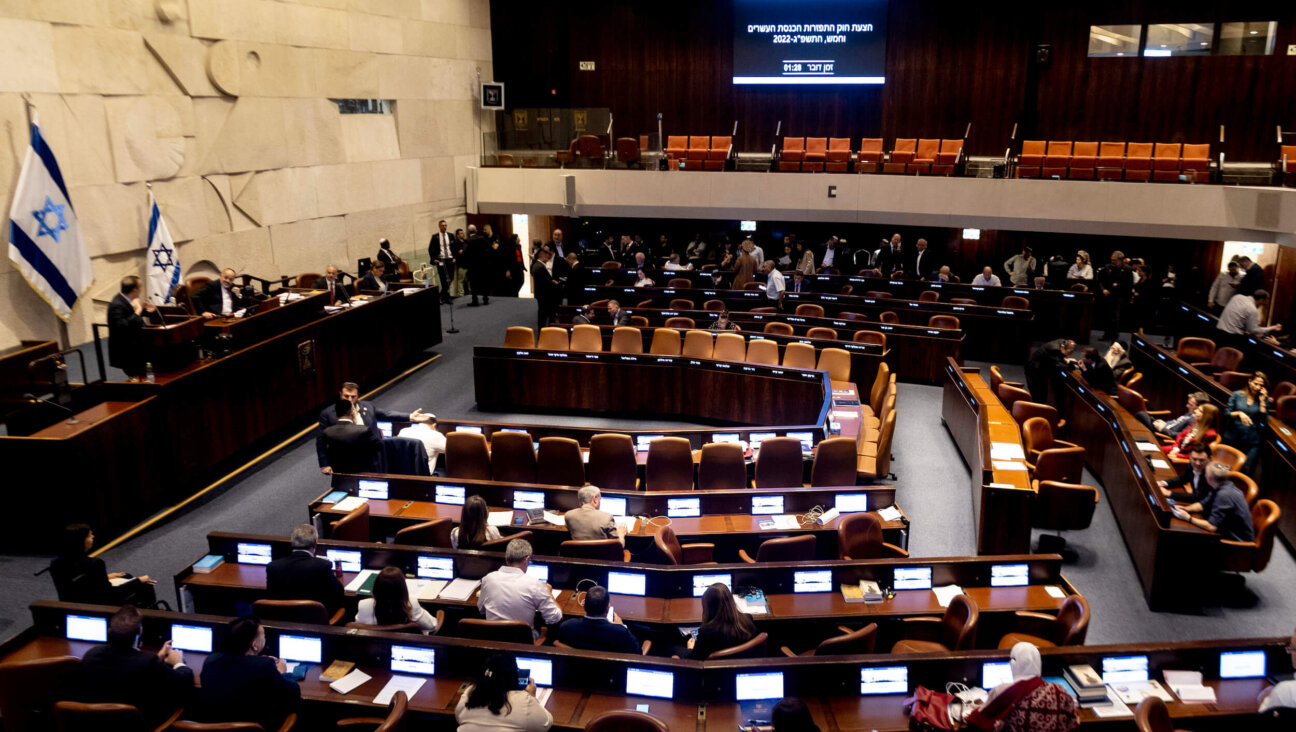
The Jewish National Fund, founded in 1901, turned tree planting, particularly on Tu B’Shvat, into part of the national ethos. The Zionist movement also turned to Tu B’Shvat as a symbol of revival, beyond just reforestation, when the date was chosen for the opening of the Technion in 1925 and of the first Knesset in 1949. It came to represent the blossoming of a restored Jewish nation.
More recently, in reaction to the birth of the worldwide environmental movement, Tu B’Shvat has taken on an additional role as the Jewish equivalent of Earth Day. By the mid-1980s, there was a revival of Tu B’Shvat Seders, with the expanded and heightened message to care for the environment. At the conclusion of the first decade of the 21st century, the popularity of Tu B’Shvat in its latest manifestation continues to grow.
As we have seen, in its 2,000 years of existence, Tu B’Shvat has taken on different roles and meanings as the reality and related needs of the Jewish people change. First created to demarcate a tax and fiscal year, it later developed into a ritual for a new kabbalistic theology, and was rediscovered by the modern Zionist movement. Finally, in our day, it has become the Jewish environmental holiday par excellence.
There is a school of thought that says stasis is the key to maintaining authentic Judaism. This is an outlook with many followers, but it is proven wrong by the grand sweep of Jewish history. Our challenge today, as it has been in every generation, is to distill what is at the core and essence of Judaism and discover, when needed, new and sometimes even radical ways to go forward.
The strength of a tree lies in its flexibility to bend so it does not break in powerful winds. For many trees there is also the ability to change appearance with the seasons. This is what takes place above ground, while below ground a tree’s roots remain firmly planted. It is with this dynamic understanding that we say of Torah and the Jewish tradition, “It is a tree of life to those who hold fast to it.”
Rabbi Michael M. Cohen is director of special projects for the Arava Institute for Environmental Studies and the author of “Einstein’s Rabbi: A Tale of Science and the Soul” (Shires Press, 2008).
I’m personally matching all gifts to the Forward, up to $36,000. Can I match your gift now?

Hello, fellow Forward reader! I’m Joel Brown, a Forward reader and supporter for more than 15 years, and currently the chair of the board of directors.
I’m an avid Forward reader because it ticks so many of my essential boxes: excellent journalism, Jewish focus and diverse viewpoints. In today’s political climate, what I most appreciate is the Forward’s independence — made possible by the generosity of its membership.
The Forward is committed to bringing you unbiased, nuanced Jewish news. From my position as board chair, I see an exciting future as we expand our position as the definitive independent voice of contemporary American Judaism.
— Joel Brown, Forward board chair
Support our mission to tell the Jewish story fully and fairly.