Defending Bronner

Editorial

Published February 10, 2010, issue of February 19, 2010.
  • Print
  • Share Share

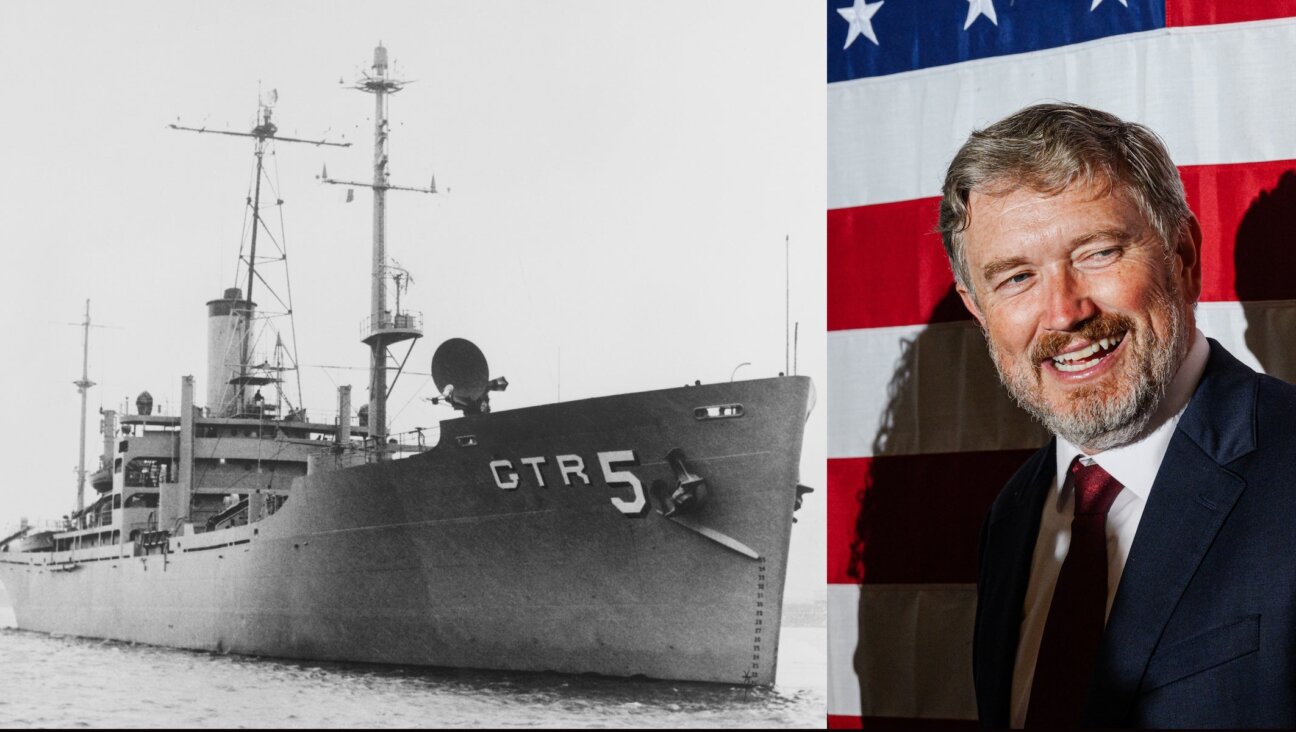
Too close to home. That was the reason given by the public editor of The New York Times for his assertion that the Times bureau chief in Jerusalem should be reassigned because his son decided to join the Israel Defense Forces.

This is close to home for us, too. After all, this dispute pokes at the heart of a central tenet of modern journalism, that as professionals we should strive to avoid not only conflicts of interest, but the appearance of such conflicts, to maintain credibility in the eyes of readers. Surely the public editor, Clark Hoyt, meant to uphold that standard when he recommended a transfer for Ethan Bronner. Bless The New York Times for its exacting rules, but claiming that Bronner cannot now do his job is going too far.

Reporting from the center of a passionately disputed story for the world’s most respected news organization is a job only for someone extremely talented and fiercely independent, and Bronner, by all accounts, is both. Even Hoyt praised his “excellent track record.”

And that is the measure to judge a journalist: his or her work. As Times editor Bill Keller said in his welcome defense of Bronner: “Every reporter brings to the story a life — a history, relationships, ideas, beliefs.” To imagine otherwise is to imagine journalism done by robots. Scrubbing journalism clean of all biases is impossible; judgments are made every step of the way that reflect beliefs in who and what is newsworthy, and why, and the best journalists allow their humanity to shape their work. They also are disciplined to recognize those biases and hold them in check.

That can be difficult to do on one’s own, and this is where the kind of journalism to which the Times aspires — the kind we aspire to practice at the Forward, as well — lifts itself up from ordinary writing and opinionating. There is the obligation to verify facts and statements, and seek different sides of a story. There are gatekeepers, questions from within, accepted norms to follow, and several steps between the time a writer hits the “send” button and the time a piece is published. And, once that piece is published in print or online, journalists can be held accountable. When we get it wrong, as will happen, you can tell us. You have our address.

To imagine that Bronner’s work would be fatally compromised by his son’s military service is also to misunderstand Israeli society. Unlike in this country, where we doubt that many members of the mainstream media have sons or daughters serving in Iraq or Afghanistan, the IDF is just about ubiquitous. If it’s not your child, it’s your neighbor’s. For better and for worse — and it’s both — connection to the military is not an abstract concept, it’s a routine part of life. After covering the Israeli-Palestinian conflict for 27 years, Bronner has been tested. If he had prejudices about the military and they were to infect his work, that would have happened long ago.

Some readers will never be convinced, and to them, the appearance of conflict is all. But as Keller rightly noted, those readers cannot be allowed to dictate what the rest of us need. And we need more honest, thorough reporting from the Mideast, not less. Let the work speak for itself.


  • Print
  • Share Share

The Forward welcomes reader comments in order to promote thoughtful discussion on issues of importance to the Jewish community. In the interest of maintaining a civil forum, the Forward requires that all commenters be appropriately respectful toward our writers, other commenters and the subjects of the articles. Vigorous debate and reasoned critique are welcome; name-calling and personal invective are not. While we generally do not seek to edit or actively moderate comments, the Forward reserves the right to remove comments for any reason.


Comments
Michael Levin Wed. Feb 10, 2010

" . . . to misunderstand Israeli society":

"To imagine that Bronner’s work would be fatally compromised by his son’s military service is also to misunderstand Israeli society. Unlike in this country, where we doubt that many members of the mainstream media have sons or daughters serving in Iraq or Afghanistan, the IDF is just about ubiquitous. If it’s not your child, it’s your neighbor’s. For better and for worse — and it’s both — connection to the military is not an abstract concept, it’s a routine part of life."

However, for the 20% of the population who are Arab citizens of Israel, that "connection to the military" would be of a somewhat different nature. For the millions of Palestinians under Israeli military occupation, that "routine part of life" which is "connection to the military" would be of a somewhat different nature. For the millions of Palestinian who are refugees, that "connection to the military" would be of a somewhat different nature.

Oh well . . . as Johnny Carson used to say: "If you buy the premise you buy the bit."

Yehuda Thu. Feb 11, 2010

Michael Levin - While it is clear that you are trying to express hostility towards the IDF, I can't really understand what your point is. Are you trying to tell us that both sides of an ongoing conflict should have the same attitudes about the armed forces of the one side of conflict? In my limited experience here on planet earth, I noticed that in armed conflicts, people tend to identify with the soldiers of their own society - but obviously they don't identify with the soldiers of the rival society. It's quite normal. Do you hold it against the Hamas, for example, that my attitude about their armed forces is different that the attitudes of Palestinian society? Well, I would imagine that you never gave the matter any thought. It seems to me that, once again, the anti-Israel crowd has some sort of strange book of rules that were invented just for us. In this latest of strange rules, you seem to be telling us that the social identifications of Ethan Bronner's son (i.e. his sense of belonging or his sense of patriotism) has to be approved by those who do not identify with our Hebrew-speaking society. How strange.

Robin 'Roblimo' Miller Thu. Feb 11, 2010

Not too many decades back, the U.S. had a citizens' army instead of a mercenary force, a majority of adult males were veterans, and almost everyone had a relative or friend was was either in the military or had been in the military.

Using the same standards by which Mr. Bronner is being judged, hardly any American journalists back then were unbiased when it came to defense matters.

Susanne Thu. Feb 11, 2010

Bronner's son is not serving in the American army, he is serving in the army of a foreign country. Israel is not the 51st state.

Would it be ok for the NYT to have a reporter in Israel who's son is a Hamas policeman?

Danny Fri. Feb 12, 2010

Susanne. Many news media have Palestinian Arabs on their team, which no one would object to. How do we know whether their kids have links to Hamas? We read a wide range of sources and assume the truth emerges and biased sources get discounted. As Americans we know that children do not always have the exact same outlook as their parents. As Ezekiel tell us, 'The father shall not die for the sins of the son, nor the son die for the sins of the father.' I kept this is the masculine because I assume women never sin!

Sherlock Holmes Fri. Feb 12, 2010

How impartial is any news? Should the American media give equal time to Al Qaeda and the Taliban? Should the BBC have given equal time to Hitler? BBC did give almost equal time to Saddam Hussein during the war over Kuwait -- and looked quite ridiculous! We share some basic moral Judaeo-Christian values and some would call this bias. If the Hamas charter calls for the murder of all Jews world wide, can we give this equal status with Israel's willingness to work out a compromise with Abbas? If Hamas suicide bombers kill 1,250 Israeli civiians on buses, in cafes, in a disco, making a pensioners' seder in a hotel, should we equate this with the IDF attempt to knock out those who launched 7,000 missiles into Southern Israel? Reporters have a point of view and that's just part of being human.

nsaarinen Fri. Feb 12, 2010

I agree with you that the work should speak for itself, and for as long as I've been paying attention to his reporting, Bronner's has.

Given the longstanding and worsening situation in Israel, I've long despaired that the 'paper of record' would have so obviously biased a reporter in that assignment, (though I'd no idea he had such long experiece; I'd assumed the bias in his writing reflected his lack of it). The issue with his son only makes the issue more concrete and specific.

Unfortunately, this editorial is infused with the same sticky feeling that to my mind reflects a lack of objectivity, and therefore, a kind of bias. Sometimes we really do have to stand outside the forest to see the trees.

Greg Fairweather Fri. Feb 12, 2010

Let's say the Times correspondent was an Arab-American, and his son had joined Hamas or Hizbullah. What would The Times, the Forward, and other readers say then?

JZ Fri. Feb 12, 2010

Greg, I think what everyone seems to be saying is if the reporter is fair and objective, it does not matter. Capiche?

abiebaby Fri. Feb 12, 2010

I fear that Bronner, with his son in the IDF, will be biased against the Israeli side to show that he is not biased. It's bending over backwards.

To all those who want to know what the Forward would say if its reporter had a son in Hamas-- Learn a little about the real world. Almost no Western reporter knows Arabic. Every Western reporter is required to use a local "fixer" (not my word) approved by the PA or Hamas to cover anything in the West Bank or Gaza. Now, please please repeat your question.

Susanne Sun. Feb 14, 2010

"Many news media have Palestinian Arabs on their team, which no one would object to."

Really? Like, which one? Can you name one?

Anyway, it does not matter, because everybody knows the The Times is a Jewish paper. Better to have it more out in the open.

Yehuda Sun. Feb 14, 2010

Suzanne - And if the NY Times is a "Jewish newspaper", what is wrong with that? Obviously, it is not a Jewish newspaper. It is not focused on the reality of Jewish life (like the Forward), nor is it written in a Jewish language (like Ha-Aretz). Perhaps you think that it's a "Jewish newspaper" because it was founded by Jews. Anyway, it doesn't really matter. Let's say that it is a Jewish newspaper. Why do you feel that this is an issue for discussion? A "Jewish newspaper" is perfectly legitimate. Anti-Jewish sentiments, Suzanne, are not.

Bruce Levine Mon. Feb 15, 2010

Susanne:

Taghreed El-Khodary is a Gazan-born Palestinian employed by the New York Times. She was in Gaza throughout Operation Cast Lead last year and she reported directly from the scene. Here is a fascinating interview with her:

http://thelede.blogs.nytimes.com/2009/01/19/q-a-with-taghreed-el-khodary-in-gaza/

In short, like so many extremists on both "sides" of the Israeli-Palestinian debate, you are exposed as someone who just shot from the hip, made an all-too typical indictment, and did absolutely no research to see whether your preconceived notion about the way things are could possibly be just plain wrong.

Marisa Elana Tue. Feb 16, 2010

He's been reporting for 27 YEARS. Does anyone really think that his son's choice to do anything could really affect his professional abilities?

Also, since when do we care what passports a reporter or his family holds? Bronner is American, his wife is Israeli, I assume the kid is BOTH American AND Israeli. Does any of that have any bearing on his reporting skills? Nope.

Steve Ross Fri. Feb 19, 2010

I do believe that even the appearance of bias is grounds for reassignment, but I am also bothered by the seeming laziness of NYT Israel-based reporting, considering the resources available. And Bronner is in charge of it. Has anyone in the bureau (or at the Forward for that matter) actually read the Goldstone report? If so, how come stories mentioning complaints from either side do not note that the complaints are usually answered in the report itself?

For instance, Hamas (as noted in another editorial today) justifies rockets that hit civilians as unavoidable because the rockets have no real guidance. Goldstone alleges the very act of using such rockets is contrary to international law because they can't be accurately aimed! Israel justifies at least 400 civilian deaths in Gaza because Hamas fighters hid behind civilians and because urban fighting produces these kinds of casualties. Goldstone notes that in the cases investigated in the report, the "hiding behind civilians" does not seem to be true, but even if it were true, Israel would be justified in attacking only if its soldiers felt they were in imminent danger themselves... and on and on.

Compare the high rate of civilian casualties in Gaza (at least one out of three Gaza deaths by IDT's tally) with much lower rates in Iraq and Afghanistan (roughly one out of 10). Isn't that worth really, really careful investigation, either to find fault or to guide tactics to keep it from happening again? Yet the NYT has NOT focused on such issues. where's Bronner?

That may not be bias on Bronner's part, but it certainly is sloppiness -- and sloppiness that benefits members of the IDF who fought in the Gaza war.

Worse, Hamas, Israel, Fatah and the US government can agree on only one thing, and The Forward agrees, too: That the report is dead on arrival. Why? If the wealthy and powerful who support mayhem on all sides were brought to justice, maybe there would be less mayhem.


    Would you like to receive updates about new stories?


    We will not share your e-mail address or other personal information.

    Already subscribed? Manage your subscription.