Djerba’s Lag b’Omer Pilgrims
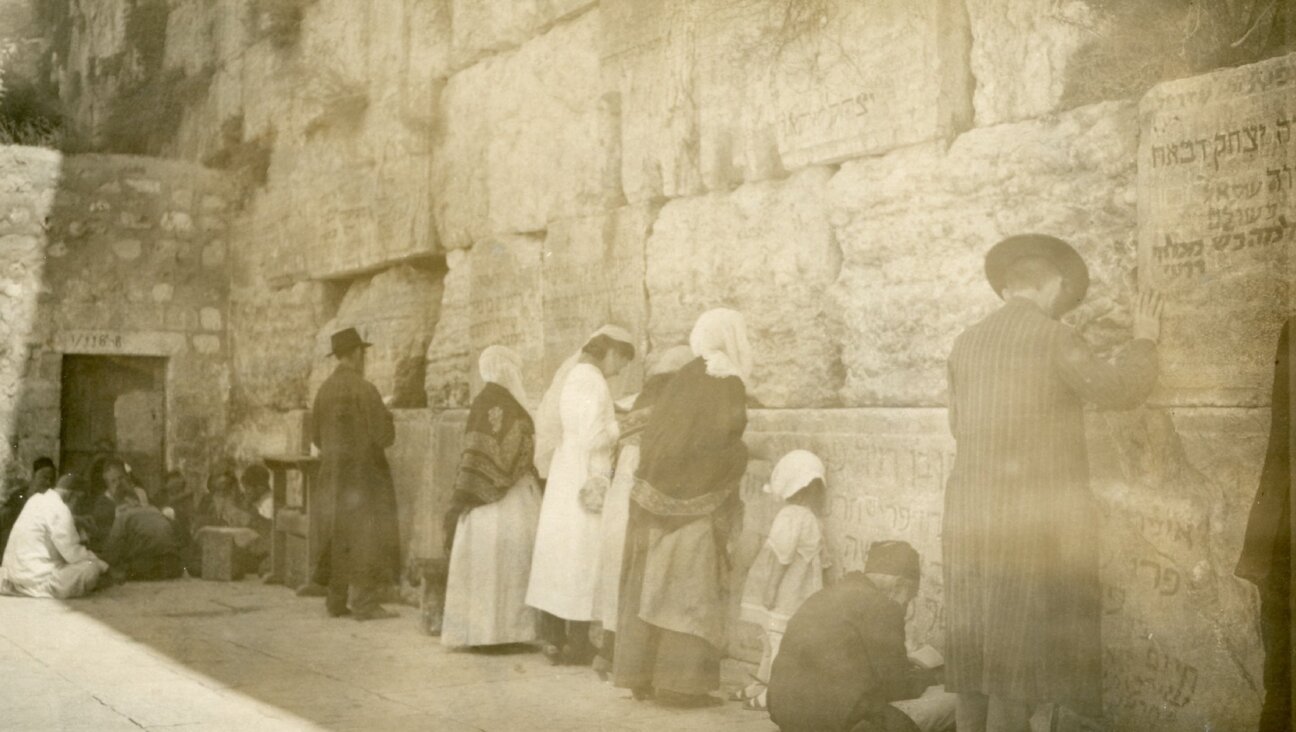
Jews are said to have arrived in Djerba, off the coast of Tunisia, in 586 BCE, following the destruction of the First Temple. Tradition has it that they brought with them a stone from the destroyed edifice, on top of which was built the synagogue known as El-Ghriba, or “the wondrous.” Although the current structure is only a century or so old, there has been a synagogue on the site for more than two-and-a-half millennia.
Lag b’Omer — the 33rd day of the period between Passover and Shavuot — has served, since the 19th century, as a time for Jews from across the region (and, in more recent years, from Europe and Israel) to make a pilgrimage to the site. The festivities, which draw thousands, include a procession from El-Ghriba to other, smaller synagogues in the region. The procession has been said to symbolize the union of humankind and the divine.
I’m personally matching all gifts to the Forward, up to $36,000. Can I match your gift now?

Hello, fellow Forward reader! I’m Joel Brown, a Forward reader and supporter for more than 15 years, and currently the chair of the board of directors.
I’m an avid Forward reader because it ticks so many of my essential boxes: excellent journalism, Jewish focus and diverse viewpoints. In today’s political climate, what I most appreciate is the Forward’s independence — made possible by the generosity of its membership.
The Forward is committed to bringing you unbiased, nuanced Jewish news. From my position as board chair, I see an exciting future as we expand our position as the definitive independent voice of contemporary American Judaism.
— Joel Brown, Forward board chair
Support our mission to tell the Jewish story fully and fairly.