From ‘The Washington Story’
Jill Wasserstrom, cub reporter for her high school newspaper, the Lane Leader, was a great believer in fate, so it was not surprising that she would read great meaning into the fact that, in November 1982, three historically significant incidents would occur within one 12-hour period. On Wednesday evening, she and Lane Leader editor Wes Sullivan had stood in the Hyde Park Hilton ballroom to hear Illinois Congressman Harold Washington announce that he would seek to become Chicago’s first black mayor. And the next morning, she would hear WBBM reporter John Cody announce both the death of Leonid Brezhnev and the lift-off of Space Shuttle Columbia. And yet, she didn’t read meaning into the coincidence of all these events themselves as much as the fact that they all had taken place while she’d been thinking of Wes. Still, Jill had already determined that it was foolish to think that anything would ever happen between herself and Wes; after all, Wes was a senior dating Rae-Ann Warner, while Jill was a junior dating Muley Scott Wills. And besides, nothing interesting happened in West Rogers Park anyway.
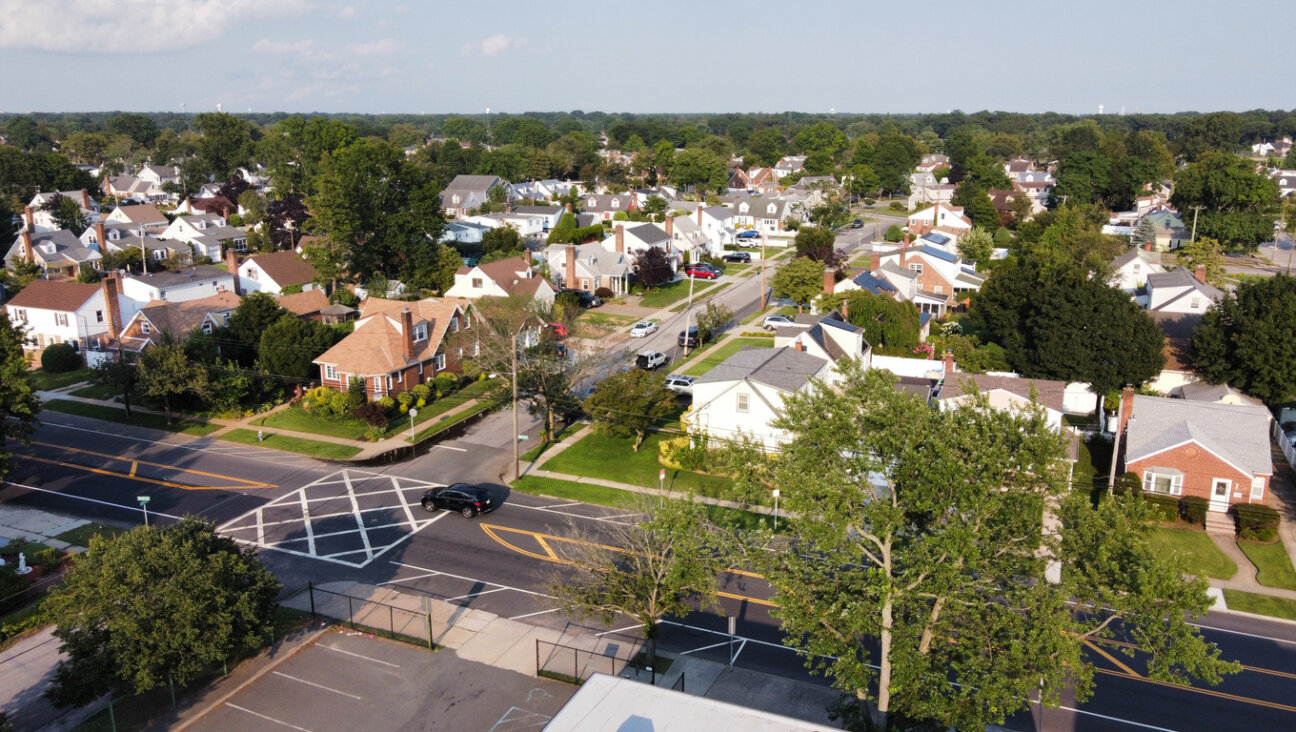
West Rogers Park is the only Chicago neighborhood where synagogues outnumber churches, kosher pizza joints outnumber fast food restaurants, and kichels outnumber doughnuts. Throughout its history, the rest of Chicago has all but ignored it; during the blizzards of 1967 and 1979, the city’s snowplows never once touched its side streets. West Rogers Park’s dimensions had not changed during Jill’s lifetime, yet to her, it was slowly yet inexorably shrinking, so much so that she often felt as though she lived in two separate and completely distinct worlds.
On North Shore Avenue, Jill lived with her father, Charlie, lifestyle columnist for the Schiffler Neighborhood Newspapers; her stepmother, Gail, publisher and heir to the Schiffler Newspaper fortune, and their infant daughter, Rachel. In West Rogers Park, Jill would study, walk her mutt, Fidel, or lounge on the beanbags in her bedroom with Muley watching movies checked out from the Nortown Library.
Recently, a group of Orthodox Jews had petitioned the city to request that a border made of fishing wire, or an eruv, be hung from the lampposts of West Rogers Park, encircling the neighborhood, thus creating the boundaries for a small community in which residents were allowed to perform certain activities otherwise forbidden on the Sabbath, such as pushing strollers to shul. But to Jill, the eruv symbolized the sameness of the neighborhood, its provincialism and insularity.
And in both Jill’s moments of greatest rage, such as when her father had written a facile column entitled “Ebony Bagels, Ivory Cream Cheese,” about how blacks and Jews had much in common, or in her moments of greatest contentment, reading revolutionary tracts in Muley’s room, Jill always sensed that Life was something that happened elsewhere. Life was what happened on subways and buses, not in the big, lumbering Cutlasses and Lincoln-Continentals of North Shore Avenue, not in the kosher bakeries or Judaica bookstores of Devon Avenue, not in West Rogers Park at all.
This is a moment of great uncertainty. Here’s what you can do about it.
We hope you appreciated this article. Before you go, we’d like to ask you to please support the Forward’s independent Jewish news this Passover. All donations are being matched by the Forward Board - up to $100,000.
This is a moment of great uncertainty for the news media, for the Jewish people, and for our sacred democracy. It is a time of confusion and declining trust in public institutions. An era in which we need humans to report facts, conduct investigations that hold power to account, tell stories that matter and share honest discourse on all that divides us.
With no paywall or subscriptions, the Forward is entirely supported by readers like you. Every dollar you give this Passover is invested in the future of the Forward — and telling the American Jewish story fully and fairly.
The Forward doesn’t rely on funding from institutions like governments or your local Jewish federation. There are thousands of readers like you who give us $18 or $36 or $100 each month or year.

Support our mission to tell the Jewish story fully and fairly.