Rock bands love provocative names. Is ‘The Jews’ a step too far?
HaYehudim, an Israeli rock band, recently had a performance canceled due to their name
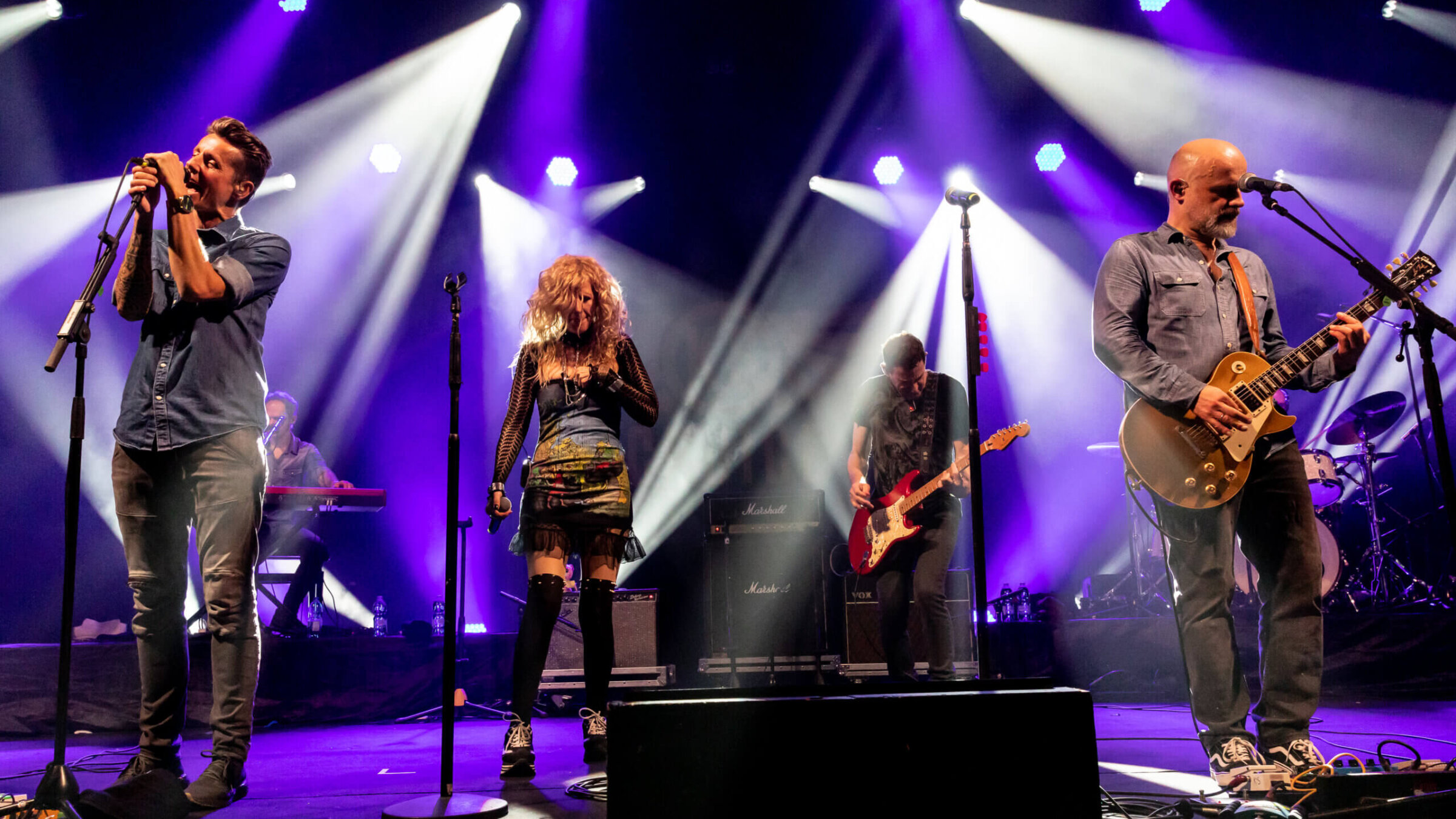
Members of HaYehudim perform with another band in Tel Aviv. Courtesy of Getty Images

By Mira Fox April 11, 2024
The band is called HaYehudim — “The Jews,” in Hebrew.
And that simple statement of identity was apparently political enough for music venue the Brooklyn Monarch to cancel the band’s scheduled May show, the band’s public relations representative told Israeli radio program Kan.
Shir Pinto said that, after the Monarch canceled HaYehudim’s show, they attempted to find another club that would host them — but the alternative venue they approached also called the band’s name “problematic” and refused.
It’s not HaYehudim’s first run-in with controversy over their name. In 2012, they played at the SXSW festival in Austin, Texas, and were asked to change their name for the occasion — and they did.
“We were told we couldn’t call ourselves ‘The Jews’ and that we’d just get ourselves into a whole lot of trouble with it,” the band’s frontman, Tom Petrover, told The Jerusalem Post in 2015, “so we chose the initials I.U.D.M. It was the best thing we could come up with that sounded like our actual name.”
The cancellation quickly caught online attention, and users began to pass around an unverified message, ascribed to the venue, saying that “we as an entertainment space in New York prefer to avoid politically charged events or actions.” The Brooklyn Monarch did not immediately reply to a request for comment.
Of course, it’s not unusual for bands to be drawn to provocative names. On the Brooklyn Monarch’s upcoming shows list, potentially problematic names — depending, of course, on who you are and what offends you — include Junkie Kid (encouraging drug use), God Awful (taking God’s name in vain), Hellwitch (profanity, Satanism) and Hemorrhoid (too gross). There have also been other bands that have included “Jew” in their name — The Silver Jews, Jewdriver — without stirring up much controversy.
So the question remains: Why is calling yourself “The Jews” especially problematic — in 2012 or 2024?
The answer may seem obvious, in a climate marked by rising fear of antisemitism. People on Reddit and other social media sites immediately assumed the venue was just looking for an excuse to oust an Israeli band.
But that wasn’t the environment when HaYehudim first encountered pushback on their name in 2012. (And if it was, why book them in the first place?)
The highly sensitive politics around the Israel-Hamas war are certainly a possible explanation for this year’s issues for HaYehudim; Jewish reggae singer Matisyahu has had three performances canceled this year due to safety concerns connected to pro-Palestinian protests expected at his concerts.
But it could also be, at least in part, an issue of people-first language.
That’s the school of thought that dictates saying “a person with diabetes” instead of “a diabetic,” “Black people” instead of “Blacks” or “queer people” instead of “queers,” under the theory that the latter dehumanizes the groups. Similarly, some people are uncomfortable with calling someone a Jew — and admittedly, the term has been used as a slur.
Yet the band — perhaps because of the charged environment — seems unwilling to make the same adjustment they did in 2012 in 2024. Pinto called the cancellation an “antisemitic act.” And, in a statement to The Times of Israel, the band said the cancellation was “due solely to the fact that they are Jewish,” but that “HaYehudim bears its name with pride and always advocates for cultural freedom and the love of man.”
Whether it’s a question of language or of war, the issue is political. But perhaps the better question is how the politics have changed — and why, in today’s landscape, HaYehudim are unwilling to become I.U.D.M. again for a night.
This is a moment of great uncertainty. Here’s what you can do about it.
We hope you appreciated this article. Before you go, we’d like to ask you to please support the Forward’s independent Jewish news this Passover. All donations are being matched by the Forward Board - up to $100,000.
This is a moment of great uncertainty for the news media, for the Jewish people, and for our sacred democracy. It is a time of confusion and declining trust in public institutions. An era in which we need humans to report facts, conduct investigations that hold power to account, tell stories that matter and share honest discourse on all that divides us.
With no paywall or subscriptions, the Forward is entirely supported by readers like you. Every dollar you give this Passover is invested in the future of the Forward — and telling the American Jewish story fully and fairly.
The Forward doesn’t rely on funding from institutions like governments or your local Jewish federation. There are thousands of readers like you who give us $18 or $36 or $100 each month or year.
Support our mission to tell the Jewish story fully and fairly.