How New York Jews made pickles a big dill
‘The Pickled City’ is an ode to the humble kosher cuke
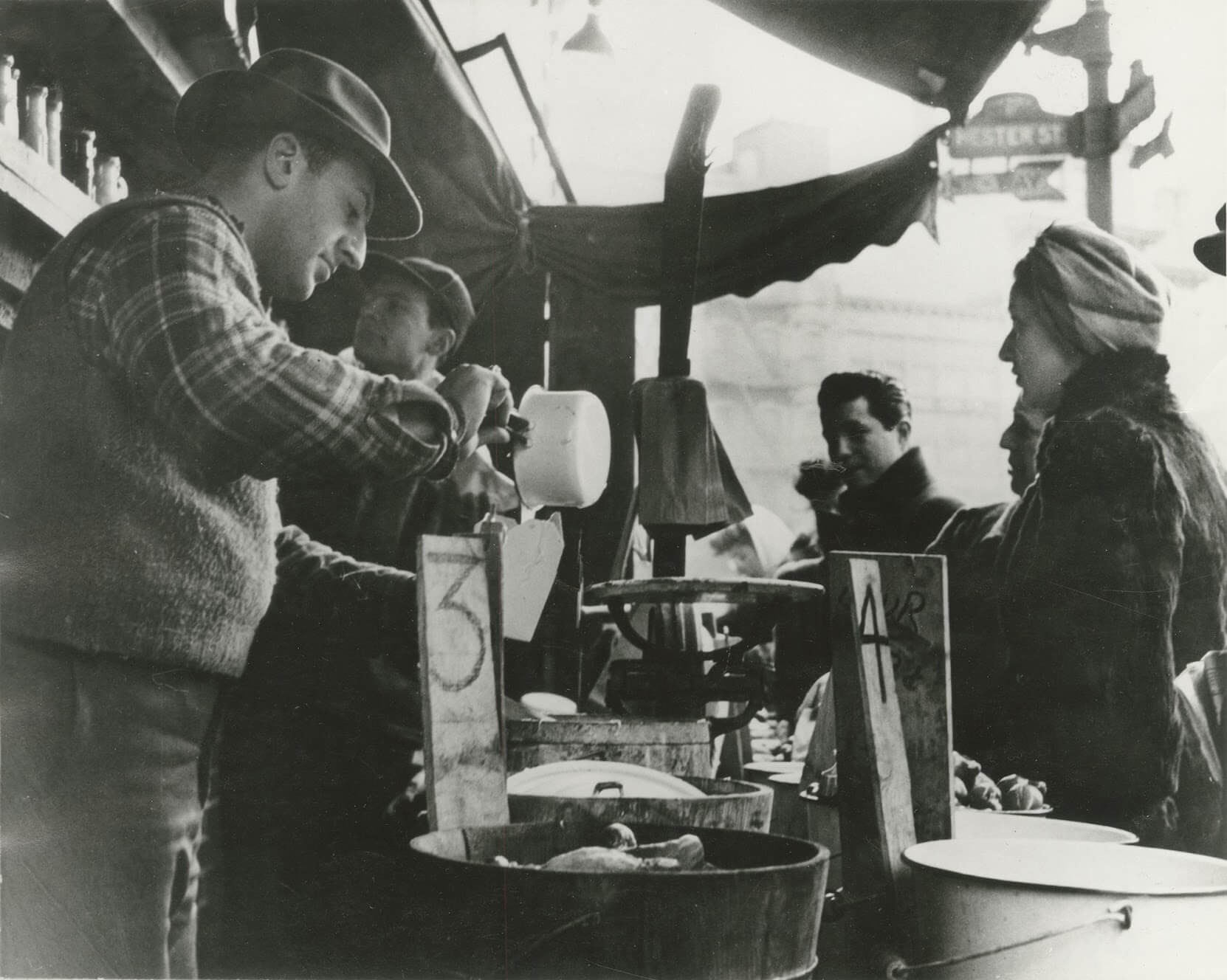
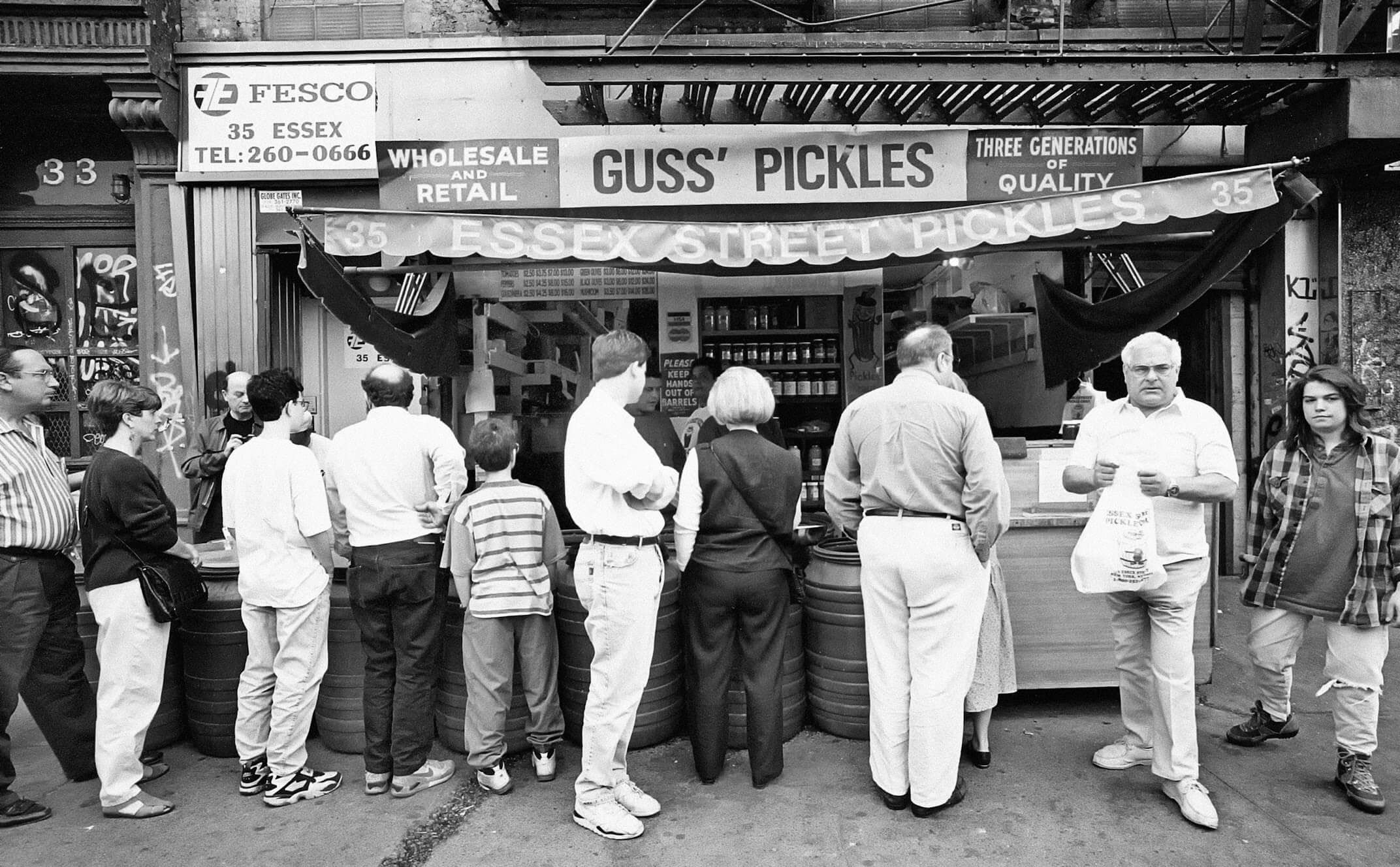
A Lower East Side pickle man serves customers. Photo by Pickled City: The Story of New York Pickles

By PJ Grisar March 31, 2026
The Pickled City: The Story of New York Pickles
By Paul van Ravestein and Monique Mulder
Chronicle Books, 224 pages, $27
“Pickles are a favorite food in Jewtown,” muckraker Jacob Riis, referring to the Lower East Side, wrote in How the Other Half Lives, his seminal exposé on poverty. “They are filling and keep the children from crying with hunger. Those who have stomachs like ostriches thrive in spite of them and grow strong — plain proof that they are good to eat.”
Other thinkers from the turn of the last century disagreed, one lamenting, of the children of New York who got their meals from pushcarts, “it speaks volumes for their digestive powers that they don’t die at once.” That was Teddy Roosevelt.
But appropriately for a preserved foodstuff, pickles have had a remarkably long cultural shelf life. The Pickled City: The Story of New York Pickles, a new coffee table book about the ubiquitous cukes, reaches deep into the barrel to chronicle the rise of the pickling industry, giving pride of place to the Jewish immigrants who sealed the business for posterity.
The book is the work of Paul van Ravestein and Monique Mulder of the Dutch branding company Mattmo, and is a successor to their previous book De Zure Stad (The Sour City) about the pickle history of the Netherlands, pioneered by a different set of Jewish immigrants who were, overwhelmingly, murdered in the Shoah.
The Pickled City is a brighter work, though in the early going its emphasis on Jews, stated early and often, is a bit of a head scratcher. Going back to Mesopotamia for early pickling practices, and outlining the largely gentile-owned pickle businesses in the U.S. (the first American pickle outfit, the William Underwood Company, trademarked devilled ham) the Jews appear to be relative latecomers. It was Dutch settlers in what was then New Amsterdam who kickstarted the process of farming and preserving cucumbers.
An earlier wave of German immigrants brought pickle culture to Manhattan before Eastern European Jews took to their pushcarts. But the Jews brought a piquant innovation to their pickles, brining them not in vinegar, but salt water with dill and garlic: the kosher pickle we all know. That variety soon became a bestseller even among the goyische operations like Heinz, a business that was early to apply for kosher certification.
The Jewish love affair with pickles was itself not novel. The Talmud mentions pickled veg as a symbol of abundance and survival and, per van Ravestein and Mulder, the “transformation through pickling — turning a simple, earthy root into a tangy, vibrant dish — was often seen as a metaphor for renewal and the endurance of the Jewish people through adversity.”
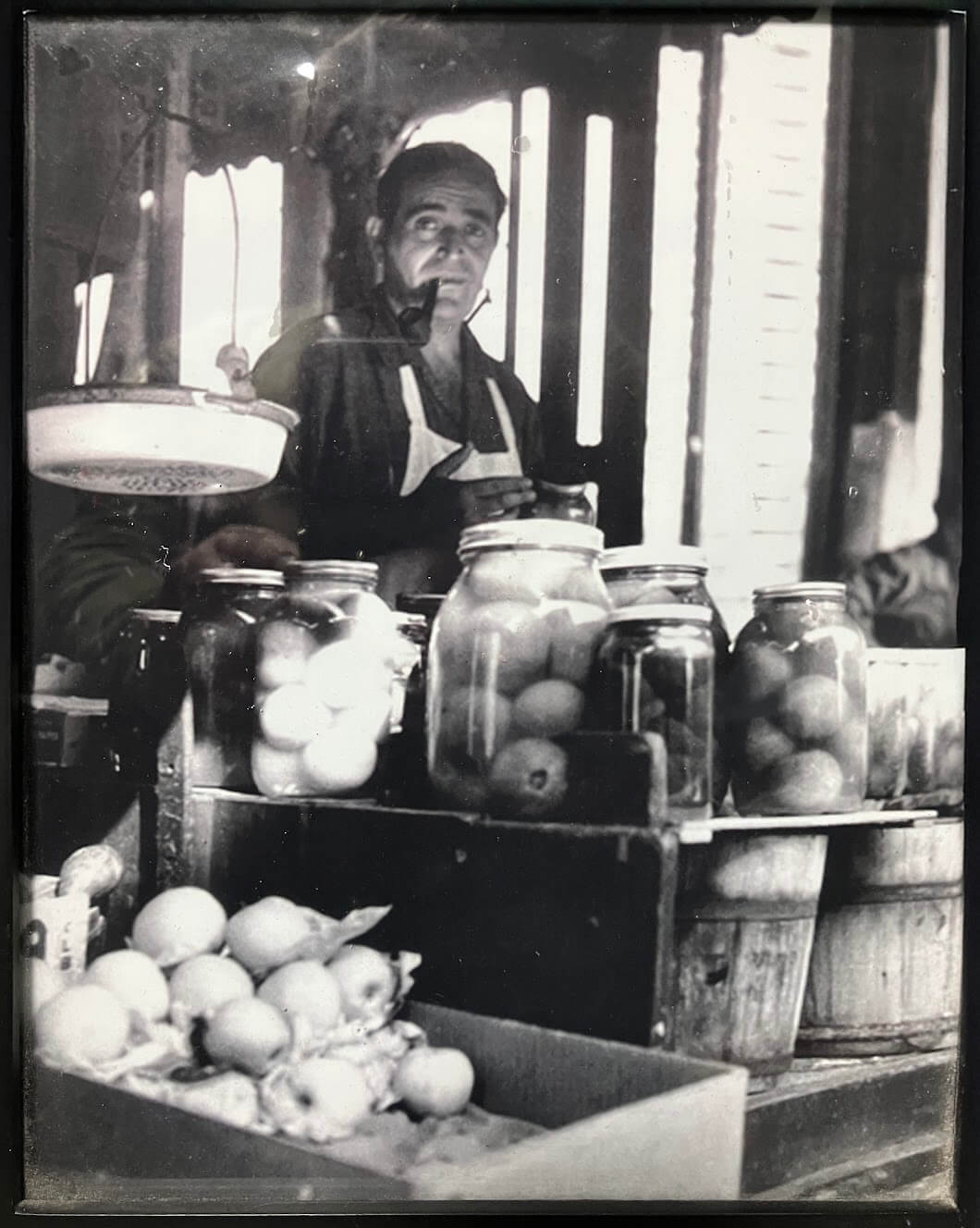
We see the enterprise, in pages of archival photos and maps of the pickle shops of yesteryear alongside long-running institutions like Russ & Daughters and Katz’s.
At times, beyond the handsome packaging of the book, the branding agency origins of the authors stick out: A primer on B&G pickles reports their $2.16 billion in net sales, and calls it a “testament to entrepreneurial spirit and innovation in the food industry.” But there are just as many colorful stories that don’t read like investor reports.
We learn, for instance, that Izzy Guss, of Guss’ pickles, beat out the competition after a neighbor in his tenement offered to hook his cart up to electricity with an extension cord, giving the cart a light and allowing Guss to sell at night. (We’re told the cord was cut when Guss refused to marry the neighbor’s daughter.)
The book also touches on the pickling history of Long Island, with a mention of a Samuel Ballton — Pickle King of Greenlawn, a formerly enslaved man and Union veteran who produced 1.5 million pickles in a single season. The industry in Syosset was dealt a major blow with a blight called the “white pickle” disease, and subsequently pivoted to potatoes.
Even with these New York histories, the book often crosses Delancey into a wider world, making a kumbaya case for pickles as a conduit for cultural exchange.
Japanese pickled plums, Indonesian atjar and Indian chutneys are given space toward the back, but their current imprint in New York, on the same streets that once held tenements and peddlers, is oddly glossed over. (I could have tipped them off to the Astoria bagel shop that serves beef bulgogi and kimchi sandwiches.)
“For Jewish families fleeing persecution, pickling was more than a way to save food — it was a way to preserve identity and heritage,” the authors write.
This is not an exclusively Jewish phenomenon. There are 8 million stories in the pickled city. This book cracks the lid, but only skims the surface.

Did you know that only 2% of Forward readers donate to support our nonprofit newsroom? That 2% make it possible for millions to read the Forward without a paywall or subscription — removing any barriers to the full and fair Jewish story.
But while the Forward is free to read, it isn’t free to produce. Big stories — like deep dives into the antisemitism data, political scoops or reporting trips to college campuses — take months of research and fact-checking. All while we keep you informed of what you need to know each day.
— Rachel Fishman Feddersen, Forward Publisher & CEO
Support our mission to tell the Jewish story fully and fairly.