Marilyn Monroe would be 100 today. Are we making too much of her conversion?
The actor’s 1956 leap of faith has long been a piece of Jewish trivia
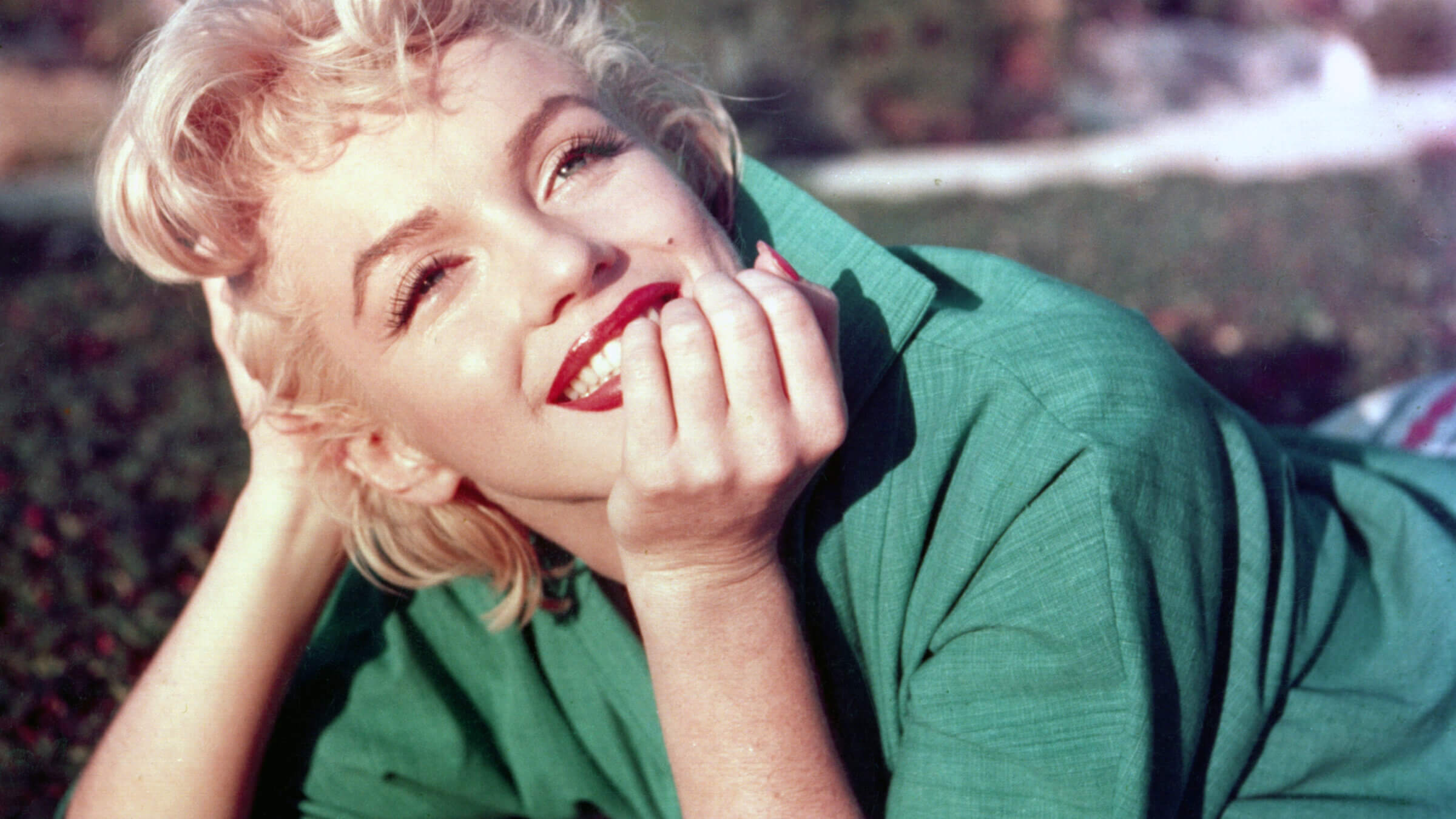
Marilyn Monroe in 1954 Photo by Baron/Hulton Archive/Getty Images

By PJ Grisar June 1, 2026
Back in 2019, Marilyn Monroe’s menorah, a gift from her former in-laws, sold at auction for more than $112,000. The candle in the wind jokes wrote themselves, but how exactly the tragic actress lived her life has long been a point of Jewish fascination.
The effort to make Monroe a Jewish icon is almost certainly strained, though not baseless.
Born Norma Jean Mortenson, she converted to Judaism in 1956 ahead of her nuptials with Arthur Miller. That this detail still commands such attention can’t easily be divorced from certain stereotypes of their mismatched pairing: the beauty and the brain. He, balding and bespectacled, she, a peroxide paragon of bombshell beauty. Philip Roth didn’t need to write about it — Joyce Carol Oates did instead.
But Monroe’s attachment to Judaism, beyond leaving behind such effects as the menorah and an annotated siddur (sold for $21,000 in 2018), may be overstated, even as she continued to identify as a “Jewish atheist” after her 1961 split with Miller. That she engaged with her lessons with some seriousness, according to the rabbi who converted her, may be more a testament to her curiosity and intelligence than a true demonstration of faith.
In 2015, the Jewish Museum in New York offered a useful contrast. An exhibition hosted Andy Warhol’s portraits of Monroe and Elizabeth Taylor presented as a diptych. Taylor’s conversion came about after the death of a Jewish husband and remained important to her through the rest of her life, extending to pro-Israel causes and activism on behalf of Soviet Jewry. (Taylor was buried by a rabbi, Monroe by a Lutheran minister.)
Both women had their films banned in Egypt on account of their adopted faith — in the case of Taylor, this meant completing Cleopatra in Rome. Only one could be said to have lived a thoroughly Jewish life, though Monroe’s death is certainly a mitigating factor, the subject of so many “what ifs.”
When we look at Marilyn as a coreligionist, it may say more about us than her. I suspect the fact she didn’t “look Jewish” is what makes her affiliation matter to so many.
But the affiliations that truly matter are in the credits: Billy Wilder, Tony Curtis, Charles Lederer, Lee Strasberg. The work, or Avodah, is captured in celluloid: the way Sugar Kane takes a belt from her flask and tucks it in her garter or Lorelei Lee swats at her suitors with a fan.
It is Marilyn, not Norma Jean, not Miriam bat Sarah, who continues to have immense cultural cachet, already long exceeding her brief time on earth.
Did you know that only 2% of Forward readers donate to support our nonprofit newsroom? That 2% make it possible for millions to read the Forward without a paywall or subscription — removing any barriers to the full and fair Jewish story.
But while the Forward is free to read, it isn’t free to produce. Big stories — like deep dives into the antisemitism data, political scoops or reporting trips to college campuses — take months of research and fact-checking. All while we keep you informed of what you need to know each day.
— Rachel Fishman Feddersen, Forward Publisher & CEO
Support our mission to tell the Jewish story fully and fairly.