Israel closed the Church of the Holy Sepulchre and set off a Holy Week firestorm
Concerns over Israel’s treatment of its Christian residents have been chipping away at American support for the state
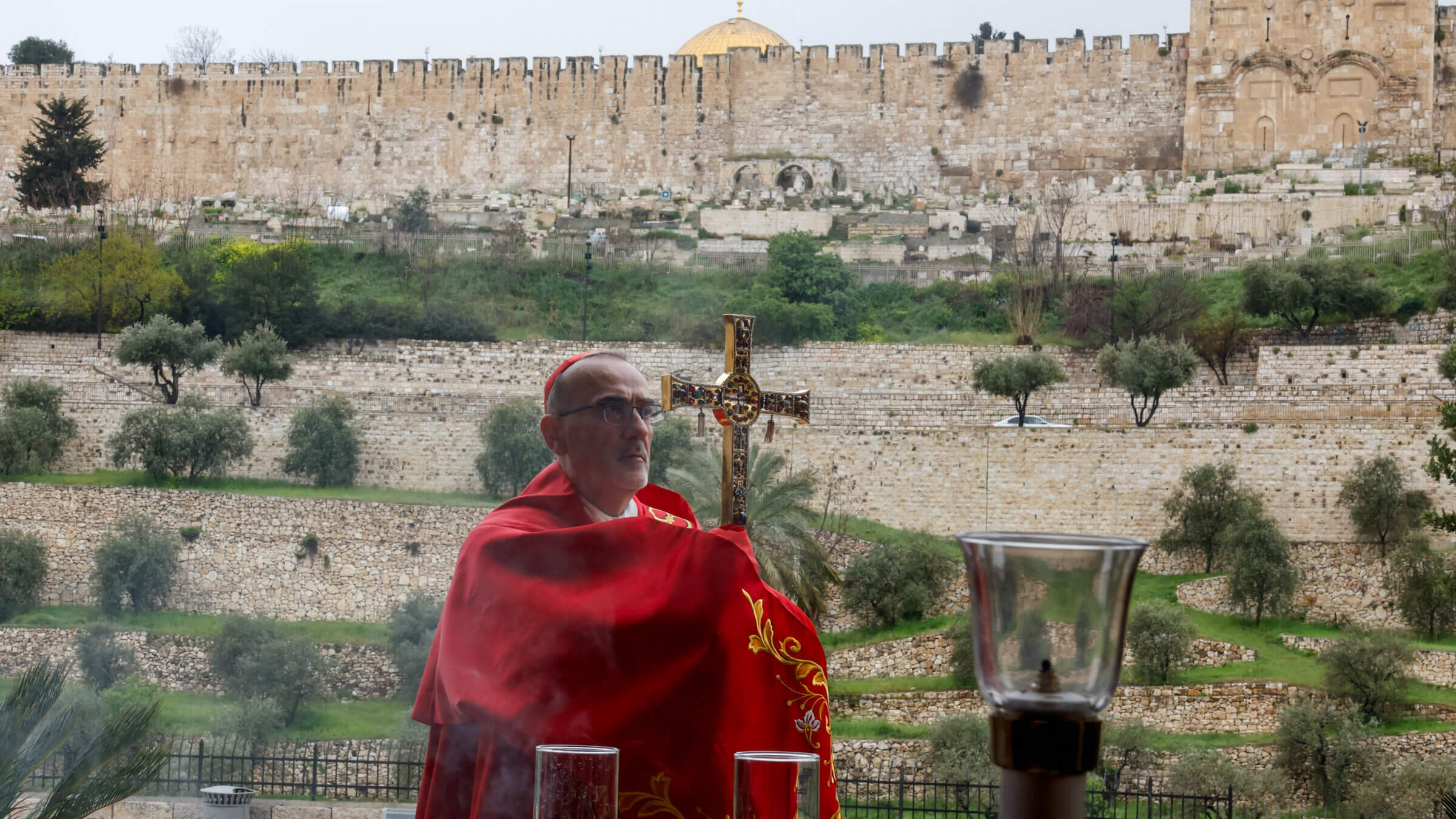
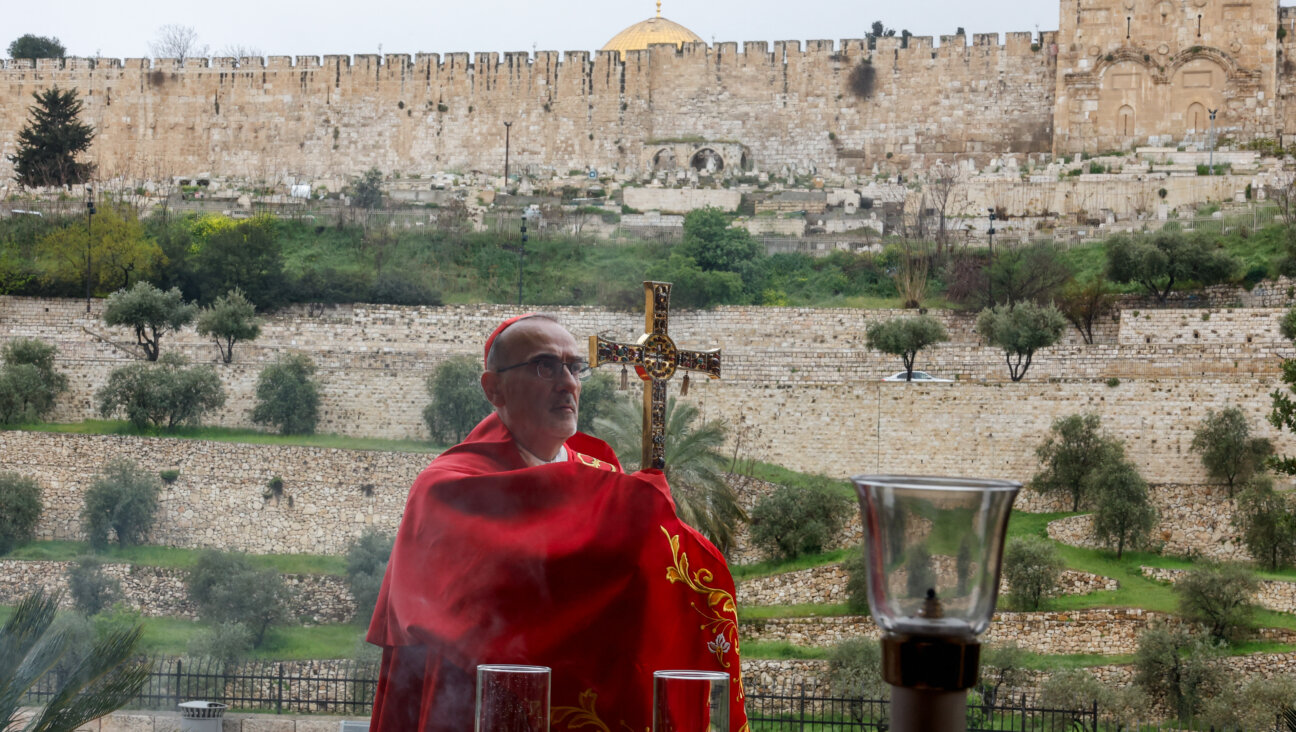
Latin Patriarch of Jerusalem, Cardinal Pierbattista Pizzaballa, leads a prayer service to mark Palm Sunday in Jerusalem on March 29, 2026, following the cancellation of the traditional Palm Sunday procession. Photo by Ammar Awad / POOL / AFP

By Mira Fox April 1, 2026
Palm Sunday marks the beginning of Holy Week for Christians, the lead-up to Easter, when Christians believe that Jesus rose from the dead. Usually, it’s observed in large services with liturgical readings, where palm leaves are distributed to parishioners to commemorate the day that Jesus arrived in Jerusalem before his crucifixion.
But this Holy Week, that wasn’t possible due to the war in Iran, which has limited gatherings in Israel due to safety concerns.
Still, Cardinal Pierbattista Pizzaballa, the Latin Patriarch of Jerusalem — the Catholic representative in Jerusalem, where many Christian denominations share custody of Christian holy sites — had planned to observe Palm Sunday with a smaller, private prayer in the Church of the Holy Sepulchre, in Jerusalem’s Old City to, as he said, “preserve the idea of the celebration in the Holy Sepulchre.”
Israeli authorities, however, turned Pizzaballa and another priest away. “Life-saving restrictions have been applied to all holy sites in the Old City — this includes for Jews, Christians and Muslims alike,” said a spokesperson for the Israeli police forces.
The decision — despite being quickly overturned — has set off a conflict, with American Christians worrying that Israel is persecuting Christianity
. The incident has chipped away at one of Israel’s strongest allies: the U.S.
The reaction to the Holy Sepulchre incident
Usually, Holy Week is a big deal in Jerusalem, the site where the events Christians commemorate during the holiday took place. So when Pizzaballa was denied entry to the Church of the Holy Sepulchre, outcry began immediately.
U.S. ambassador to Israel Mike Huckabee — a staunch Christian Zionist who is not Catholic — called for Israel to lift the restriction for Pizzaballa. Emmanuel Macron, president of France, condemned the decision, as did Pedro Sanchez, the prime minister of Spain. A statement from the Latin Patriarchate said the refusal “constitutes a manifestly unreasonable and grossly disproportionate measure.” Middle East journalists and commentators pointed out that the restrictions limit gatherings to 50 people, far more than the two Pizzaballa arrived with, and that both Jewish and Muslim religious leaders had been allowed to privately pray at their respective holy sites despite the restrictions.
Most loudly, outraged Christian influencers, such as Carrie Prejean Boller, Candace Owens and Tucker Carlson seized on the incident. They posted decades-old videos of Palm Sunday processions to show how things once were and photos of churches in Lebanon and Gaza that had been hit by bombs in the war over the past several years, implying that Israel has been targeting Christianity and framing the nation as a religious enemy to be defeated.
“This is the deliberate denial of Christian worship,” wrote Prejean Boller on X. “Allies don’t do this … enemies do.”
After being turned away, the cardinal took his prayer to Gethsemane, another holy site with a view of the gate by which Jesus entered Jerusalem, and mourned the war in a speech. “Today, Jesus weeps once more over Jerusalem,” Pizzaballa said.
The next day, Tucker Carlson released a nearly 90-minute conversation with Bishop Joseph Strickland about the church’s closure. (Strickland has publicly defended Carrie Prejean Boller from accusations of antisemitism and reprimand from the United States Conference of Catholic Bishops.) Throughout the conversation, Carlson pushed the idea that Israel has been “targeting” Christians, both physically and on some sort of spiritual plane.
“I wasn’t aware that the government, the secular government of Israel, owned the Holy Sepulchre. Where does this authority come from that you can just close someone else’s church?” said Carlson. “It suggests that there’s something else going on here, perhaps influenced by the spiritual war going on around us, that Christians would be the targets,”
Strickland responded with a theological ramble about Jesus being truth incarnate, culminating in implying that Israel is trying to get rid of Christians the way the Jews of the New Testament killed Jesus.
“Certainly that was the threat that the Romans and Jewish leaders wanted to get rid of. That’s historic reality, they plotted to rid themselves of this truth problem,” the bishop said. “In many ways we see the same thing repeated.”
A crumbling Judeo-Christian alliance
Israeli leaders quickly apologized for the police who prevented Pizzaballa from entering the Church of the Holy Sepulchre and promised to ensure the patriarch’s access to holy sites for the rest of the week. The cardinal — who, as a figure who relies on a pact with Israel but leads a largely Palestinian flock, is known for measured statements — thanked them and called it a “misunderstanding.”
But Christian suspicion of Israel as a trustworthy religious ally and custodian of holy sites has been building for years. This is not the first time this year that Carlson has harped on the idea that Israel discriminates against its Christians, who are largely Palestinian; last year he did a podcast in February interviewing a Palestinian Anglican priest about limits on Christian worship and a declining Christian population
Videos of Orthodox Jews in Jerusalem spitting at Christian pilgrims go viral several times a year. Every church destroyed by Israeli strikes in Gaza or Lebanon is shared among Christians online as proof that Israel targets Christians.
“The United States, the most important Christian country in the world, is funding this,” Carlson said.
Historically, much American support for Israel has come not only from Christian Zionists — who believe that Israel’s existence as a Jewish state is theologically ordained — but from Christians who simply believe that Israel is a safer custodian of Christian holy sites, thanks to their shared so-called Judeo-Christian values, than a Muslim country might be. American Christians have historically seen Israel as an ally not only geopolitically, but spiritually.
That’s all changing. Earlier this year, Pizzaballa’s Patriarchate had also released a statement condemning “damaging ideologies, such as Christian Zionism, mislead the public, sow confusion, and harm the unity of our flock.” And now, conversions to Catholic and Orthodox Christian churches, both which oppose Christian Zionism, are spiking, with some converts citing Israel as a reason for their conversion.
And as Israel limits or decreases access — however temporarily, or for whatever reasons — to Christian holy sites, the idea that it shares a set of cultural values, like freedom of religion, with the U.S., has begun to erode. Online commentators are building a narrative not only that Israel limits Christian worship, but that it is a spiritual enemy of Christianity itself.
Israeli opposition leader Yair Lapid shared his concerns about the growing phenomenon in a statement posted on X. “The entire Catholic world is turning against us,” he wrote. “No one is stepping up to say: ‘This is not a Jewish declaration of war on the Christian world.’”
This is a moment of great uncertainty. Here’s what you can do about it.
We hope you appreciated this article. Before you go, we’d like to ask you to please support the Forward’s independent Jewish news this Passover. All donations are being matched by the Forward Board - up to $100,000.
This is a moment of great uncertainty for the news media, for the Jewish people, and for our sacred democracy. It is a time of confusion and declining trust in public institutions. An era in which we need humans to report facts, conduct investigations that hold power to account, tell stories that matter and share honest discourse on all that divides us.
With no paywall or subscriptions, the Forward is entirely supported by readers like you. Every dollar you give this Passover is invested in the future of the Forward — and telling the American Jewish story fully and fairly.
The Forward doesn’t rely on funding from institutions like governments or your local Jewish federation. There are thousands of readers like you who give us $18 or $36 or $100 each month or year.
Support our mission to tell the Jewish story fully and fairly.