Bodily Fluid Project Unites Muslims and Jews
Graphic by Angelie Zaslavsky
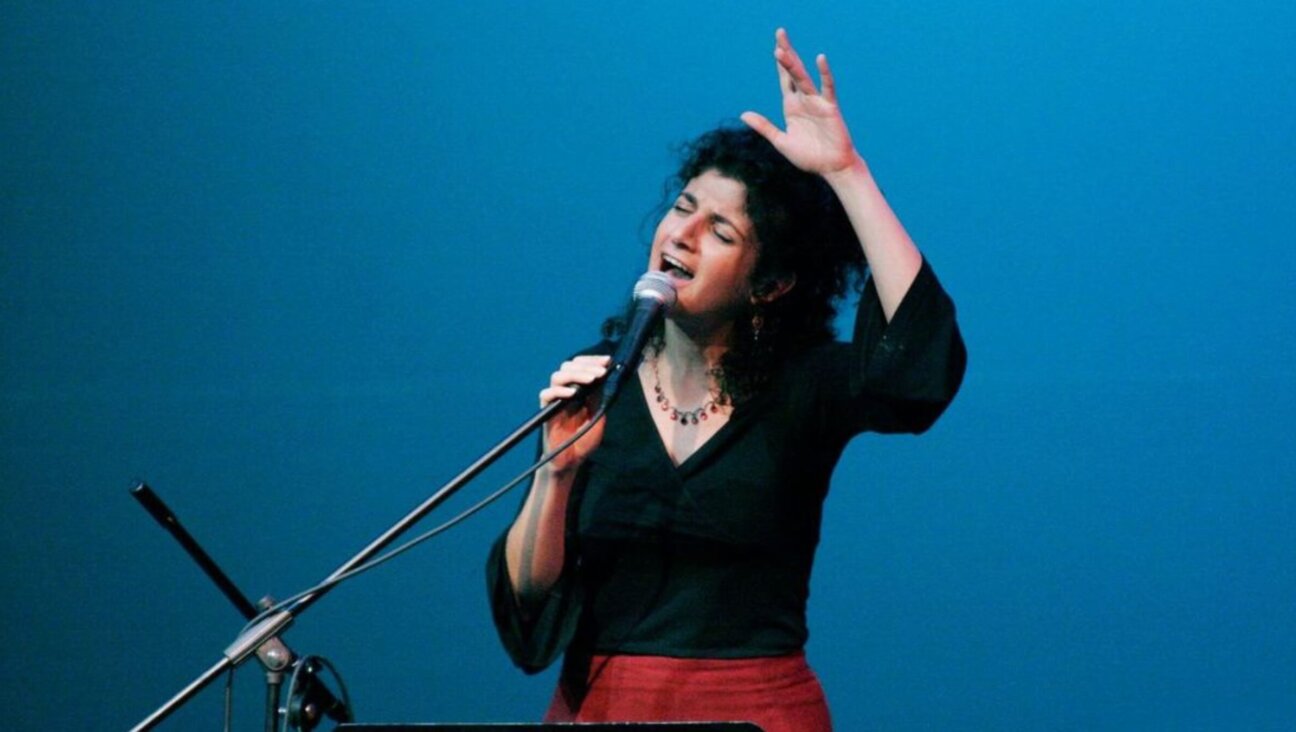
In a project melding interfaith dialogue and feminist theory, a Toronto gallery brought together Jewish and Muslim women to study sacred texts.
Guided by Toronto artist Rochelle Rubenstein, the women created scrolls that meshed ancient verses with very modern meditations on the female body. The goal: To explore traditional responses to menstruation, breastfeeding and mourning — and the links between gender, religion and identity.
The result is the powerful, compact exhibition, “Blood, Milk, and Tears” at Toronto’s storefront Fentster Gallery. The Forward spoke to Fentster curator Evelyn Tauben, a creator of the project.
Things here in the US are so tense, but you managed to bring together Jewish and Muslim women for an incredibly productive project. How did the two groups interact?
My sense is that now more than ever, people are looking for connection and mutual understanding across points of difference. There is a desire to push back against the toxic energy emanating from the new U.S. administration by engaging in initiatives that are generative, thoughtful and meaningful. I don’t particularly think of it as two groups coming together but rather a diverse, multi-generational collection of individuals who each identify as artists in some capacity and as either Muslim or Jewish.
Of the work these women produced, what surprised you most?
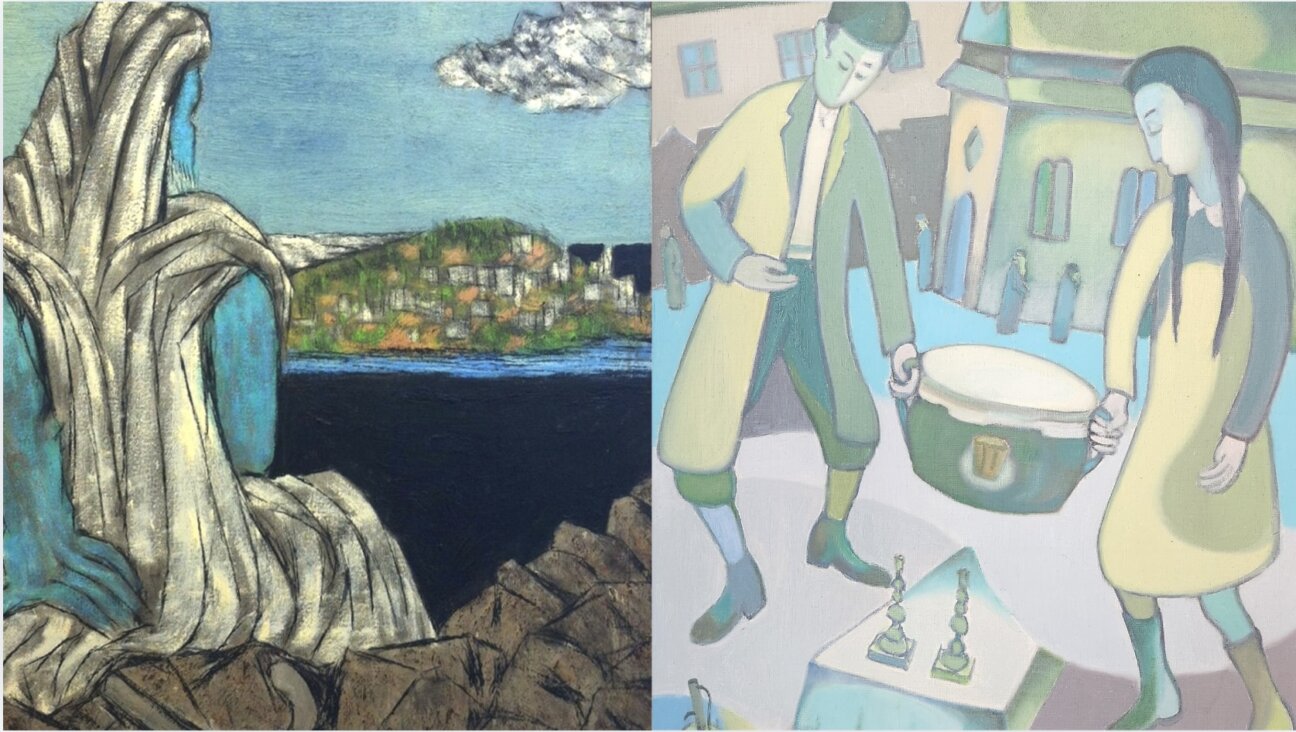
One of the more surprising pieces was created by a mother and daughter, N. Noor and M. Syed. They are not professional artists but they threw themselves into this project wholeheartedly. In person, they are both rather soft-spoken and unassuming, but their scroll is layered with complex, bold, unexpected imagery. There is a section with a female figure in profile and words and phrases in Arabic and English, like “modesty” and “body parts to cover.” Words such as “misogyny”, “inequality” and “oppression” were also included to shed light on how societal misinterpretations of religious texts can negatively impact many Muslim women. There is also an image of a mother holding a baby. On closer inspection, they are cloaked in a garment that is actually flowing breast milk.
What was the biggest difference between work from the Jewish participants and the Muslim participants?
On the whole, the Jewish women engaged less in overtly religious topics in their scrolls. I think this is more a reflection of the specific individuals who ended up signing on to the project rather than a reflection of each community in contemporary Canadian life.
Considering Muslims and Jews are both on edge here in the States, how would you describe the significance of bringing these groups together?
I think any time we create spaces for marginalized conversations and for artistic creation, it is highly significant. It is not commonplace to address in such a public forum the fluids that come from women’s bodies and how we are sidelined because of the ways in which our bodies behave over which we have no control. Then in addition to taking on these taboo subjects that tend to be relegated to private realms, we are also bringing together contemporary Jewish and Muslim perspectives. I think there are cynical voices who view interfaith work as naïve or simplistic. But actually, it’s very powerful to connect around the study of each other’s textual traditions and around the creative process.
This is a moment of great uncertainty. Here’s what you can do about it.
We hope you appreciated this article. Before you go, we’d like to ask you to please support the Forward’s independent Jewish news this Passover. All donations are being matched by the Forward Board - up to $100,000.
This is a moment of great uncertainty for the news media, for the Jewish people, and for our sacred democracy. It is a time of confusion and declining trust in public institutions. An era in which we need humans to report facts, conduct investigations that hold power to account, tell stories that matter and share honest discourse on all that divides us.
With no paywall or subscriptions, the Forward is entirely supported by readers like you. Every dollar you give this Passover is invested in the future of the Forward — and telling the American Jewish story fully and fairly.
The Forward doesn’t rely on funding from institutions like governments or your local Jewish federation. There are thousands of readers like you who give us $18 or $36 or $100 each month or year.
Support our mission to tell the Jewish story fully and fairly.