Hannah Arendt and the Eichmann Trial
Graphic by Angelie Zaslavsky

By Deborah E. Lipstadt April 29, 2011
On Wednesday, Deborah Lipstadt wrote about eerie anniversaries. She is the author of the new book “The Eichmann Trial.” Her blog posts are being featured this week on The Arty Semite courtesy of the Jewish Book Council and My Jewish Learning’s Author Blog series. For more information on the series, please visit:
I have spent much of the past few weeks talking about my new book, “The Eichmann Trial.” I don’t want to make this blog entry about the book. (To be blunt, I’d rather have folks read the book.) But something has struck me in the talks and interviews I have conducted.
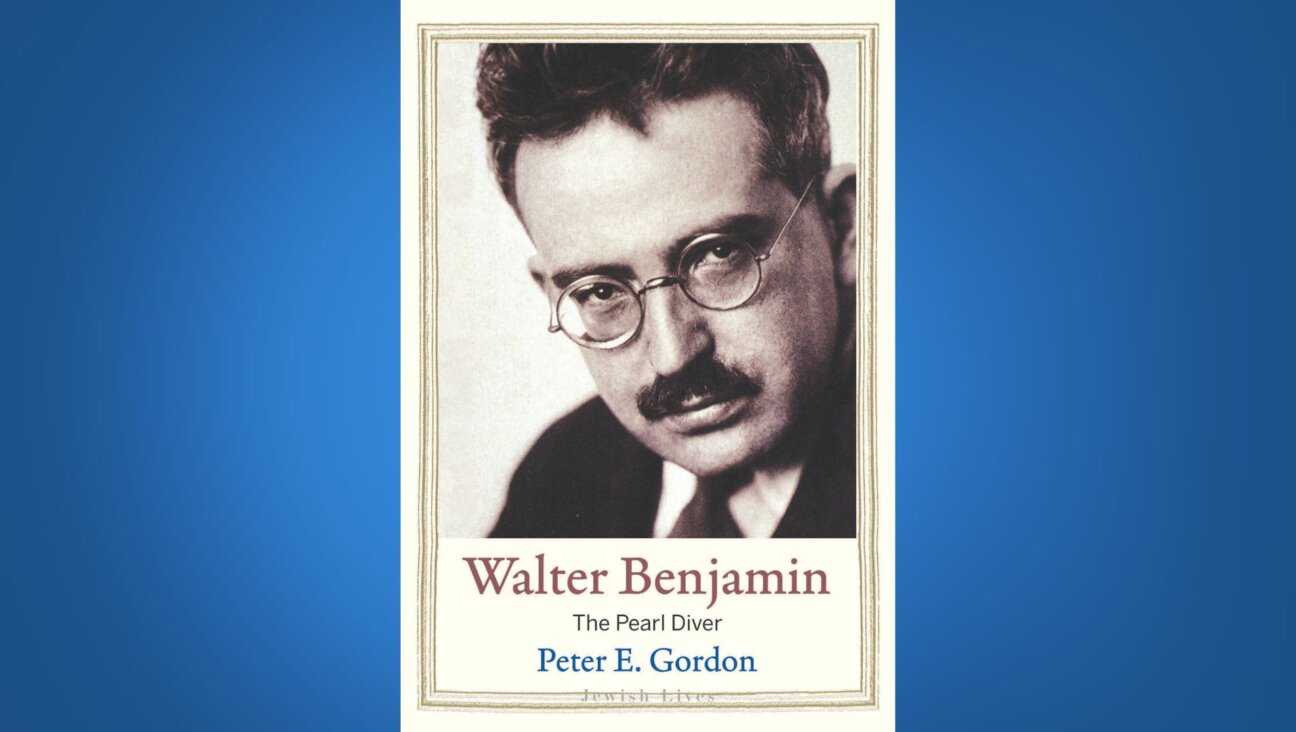
For so many people the issue of the Eichmann trial remains Hannah Arendt. They seem to have a hard time conceiving of the Eichmann trial independent of Arendt’s “analysis.” I am speaking of who abhor what she said as well as of those who espouse her views.
I take a more “middle of the road” or balanced perspective. Let me be explicit (for nuance, you’ll have to read the book. OK, I won’t repeat that again. Twice is certainly enough. Though, please note, I wrote read, not buy). When I speak about Arendt I try to discern where my audience — whether it be one person or a multitude — stands on the issue. I then try to stress the “other” side, i.e. if they hate — and that’s not too strong a term — her words I tell them the affirmative things she had to say about the trial and Israel. If they are enthralled with her views, I point out the glaring historical mistakes on which they are based.
Sometimes that leads to trouble.
At a talk I gave at the Center for Jewish History I assumed that many of the people in the audience were familiar with all the negatives that had been said both by and about Arendt. They knew of her [c]overt antisemitic — if not racist — comments about Israeli society and of her historically inaccurate statements about the Judenrate, the Jewish councils established in the ghettoes by the Nazis.
I, chose, therefore to speak of some of the insights she had and powerful statements she made about the significance of the Holocaust. I wanted to make it clear to them that there are a lot of grays when it comes to Arendt. Sure enough, I received a number of e-mails and comments accusing me of having “gone soft on Arendt.”
Conversely, when I have spoken with those, whose view of the trial has been completely refracted thorough Arendt, they hear me as critical of her and have also reacted viscerally. They defend her in a knee-jerk fashion and excoriate me for being critical of her.
Wouldn’t it be refreshing if people set aside their preconceived conclusions and read what I have to say about her? (Oops, there I go again. Clearly this is the place to end this blog entry.)
Deborah Lipstadt will be blogging all week for the Jewish Book Council and My Jewish Learning’s Author Blog. Her new book, “The Eichmann Trial,” is available now.
The Jewish Book Council is a not-for-profit devoted to the reading, writing, and publishing of Jewish literature. For more Jewish literary blog posts, reviews of Jewish books, book club resources, and to learn about awards and conferences, please visit www.jewishbookcouncil.org.
MyJewishLearning.com is the leading transdenominational website of Jewish information and education. Visit My Jewish Learning for thousands of articles on Judaism, Jewish holidays, Jewish history, and more.
This is a moment of great uncertainty. Here’s what you can do about it.
We hope you appreciated this article. Before you go, we’d like to ask you to please support the Forward’s independent Jewish news this Passover. All donations are being matched by the Forward Board - up to $100,000.
This is a moment of great uncertainty for the news media, for the Jewish people, and for our sacred democracy. It is a time of confusion and declining trust in public institutions. An era in which we need humans to report facts, conduct investigations that hold power to account, tell stories that matter and share honest discourse on all that divides us.
With no paywall or subscriptions, the Forward is entirely supported by readers like you. Every dollar you give this Passover is invested in the future of the Forward — and telling the American Jewish story fully and fairly.
The Forward doesn’t rely on funding from institutions like governments or your local Jewish federation. There are thousands of readers like you who give us $18 or $36 or $100 each month or year.
Support our mission to tell the Jewish story fully and fairly.