Rob Reiner asked the big questions. His death leaves us searching for answers.
The director and humanist was singularly inquisitive
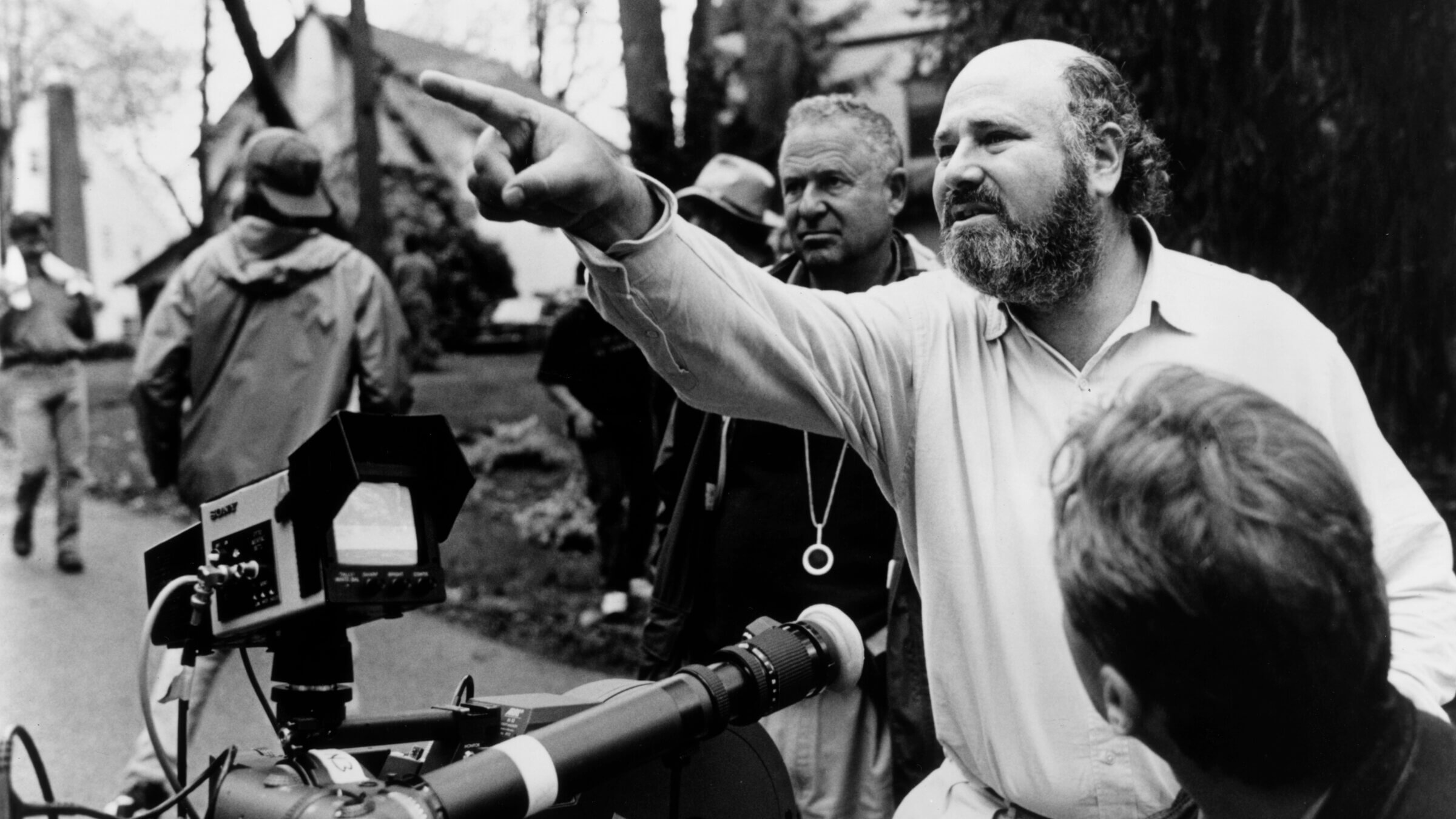
Rob Reiner directing his film North. Photo by Andy Schwartz/Fotos International/Getty Images

By PJ Grisar December 15, 2025
Can men and women just be friends? Can you be in the revenge business too long? Why don’t you just make 10 louder and have that be the top number on your amp?
All are questions Rob Reiner sought to answer. In the wake of his and his wife’s unexpected deaths, which are being investigated as homicides, it’s hard not to reel with questions of our own: How could someone so beloved come to such a senseless end? How can we account for such a staggering loss to the culture when it came so prematurely? How can we juggle that grief and our horror over the violent murder of Jews at an Australian beach, gathered to celebrate the first night of Hanukkah, and still light candles of our own?
The act of asking may be a way forward, just as Rob Reiner first emerged from sitcom stardom by making inquiries.
In This is Spinal Tap, his first feature, he played the role of Marty DiBergi, the in-universe director of the documentary about the misbegotten 1982 U.S. concert tour of the eponymous metal band. He was, in a sense, culminating the work of his father, Carl Reiner, who launched a classic comedy record as the interviewer of Mel Brooks’ 2,000 Year Old Man. DiBergi as played by Reiner was a reverential interlocutor — one might say a fanboy — but he did take time to query Nigel Tufnell as to why his amp went to 11. And, quoting a bad review, he asked “What day did the Lord create Spinal Tap, and couldn’t he have rested on that day too?”
But Reiner had larger questions to mull over. And in this capacity — not just his iconic scene at Katz’s Deli in When Harry Met Sally or the goblin Yiddishkeit of Miracle Max in The Princess Bride — he was a fundamentally Jewish director.
Stand By Me is a poignant meditation on death through the eyes of childhood — it asks what we remember and how those early experiences shape us. The Princess Bride is a storybook consideration of love — it wonders at the price of seeking or avenging it at all costs. A Few Good Men is a trenchant, cynical-for-Aaron Sorkin, inquest of abuse in the military — how can it happen in an atmosphere of discipline.
In his public life, Reiner was an activist. He asked how he could end cigarette smoking. He asked why gay couples couldn’t marry like straight ones. He asked what Russia may have had on President Trump. This fall, with the FCC’s crackdown on Jimmy Kimmel, he asked if he would soon be censored. He led with the Jewish question of how the world might be repaired.
Guttingly, in perhaps his most personal project, 2015’s Being Charlie, co-written by his son Nick he wondered how a parent can help a child struggling with addiction. (Nick was questioned by the LAPD concerning his parents’ deaths and was placed under arrest.)
None of the questions had pat answers. Taken together, there’s scarcely a part of life that Reiner’s filmography overlooked, including the best way to end it, in 2007’s The Bucket List.
Judging by the longevity of his parents, both of whom lived into their 90s, it’s entirely possible Reiner had much more to ask of the world. That we won’t get to see another film by him, or spot him on the news weighing in on the latest democratic aberration, is hard to swallow.
Yet there is some small comfort in the note Reiner went out on. In October, he unveiled Spinal Tap II: The Beginning of the End, a valedictory moment in a long and celebrated career.
Reiner once again returned to the role of DiBergi. I saw a special prescreening with a live Q&A after the film. It was the day Charlie Kirk was assassinated. I half-expected Reiner to break character and address political violence — his previous film, God & Country, was a documentary on Christian Nationalism.
But Reiner never showed up — only Marty DiBergi, sitting with Nigel Tufnell (Christopher Guest), David St. Hubbins (Michael McKean) and Derek Smalls (Harry Shearer) at Grauman’s Chinese Theater in Los Angeles. (Reiner later, with his wonted humanism, would weigh in out of character on Kirk, telling Piers Morgan that his reaction to his death was one of “absolute horror,” regardless of their political differences.)
The Spinal Tap interview was broadcast to theaters across the country, with viewer-submitted questions like “What, in fact, did the glove from Smell the Glove smell like?” (Minty.) And “Who was the inspiration for ‘Big Bottom?’” (Della Reese.)
DiBergi had one question for the audience: “How did you feel about the film?”
The applause was rapturous, but DiBergi still couldn’t get over Nigel Tufnell’s Marshall amp, which now stretched beyond 11 and into infinity.
“How can that be?” he asked. “How can you go to infinity? How loud is that?”
There’s no limit, Tufnell assured him. “Why should there be a limit?”
Reiner, an artist of boundless curiosity and humanity, was limitless. His remit was to reason why. He’ll be impossible to replace, but in asking difficult questions, we can honor him.