A compelling horror series from Israel — even if you don’t like horror movies
‘The Dybbuk’ meets ‘The Exorcist’ in ‘The Malevolent Bride’
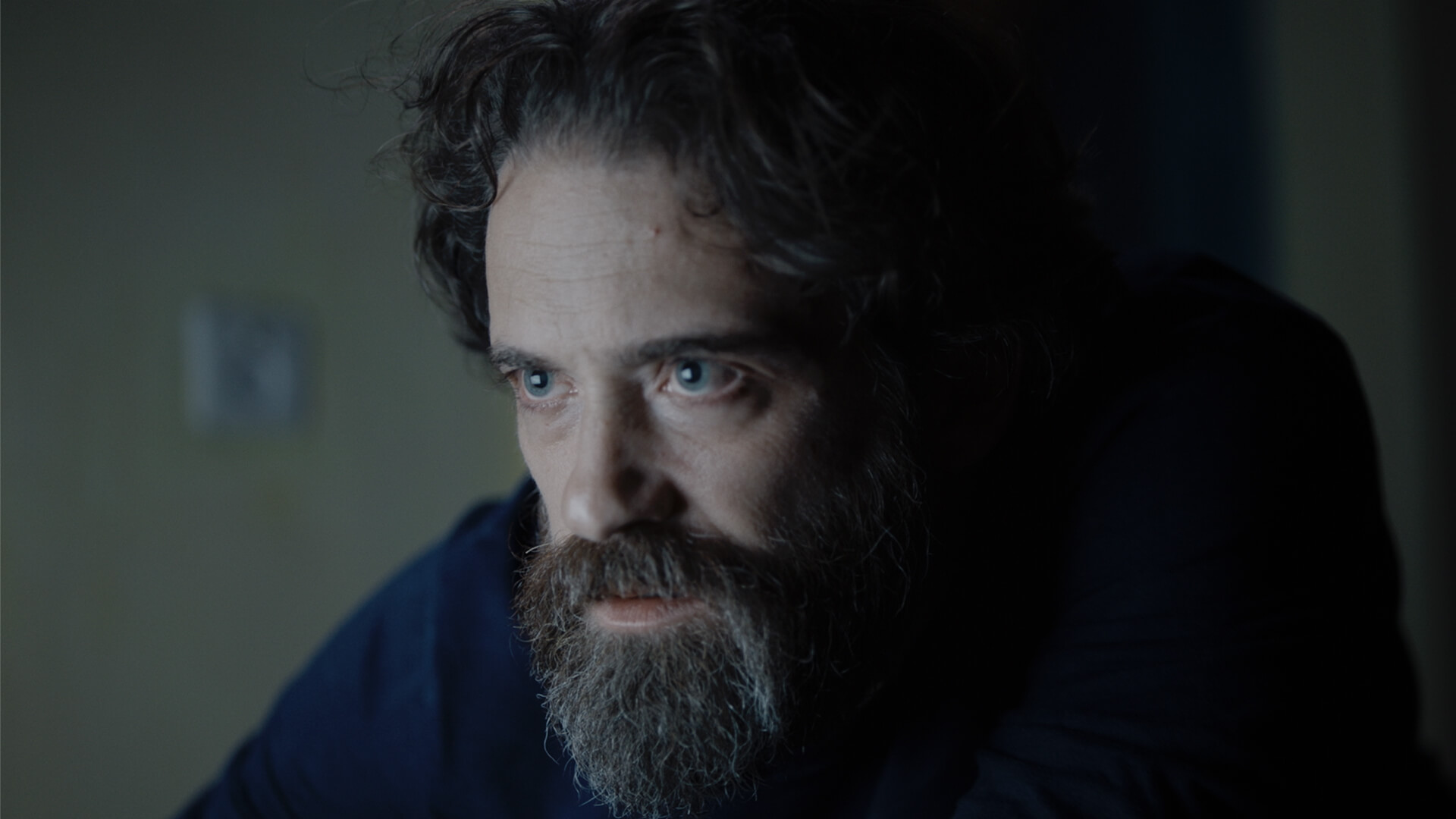
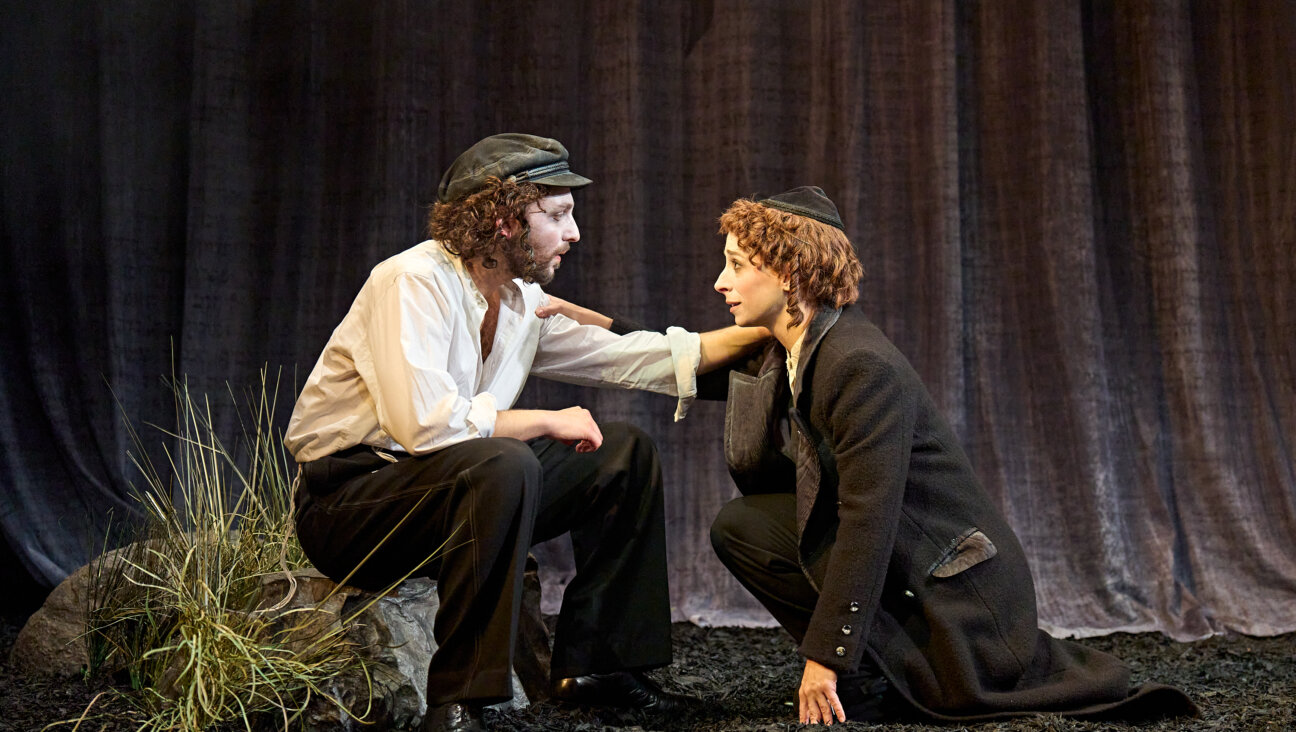
in The Malevolent Bride, Tom Avni plays Be’er Dov, a formerly Hasidic physicist who has shed all religion. Courtesy of ChaiFlicks
In general, I steer clear of genre entertainment. For me, films awash in horror and the paranormal are gory, frightening and in the end relentlessly dull — a lethal combination.
But to my surprise, The Malevolent Bride, an Israeli horror series now streaming on Chaiflicks, is so compelling and has such page-turning momentum that I had to know what happened next.
Set in Jerusalem’s ultra-Orthodox community, the series — which is the brainchild of Noah Stollman and director Oded Davidoff, creators of, respectively, Fauda and The Beauty Queen of Jerusalem — recounts a wave of inexplicable, blood-curdling crimes. But beyond its mystery and thriller elements, the picture embodies an amalgam of Kabbalah, feminism, humanism, and, yes, even quantum field theory.
Here, the line between the scientific world and Jewish mysticism, each requiring its own brand of blind faith, is blurred. Interwoven throughout are themes related to the crippling power of religion and the cost of repressed sexuality that comes in its wake. Like many horror flicks, it has its share of high camp comedy.
The characters (well, at least the secular ones) are relatable and appealing. The lead, Tom Avni playing Be’er Dov, a physicist, is sympathetic and appealing (easy to look at, too). An ex-Hasid who has shed all religion, he lives openly with his equally non-religious doctor girlfriend. Be-er, who’s also a feminist, advocates for the daughter of a Hasid.
The performances are uniformly superb. Even the grotesque moments, and there are some, work entertainingly, if not credibly, within the parameters of the genre’s over-the-top sensibility, which can at times recall The Exorcist.
The series begins with the wedding night of a Hasidic couple — the terrified virgin bride, swathed in white, is about to lose her virginity with a man she’s met perhaps twice. Moments later, we see her clutching shards of glass, her hand bloodied, her gown covered in blood as she charges toward the groom; his corpse is on the floor.
Later in jail, eyes wild, and demonically possessed, she utters a sing-songy phrase, “oxyn, oxyn,” that becomes the first part of a satanic refrain that more and more Hasidic women spew forth as they too are overtaken by a curse. Dybbuk imagery is evoked. Violent atrocities ensue.
Giovanni, a police officer (convincingly played by Hisham Suliman), uncovers evidence that connects Be’er to each of these women who owns a book, presumably given to them by him. His name, in each case, appears on its pages as its original owner. The book in question is about Raizel, an archangel out of the Kabbalah who has magical knowledge and powers. Sketches of diabolical figures and illegible writings are scribbled across its pages and in its margins.
Be’er insists he knows none of these women. Nonetheless, with his career at risk, he realizes he must uncover the truth to save his reputation. Through flashbacks, we learn that as a young Yeshiva student he was drawn to the Kabbalah and had a clandestine and shockingly forbidden affair with a Hasidic girl named Yedidia, to whom he did indeed gift the book.
At the same time, Dr. Malki Price (Leeox Levy), an Orthodox clinical psychologist who heads a mental health facility for deeply troubled girls, is also grappling with the growing menace. Some of her own patients have channeled the free-floating demon, leading to murder, suicide and terrifying occult acts.
Be’er and Malki join forces in order to track down Yedidia who, for reasons that are not entirely clear, seems to be the origin of this epidemic of violence and mysticism. Levy brings an understated compassion to her role that is riveting to watch.
Malki, we later learn, is a transgender woman, as is Levy in her first major film role, which reinforces the series’ themes of tolerance and mutual respect. The Jewish mysticism, with its scary folkloric and mythic warnings and taboos, underscores the series’ embrace of sexuality and the fluidity of gender identity. After all, in the Kabbalah tradition, the Messiah will be both male and female.
Along their journey, Be’er and Malki meet an array of great characters and, despite their differences, grow increasingly attached to one another. The final romantic scene between Be’er and Malki is simultaneously unnerving, comic and unexpected, though it shouldn’t be. Yet another hallmark of a fun original series.
This is a moment of great uncertainty. Here’s what you can do about it.
We hope you appreciated this article. Before you go, we’d like to ask you to please support the Forward’s independent Jewish news this Passover. All donations are being matched by the Forward Board - up to $100,000.
This is a moment of great uncertainty for the news media, for the Jewish people, and for our sacred democracy. It is a time of confusion and declining trust in public institutions. An era in which we need humans to report facts, conduct investigations that hold power to account, tell stories that matter and share honest discourse on all that divides us.
With no paywall or subscriptions, the Forward is entirely supported by readers like you. Every dollar you give this Passover is invested in the future of the Forward — and telling the American Jewish story fully and fairly.
The Forward doesn’t rely on funding from institutions like governments or your local Jewish federation. There are thousands of readers like you who give us $18 or $36 or $100 each month or year.
Support our mission to tell the Jewish story fully and fairly.