Jonah Hill’s cancel culture dramedy makes an antisemitism exception — all about Kanye
‘The Outcome’ gives pride of place to the rapper, whose bigotry has hampered him (to a point)
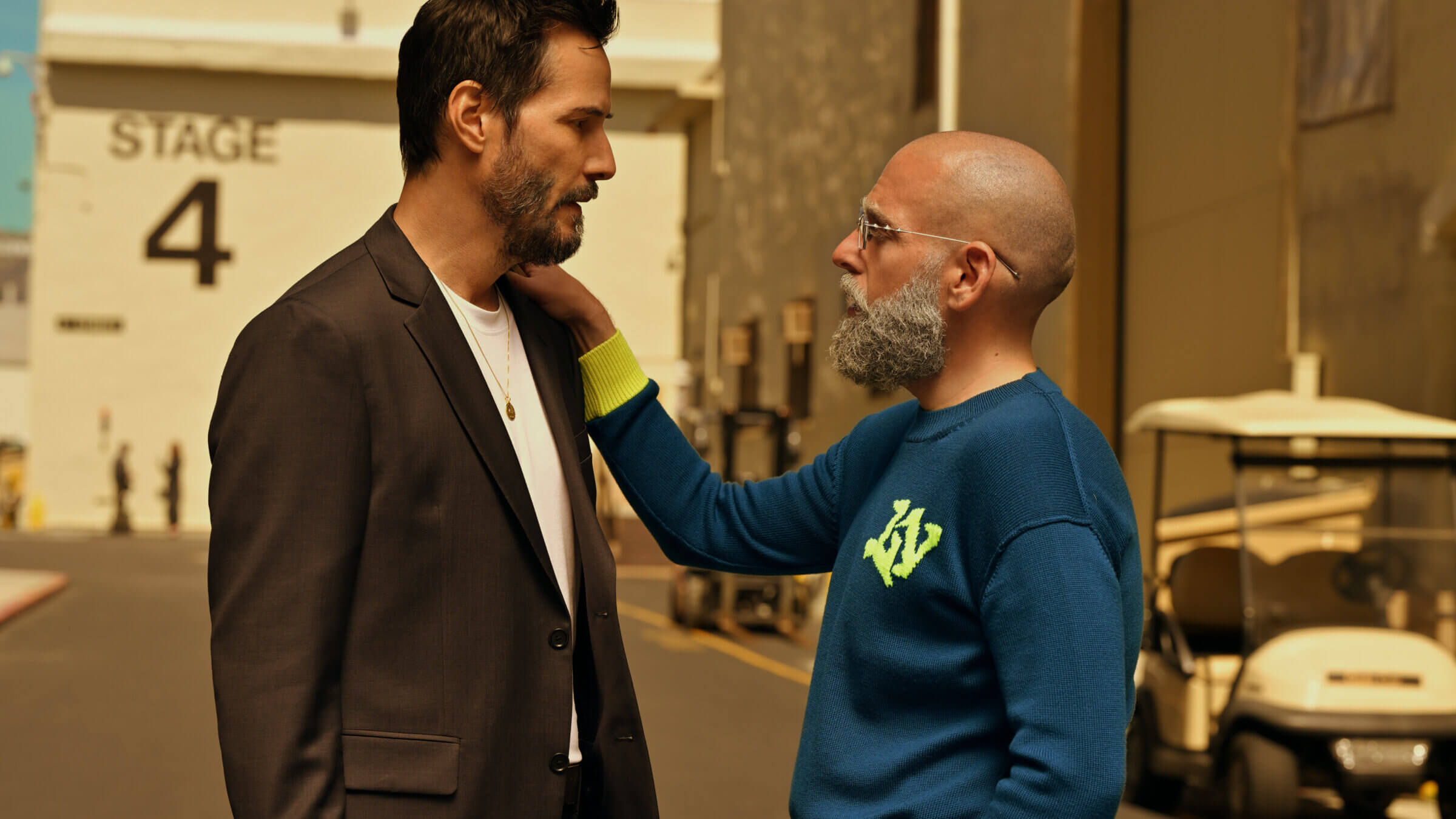
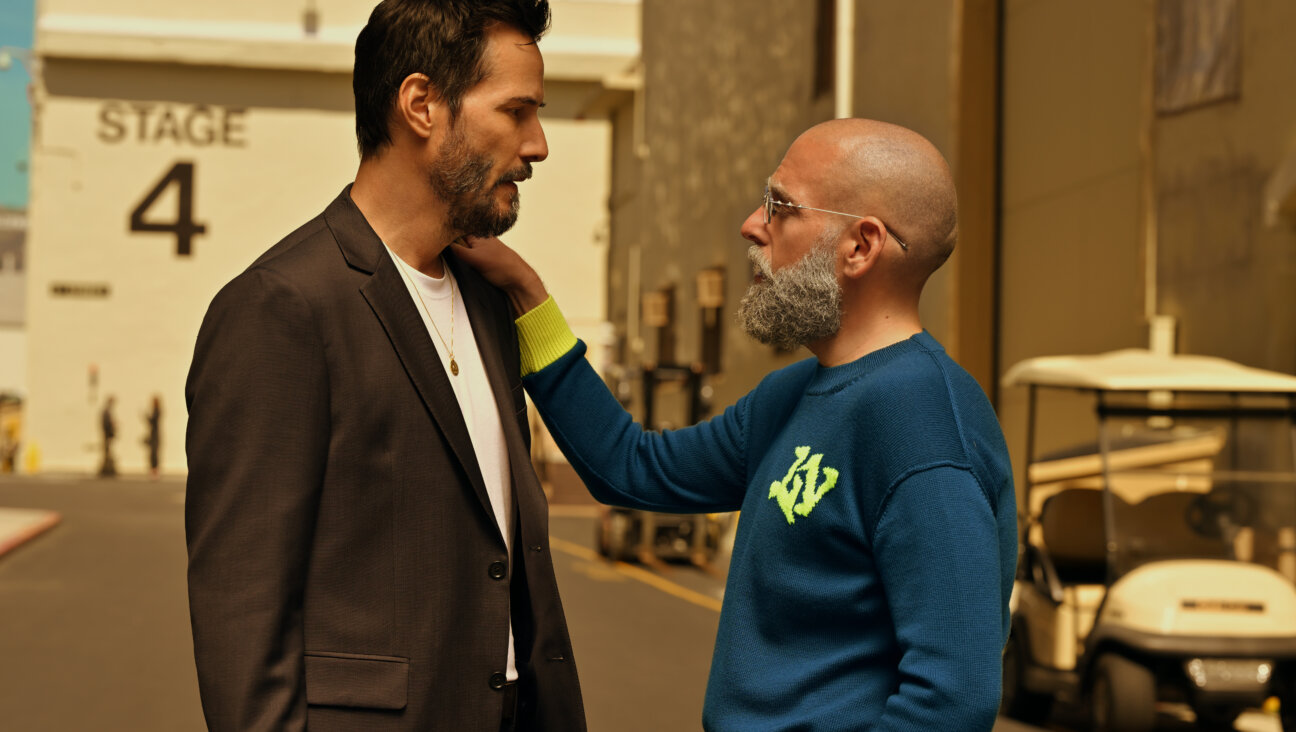
Keanu Reeves and Jonah Hill in The Outcome. Photo by Apple TV+

By PJ Grisar April 9, 2026
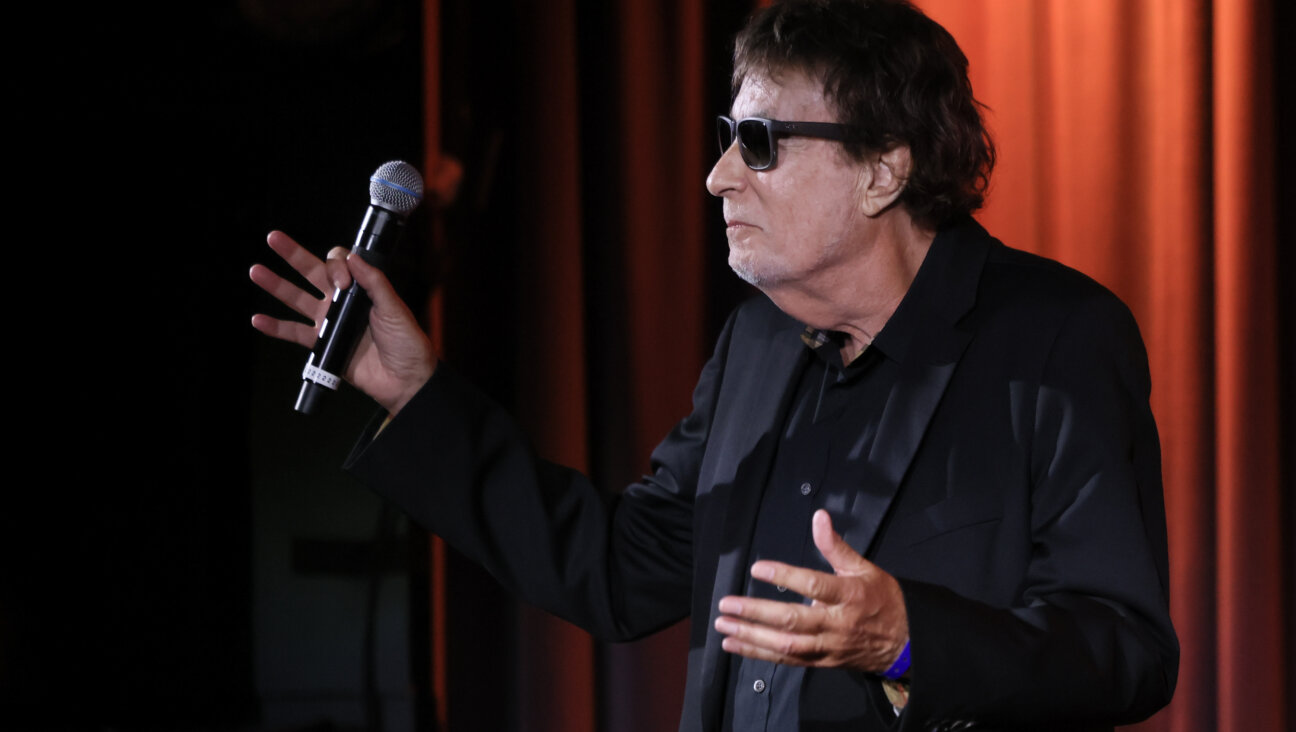
Ye, the rapper formerly known as Kanye West, is having an interesting April.
Fans are hailing his new album Bully as a return to form. (Critics are more mixed.) He reportedly made $33 million from two sold-out shows in Los Angeles, but he was also banned from entering the U.K. owing to a pressure campaign by Jewish groups over a scheduled headlining performance at the Wired music festival, even as the artist, who recently attributed his antisemitic behavior to a brain injury and bipolar disorder, offered to have “meet and listen” sessions with the Jewish community.
On top of this mixed reception, add a movie premiere. Ye has a memorable cameo in Jonah Hill’s new AppleTV+ film The Outcome, about an A-list actor’s teshuvah tour. And that moment has something to say about what to do with the artist’s outbursts.
Hill’s character, a crass crisis lawyer named Ira, assembles a dream team to protect his client, Reef Hawk (Keanu Reeves), who is awaiting the release of an incriminating video. The nature of this video is unknown beyond its potential to derail his comeback after a five-year sabbatical to treat a secret heroin addiction. Among Reef’s potential defenders are a Gloria Allred-style lawyer (Laverne Cox), a Black minister legendary for his work on civil rights (Roy Wood Jr.) and an ambassador from the Asian-American community (Atsuko Okatsuka). Ira notes someone missing from the mix, one “Moshe, from the Antisemitism Committee,” perhaps a poorly-named stand-in for the ADL.
“We ran the numbers,” Ira’s assistant says by way of explanation. “It turns out that hating Jews doesn’t negatively affect a person’s career. In fact, it could help.”
And we cut to a black-and-white headshot of Ye, occupying the whole screen.
Hill explained this choice in an interview with TMZ, saying the scene wasn’t just there to score a cheap shot at Ye, who publicly (and compellingly) apologized in an ad in the Wall Street Journal in January.
“In the midst of all this Jew stuff, he did Instagram a picture of me in the 21 Jump Street poster,” Hill recalled. “And he said something along the lines of ‘I don’t hate Jews anymore because I love Jonah Hill.’”
“Me and him got no beef,” Hill continued.” I just put that in there like, ‘Yo, you’re gonna f—ing put the 21 Jump Street poster up there and say you don’t hate Jews anymore. That’s pretty wild. I’m gonna put a picture of you saying that like, hating Jews helps your career.’”
Clearly a sight gag and a bit of an inside joke. But is it true?
Running my own numbers, and not even accounting for this last week of ups and downs, Ye took a major hit to his net worth when he lost his Adidas partnership, backsliding all the way from billionaire to mere multimillionaire. Fans still turn up for Ye, and some even seem to like what I’ll call his Hitler catalogue. That said, it’s hard to imagine him making a full recovery, once again gracing the stage at the Grammys or headlining a major festival or getting a shot at the Super Bowl halftime show.
The difference between Ye’s transgression and that of others is instructive. There’s plenty of arguable antisemitism in the case of celebrities whose pro-Palestinian advocacy has crossed the line into something unsavory. Rappers Bob Vylan of “death, death to the IDF” fame and Kneecap, who chanted “up Hamas, up Hezbollah,” come to mind. They have had their own brushes with cancellation and been denied visas because of their antics — but also strong support from those who believe they are simply speaking up for Palestinians. The ascendancy of Israel conspiracies, echoing age old canards, has recently produced an odd coalition between pundits on the far-left and far-right, and hasn’t put a dent in their audience.
(Hill, though Jewish, was accused of dabbling in Jewish stereotypes his last film, You People, and he will likely get some flack for this movie, both for his character — a kind of grubby fixer who calls his client “Bubbie” — and for a joke where Man’s Search for Meaning is referred to as “the most lit Holocaust book.”)
Even in this environment, Ye is toxic for mainstream consumption, because when he went “death con 3” on the Jews, his words had no agenda beyond delusion-fueled animus about Jewish control of the media. Ye’s awareness of the Middle East was best expressed on the occasion he used a fish tank net and Yoo-hoo bottle to represent the Israeli prime minister. Vylan and Kneecap’s slogans are more subtle and plausibly deniable than one of Ye’s latest tracks, literally called “Heil Hitler.”
There was no hedging it, try as Candace Owens might. It was Jew Hate Classic, the original recipe. And it wasn’t, in the case of Mel Gibson, a pattern that emerged over relatively wide gaps of time with only one incident widely known to the general public. It was an endless, often marathon torrent of invective and odd tangents care of an unmedicated bipolar insomniac. It went on for months. Then died off. Then came back swinging in the form of an album the concept of which could, charitably, be defined as spiritually Hitlerian.
The sheer concentration of vitriol seems like proof that the outburst was the result of a manic episode, which could afford the rapper some grace. Instead, he now lives in a liminal space between relevance and punchline. This strain of antisemitism doesn’t boost careers — yet — but the man behind it can sell out stadiums in spite of it.
All the while, the question of what to do with Ye’s mental health, and how it factors into his cancellation makes him a conundrum, even if it should by rights be a better excuse than Mel Gibson’s squad car in vino veritas. (Gibson is mentioned in the film, in the context of a poppers-related Weekend at Bernie’s scenario, not his own scandal.) Before we render a judgment, we need commitments he won’t repeat his tirades and so continue to influence looksmaxxers, incels and their overlapping Venn Diagram of Nazi revivalists.
Hill’s belief that Ye’s antisemitic streak was good for business is symptomatic of something fundamentally off with the director’s treatment of cancel culture. It feels out-of-touch even — or maybe because — it draws from experience. Hill himself was the victim of cancellation some years ago, when his ex leaked texts in which he weaponized “therapy talk.” Hill’s project, with a cast that includes Reeves, Van Jones, Martin Scorsese, Drew Barrymore and a rare appearance from Cameron Diaz, is itself proof of how not all cancellations are created equal or indefinite.
The Outcome is in tension with itself, part Hill’s version of Don Henley’s “Dirty Laundry” and Seth Rogen’s The Studio, part earnest penance that may or may not be coming from the director-writer himself.
One of the lines, delivered by Reef’s reality star mother (soap opera icon Susan Lucci), as a crew films their rapprochement for Bravo, sums the film up nicely: “Just because it’s performative doesn’t mean it’s not the truth.” We’ll have to take her word for it.
When it comes to Ye, there is some truth that antisemitism alone can’t crater a career — with the exception of lesser talents, it never could. We need not wonder how it has affected Ye’s popularity with Hill, who cited him on TMZ as “probably the greatest artist whoever lived.”
As Ira departs the film, we see his bumper sticker: “Honk if you can separate the art from the artist.” Hill would blow out the horn, and hopes you might too.
Jonah Hill’s The Outcome debits April 10 on AppleTV+.
This is a moment of great uncertainty. Here’s what you can do about it.
We hope you appreciated this article. Before you go, we’d like to ask you to please support the Forward’s independent Jewish news this Passover. All donations are being matched by the Forward Board - up to $100,000.
This is a moment of great uncertainty for the news media, for the Jewish people, and for our sacred democracy. It is a time of confusion and declining trust in public institutions. An era in which we need humans to report facts, conduct investigations that hold power to account, tell stories that matter and share honest discourse on all that divides us.
With no paywall or subscriptions, the Forward is entirely supported by readers like you. Every dollar you give this Passover is invested in the future of the Forward — and telling the American Jewish story fully and fairly.
The Forward doesn’t rely on funding from institutions like governments or your local Jewish federation. There are thousands of readers like you who give us $18 or $36 or $100 each month or year.

Support our mission to tell the Jewish story fully and fairly.