He committed murder today. Or maybe yesterday. He doesn’t know.
A new film adaptation of Albert Camus’ ‘The Stranger’ finds the world as strange and absurd as it ever was.
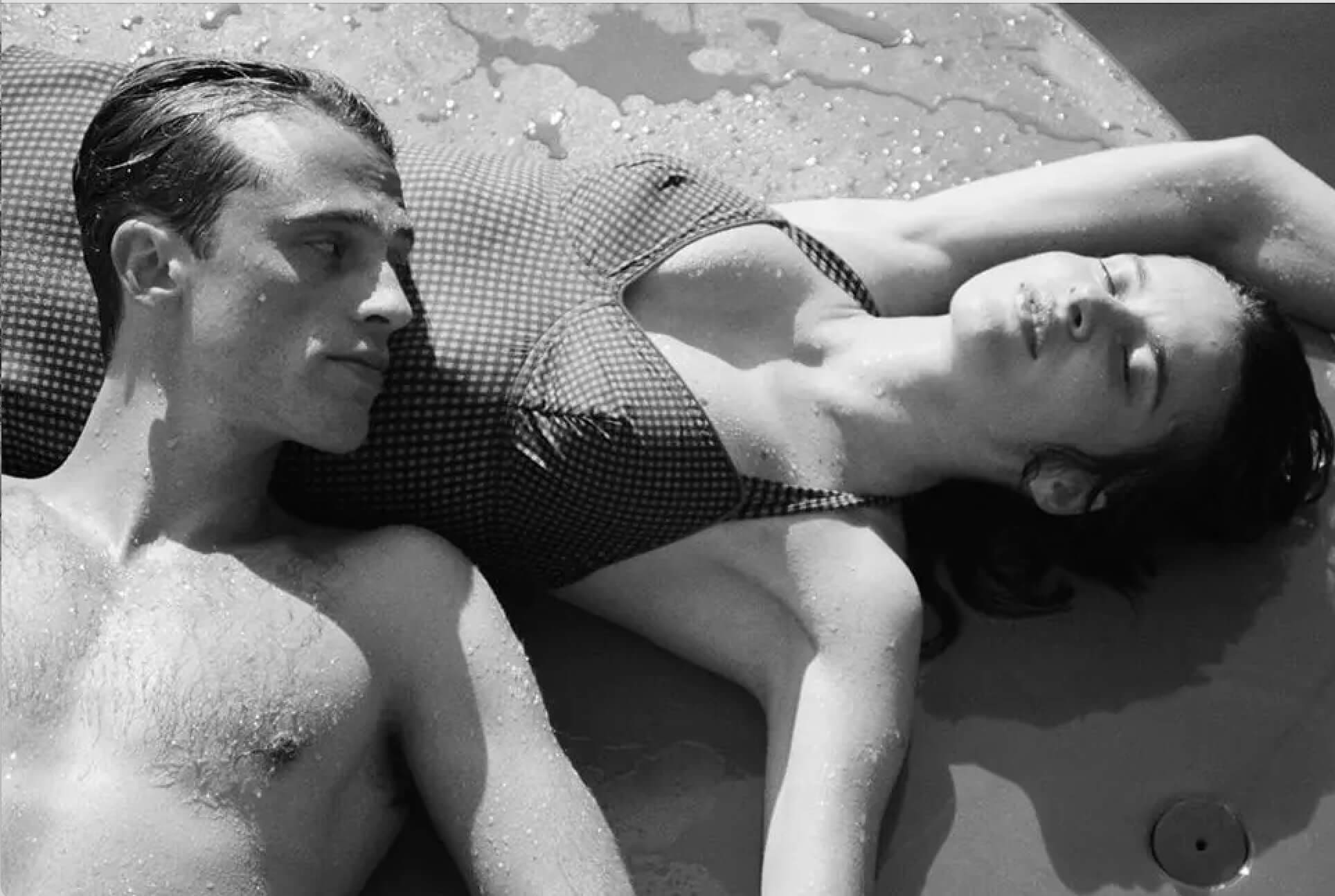
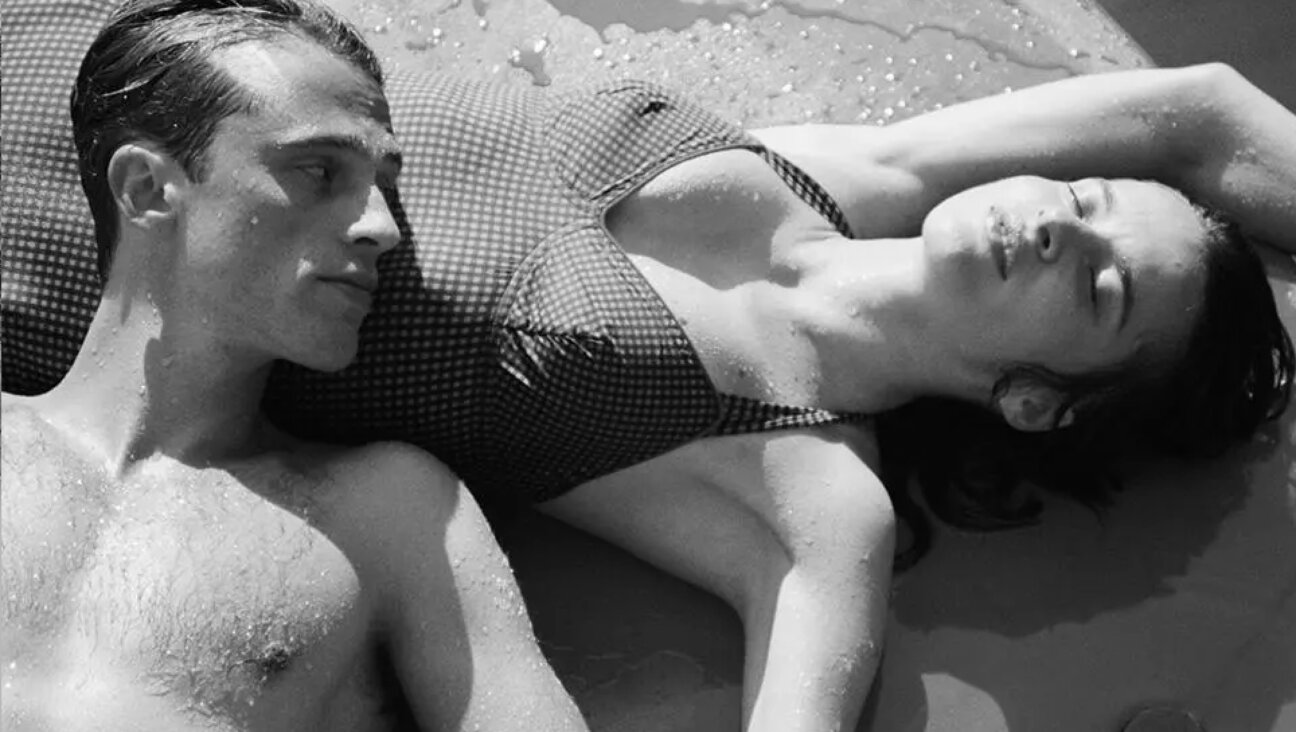
Benjamin Voisin and Rebecca Marder in ‘The Stranger.’ Courtesy of Music Box Films
By Robert Zaretsky April 13, 2026
In the spring of 1940, two French Algerians, the brothers Raoul and Edgar Bensoussan, got into a rumble with two Arabs on a beach near the city of Oran. The reason is unclear, but not the result: One of the Arabs, Kaddour Betouil, pulled out a knife and stabbed Raoul in the arm and mouth. The latter, bloodied and retreating to his beach cottage, returned to the crime scene armed with a pistol. A second fight occurred between the two men, ending not with a pistol shot but instead with the arrival of French gendarmes.
It happens that the Bensoussan brothers were Algerian Jews whose family were beneficiaries of the Crémieux Law, which in 1870 extended French citizenship to the Jewish community that had lived for centuries in Algeria. That same law, however, did not extend to the several million Arabs and Berbers, who, like Kaddour Betouil, were condemned to remain subjects, not citizens, under the French republic.
If this story sounds familiar, it is not at all absurd. This same strip of beach, the historian Alice Kaplan reports, is still known to locals as la plage de L’Étranger, or The Stranger’s beach. The story of this altercation, bien évidemment, made its way back to a friend of Bensoussan brothers, Albert Camus.
In both the novel and in François Ozon’s new film adaptation, this scene, though it arrives midway through the story, is in fact the climax. On a beach in Algiers, there is a confrontation between a Frenchman, named Meursault, and an Arab, left unnamed. The latter, reclining on the sand, holds a knife, while Meursault, standing above him, holds a pistol. This time, though, as waves crash and the sun blinds, the pistol does go off. There is a single shot, a pause, then four more shots.
“It was like knocking,” Meursault observes, “four quick times on the door of unhappiness.”
Ozon has Meursault, played by the actor Benjamin Voisin, speak these words in a voice-over once he fires the shots. He repeats this use of the voice-over, reciting the final lines of the novel as the film approaches its conclusion. As for the rest of the screenplay, also written by Ozon, it bears an unwavering fidelity to the lean yet lyrical cadence of Camus’ own language, famously described by the literary theorist Roland Barthes as the “zero degree” of writing, one that strove to be utterly transparent.
Yet there are also dramatic departures from the novel, not to mention the even more faithful adaptation by Luchino Visconti in 1967, which starred Marcello Mastroianni as Meursault. In part, the Visconti version was more faithful because it was filmed in color. How could it be otherwise for a novel in which the startling colors of the sea, sand and sky play such a crucial role? Yet Ozon chose to film in black and white, perhaps reflecting Hollywood film noirs, and the crime novels by the likes of James M. Cain and Raymond Chandler, that knocked the socks off Camus and fellow existentialists like Jean-Paul Sartre. While the images captured by cinematographer Manu Dacosse often vibrate with sensuality, they nevertheless smack of skilled artifice and not Meursault’s reality.
Moreover, Ozon refashions the role of Marie Cardona, the woman who falls for Meursault. In the novel, she is little more than a prop — a woman as attracted to Meursault’s physical beauty as she is alienated by his emotional blankness. Here, Marie, played by the young stage actor Rebecca Marder, assumes a central role. Marder is mesmerizing, but that is precisely the problem; it risks turning an iconic account of the absurd into a love story. And, to paraphrase Tina Turner, love’s got nothing to do with this story.
Ozon introduces other wrinkles — for example, the thrum of homoeroticism that accompanies the scene with Meursault and the Arab — but they pale in comparison to his most dramatic departure from the novel. In effect, Ozon names not just the Arab, but also his sister. The latter works as a prostitute and is beaten by her pimp, Raymond Sintès, who also befriends Meursault. It is this unromantic triangle that leads to their confrontation on the beach — and, of course, to the reader’s confrontation with the perennial question: Why did Camus leave them nameless?
Rather than try to answer this question, the Algerian writer Kamel Daoud decided to give the Arab not just a name, Musa, but a history. In Daoud’s stunning novel Meursault, Contre-enquête, or The Meursault Investigation, Musa’s brother, Harun, cannot forgive the injustice that Meursault won undying fame while Musa was condemned to nameless obscurity. “Good God, how can you kill someone and then even take his own death away from him? My brother was the one who got shot, not him! There’s something I find stunning, and it’s that nobody…ever tried to find out the victim’s name.”
In a couple of simple and scintillating scenes of his own invention — one with Musa’s sister Djemila visiting his gravestone, the other an encounter between Djemila and Marie — Ozon repairs this omission by giving names and voices to those who had been nameless and speechless. No less importantly, he has given us a film that reminds us of the elusiveness of meaning and strangeness of life in a world as absurd today as it was in Camus’ day.
This is a moment of great uncertainty. Here’s what you can do about it.
We hope you appreciated this article. Before you go, we’d like to ask you to please support the Forward’s independent Jewish news. All donations are still being matched by the Forward Board - up to $100,000 until April 24.
This is a moment of great uncertainty for the news media, for the Jewish people, and for our sacred democracy. It is a time of confusion and declining trust in public institutions. An era in which we need humans to report facts, conduct investigations that hold power to account, tell stories that matter and share honest discourse on all that divides us.
With no paywall or subscriptions, the Forward is entirely supported by readers like you. Every dollar you give is invested in the future of the Forward — and telling the American Jewish story fully and fairly.
The Forward doesn’t rely on funding from institutions like governments or your local Jewish federation. There are thousands of readers like you who give us $18 or $36 or $100 each month or year.

Support our mission to tell the Jewish story fully and fairly.