August 29, 2008
100 Years Ago in the forward
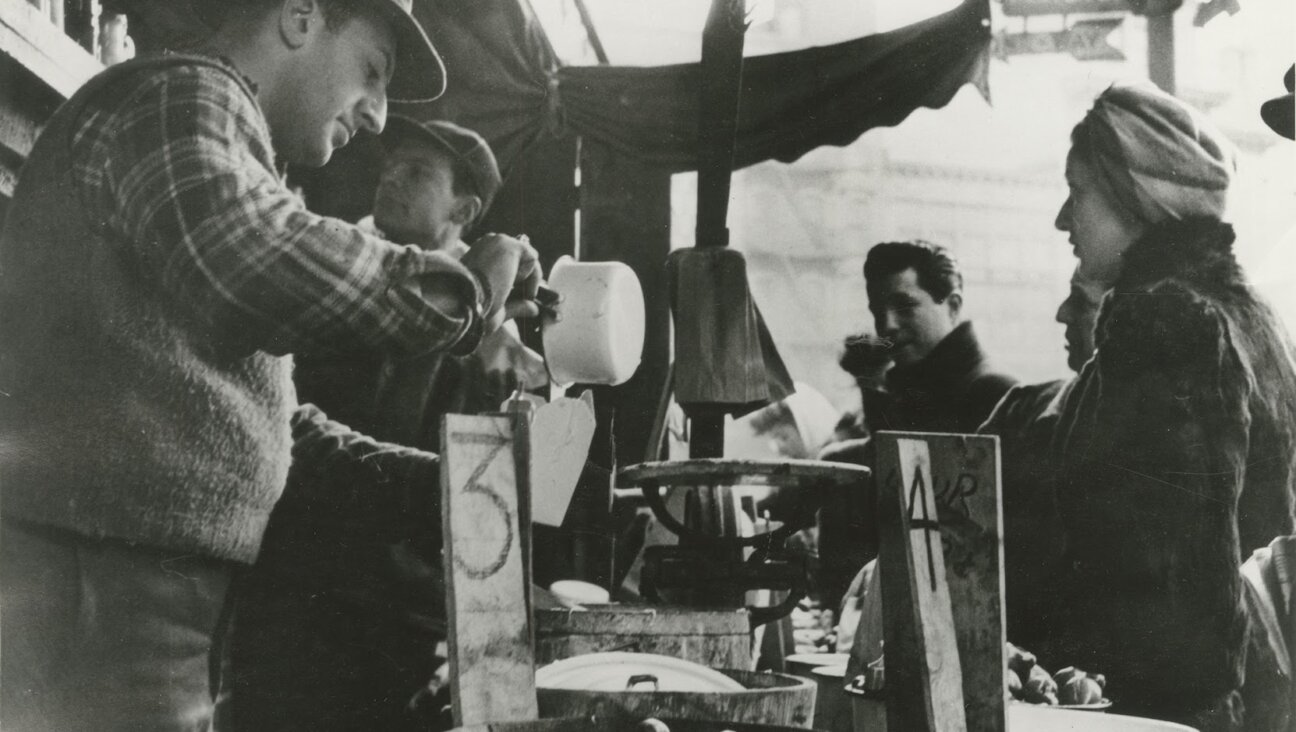
The Mansour brothers are an international family of peddlers. One brother, Itzik, began in the trade by peddling dishrags on Essex Street on Manhattan’s Lower East Side. Another brother peddles goods in Manchester, England. Another does the same in Cairo, Egypt. There’s one in Marseilles, France, and yet another in Haiti. Over the past two years, there have been diplomatic troubles between the United States and Haiti. Some say that this is because of one Itzik Mansour, who, when visiting his brother in Port-au-Prince, decided to open a business buying and selling goods. For one reason or another, the government of Haiti didn’t approve of Itzik’s business practices, and so it deported him back to the United States. Infuriated, Itzik initiated legal proceedings against the country of Haiti in order to try and sue for damages. For two years, Itzik’s cases languished in the court system without success. And just last week, a judge threw out the cases, declaring that Itzik obtained his American citizenship under false pretenses. Not to be dissuaded, Itzik said that he is going to take his case to the Supreme Court.
75 Years Ago in the forward
The hardest-working Jews in Palestine, without doubt, are the Yemenite Jews. Jewish immigrants from Yemen take on the most laborious work in the Yishuv, carrying heavy packs, working in quarries, trudging with stones and bricks. These Jews, who are virtually unknown in America and Europe, almost look like darker-skinned versions of religious Litvaks or Hasidism, and have peyes like no other Jews. Tightly wound springs hang from over their ears, past the lengths of their beards. And all the men have them — even those who don’t consider themselves religious. In fact, one of their rabbis says their peyes are not even a symbol of religiosity, but more a national symbol that distinguished them from Arabs in the wilds of Yemen.
50 Years Ago in the forward
Some of the most popular visitors in Liberia today are the Israelis who have come to work on construction projects in this West African country, originally founded by freed American slaves. The Israeli workers say they have great respect for the country, which, like Israel, is in the process of developing itself into a modern state. Their work has created great respect for the State of Israel among Liberians, and bodes well for relations with Liberia and other developing African countries.
This is a moment of great uncertainty. Here’s what you can do about it.
We hope you appreciated this article. Before you go, we’d like to ask you to please support the Forward’s independent Jewish news this Passover. All donations are being matched by the Forward Board - up to $100,000.
This is a moment of great uncertainty for the news media, for the Jewish people, and for our sacred democracy. It is a time of confusion and declining trust in public institutions. An era in which we need humans to report facts, conduct investigations that hold power to account, tell stories that matter and share honest discourse on all that divides us.
With no paywall or subscriptions, the Forward is entirely supported by readers like you. Every dollar you give this Passover is invested in the future of the Forward — and telling the American Jewish story fully and fairly.
The Forward doesn’t rely on funding from institutions like governments or your local Jewish federation. There are thousands of readers like you who give us $18 or $36 or $100 each month or year.
Support our mission to tell the Jewish story fully and fairly.