Controversial BDS Panel Draws Crowds at Brooklyn College
Graphic by Angelie Zaslavsky

By Josh Nathan-Kazis February 8, 2013
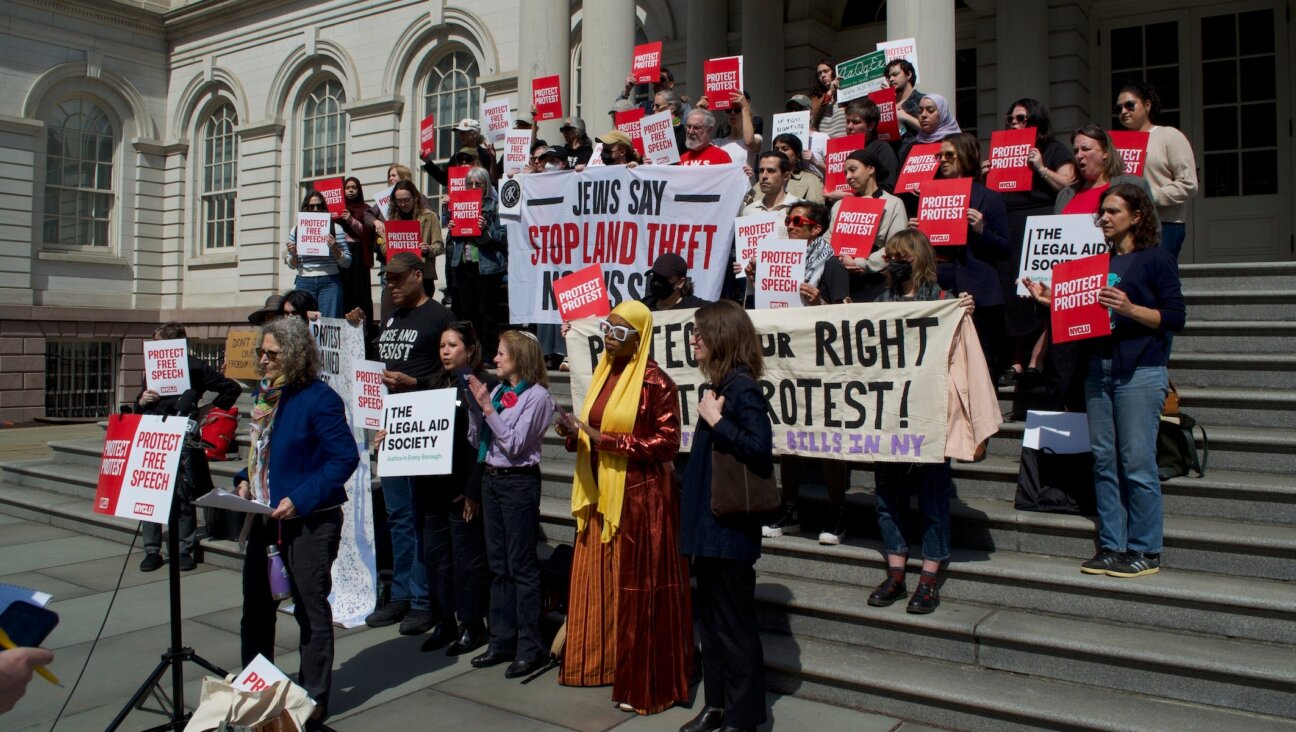
Protesters and panel attendees turned out in large numbers at the Brooklyn College BDS panel.

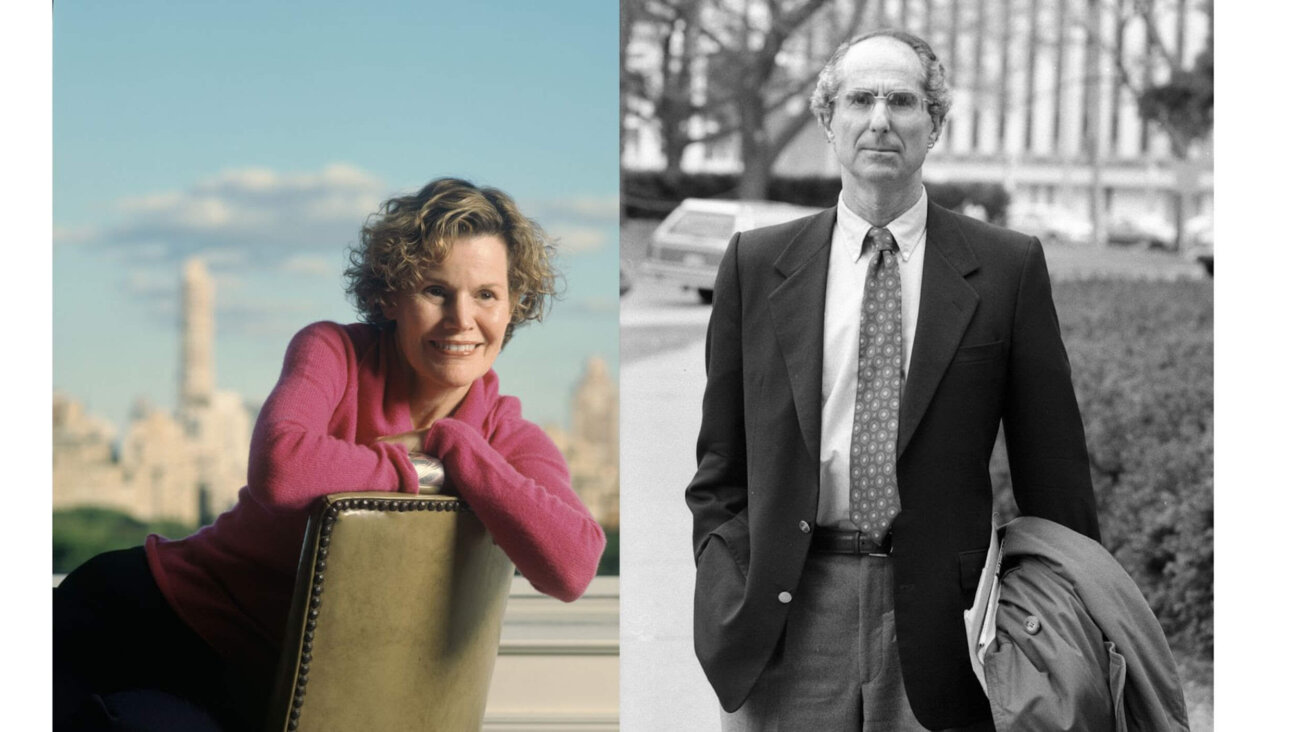
Judith Butler
Roughly 300 attendees came to listen to the discussion of the movement to impose boycotts, divestments and sanctions against Israel. Outside, 150 counter protesters chanted in the cold on the public college’s campus, according to one report.
The event, co-sponsored by the school’s political science department, was at the center of a high-profile controversy in recent weeks, as Jewish activists and elected officials weighed in against it.
Elected officials criticized the school’s political science department for co-sponsoring the event. One group of Jewish political elected officials implicitly threatened the school’s funding of the decision. Mayor Michael Bloomberg pushed back at those specific threats at a February 6 press conference.
“If you want to go to a university where the government decides what kind of subjects are fit for discussion, I suggest you apply to a school in North Korea,” Bloomberg said.
In the hours since the talk, a written version of the remarks delivered at the event by U.C. Berkeley philosopher Judith Butler and posted on The Nation’s website have gone viral online. Butler, known for her relatively dense works of academic theory, spoke at length about BDS, and about the opposition to the Brooklyn College event.
“The principle of academic freedom is designed to make sure that powers outside the university, including government and corporations, are not able to control the curriculum or intervene in extra-mural speech,” Butler said, according to the Nation’s site. “It not only bars such interventions, but it also protects those platforms in which we might be able to reflect together on the most difficult problems.”
This is a moment of great uncertainty. Here’s what you can do about it.
We hope you appreciated this article. Before you go, we’d like to ask you to please support the Forward’s independent Jewish news this Passover.
This is a moment of great uncertainty for the news media, for the Jewish people, and for our sacred democracy. It is a time of confusion and declining trust in public institutions. An era in which we need humans to report facts, conduct investigations that hold power to account, tell stories that matter and share honest discourse on all that divides us.
With no paywall or subscriptions, the Forward is entirely supported by readers like you. Every dollar you give this Passover is invested in the future of the Forward — and telling the American Jewish story fully and fairly.
The Forward doesn’t rely on funding from institutions like governments or your local Jewish federation. There are thousands of readers like you who give us $18 or $36 or $100 each month or year.
Support our mission to tell the Jewish story fully and fairly.