Israeli Minister Slams Modern Orthodox As ‘Borderline Reform’

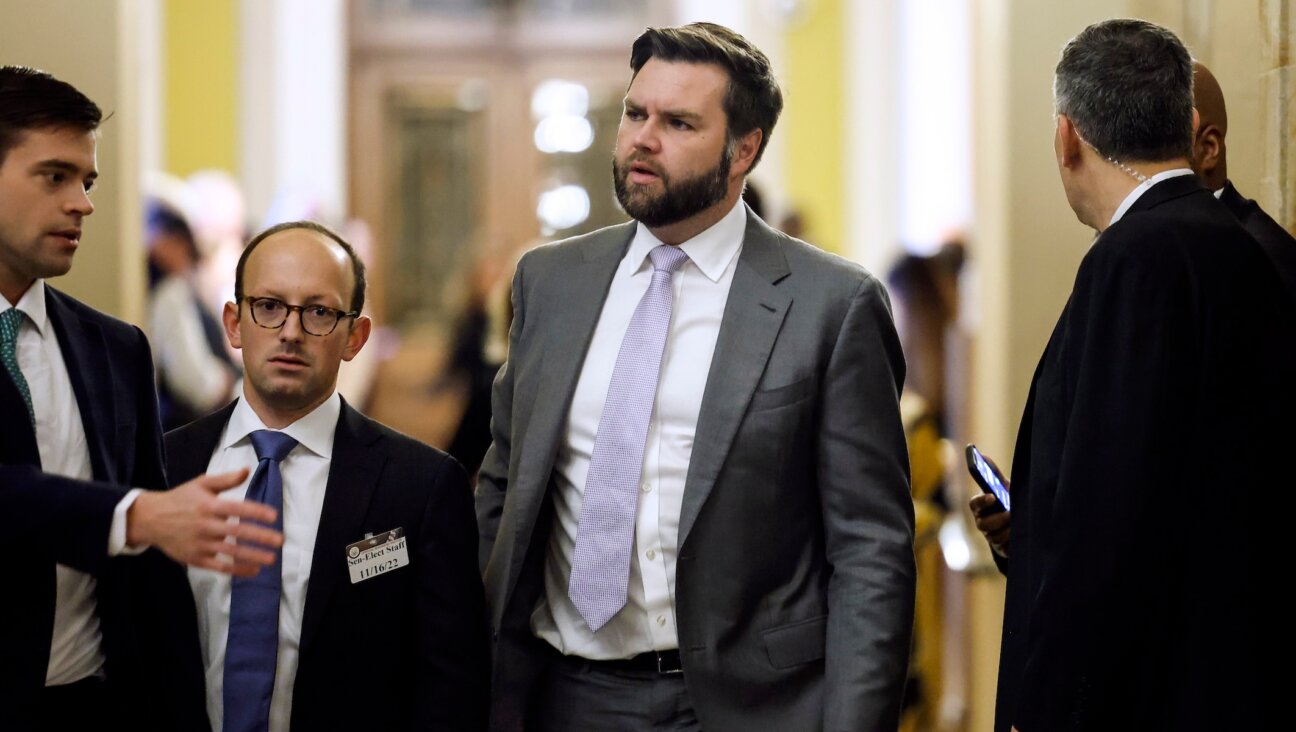
Hero No More: Shas leader Aryeh Deri got a hero’s welcome when he returned home from jail on corruption charges in 2002. Image by getty images
JERUSALEM (JTA) — The head of the Sephardic Orthodox Shas party called members of the Religious Zionist movement “borderline Reform,” an insult among his Haredi Orthodox constituents.
“Even the ‘knit kippot’ today, as some know even in very large communities, mainly in the center of the country, they’re already borderline Reform,” Aryeh Deri, who is also the country’s Interior Minister, said earlier this month at a conference of a haredi Orthodox rabbinic organization. The remarks were captured on video and broadcast Monday on Israel’s Channel 2.
“Knit kippot” refers to the crocheted kippahs worn by the more modern Orthodox community.
“It’s true, there are more kippot” in these communities than in American Reform synagogues, Deri went on. “It looks different, it’s more Israeli. But it’s still borderline Reform.”
Members of the Religious Zionist community, who tend to represent a less insular form of Orthodoxy than haredim, have been critical of the haredi Chief Rabbinate’s strict control of marriage and conversion issues in Israel. Modern Orthodox Jews in Israel are less likely to support yeshiva exemptions from army service and expensive subsidies for large families.
Deri defended his remarks in an essay for the Israeli news site Arutz Sheva.
“I said that those communities that pretend to present themselves as religious are turning to liberal areas which, in many cases, clash head-on with Halakha and our tradition,” he wrote, using the Hebrew word for Jewish law. “I said these things out of deep concern for the preservation of Jewish tradition.”

Hello, fellow Forward reader! I’m Joel Brown, a Forward reader and supporter for more than 15 years, and currently the chair of the board of directors.
I’m an avid Forward reader because it ticks so many of my essential boxes: excellent journalism, Jewish focus and diverse viewpoints. In today’s political climate, what I most appreciate is the Forward’s independence — made possible by the generosity of its membership.
The Forward is committed to bringing you unbiased, nuanced Jewish news. From my position as board chair, I see an exciting future as we expand our position as the definitive independent voice of contemporary American Judaism.
That’s why I’m paying it Forward, by matching $36,000 of reader gifts. It’s an investment in the Forward’s newsroom, to continue telling the American Jewish story with truth and independence.
— Joel Brown, Forward board chair
Support our mission to tell the Jewish story fully and fairly.