Palestinian poet who chronicled daily life in Gaza released after capture by IDF
Mosab Abu Toha had written essays on the difficulty of caring for his family during Israeli bombardment for several major American publications
Graphic by Angelie Zaslavsky

By Irene Katz Connelly November 20, 2023
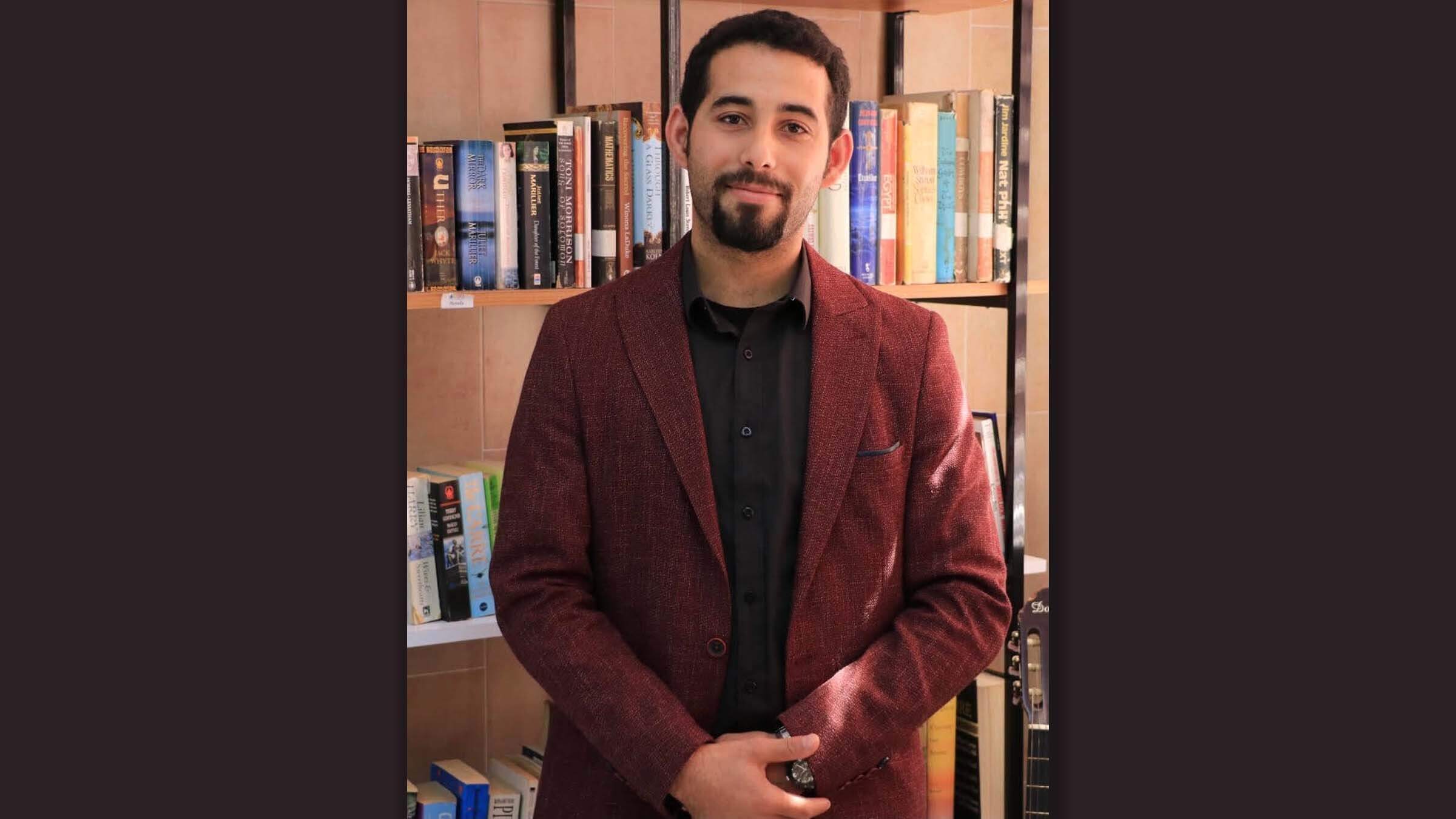
A Palestinian poet whose dispatches on daily life in Gaza during Israel’s war with Hamas have appeared in several high-profile American publications was captured on Sunday and subsequently released by the Israeli military.
The IDF told the Forward that Abu Toha had been “taken into questioning,” and on Tuesday morning said that he had been released. The poet’s editor at The New Yorker also announced his release on X, formerly known as Twitter.
Since Israel instigated a bombing campaign in Gaza in retaliation against Hamas’ Oct. 7 attacks, Mosab Abu Toha has written essays for publications including The New Yorker, The New York Times and the Financial Times. His dispatches focus on everyday activities, such as finding food or entertaining his children, that have become dangerous or simply impossible during the Israeli invasion, which has killed over 12,000 people according to officials in Gaza, which is run by Hamas. Abu Toha has also expressed frustration with an international community that he sees as indifferent to the suffering of Palestinians.
On Monday morning, Palestinian lawyer and activist Diana Buttu posted on X that Abu Toha had been “kidnapped by the Israeli army in Gaza as he was fleeing with his family.” Buttu said that she had received the information directly from his relatives. The poet’s wife, Maram Abu Toha, told The New York Times that Israeli troops stopped their family while they were walking from northern Gaza to the Rafah border crossing, where they planned to evacuate. She said that soldiers told Abu Toha, who was carrying his three-year-old son, to “drop the kid” and approach them for questioning, and threatened to shoot the rest of the family if they did not keep walking.
The New York Times reported that Israeli soldiers have detained many other Palestinian men fleeing northern Gaza with their families.
After New Yorker editor Michael Luo posted about Abu Toha’s capture on Monday, the free speech organization PEN America called on X for the his “protection,” and the poet’s publisher announced that it would offer free digital downloads of his book as a gesture of “fervent hope for peace.”
On Tuesday morning, Buttu confirmed that Abu Toha had been released, writing on X that “Israeli soldiers beat him” and that he was getting medical treatment and reuniting with his family.
Update on Mosab Abu Toha: he has been released by the Israeli army. Israeli soldiers beat him and he getting medical treatment now and with his family.
— Diana Buttu (@dianabuttu) November 21, 2023
Abu Toha’s first poetry collection, Things You May Find Hidden In My Ear, was published in 2022. A former visiting scholar at Harvard, Abu Toha is the founder of the Edward Said Library, Gaza’s first English-language public library.
This is a moment of great uncertainty. Here’s what you can do about it.
We hope you appreciated this article. Before you go, we’d like to ask you to please support the Forward’s independent Jewish news this Passover. All donations are being matched by the Forward Board - up to $100,000.
This is a moment of great uncertainty for the news media, for the Jewish people, and for our sacred democracy. It is a time of confusion and declining trust in public institutions. An era in which we need humans to report facts, conduct investigations that hold power to account, tell stories that matter and share honest discourse on all that divides us.
With no paywall or subscriptions, the Forward is entirely supported by readers like you. Every dollar you give this Passover is invested in the future of the Forward — and telling the American Jewish story fully and fairly.
The Forward doesn’t rely on funding from institutions like governments or your local Jewish federation. There are thousands of readers like you who give us $18 or $36 or $100 each month or year.
Support our mission to tell the Jewish story fully and fairly.