Hamas releases video showing American-Israeli hostage Hersh Goldberg-Polin talking about Passover
3-minute video marks first sign that injured Nova music festival attendee survived his hand injury on Oct. 7
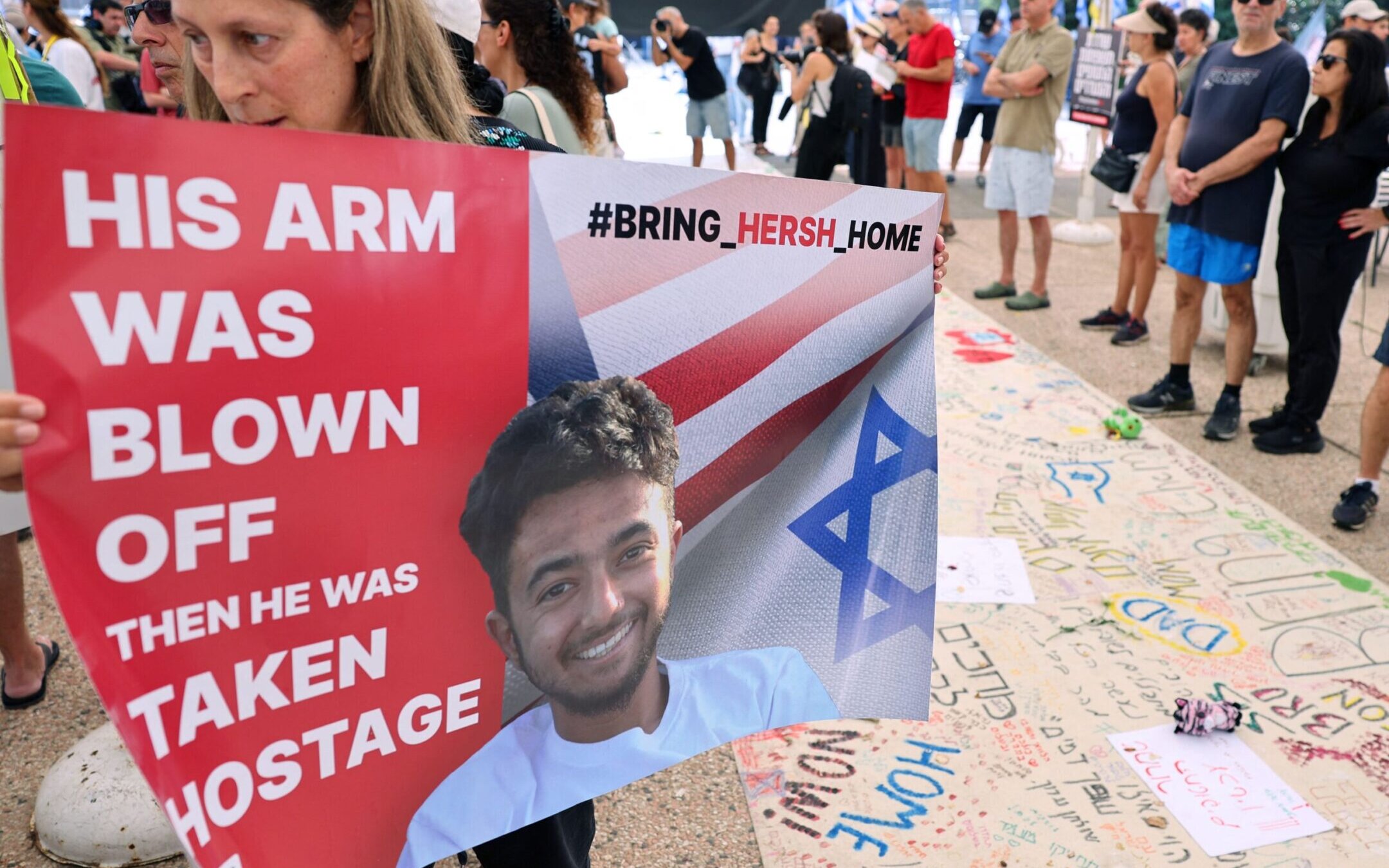
A protester holds a poster with a photo of 23-year-old U.S.-Israeli Hersh Goldberg-Polin as people gather with signs calling for the release of hostages held by Hamas since Oct. 7, during a rally in Tel Aviv Oct. 28. Photo by Jack Guez/AFP via Getty Images

By Susan Greene April 24, 2024
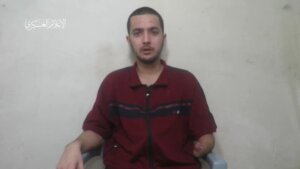
Hamas released a propaganda video Wednesday suggesting American-Israeli hostage Hersh Goldberg-Polin is still alive.
Goldberg-Polin is the 23-year-old Israeli-American who lost his hand when a grenade exploded in the bomb shelter where he and fellow attendees of the Nova music festival tried hiding during the Hamas-led attack on the rave near Gaza on Oct. 7. He was kidnapped and taken hostage with his hand severely injured.
The three-minute video, released — and clearly scripted — by the terrorist group to coincide with Passover, shows a pale and at times distraught-looking Goldberg-Polin identifying himself, lifting up his left arm where his hand seems to have been surgically amputated, and saying he has been living in underground tunnels “without water, food or sun” and without “the treatment I need for so long.”
His statement goes on to chastise Israeli Prime Minister Benjamin Netanyahu for “neglecting” hostages and “thousands of other citizens,” and claims that about 70 hostages have been killed in Israeli Air Force strikes — an assertion that has not been reported or substantiated by the Israeli government, nor by any credible news outlets.
It ends with Goldberg-Polin sending his love to his parents, Rachel and Jon, and two sisters, and sending them Passover wishes.
“It won’t be a happy holiday for me, but I wish you one,” he said.
The video marks the first sign that Goldberg-Polin is possibly still alive since being taken hostage 201 days ago, and that he seems to have survived his injury. He is believed to be among 133 hostages still in Hamas captivity, dead or alive.
“Seeing the video of Hersh today is overwhelming. We are relieved to see him alive but we are also concerned about his health and well-being as well as that of all the other hostages and all of those suffering in this region,” Hersh’s father, Jon Polin, said in a video statement today after seeing the footage of his son. “We are here today with a plea to all of the leaders of the parties who have been negotiating to date. This includes Qatar, Egypt, the United States, Hamas and Israel: Be brave, lean in, seize this moment and get a deal done to reunite all of us with our loved ones and end the suffering in this region.”
“Hersh, we heard your voice today for the first time in 201 days and if you can hear us, we are telling you, we love you, stay strong, survive,” added Hersh’s mother, Rachel Goldberg-Polin.
She has traveled the globe meeting with world leaders to bring attention to the plight of her son. Along the way, she has become the international voice, face and conscience of the hostage crisis. She was named last week to Time magazine’s list of the 100 most influential people of the year.
Her son completed his mandatory military service last year and had been planning to travel the world starting in December.
This is a moment of great uncertainty. Here’s what you can do about it.
We hope you appreciated this article. Before you go, we’d like to ask you to please support the Forward’s independent Jewish news this Passover. All donations are being matched by the Forward Board - up to $100,000.
This is a moment of great uncertainty for the news media, for the Jewish people, and for our sacred democracy. It is a time of confusion and declining trust in public institutions. An era in which we need humans to report facts, conduct investigations that hold power to account, tell stories that matter and share honest discourse on all that divides us.
With no paywall or subscriptions, the Forward is entirely supported by readers like you. Every dollar you give this Passover is invested in the future of the Forward — and telling the American Jewish story fully and fairly.
The Forward doesn’t rely on funding from institutions like governments or your local Jewish federation. There are thousands of readers like you who give us $18 or $36 or $100 each month or year.

Support our mission to tell the Jewish story fully and fairly.