After Australia shooting, Jewish leaders say Mamdani’s refusal to condemn ‘globalize the intifada’ has consequences
Deborah Lipstadt and Rabbi David Wolpe were among those criticizing New York City Mayor-elect Zohran Mamdani
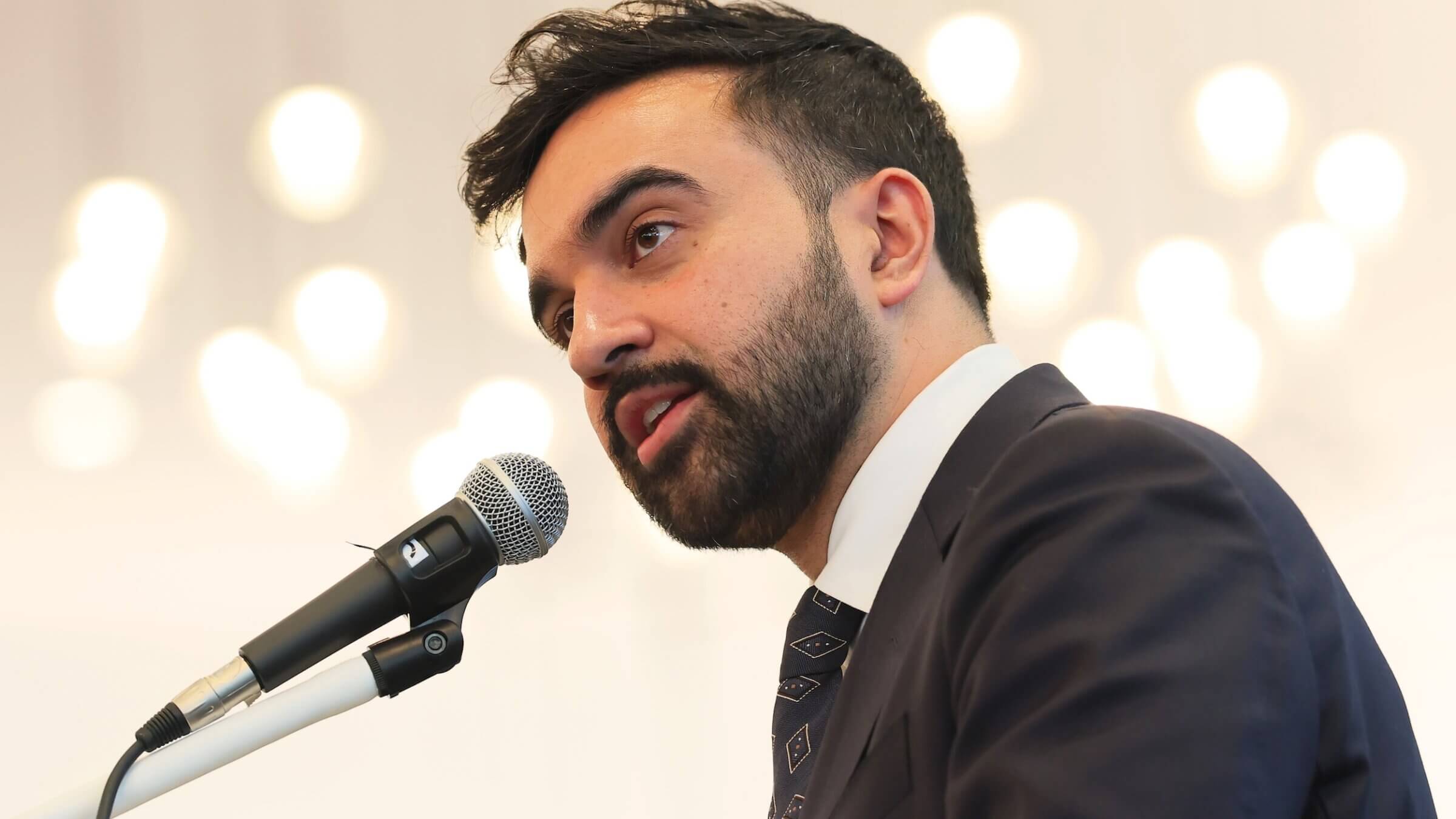
New York CIty Mayor-Elect Zohran Mamdani on Dec. 12. Photo by Michael M. Santiago/Getty Images

By Jacob Kornbluh December 14, 2025
The shooting attack targeting a Hanukkah celebration at Sydney’s popular Bondi Beach on the first night of Hanukkah, in which at least 15 people were killed, reignited sharp criticism of New York City Mayor-elect Zohran Mamdani’s refusal to condemn the “globalize the intifada” slogan during the mayoral election.
“When you refuse to condemn and only ‘discourage’ use of the term ‘Globalize the Intifada,’ you help facilitate (not cause) the thinking that leads to Bondi Beach,” Deborah Lipstadt, a Holocaust historian and the State Department special envoy to combat and monitor antisemitism in the Biden administration, wrote on X in a post addressed to Mamdani.
Police said a father and son were behind the mass shooting in Australia, with authorities adding that they would need more time to determine a motive.
Mamdani, a supporter of the Boycott, Divestment and Sanctions movement against Israel, faced fierce backlash during the Democratic primary for defending the slogan used by some at the pro-Palestinian protests and perceived by many as a call for violence against Jews. After his surprise primary victory in June, Mamdani clarified that he understood why the phrase alarmed people and noted that it was not language he personally uses, but he declined to explicitly condemn it.
He later said he would “discourage” the use of that phrase after hearing from Jewish leaders who experienced the bus bombings during the Second Intifada in the early 2000s.
Lipstadt included a link to a June Politico article detailing Mamdani’s initial refusal to condemn the slogan.
Rabbi David Wolpe, the emeritus rabbi of Sinai Temple in Los Angeles and a harsh critic of Harvard’s handling of antisemitism on campus, wrote, “How about now, Mr. Mayor?” Republicans and Mamdani critics echoed the same sentiment.
New York City is home to the largest concentration of Jews in the United States.
Outgoing Mayor Eric Adams indirectly referenced the controversy during a press conference with Police Commissioner Jessica Tisch, who Mamdani has reappointed to serve in his administration. “That attack in Sydney is exactly what it means to ‘globalize the intifada,’” Adams said. “We saw the actual application of the globalization of the intifada in Sydney.”
Reacting to Bondi Beach attack, Mayor Eric Adams says:
— Jacob N. Kornbluh (@jacobkornbluh) December 14, 2025
“That attack in Sydney is exactly what it means to ‘globalize the Intifada.’ We saw the actual application of the globalization of the intifada in Sydney...” pic.twitter.com/3EI3IZp3Dg
Mamdani issued a statement on Sunday, calling the attack in Sydney a “vile act of antisemitic terror” and “the latest, most horrifying iteration in a growing pattern of violence targeted at Jewish people across the world.” He said the deadly attack should be met with urgent action to counter antisemitism. He also reiterated his pledge to “work every day to keep Jewish New Yorkers safe — on our streets, our subways, at shul, in every moment of every day.”
A spokesperson for Mamdani didn’t immediately respond to comment on Lipstadt’s post.
In an interview aired Sunday, Mamdani responded to criticism from Rabbi Ammiel Hirsch, the senior rabbi of Stephen Wise Free Synagogue, who said after a meeting with Mamdani on Thursday that the mayor-elect’s refusal to recognize Israel specifically as a Jewish state could fuel antisemitism.
Hirsch, who also serves as president of the New York Board of Rabbis, was present at a 45-minute discussion with Mamdani as part of the mayor-elect’s outreach to Jewish leaders. Rabbi Joe Potasnik, executive vice president of the New York Board of Rabbis, said the conversation was “candid” and “constructive.”
“Rabbi Hirsch is entitled to his opinions,” Mamdani told CBS New York’s political reporter Marcia Kramer on her program The Point. “The positions that I’ve made clear on Israel and on Palestine, these are part of universal beliefs of equal rights and the necessity of it for all people everywhere.” He added, “My inability to say what Rabbi Hirsch would like me to say comes from a belief that every state should be of equal rights, whether we’re speaking about Israel or Saudi Arabia or anywhere in the world.”
This is a moment of great uncertainty. Here’s what you can do about it.
We hope you appreciated this article. Before you go, we’d like to ask you to please support the Forward’s independent Jewish news this Passover. All donations are being matched by the Forward Board - up to $100,000.
This is a moment of great uncertainty for the news media, for the Jewish people, and for our sacred democracy. It is a time of confusion and declining trust in public institutions. An era in which we need humans to report facts, conduct investigations that hold power to account, tell stories that matter and share honest discourse on all that divides us.
With no paywall or subscriptions, the Forward is entirely supported by readers like you. Every dollar you give this Passover is invested in the future of the Forward — and telling the American Jewish story fully and fairly.
The Forward doesn’t rely on funding from institutions like governments or your local Jewish federation. There are thousands of readers like you who give us $18 or $36 or $100 each month or year.
Support our mission to tell the Jewish story fully and fairly.