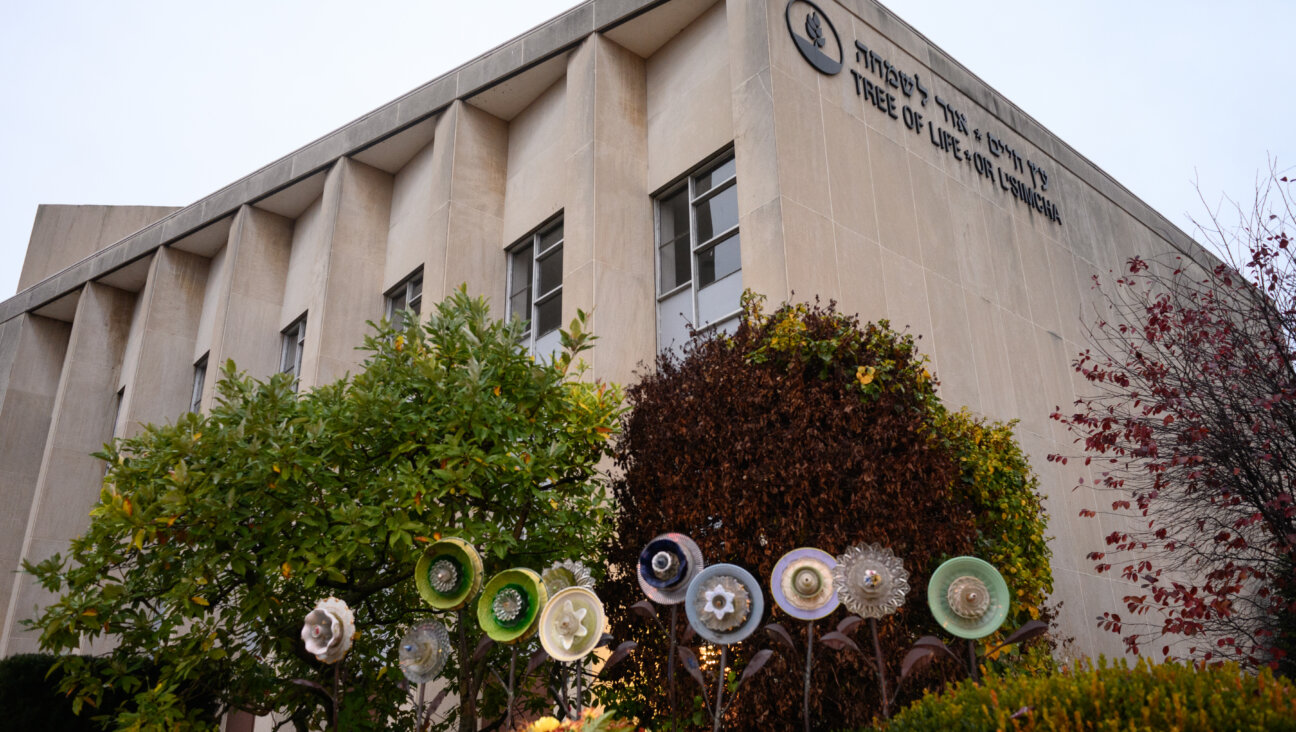
Fire at Mississippi’s largest synagogue under federal investigation after arrest
The Ku Klux Klan attacked the same synagogue in 1967 for its involvement in the civil rights movement
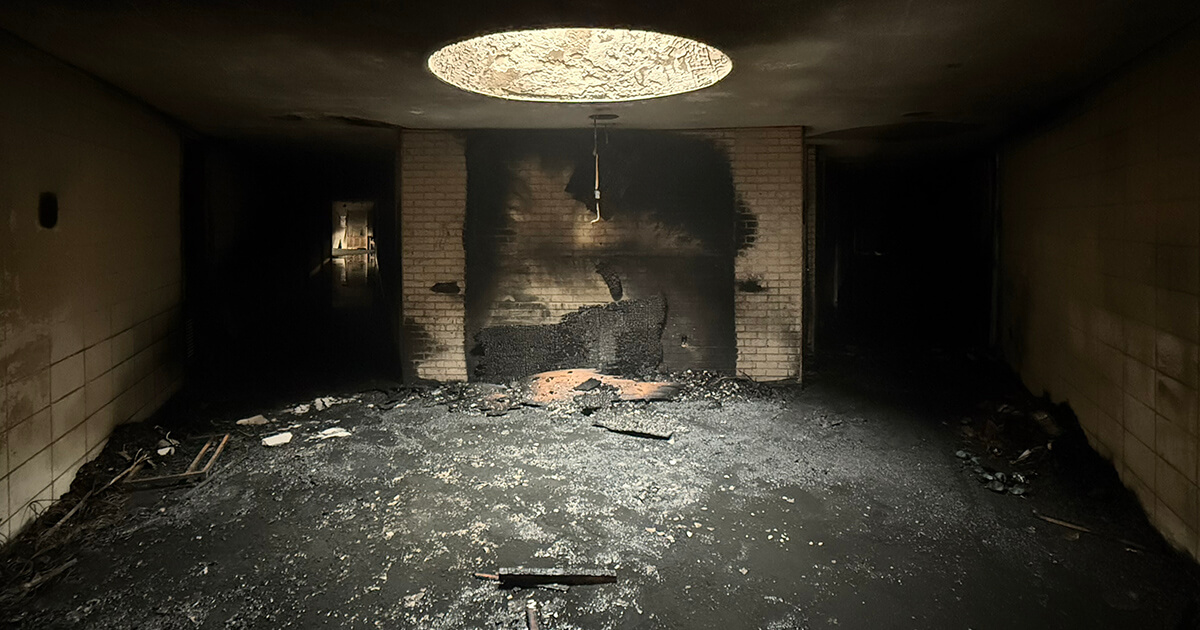
The lobby of Beth Israel Congregation was damaged in a fire on Jan. 10 in Jackson, Mississippi. Courtesy of Beth Israel Congregation

By Benyamin Cohen January 11, 2026
A suspect is in custody as authorities investigate a weekend fire that damaged Mississippi’s largest synagogue, which has been attacked before.
The fire broke out around 3 a.m. Saturday at Beth Israel Congregation, the only synagogue in Jackson, the state capital. Video surveillance footage shows a man splashing liquid along a wall onto a couch in the lobby.
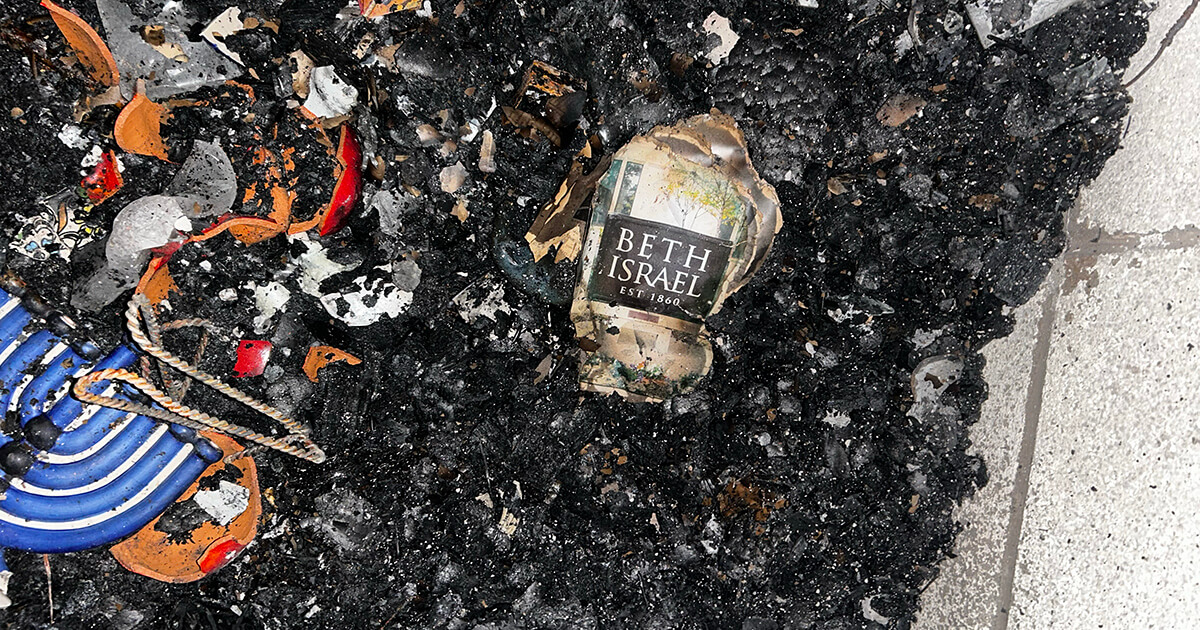
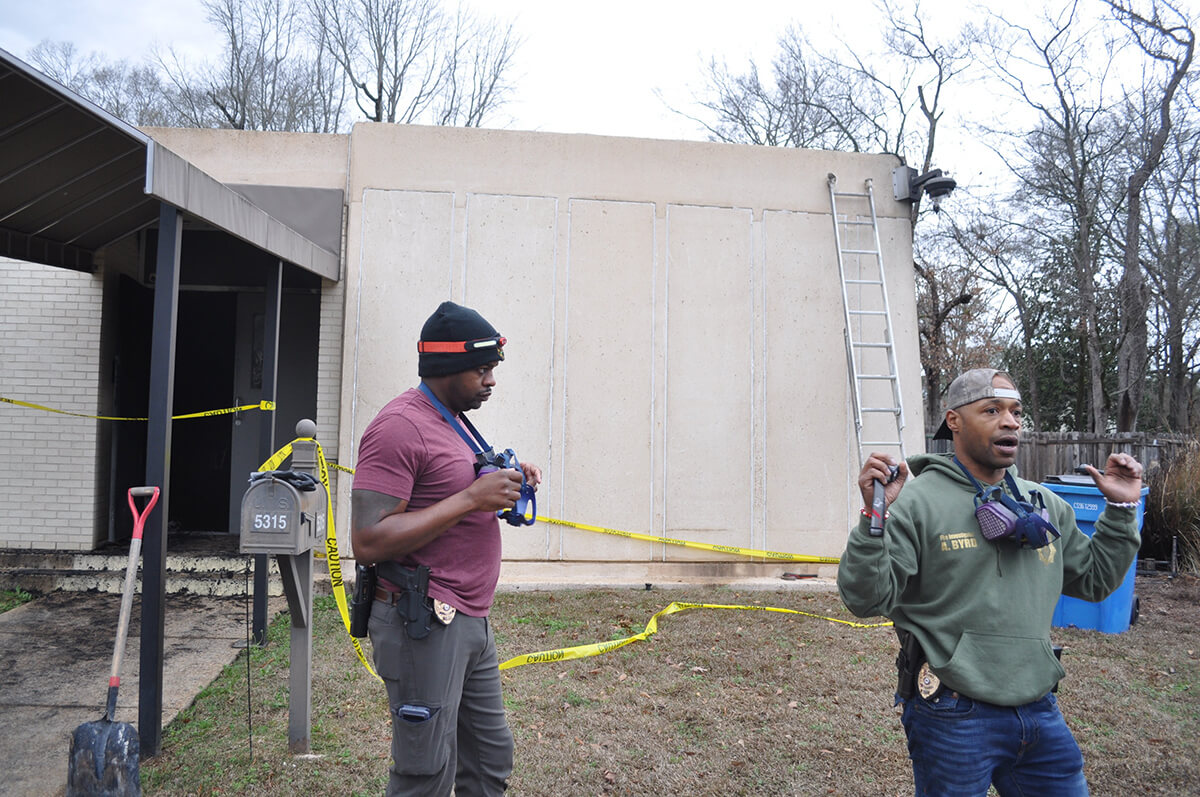
Investigators said the blaze burned the lobby, the library, and the offices. Soot and smoke damaged the rest of the building, including the sanctuary. The building also houses the offices of the Institute of Southern Jewish Life.
Nobody from the synagogue was injured; the suspect sustained non-life-threatening burns and was arrested at the hospital, according to local fire officials.
Two of the synagogue’s Torahs, kept in the library, were burned in the fire; another five in the sanctuary were damaged. An additional Torah, rescued from the Holocaust, was behind a glass case and survived the fire.
“At this time, we do have a person in custody for the fire,” said Division Fire Chief Charles Felton, who is overseeing the investigation. He added that based on fire patterns and video surveillance, it would be considered an arson.
Felton said the FBI is now involved and is expected to pursue federal charges, including determining whether the fire qualifies as a hate crime.
A reporter who was inside the building before federal authorities secured the scene described extensive damage. Allen Siegler, a reporter with Mississippi Today, said the interior was “very dark and ashen.”
“It was wet — puddles of ashes,” Siegler told the Forward.
Jackson Mayor John Horhn said the fire was an attack not only on the Jewish community, but on the city itself.
“Acts of antisemitism, racism, and religious hatred are attacks on Jackson as a whole and will be treated as acts of terror against residents’ safety and freedom to worship,” Horhn said in a statement. “Jackson stands with Beth Israel and the Jewish community, and we’ll do everything we can to support them and hold accountable anyone who tries to spread fear and hate here.”
The attack “comes alongside a dramatic increase in hate and violence targeting Jewish communities and institutions around the globe, compounding our fear and vulnerability at this already challenging moment,” said Amy Spitalnick, CEO of the Jewish Council for Public Affairs.
Jonathan Greenblatt, the CEO of the Anti-Defamation League, concurred. “An attack on any synagogue is an attack on all Jews,” he said. “We will not be intimidated. We will not be silent.”
A congregation shaped by fire — and defiance
Beth Israel Congregation, which counts around 150 member families, has anchored Jewish life in Jackson since the Civil War, its history closely tracking both the growth of the city and the persistence of a small but visible Jewish community in Mississippi’s capital.
Founded in the early 1860s, the congregation built Mississippi’s first synagogue — a modest structure on South State Street that doubled as a schoolhouse. It burned in an 1874 fire, a common fate of 19th-century wooden buildings, though the cause of the fire is not recorded. The congregation built a new brick structure on the same site, dedicated in 1875.
As Jewish families moved within Jackson, Beth Israel moved with them, relocating first to Woodrow Wilson Avenue and, in the 1960s, to its current home in northeast Jackson.
By the mid-20th century, Beth Israel had become the largest Jewish congregation in the state and a familiar civic presence in a predominantly Christian city — a visibility that brought both belonging and risk.
In September 1967, Ku Klux Klan members bombed the synagogue just weeks after the building was dedicated, damaging the rabbi’s office and library. The home of Rabbi Perry Nussbaum, a vocal supporter of the civil rights movement who had helped the Freedom Riders, was also bombed shortly afterward. No one was injured, and the congregation held High Holiday services in the building that same year.
Rabbi Valerie Cohen, who led Beth Israel from 2003 to 2014 and is now at Temple Emanuel Sinai in Worcester, Massachusetts, said the echoes between past and present were impossible to miss.
“The majority of the damage is in the same place as the bombing,” said Cohen, 54.
The fire felt especially disorienting, she said, because she had been inside the building just days earlier.
“That made this moment sad and surreal and awful,” Cohen said. “I was just there last Shabbat, officiating at a wedding for one of my bar mitzvah students from there that is all grown up now. I participated in the Torah study on Saturday morning in the library, led by their current spiritual leader.”
Cohen described Beth Israel as “very resilient throughout the years” and “very integral” to the Jackson community, noting that many non-Jewish residents know the synagogue through its longtime preschool and annual bazaar.
Despite the damage, congregants say Jewish life in Jackson will continue. “Several churches have extended kind offers for Beth Israel congregants to use their building as a worship space as we rebuild,” said Zach Shemper, the synagogue’s president.
Tamar Sharp, 67, a member of Beth Israel since 2006, is scheduled to celebrate her adult bat mitzvah this coming Shabbat — even if it must be held in a borrowed space with a borrowed Torah.
“Absolutely,” Sharp said. “The show must go on.”
This is a moment of great uncertainty. Here’s what you can do about it.
We hope you appreciated this article. Before you go, we’d like to ask you to please support the Forward’s independent Jewish news this Passover. All donations are being matched by the Forward Board - up to $100,000.
This is a moment of great uncertainty for the news media, for the Jewish people, and for our sacred democracy. It is a time of confusion and declining trust in public institutions. An era in which we need humans to report facts, conduct investigations that hold power to account, tell stories that matter and share honest discourse on all that divides us.
With no paywall or subscriptions, the Forward is entirely supported by readers like you. Every dollar you give this Passover is invested in the future of the Forward — and telling the American Jewish story fully and fairly.
The Forward doesn’t rely on funding from institutions like governments or your local Jewish federation. There are thousands of readers like you who give us $18 or $36 or $100 each month or year.
Support our mission to tell the Jewish story fully and fairly.